Ear glint Symbolism
Ear glint is the small, crisp highlight that catches on the ear or the head’s rim, registering the direction and intensity of light. In portraiture, this pinpoint reflection sharpens a sitter’s presence, suggesting alertness and a heightened state of perception. In art history, such controlled accents act as a proof of seeing, certifying observational acuity while helping to model form.
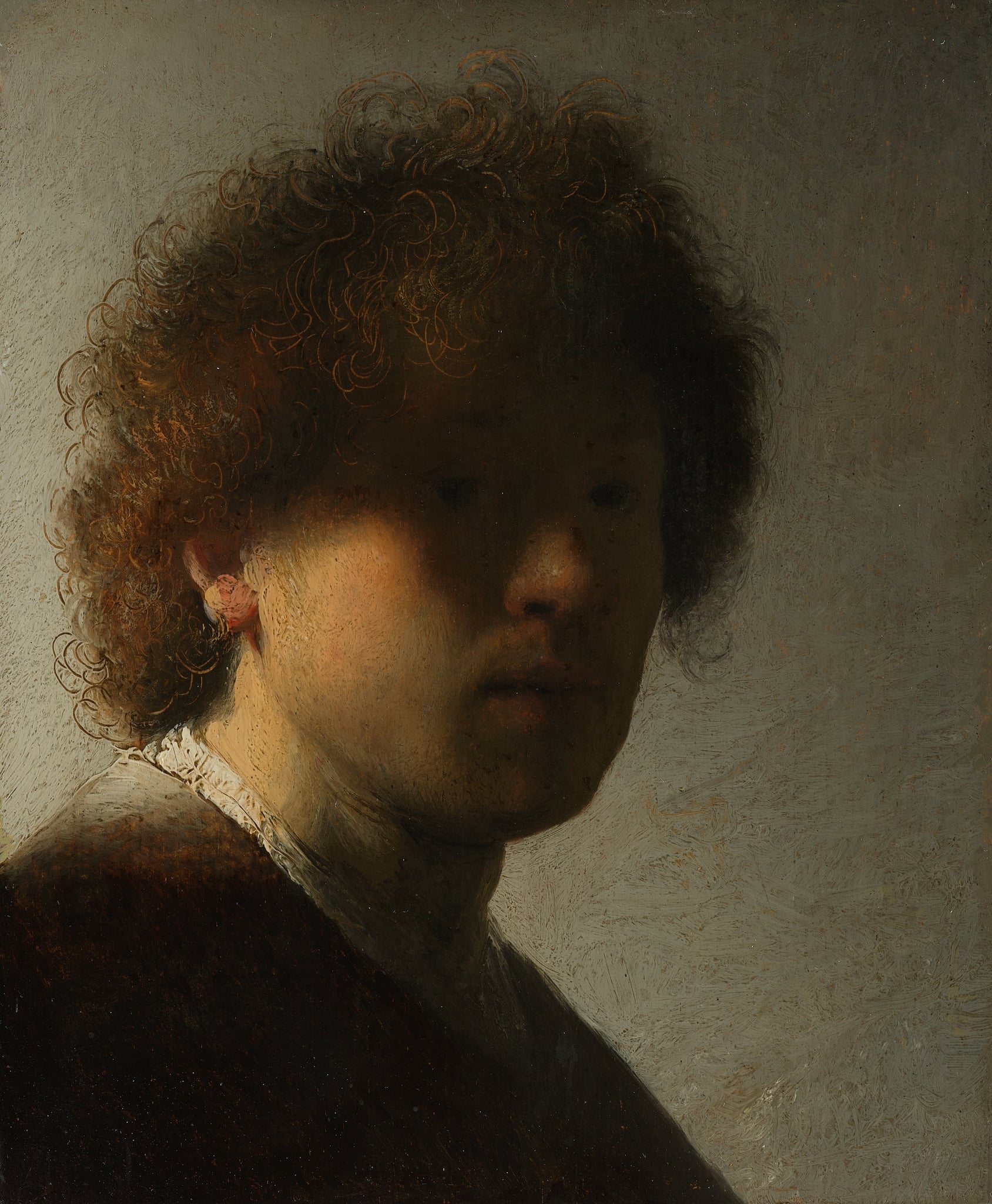
Ear glint in Self-portrait (with tousled hair)
In Self-portrait (with tousled hair) (c. 1628) by Rembrandt van Rijn, the artist tests how light both reveals and withholds, letting the head emerge from darkness while backlit curls flare like a rough halo. Within this economy of illumination, the raking highlight along the head functions as an ear glint—a precise signal of the light source that concentrates attention on the act of looking. On this small oak panel, hair, stubble, and that edged flash become evidence of perception itself, turning a modest glint into a statement of identity-in-formation.