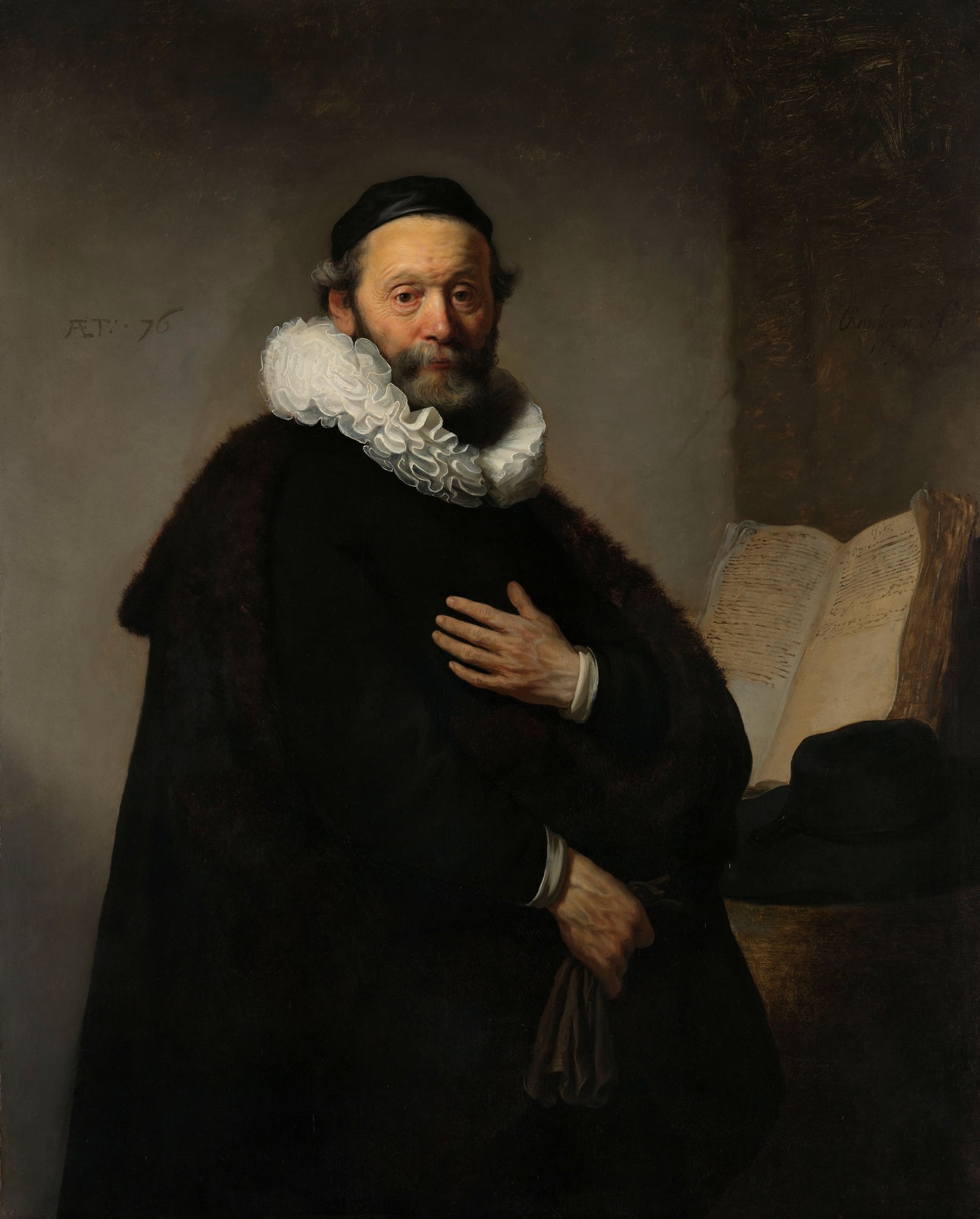
Hand to chest Symbolism
A hand placed to the chest is a long-standing sign of oath-taking, sincerity, and avowed truth in portraiture. By connecting the speaking body to the seat of conscience, artists use the gesture to make inward conviction visible. It clarifies a sitter’s moral stance even amid markers of status or learning.
Hand to chest in Johannes Wtenbogaert
Rembrandt van Rijn’s Johannes Wtenbogaert (1633) makes the meaning of the gesture explicit. Cast as a Remonstrant minister and a study in moral authority, the sitter is caught in raking light that isolates his pale hands and creased face against a dark, fur-lined cloak. The hand to his chest reads as an open declaration of inner conviction, the visible sign of conscience in action. An open book and a plain hat anchor the figure in learning and humility, while the glove held in the other hand acknowledges worldly standing; set among these attributes, the chest-touch becomes the portrait’s ethical fulcrum, translating private belief into a public avowal.