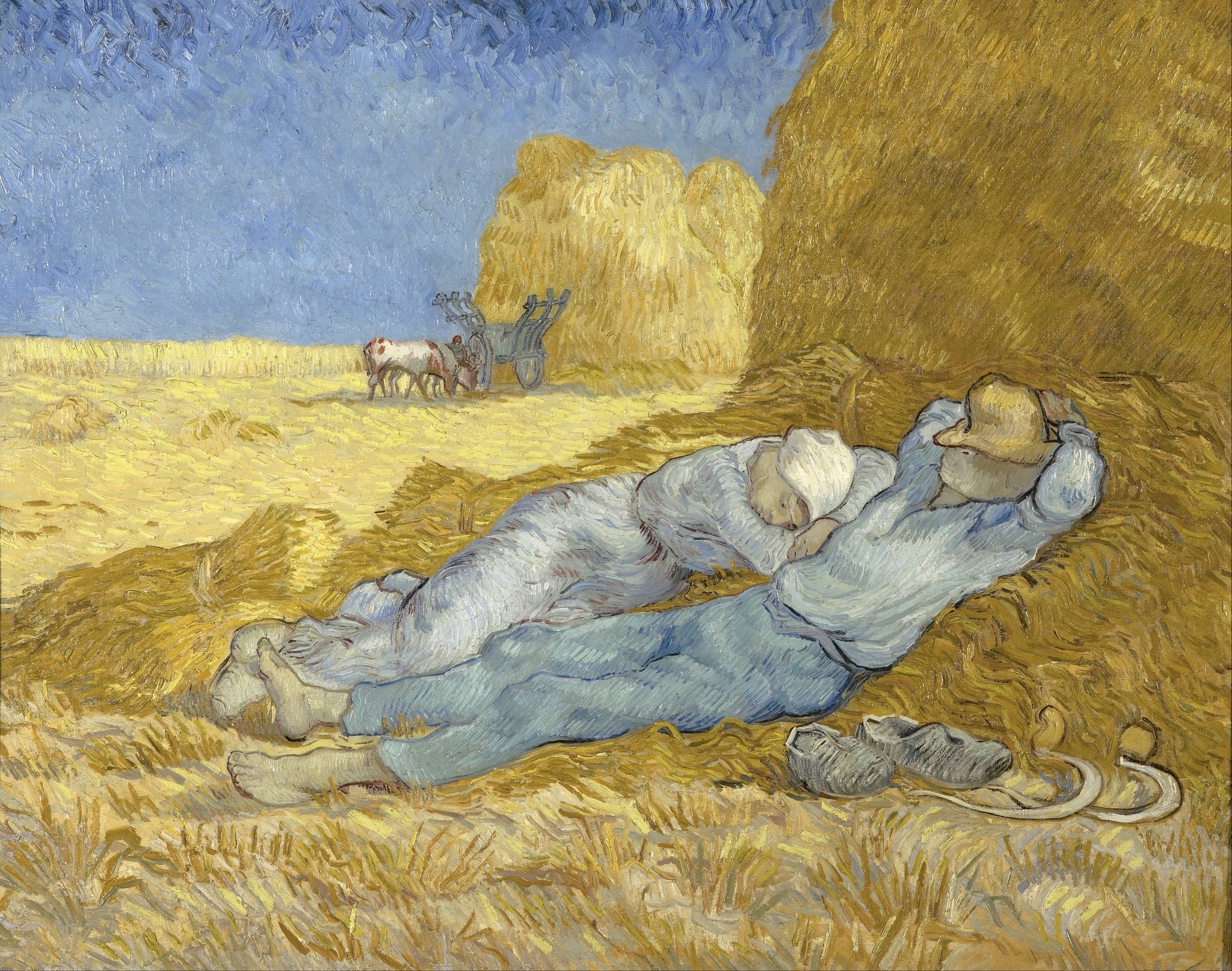
Haystack as shelter Symbolism
In 19th-century rural genre painting, the haystack often signifies the abundance of a completed harvest while also serving as a humble, practical shelter. Its massed straw becomes a place to lean or sleep, so the motif reads as both product and protector. Artists use this dual role to visualize the necessary cycle of labor and rest in agrarian life.
Haystack as shelter in The Siesta
In The Siesta (1889–1890) by Vincent van Gogh, two harvesters sleep curved against a haystack while their scythes and shoes lie idle in the straw, turning a midday pause into dignified repose. The haystack operates doubly: it is evidence of gathered grain and an improvised sanctuary that supports the workers’ bodies and brackets a necessary break within the workday. Van Gogh’s complementary blue–yellow orchestration converts heat and light into rhythm, holding rest and labor in equilibrium and making the haystack the visual hinge between abundance and protection.