Locomotive silhouettes Symbolism
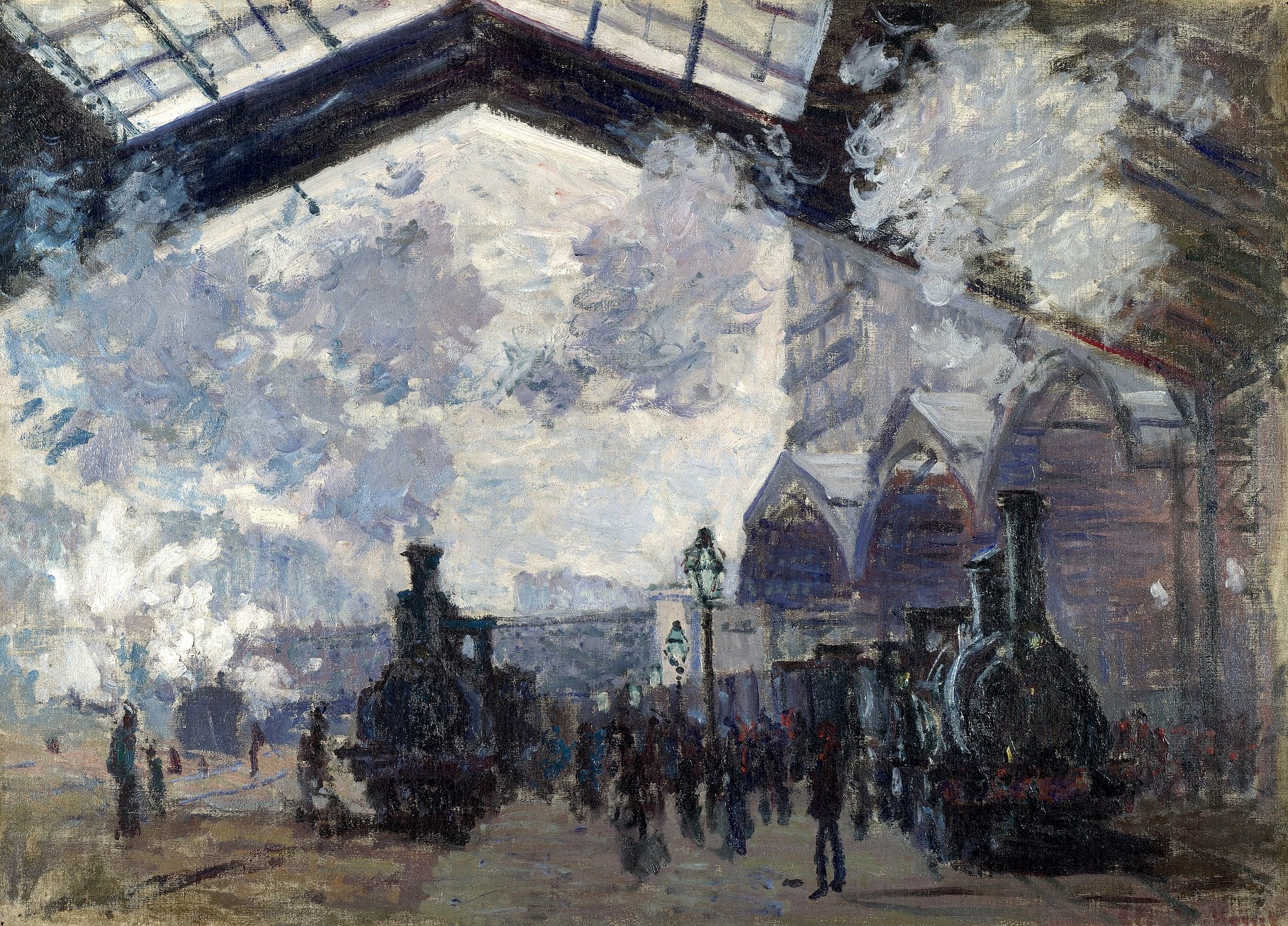
Locomotive silhouettes in art mark the rise of industrial modernity, presenting the train as a dark, simplified mass set against light and vapor. In late 19th-century painting, this silhouette let artists study the tension between engineered form and atmospheric effects, privileging contour over detail. As a symbol, it conveys speed, coordinated movement, and the visual drama of iron, glass, steam, and illumination.
Locomotive silhouettes in The Gare St-Lazare
In Claude Monet’s The Gare St-Lazare (1877), the symbol is made legible through contrast. Beneath a nave-like iron-and-glass canopy, two dark locomotives loom as compact profiles, cutting against the glare, gaslight, and steam of a bustling rail hub. Monet allows crowds and fixtures to dissolve into atmosphere so the engines read as anchoring silhouettes—emblems of speed and industry translated into sensation. The painting stages the core meaning of the motif: machines presented as mass against light, where the locomotive’s weight and the station’s luminous air define each other.