Released chain Symbolism
The released chain marks the deliberate unmooring that turns resolve into an irreversible voyage. As staged by John William Waterhouse in 1888, it binds personal agency to foreknown doom within a late Pre-Raphaelite, elegiac register. In these scenes, the gesture signals a passage from protected enclosure to mortal risk.
Released chain in The Lady of Shallot
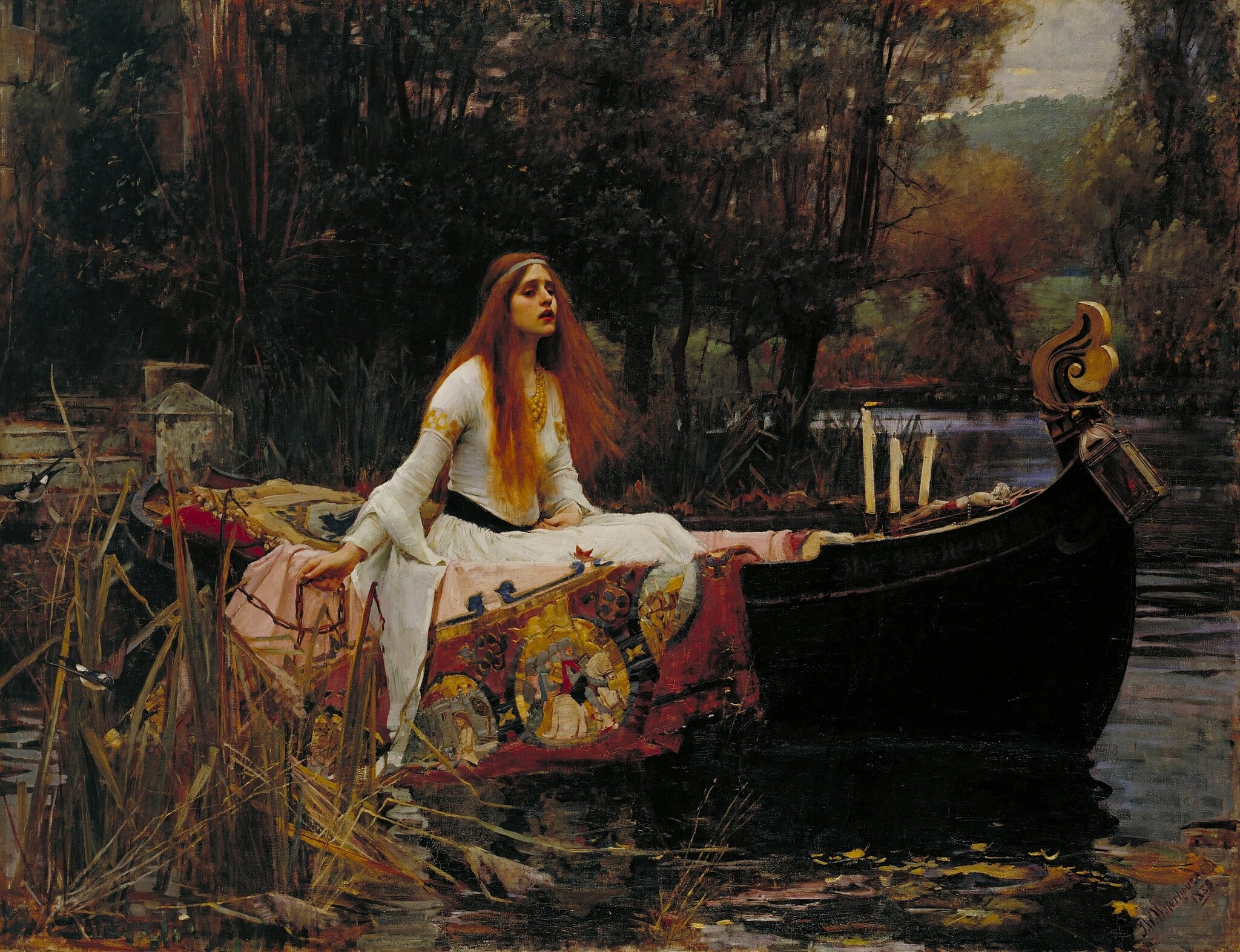
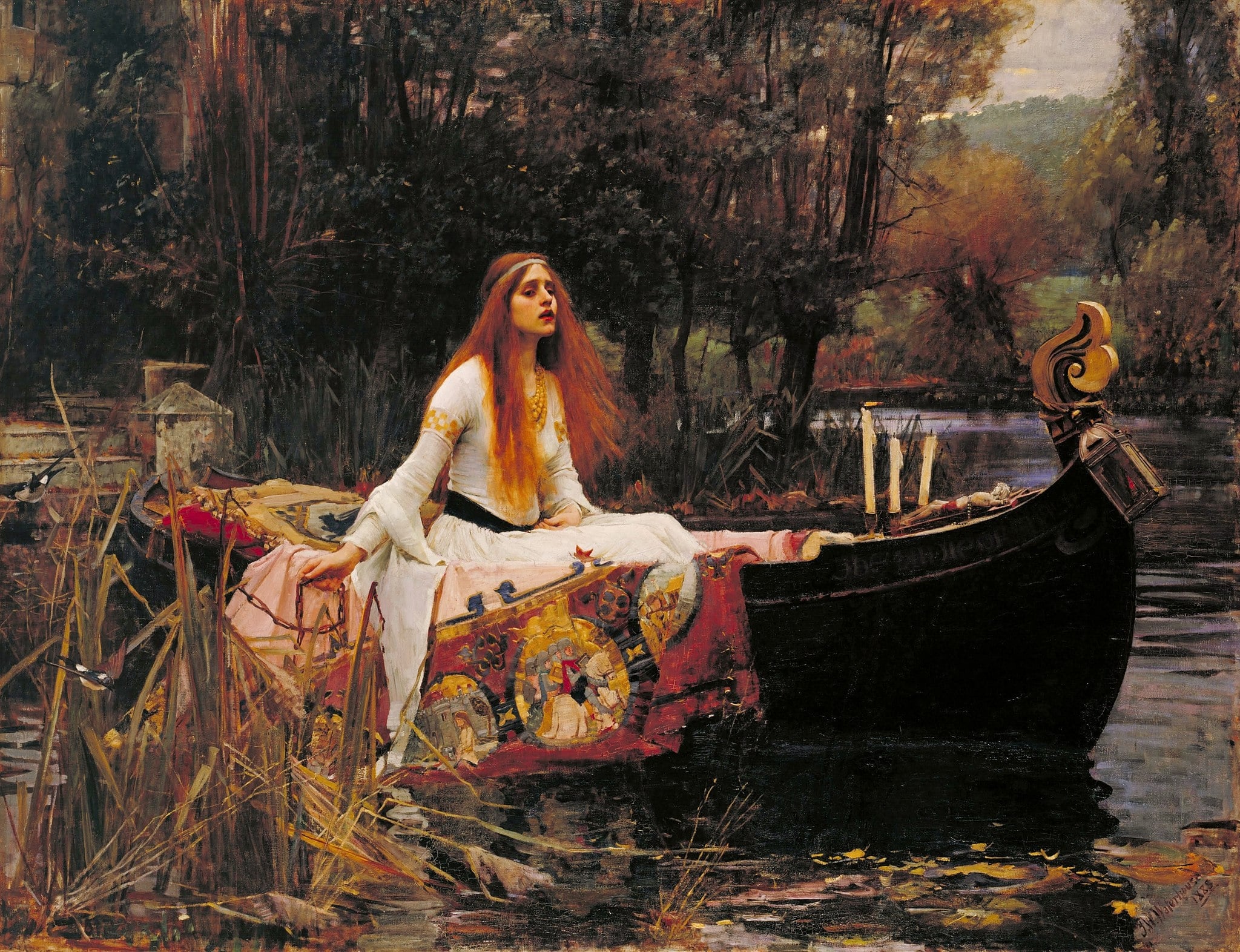
In The Lady of Shalott (1888) by John William Waterhouse, the moment of loosening the mooring is the painting’s fulcrum: the released chain, guttering candles, and tapestry spilling over the boat narrate a move from sheltered artifice to fatal reality. Waterhouse fuses late Pre-Raphaelite symbolism with an elegiac mood so that the unchaining reads as an act of will that simultaneously accepts destiny.
In The Lady of Shallot (1888) by John William Waterhouse, the heroine releases her chain and sets a black, coffinlike boat adrift. Extinguished candles, a small crucifix, and the tapestry trailing into the water frame the unmooring as a funerary voyage toward Camelot—an image of choosing experience over enclosure, where the chain’s release inaugurates the fatal journey it also makes possible.
Common Themes
Artworks Featuring This Symbol
The Lady of Shallot
John William Waterhouse (1888)
John William Waterhouse’s The Lady of Shallot (1888) fixes on the instant the cursed heroine releases her chain and sets her black, coffinlike boat adrift. The extinguished candles, the small crucifix, and the tapestry trailing into the water stage a <strong>funerary voyage</strong> toward Camelot and a choice of <strong>experience over enclosure</strong> <sup>[1]</sup><sup>[2]</sup>.
The Lady of Shalott
John William Waterhouse (1888)
John William Waterhouse’s The Lady of Shalott fixes the tragic instant when the cursed Lady chooses to loose her mooring and drift toward Camelot. The released <strong>chain</strong>, the guttering <strong>candles</strong>, and the tapestry spilling over the boat narrate a passage from sheltered artifice to fatal reality. Waterhouse fuses late <strong>Pre-Raphaelite</strong> symbolism with elegiac atmosphere to stage beauty caught between <strong>agency</strong> and <strong>doom</strong> <sup>[1]</sup><sup>[2]</sup><sup>[3]</sup>.