Scratched, backlit curls (halo of process) Symbolism
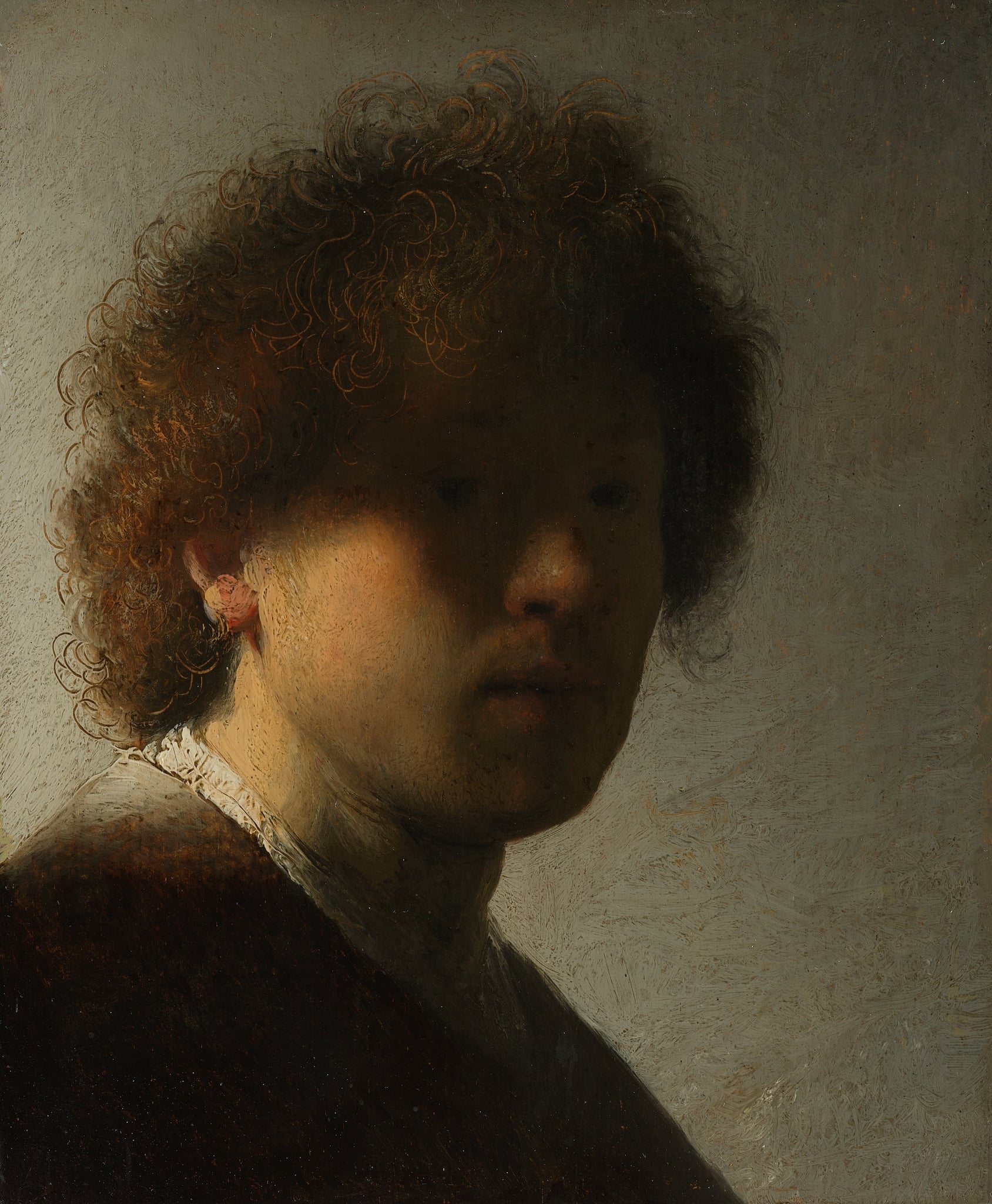
Scratched, backlit curls (halo of process) describes a head edged by intense light and articulated with visibly worked marks, so that illumination doubles as evidence of making. In art history, strong backlighting can heighten drama, but when those lit edges are literally scratched or incised, the effect foregrounds the artist’s hand and turns the halo into a sign of process. The result frames identity as something constructed in the act of painting rather than simply revealed by light.
Scratched, backlit curls (halo of process) in Self-portrait (with tousled hair)
In Self-portrait (with tousled hair) (c. 1628), Rembrandt van Rijn lets his face surface from darkness while the curls at the perimeter catch a raking highlight. Those backlit curls, worked as rough, scratched accents on a small oak panel, flare like a halo that makes the means of depiction conspicuous. Hair, stubble, and the slicing beam of light become the principal statements, so that process itself reads as self-description.
Within our collection, this single example shows the halo of process as a tool for shaping identity-in-formation: the visible scratches and edged light do not sanctify the sitter so much as declare how the image is made, binding authorship and appearance at the moment of emergence.