Sentinel Poplar Symbolism
In landscape painting, a solitary poplar often reads as a sentinel: a narrow, upright form that establishes a vertical link between earth and sky. Its hardy, long-lived presence connotes endurance, while its height and canopy register shifts in weather, underscoring vigilance amid change.
Sentinel Poplar in The Large Poplar II (Gathering Storm)
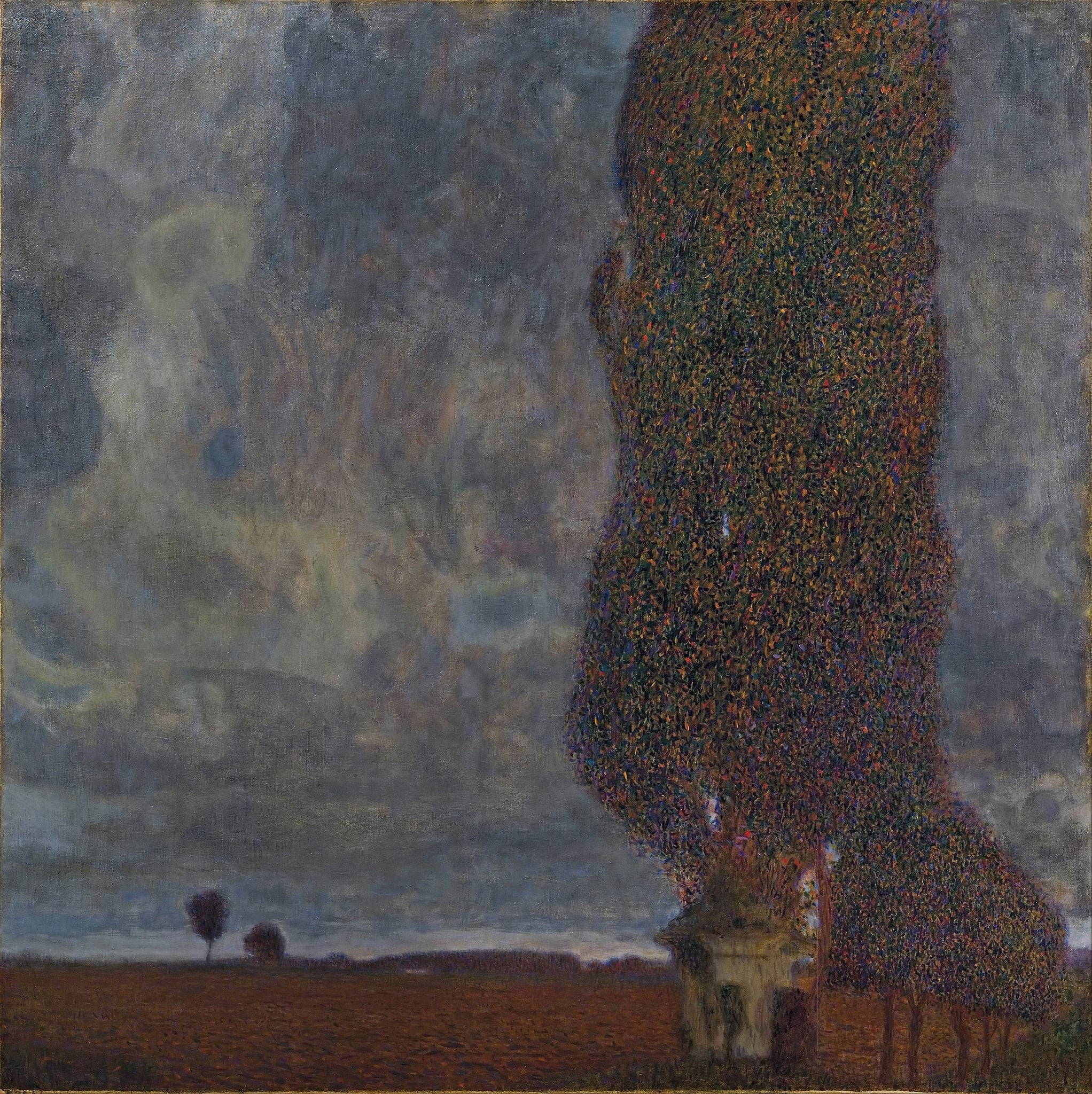
In Gustav Klimt’s The Large Poplar II (Gathering Storm) (1902/03), the monumental poplar at the right edge functions as a sentinel against a vast, charged sky. By devoting most of the square canvas to a near-monochrome atmosphere and setting a low, rust-toned plain and tiny chapel on the horizon, Klimt makes weather the protagonist; the poplar’s flecked, shimmering canopy becomes an ominous mosaic that mediates between land and turbulent heavens. The tree’s solitary, enduring stance marks vigilance at the threshold of the scene, holding its ground as the storm gathers.