Spiraling branches (volutes) Symbolism
Spiraling branches, or volutes, mark cyclical growth and recurrence, turning vegetal form into an ornamental rhythm. In Secessionist practice, these coils fuse nature and design to suggest a generative life-force that resists linear time. Their repeated curls operate as a visual engine that concentrates energies of becoming and return.
Spiraling branches (volutes) in Part of the Tree of Life (Part 5)
In Tree of Life (Part 4) (1910–1911), Gustav Klimt organizes a gilded axis of coiling branches; the mosaic-like bark and jewel-bright flower carpet root the image in fecund earth while the volutes spiral upward toward the abstract and the eternal. Within this ornamental system, the curls articulate growth alongside vigilance and mortality, signaled by amuletic eyes and a black raptor. In Part of the Tree of Life (Part 5) (1910–1911), Klimt intensifies this cosmos of spirals, studding the branches with Eyes of Horus, turquoise tesserae, and a solitary dark bird. Conceived as a full-scale working cartoon for the Stoclet dining-room mosaics—a key Secessionist Gesamtkunstwerk—the recurrent volutes serve as the panel’s generative grammar, condensing renewal, watchfulness, and finitude into a single decorative cadence.
Common Themes
Artworks Featuring This Symbol
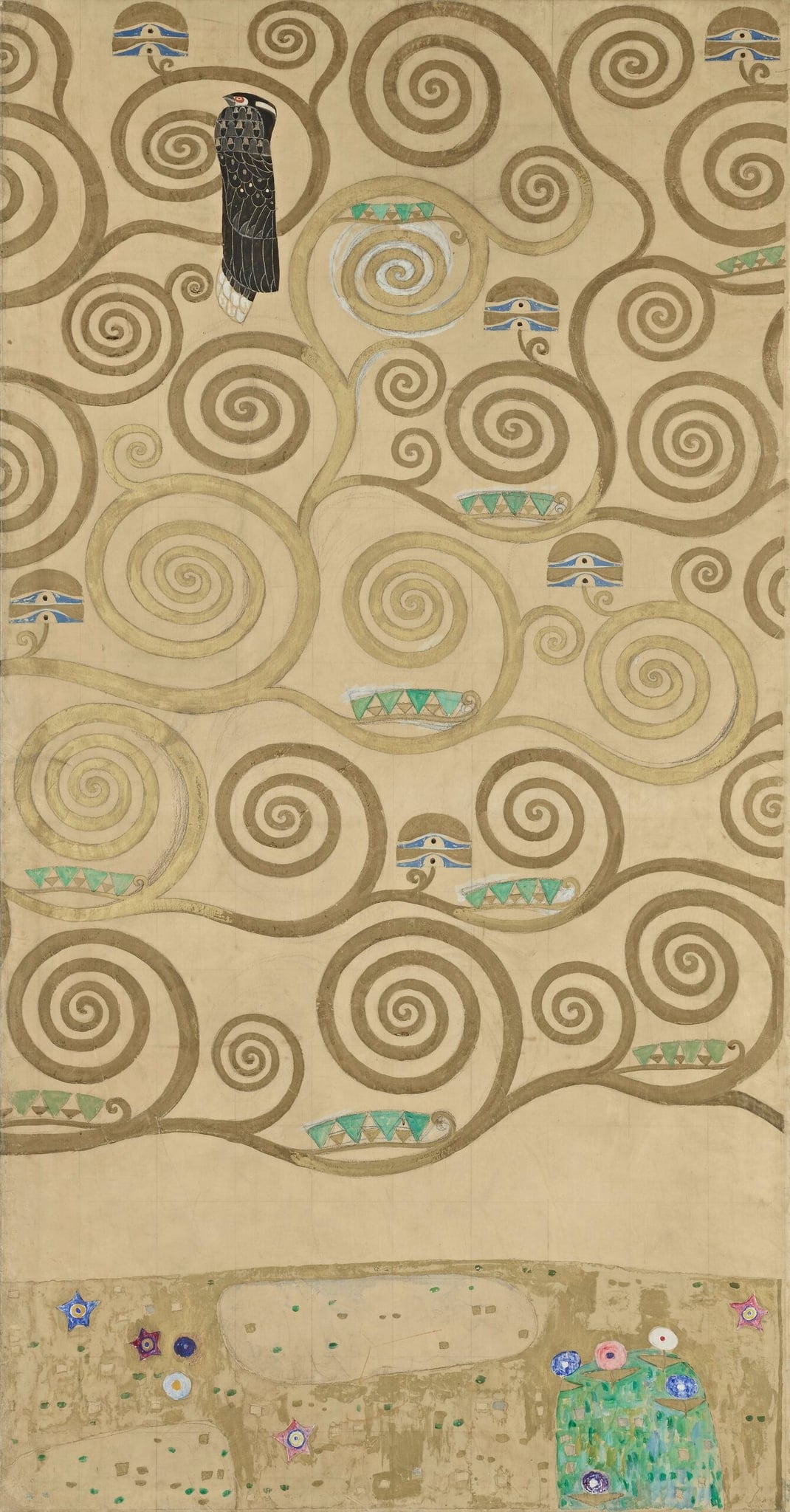
Part of the Tree of Life (Part 5)
Gustav Klimt (1910–1911)
In Part of the Tree of Life (Part 5), Gustav Klimt renders a cosmos of spiraling branches studded with <strong>Eyes of Horus</strong>, turquoise tesserae, and a solitary dark <strong>bird</strong>. The panel condenses themes of vigilance, renewal, and mortality into a decorative grammar that served as a full-scale working <strong>cartoon</strong> for the Stoclet dining-room mosaics—a key Secessionist <strong>Gesamtkunstwerk</strong> <sup>[1]</sup><sup>[2]</sup>.
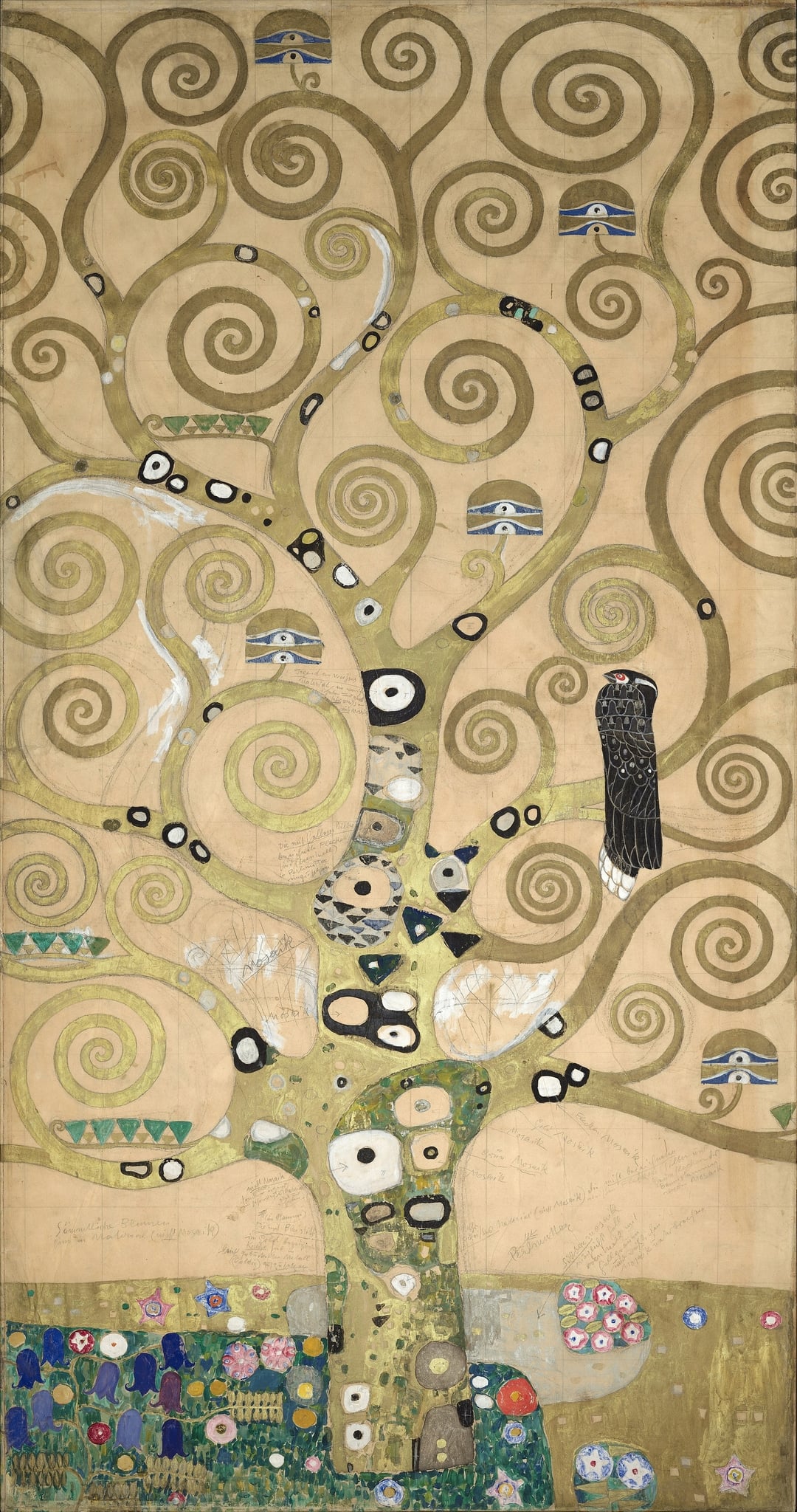
Tree of Life (Part 4)
Gustav Klimt (1910–1911)
Tree of Life (Part 4) stages a gilded axis where <strong>spiraling branches</strong>, <strong>amuletic eyes</strong>, and a <strong>black raptor</strong> compress growth, vigilance, and mortality into a single ornamental system. The mosaic-like bark and jewel-bright flower carpet root the image in fecund earth while the volutes coil upward toward the abstract and the eternal <sup>[1]</sup><sup>[6]</sup>.