Spire-like shards/obelisks Symbolism
Spire-like shards or obelisks are vertical, tapering forms that read as monumental markers, concentrating force and directing vision upward beyond human scale. In art historical discourse on the sublime, they often signal transcendence and distance, carrying associations of judgment and the austere, the sacred, or the ungraspable. Their pointed geometry diminishes human presence while asserting an impassive, enduring order.
Spire-like shards/obelisks in The Sea of Ice
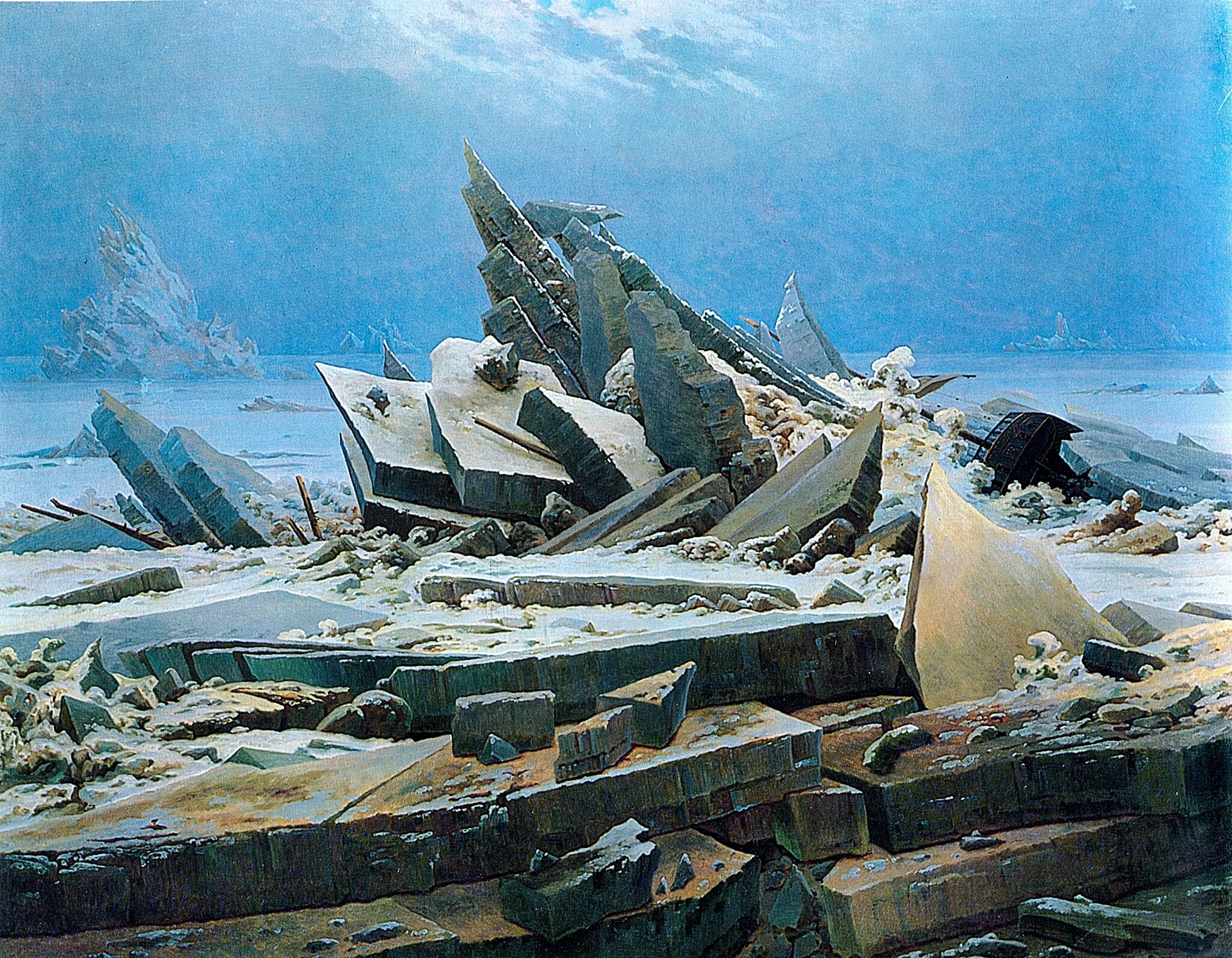
In Caspar David Friedrich’s The Sea of Ice (1823–1824), the pack ice rears into jagged, tapering ridges that read as spire-like shards—nature’s obelisks. This frozen architecture towers over and crushes a wrecked ship, redirecting the eye from human endeavor to an impassive beyond. The upward-thrusting forms stage the Romantic sublime as both awe and negation: the shards function as monumental signs of judgment and distance, emblematic of forces that exceed and silence human ambition.