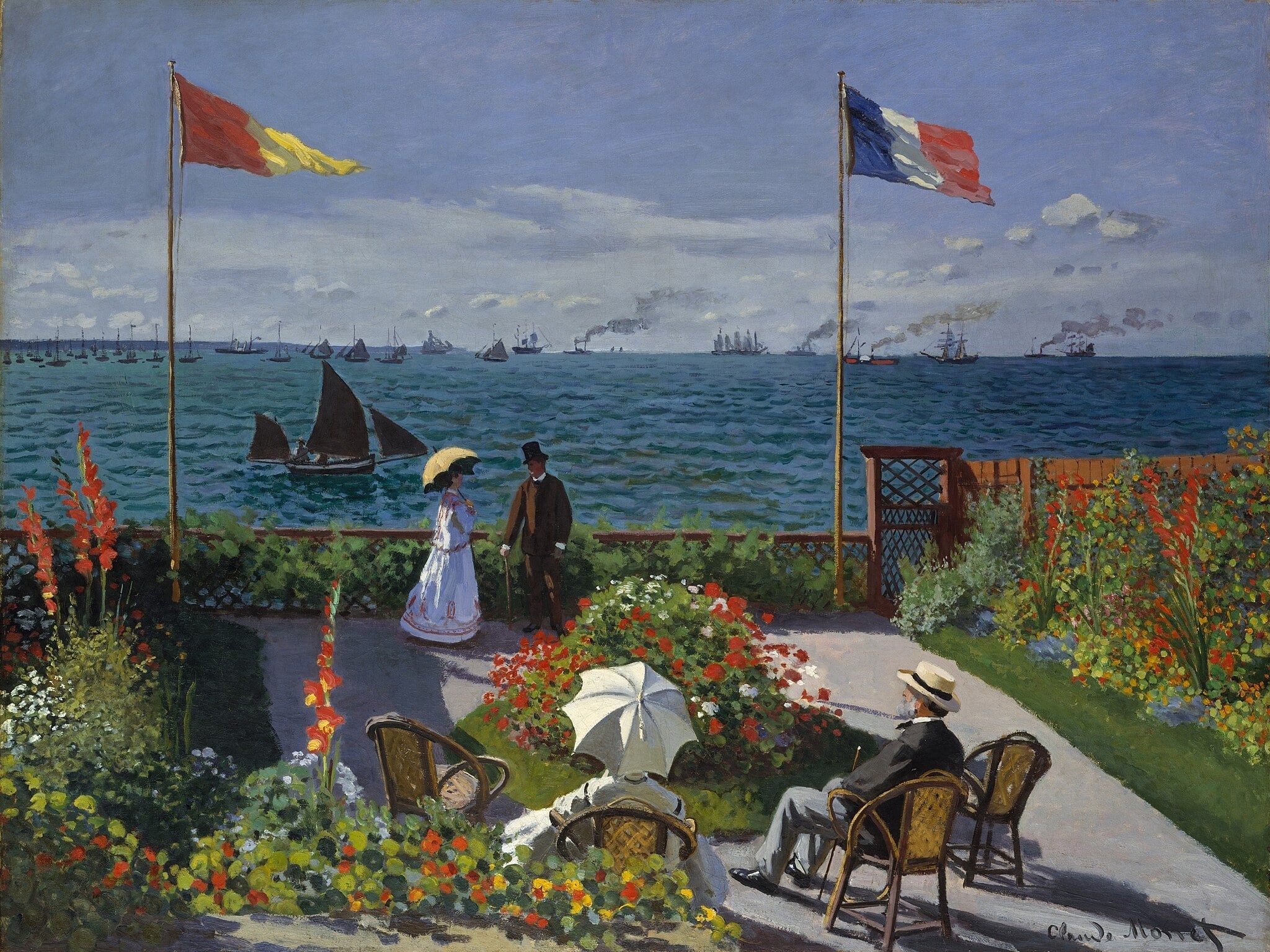
Steamships with smokestacks Symbolism
In 19th-century art, steamships with smokestacks signaled industrial modernity, speed, and the mechanization of travel and trade. Their funnels and smoke plumes served as a visual shorthand for steam power, often set against sails to mark a world in technological transition. Artists used them to place everyday views within expanding national and maritime networks.
Steamships with smokestacks in Garden at Sainte-Adresse
In Claude Monet’s Garden at Sainte-Adresse (1867), a bourgeois seaside terrace—wicker chairs, a parasol, and a promenade—faces a busy channel where sail and steam share the water. The steamships’ smokestacks register the harbor’s modernity, bringing the machinery of contemporary travel into a scene of private leisure. Framed by the French tricolor and a regatta or signal pennant, these smokestacks link domestic ease to national and nautical identity, turning the view into a succinct statement about modern life and its swift transitions.