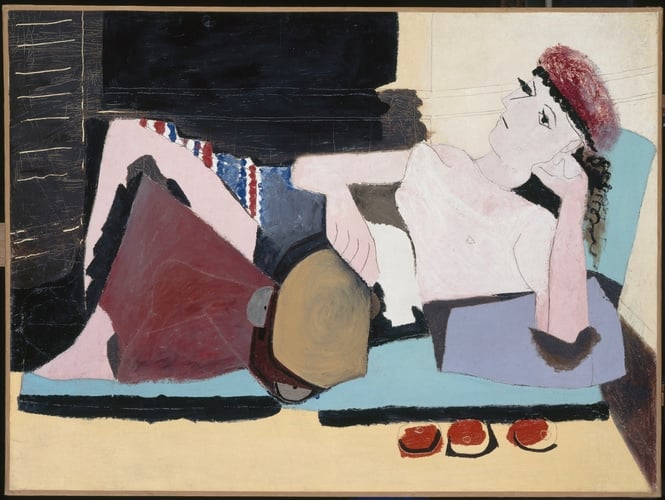
Tambourine (tympanum) Symbolism
The tambourine (tympanum) is a handheld frame drum long associated in European and Mediterranean art with dance, festivity, and ecstatic ritual. As a visual sign it identifies performers and conveys rhythm, sound, and bodily motion. Its circular form also offers artists a clear geometric motif that can organize a composition.
Tambourine (tympanum) in Femme au tambourin
In Pablo Picasso’s Femme au tambourin (1925), the tambourine functions as both a performer’s prop and a structuring device. Resting across the reclining figure’s lap, its circular form anchors the composition and establishes a measured visual rhythm with the three fruits aligned below. Picasso’s reduction of the body to bold planes and hard contours heightens this interplay, allowing the instrument’s simple round to articulate the work’s balance that weighs pleasure against performance.