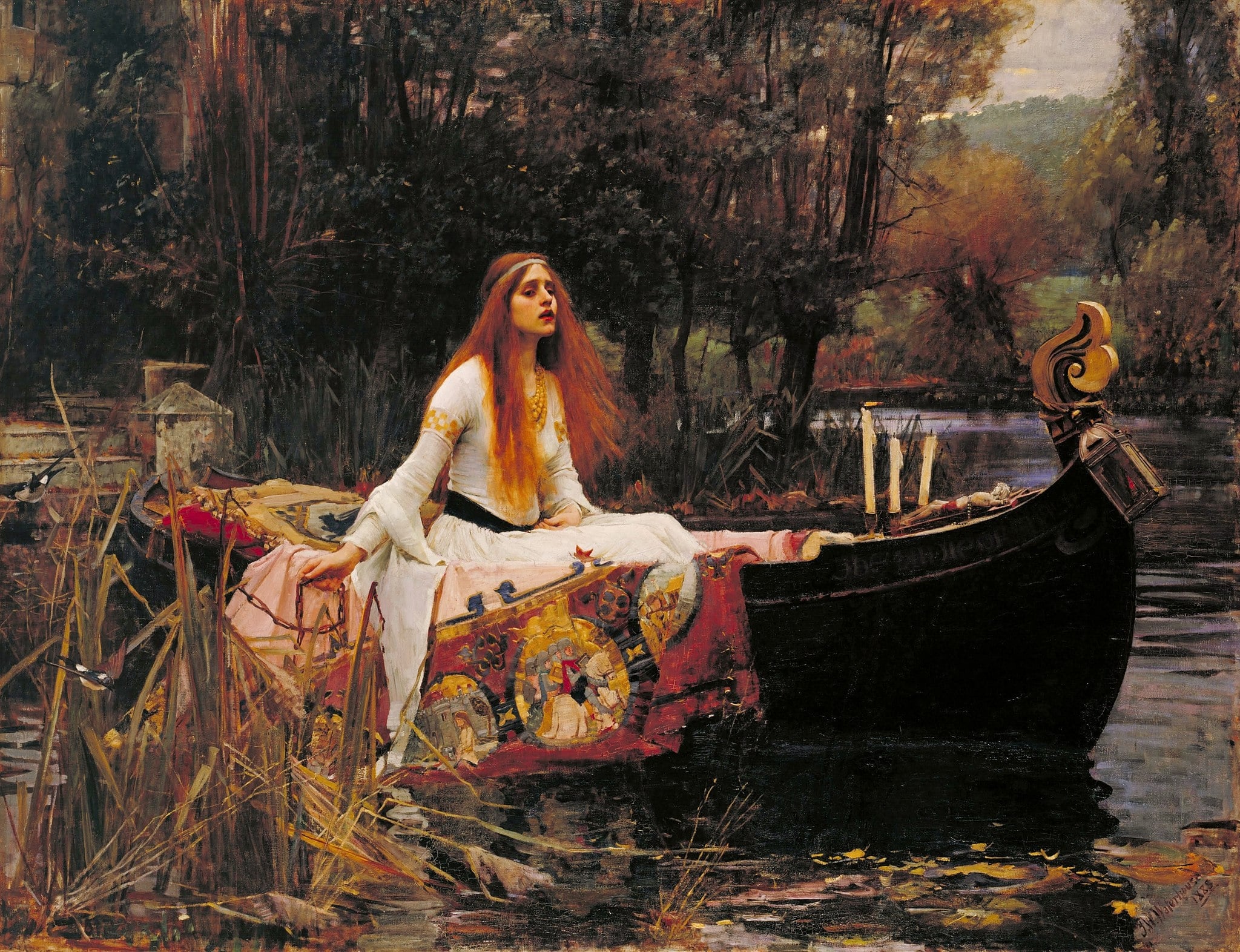
Tapestry Symbolism
In art, a tapestry often signifies the realm of images—crafted, mediated, and contained—set against the uncertainties of lived experience. In nineteenth-century symbolism, particularly among late Pre-Raphaelite painters, woven textiles can mark the threshold between representation and reality. When the textile is loosed or breached, it signals a decisive crossing with irrevocable consequences.
Tapestry in The Lady of Shalott
In John William Waterhouse’s The Lady of Shalott (1888), the tapestry spills over the boat as the cursed heroine loosens her moorings for Camelot. Placed alongside the released chain and guttering candles, it functions as the clearest emblem of a passage from sheltered artifice to fatal reality. In this work, the tapestry is not mere ornament but a narrative sign of the breach of mediated artistry and the doom it precipitates.