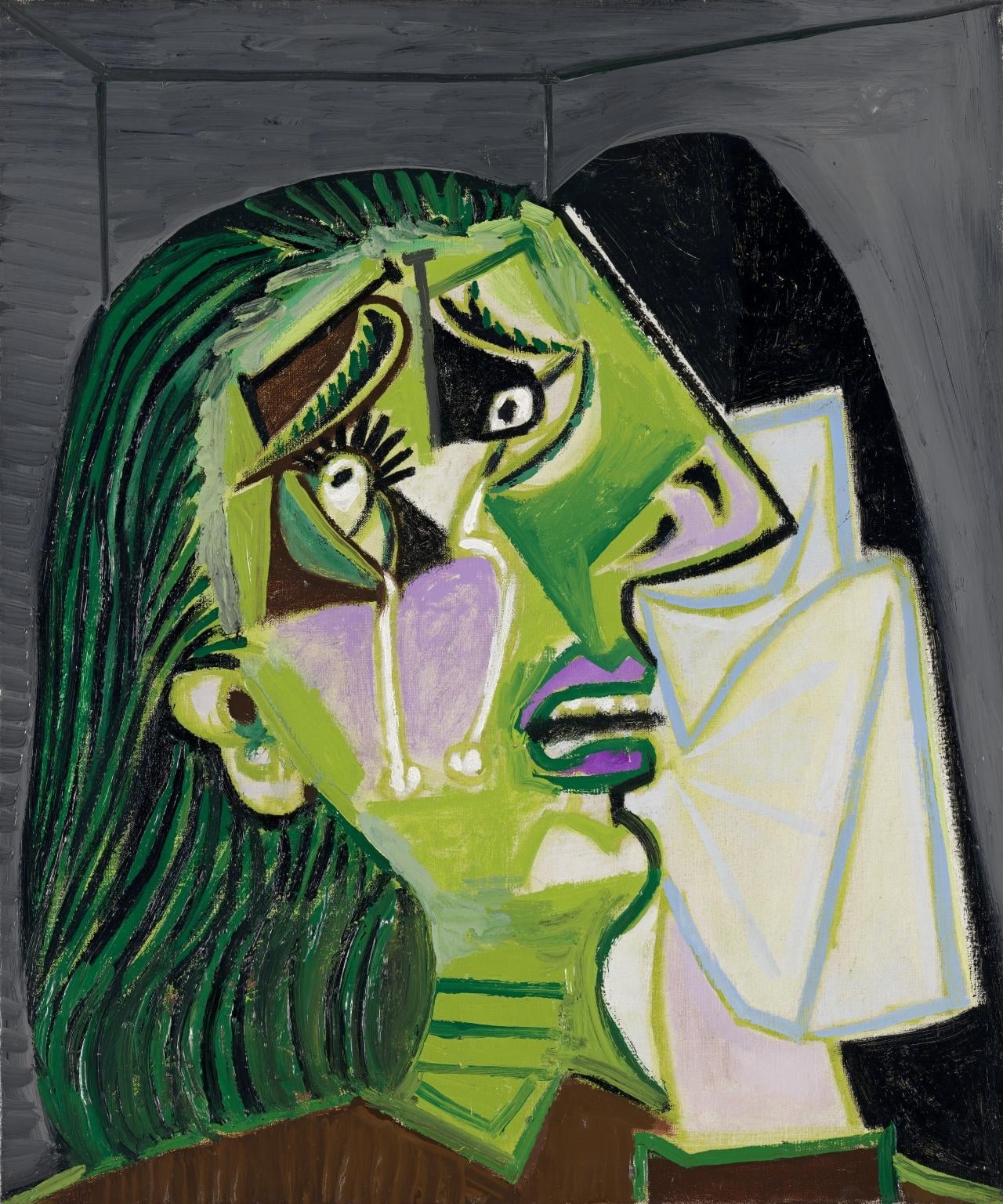
Triangular, thrusting nose Symbolism
The triangular, thrusting nose is a Cubist device that acts like a wedge, forcing contradictory viewpoints within a single head. Its hard angle conveys abrasion and psychological strain, turning the face into intersecting planes that signal fractured perception. In modern portraiture, this jutting form directs sightlines while destabilizing the image’s coherence.
Triangular, thrusting nose in The Weeping Woman
In The Weeping Woman (1937) by Pablo Picasso, the sharply triangular nose projects like a chisel between profile and frontal views, cleaving the head into shattered planes. This wedge organizes the acidic greens and purples into a tense hinge, directing the path of the jewel-like tears and amplifying the sense that grief has splintered vision itself. By thrusting forward, the nose becomes an emblem of pressure and rupture, translating private mourning into a public, fractured icon.