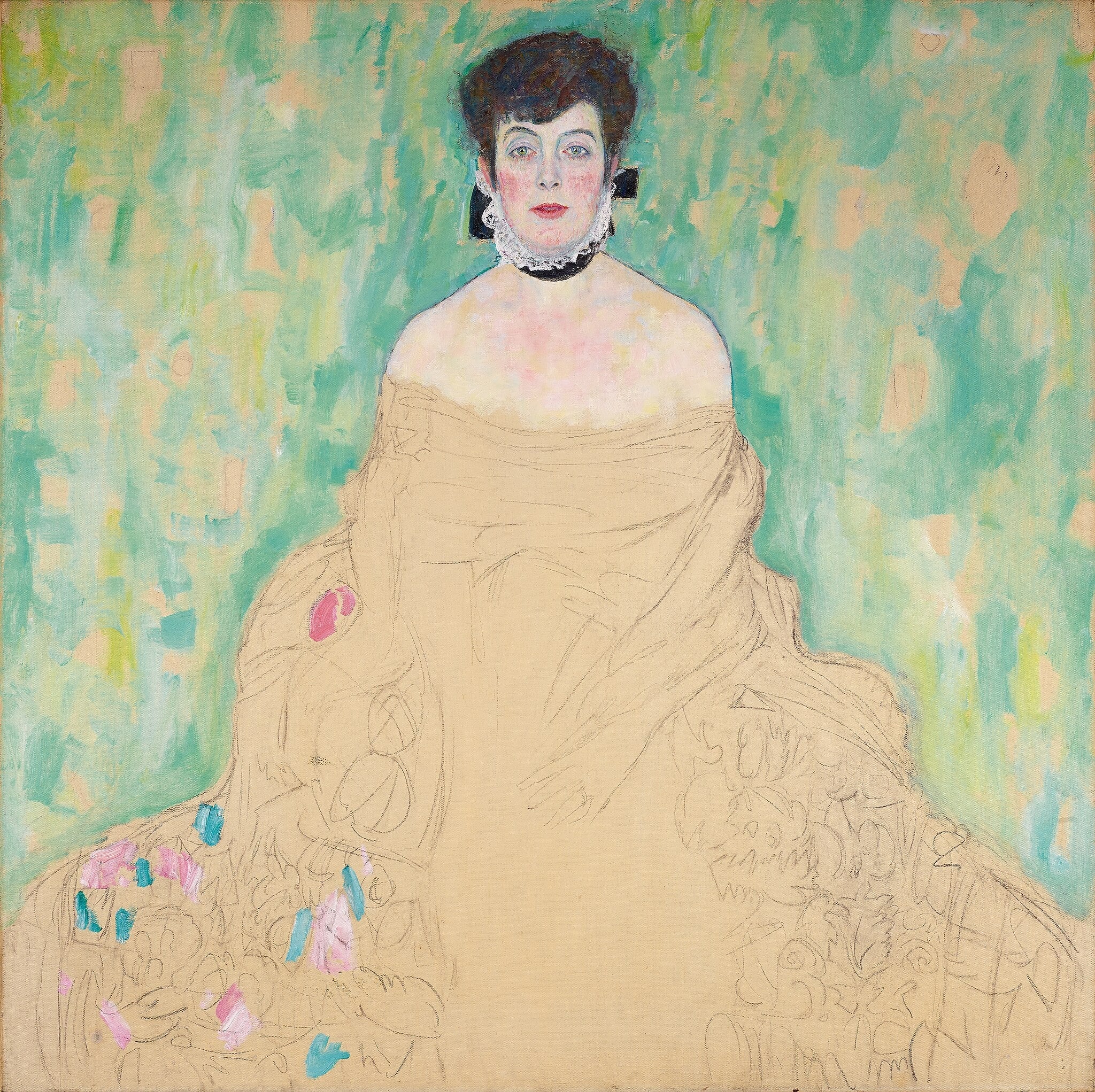
White lace ruff/collar Symbolism
A white lace ruff or collar traditionally signals cultivated elegance and propriety. By crisply encircling the neck, it frames the head and marks a boundary between living flesh and surrounding ornament, balancing sensual presence with restraint. Its clean whiteness often serves as a visual hinge that organizes the portrait.
White lace ruff/collar in Amalie Zuckerkandl
In Gustav Klimt’s Amalie Zuckerkandl (1917–1918), the white lace collar is among the most fully resolved elements, set before a cool, mottled green ground and paired with a black choker. It neatly rims the neck to frame the sitter’s flushed face and direct gaze, projecting decorum even as it heightens the intimate presence of the head and shoulders. Because the gown below remains a scaffold of graphite and thin washes, the collar functions as a decisive threshold: the crisp border between the vividly realized self and ornament that is still only potential, concentrating the portrait’s poise, restraint, and clarity of address.