White Linen Sheets Stained with Blood Symbolism
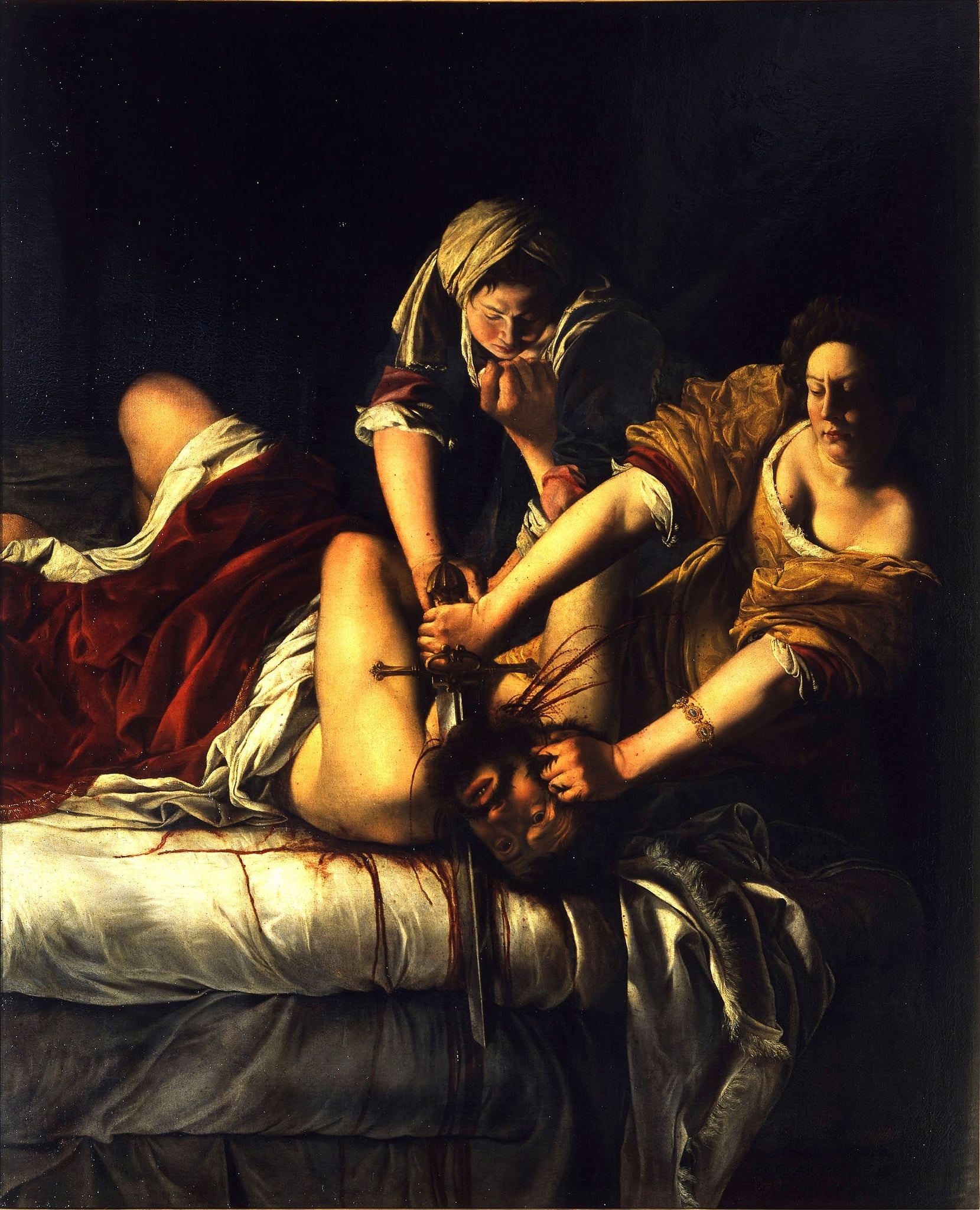
As seen in Artemisia Gentileschi’s Baroque Judith Slaying Holofernes (c. 1612–13), white linen sheets stained with blood signal the collision of purity and violence within a domestic setting. Their stark whiteness makes the consequences of force unmistakable, turning a marker of virtue into visible evidence of decisive, moral action.
White Linen Sheets Stained with Blood in Judith Slaying Holofernes
In Artemisia Gentileschi’s Judith Slaying Holofernes (c. 1612–13), the white bedding concentrates attention on the scene’s consequences. Set in a void of darkness and struck by hard light, the clean linen registers blood as it darkens the surface, transforming a familiar domestic textile into a record of justice. As Judith and her maid overpower Holofernes, the stained sheets underscore how righteous violence—enacted through female collaboration—carries a palpable, inescapable cost.