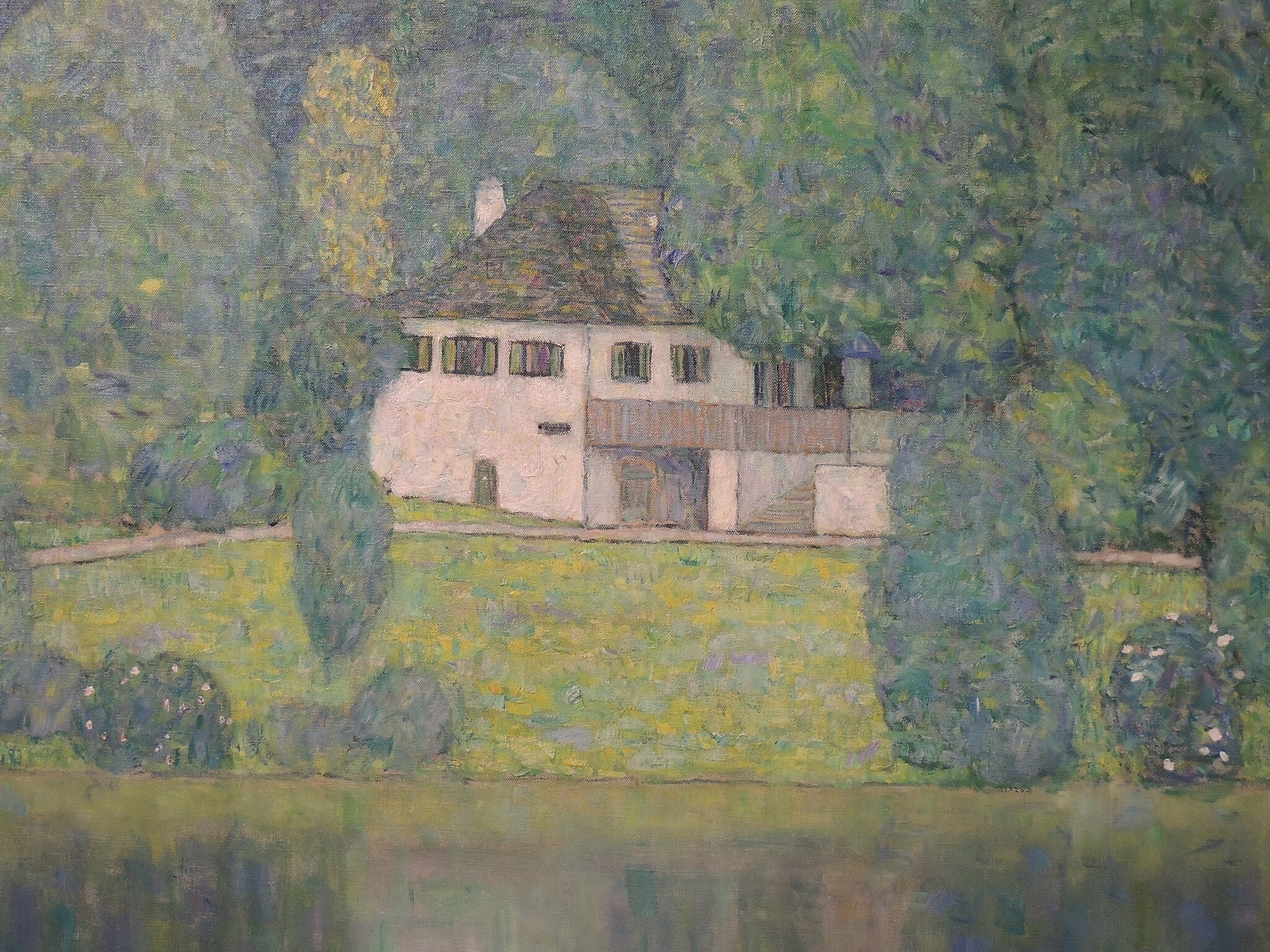
Window rhythm Symbolism
Window rhythm refers to the repeated placement and spacing of windows across a building’s facade, creating a clear visual meter within an image. This cadence organizes the viewer’s gaze and regulates the exchange between inside and outside, turning built form into a legible pattern. In art, such rhythms can make architecture read as both structure and ornament, shaping controlled perception at the picture plane.
Window rhythm in Litzlbergkeller
In Gustav Klimt’s Litzlbergkeller (1915–1916), the inn’s pale, rectangular facade is punctuated by evenly spaced windows whose rhythm sets the measure of the composition. Their quiet beat answers the vertical ranks of trees and the horizontal band of water, aligning architectural order with natural screens and the lake’s calm surface. By fusing the window grid with surrounding foliage into a square, shimmering field, Klimt converts direct observation into patterned memory: the windows mark a threshold rather than an accessible interior, holding vision at the surface where interior and exterior meet.