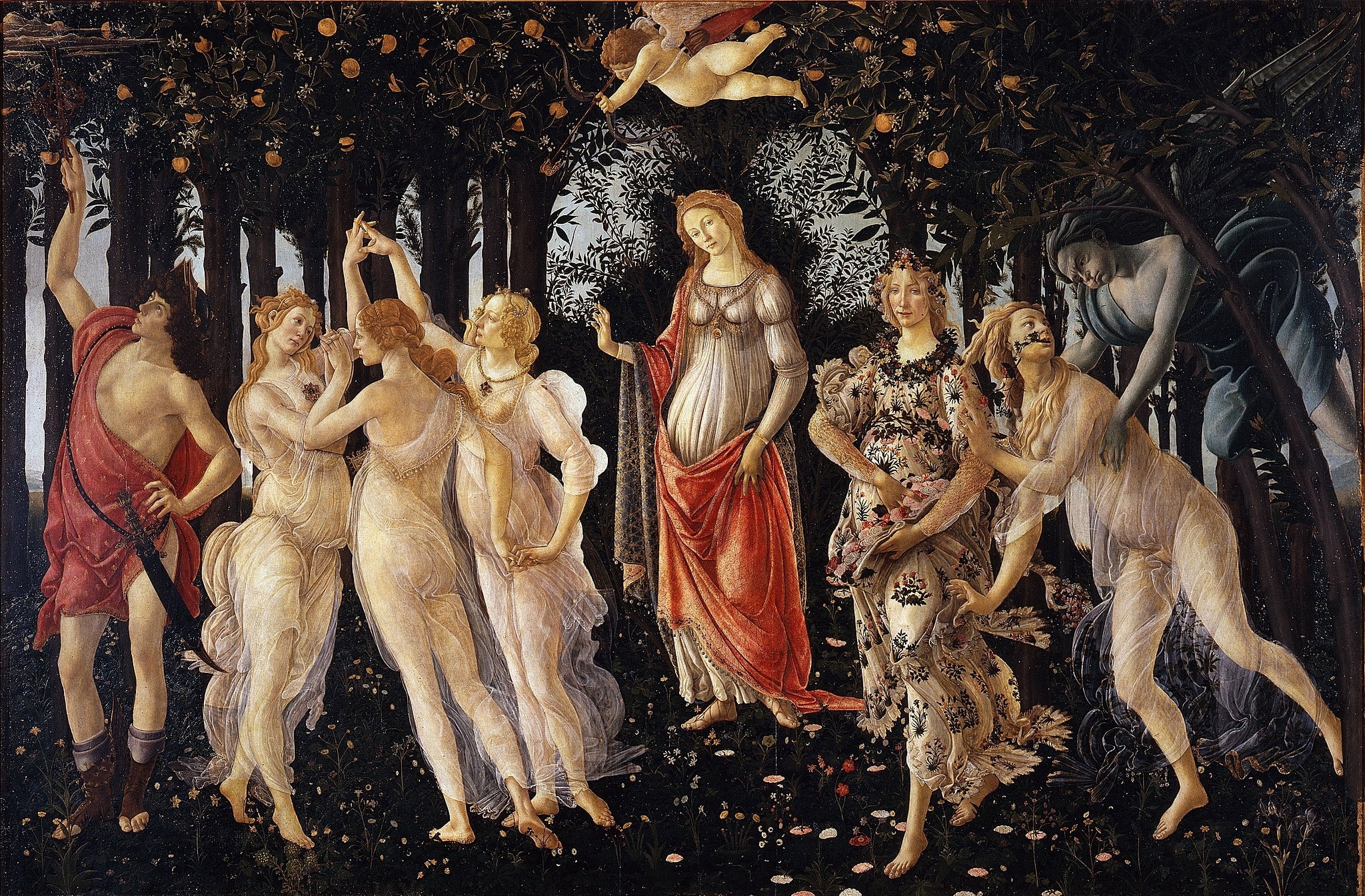
Zephyrus, Chloris, and the metamorphosis into Flora Symbolism
In classical myth and its Renaissance reception, Zephyrus’s pursuit of the nymph Chloris and her metamorphosis into the flower-bearing Flora express the passage from desire to generative abundance. Artists use this sequence to visualize the advent of spring, linking erotic impulse with fecundity, renewal, and the harmonizing force of love.
Zephyrus, Chloris, and the metamorphosis into Flora in Primavera
In Primavera (c. 1480 (1477–1482)) by Sandro Botticelli, the symbol appears as a clear narrative sequence: Zephyrus pursues Chloris, who blossoms into Flora. Set within an orange and laurel grove, and framed by Venus’s presiding presence as Cupid looses an arrow and Mercury dispels the last clouds, the metamorphosis anchors the painting’s celebration of spring. Botticelli amplifies the transformation’s meaning with a carpet of more than a hundred identifiable flowers and an ordered orchard, translating raw desire into fertility, peace, and prosperity under Venus’s benign rule.