Craft, skill, and technique
Featured Artworks
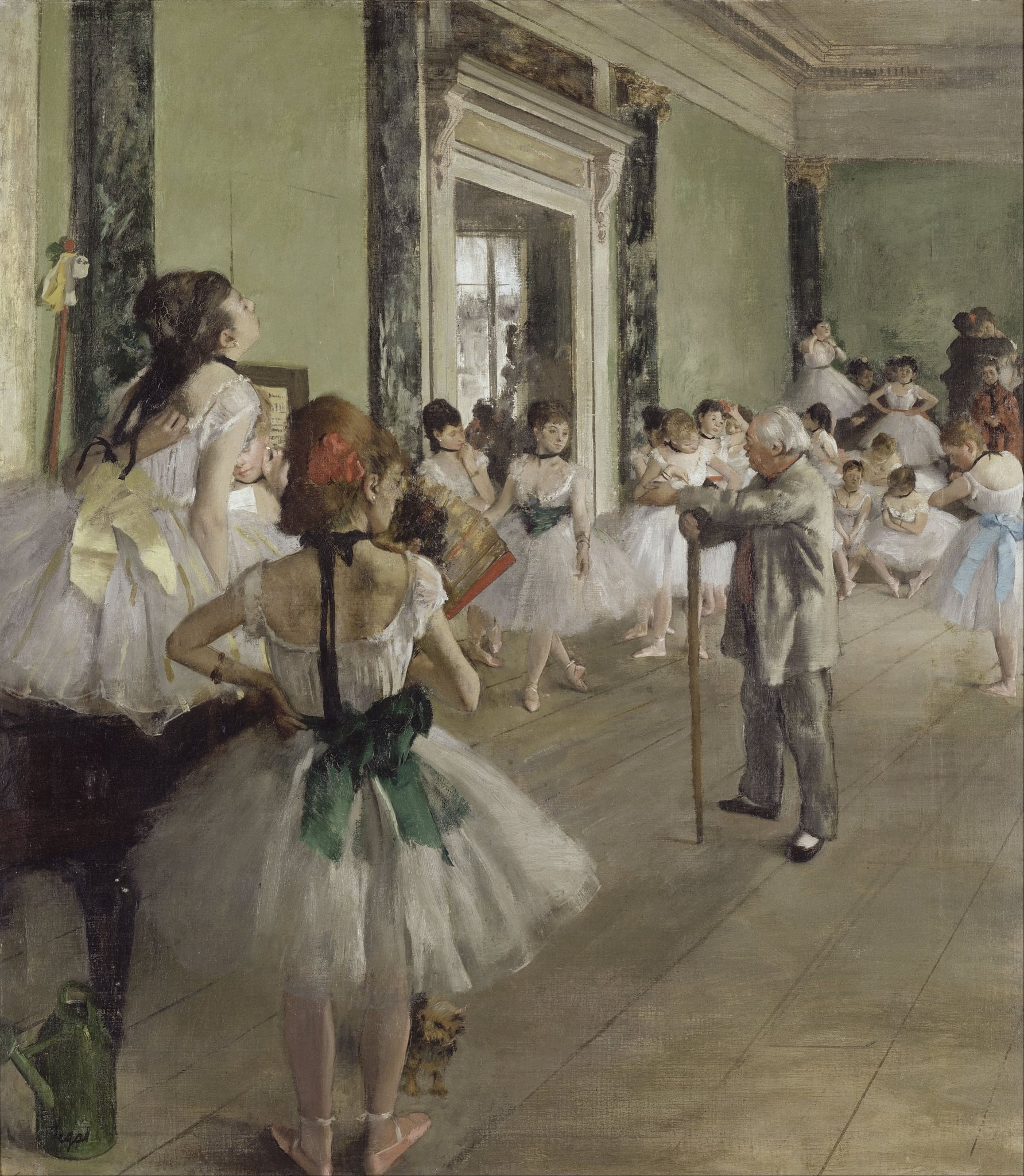
The Ballet Class
Edgar Degas (1873–1876)
<strong>The Ballet Class</strong> shows the work behind grace: a green-walled studio where young dancers in white tutus rest, fidget, and stretch while the gray-suited master stands with his cane. Degas’s diagonal floorboards, cropped viewpoints, and scattered props—a watering can, a music stand, even a tiny dog—stage a candid vision of routine rather than spectacle. The result is a modern image of discipline, hierarchy, and fleeting poise.
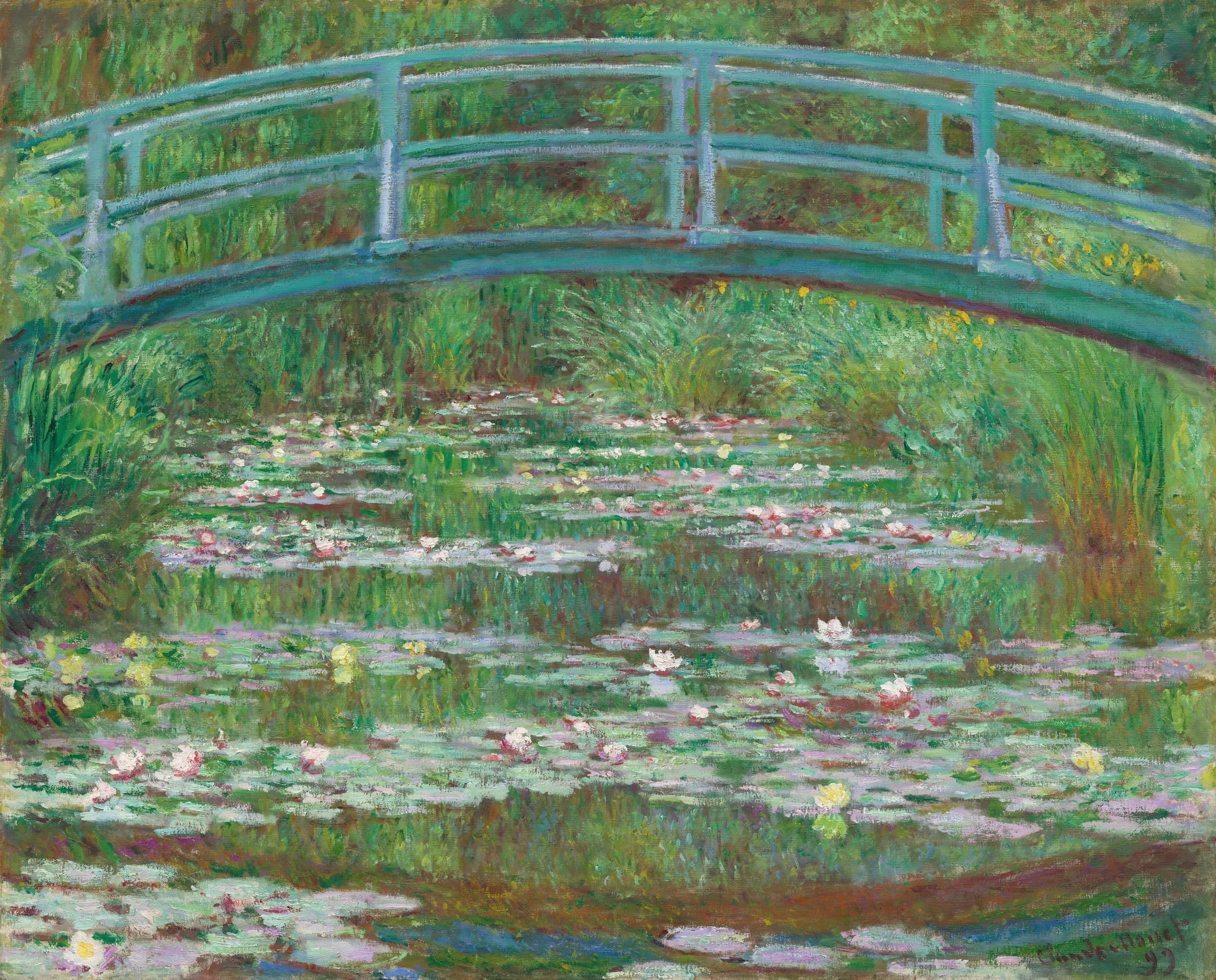
The Japanese Footbridge
Claude Monet (1899)
Claude Monet’s The Japanese Footbridge turns his Giverny garden into an <strong>immersive field of perception</strong>: a pale blue-green arc spans water crowded with lilies, while grasses and willows dissolve into vibrating greens. By eliminating the sky and anchoring the scene with the bridge, Monet makes <strong>reflection, passage, and time</strong> the picture’s true subjects <sup>[1]</sup><sup>[2]</sup>.
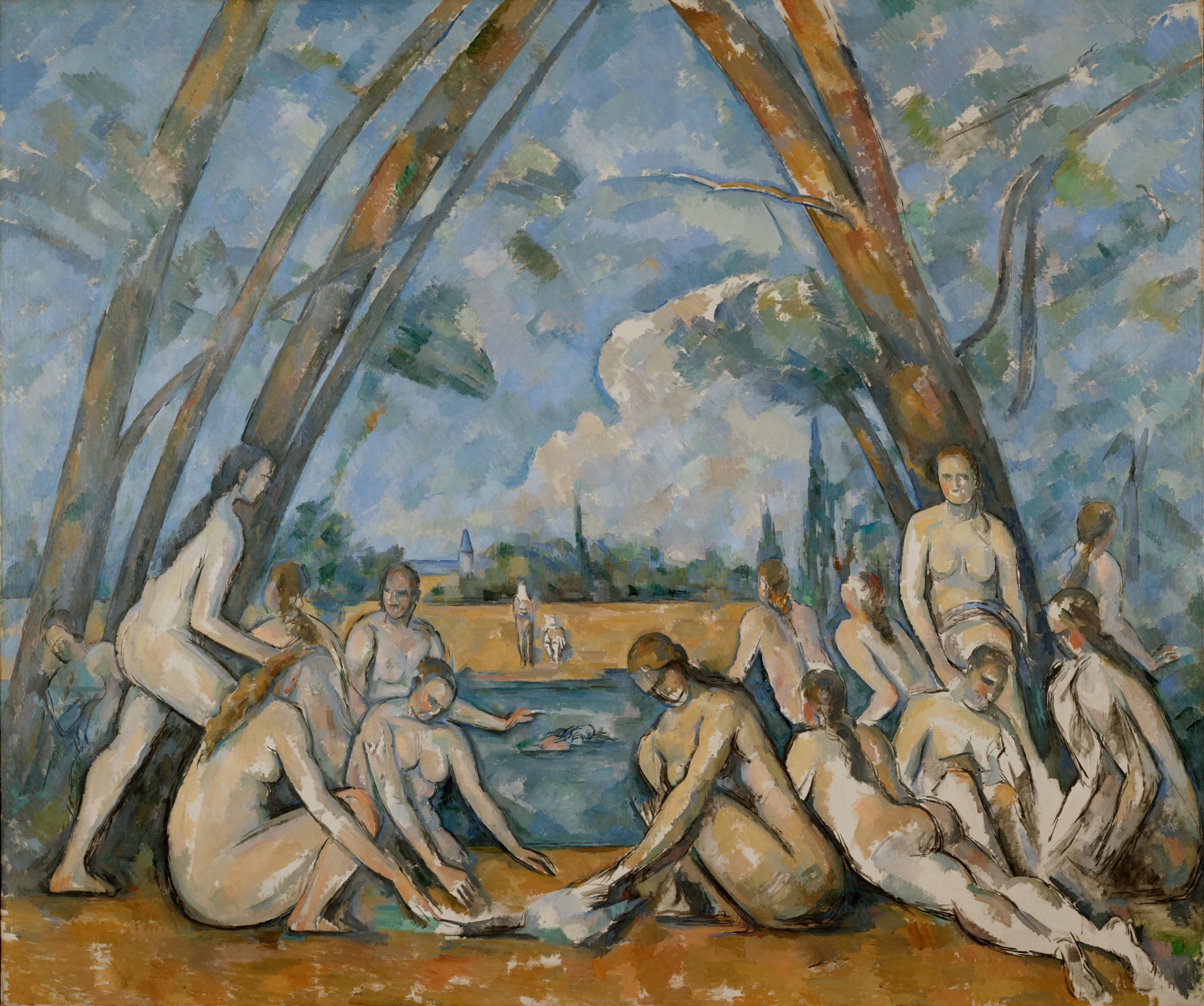
Bathers by Paul Cézanne: Geometry of the Modern Nude
Paul Cézanne
In Bathers, Paul Cézanne arranges a circle of generalized nudes beneath arching trees that meet like a <strong>natural vault</strong>, staging bathing as a timeless rite rather than a specific story. His <strong>constructive brushwork</strong> fuses bodies, water, and sky into one geometric order, balancing cool blues with warm ochres. The scene proposes a measured <strong>harmony between figure and landscape</strong>, a culmination of Cézanne’s search for enduring structure <sup>[1]</sup><sup>[2]</sup>.