Explore Meaning, Value, and Details in Great Paintings
Discover famous artworks, understand what they mean, see how much they are worth, and zoom in on the details that matter.
Featured Value Pages
Most Expensive by Artist
Explore Painting Details
The Nighttime Crowd
in Boulevard Montmartre at Night by Camille Pissarro
Seen from Pissarro’s hotel window, the Boulevard Montmartre becomes a river of motion: pedestrians, cabs, and omnibuses fused into flickering strokes and pricks of light. The nighttime crowd is both subject and sensor, registering new electric illumination against the warmer glow of shopfronts and carriage lamps, and turning the boulevard into a modern stage.
The Gaslights
in Boulevard Montmartre at Night by Camille Pissarro
In Pissarro’s Boulevard Montmartre at Night, the true “gaslights” are the warm, amber shop and café windows that fringe the sidewalks, not the cool orbs marching down the boulevard’s center. Their glow turns the street into a stage of urban commerce and sociability while Pissarro counterposes them with the bluish, newly electric streetlamps to visualize a city remade by modern light.
The Cradle Veil
in The Cradle by Berthe Morisot
The cradle veil in Berthe Morisot’s The Cradle turns a humble nursery net into the painting’s emotional and visual hinge. Drawn by the mother between viewer and infant, it asserts privacy, filters light, and binds mother and child along a luminous diagonal—defining Morisot’s modern vision of caregiving.
The Mother's Gaze
in The Cradle by Berthe Morisot
In The Cradle (1872), Berthe Morisot turns a quiet look into the engine of the painting: a mother’s lowered gaze that meets her sleeping child across a gauzy veil. This tender, watchful focus binds the pair in a strict diagonal and asserts a modern ethics of privacy, recasting motherhood as a serious, contemporary subject.
Featured Study Prints
Famous artworks paired with close readings of the details that make them unforgettable.

Full painting + study sheet
The Convex Mirror in The Arnolfini Portrait
Jan van Eyck
Detail study: Convex mirror with reflected figures and Passion roundels
$79
View study print →
Full painting + study sheet
The Scallop Shell in The Birth of Venus
Sandro Botticelli
Detail study: Scallop shell
$79
View study print →
Full painting + study sheet
The Almost-Touching Hands in The Creation of Adam
Michelangelo
Detail study: Almost-touching hands (and micro-gap)
$79
View study print →
Full painting + study sheet
The Glassy Bubbles in The Garden of Earthly Delights
Hieronymus Bosch
Detail study: Glassy Bubbles and Shells
$79
View study print →Featured Artworks
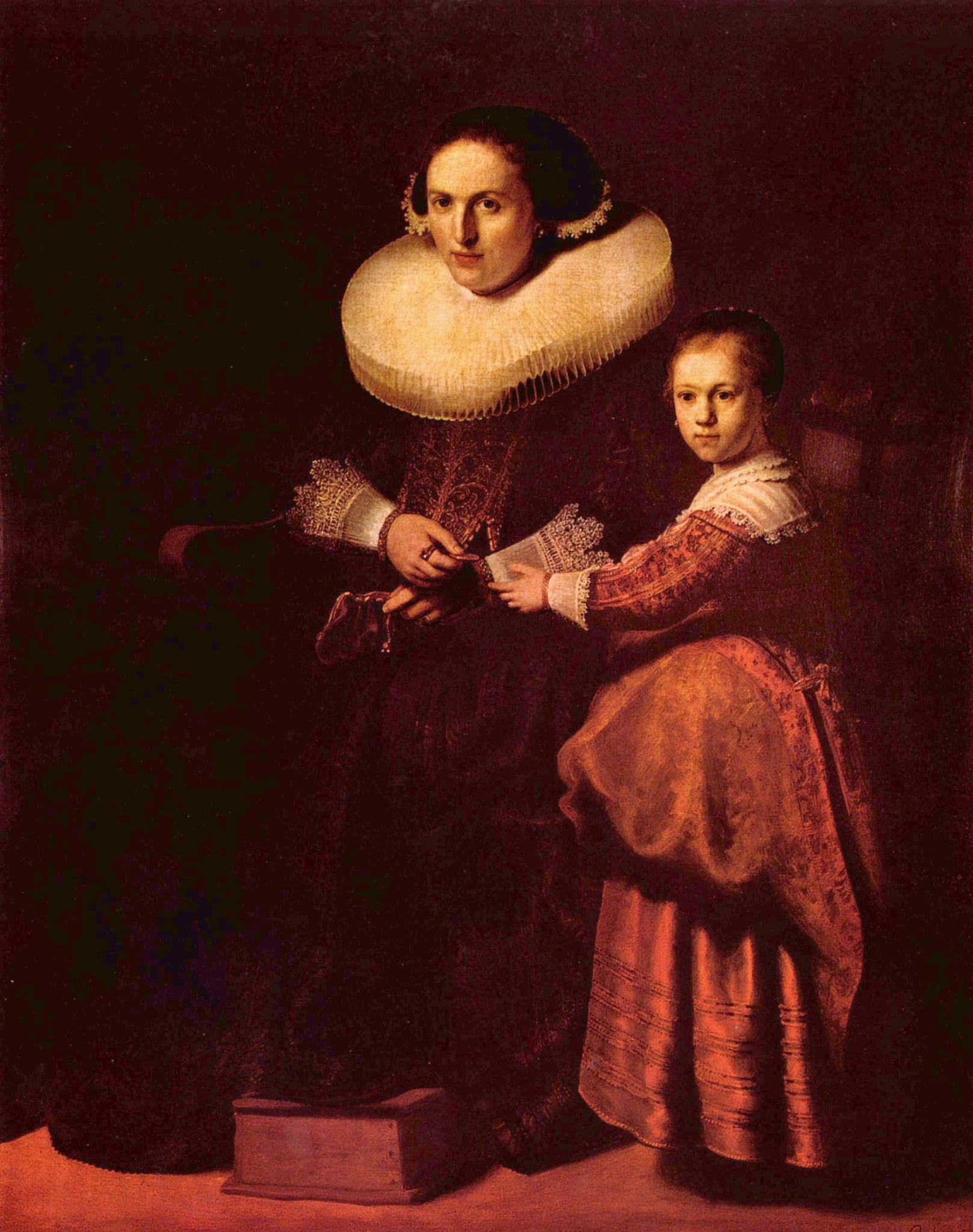
Portraits of Susanna van Collen and her Daughter Anna
Rembrandt van Rijn (c. 1632–33)
A mother and daughter step out of darkness, their faces, hands, and fabrics seized by Rembrandt’s <strong>chiaroscuro</strong>. The mother’s monumental <strong>ruff</strong> and sober black gown declare <strong>prosperity with restraint</strong>, while gloves, a clasped hand, and a book encode civility, lineage, and piety <sup>[1]</sup><sup>[4]</sup><sup>[5]</sup>.
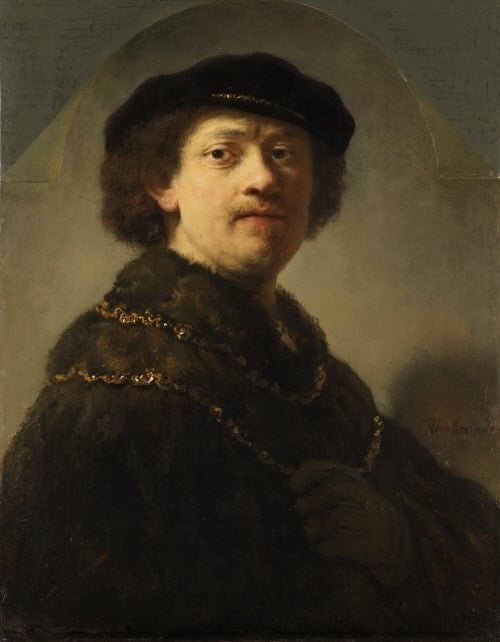
Self-Portrait in a Black Cap
Rembrandt van Rijn (1637)
In Self-Portrait in a Black Cap, Rembrandt van Rijn stages himself in <strong>sumptuous fur</strong>, a <strong>black cap</strong>, and a <strong>glinting gold chain</strong>, then cuts the figure from dusk with incisive light. The steady gaze and slightly parted lips meet the viewer while a <strong>gloved hand lifts the chain</strong>, redirecting status back to the artist’s own hand. Painted c. 1637 in oil on oak, the work now has an <strong>arched top</strong> from a later reshaping of the panel <sup>[1]</sup>.
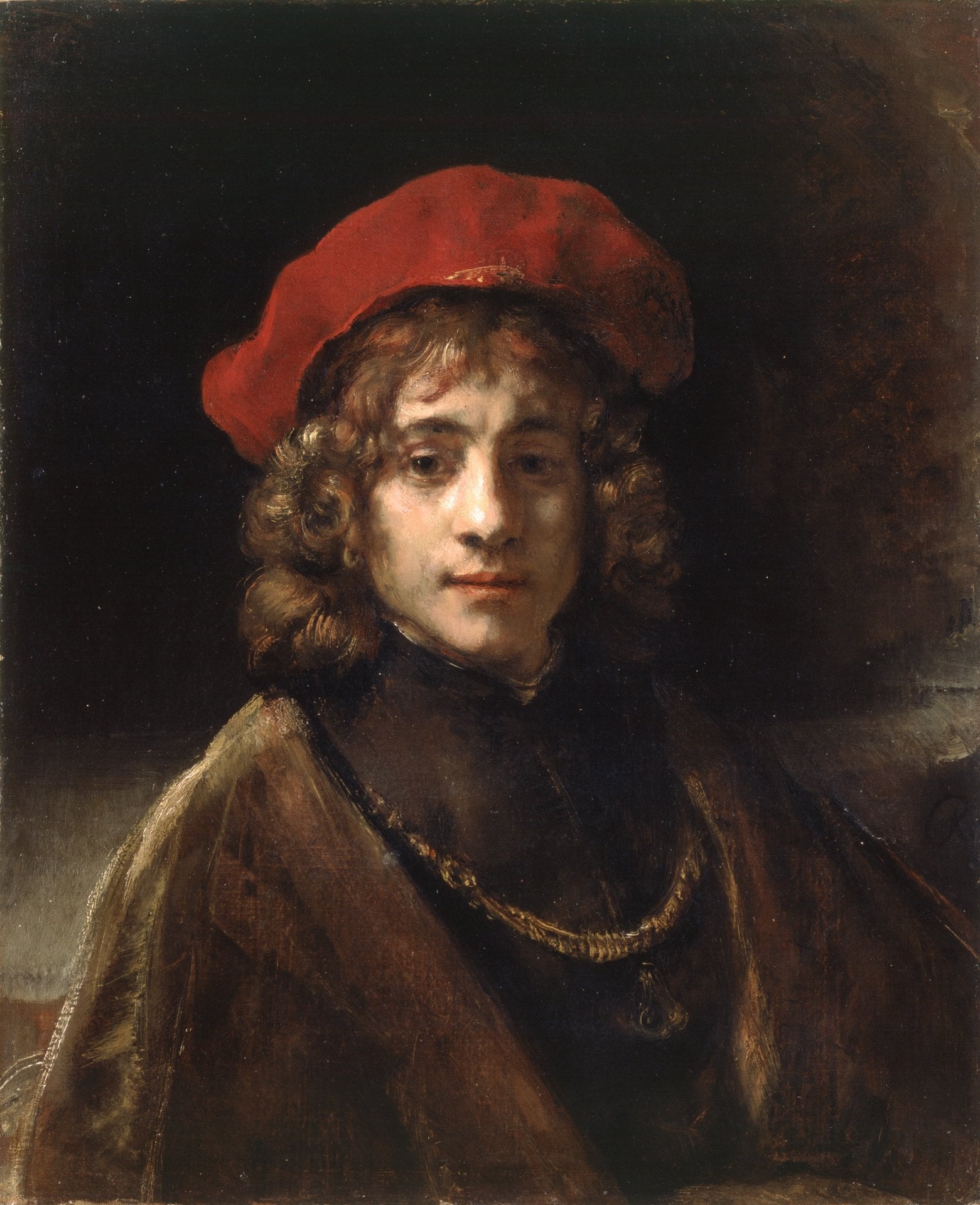
Titus, the Artist's Son
Rembrandt van Rijn (c. 1657)
Rembrandt van Rijn’s Titus, the Artist’s Son is a poised, half-lit study of youth, where <strong>tender chiaroscuro</strong> gathers on the face and crimson cap while the rest dissolves into shadow. The <strong>fancy Venetian costume</strong>, notably the red beret and simple gold chain, elevates a private likeness into a meditation on dignity and becoming <sup>[1]</sup><sup>[2]</sup>.
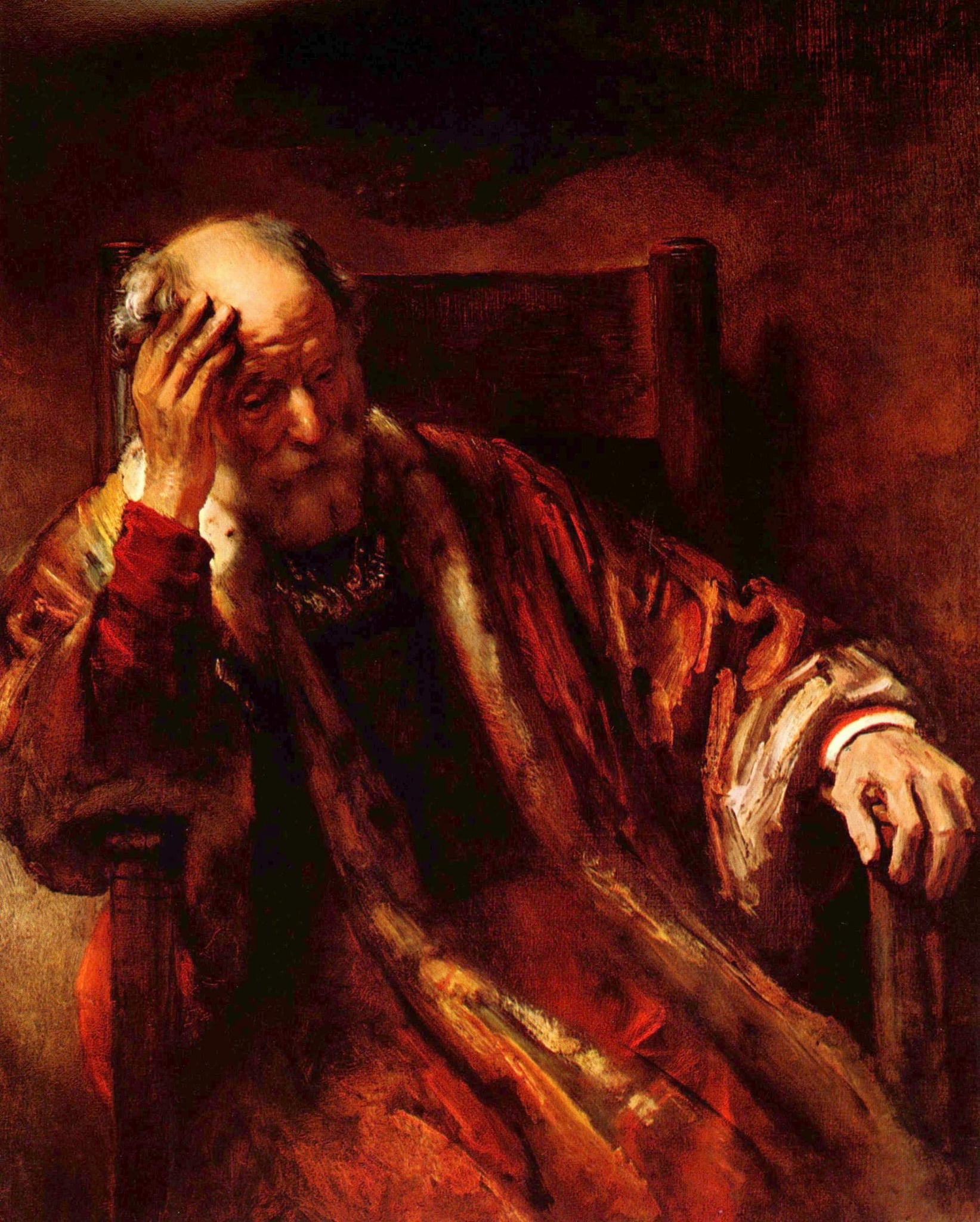
An Old Man in an Armchair
Rembrandt van Rijn (1652 (signed; generally dated 1650s))
An Old Man in an Armchair stages a solitary figure caught between <strong>worldly dignity</strong> and <strong>inner reckoning</strong>. A warm beam isolates the bald head and right hand while the robe dissolves into <strong>rough, animated brushwork</strong>, turning the chair into a site of meditation and time’s weight <sup>[1]</sup>.
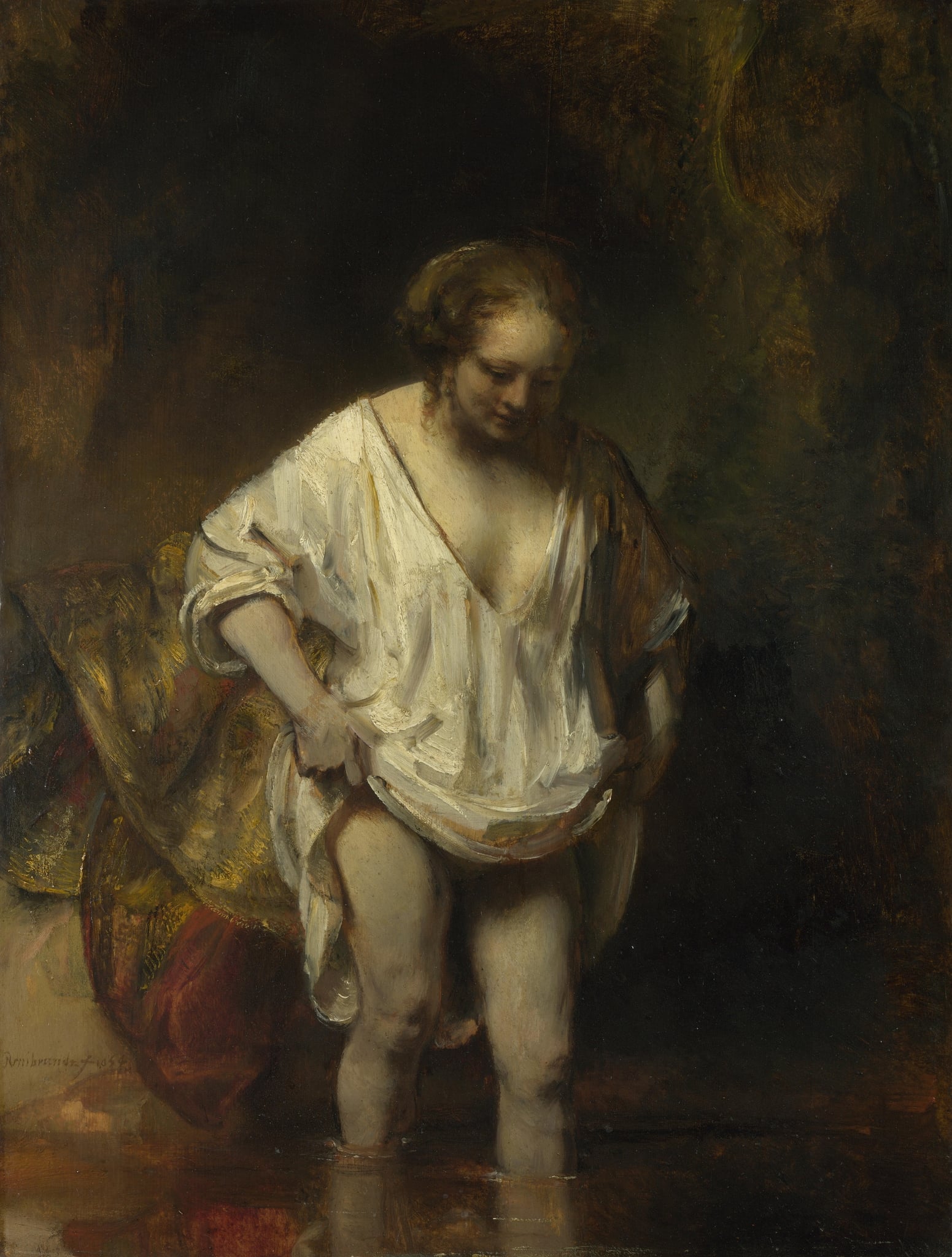
A Woman bathing in a Stream (Hendrickje Stoffels?)
Rembrandt van Rijn (1654)
Rembrandt van Rijn’s A Woman bathing in a Stream (Hendrickje Stoffels?) stages a private act as a public meditation on <strong>vulnerability</strong>, <strong>renewal</strong>, and <strong>empathetic seeing</strong>. The woman gathers her <strong>white shift</strong> as it clings to her, steps into the water, and glows under a warm, directional light against a shadowed bank. The image turns everyday intimacy into a <strong>monumental</strong>, morally inflected moment of presence <sup>[1]</sup><sup>[2]</sup>.
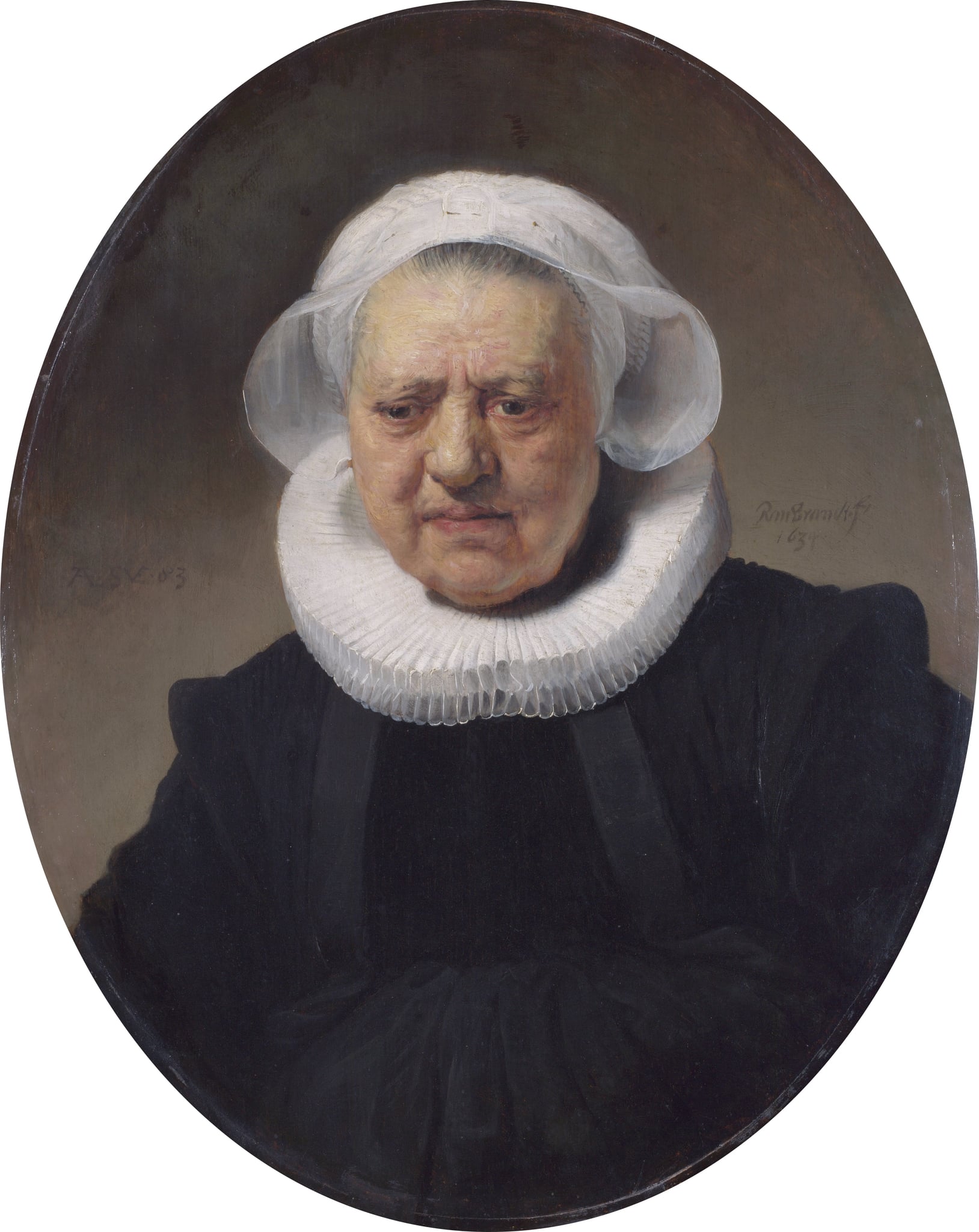
Portrait of Aechje Claesdr.
Rembrandt van Rijn (1634)
Rembrandt van Rijn’s Portrait of Aechje Claesdr. (1634) distills <strong>age, dignity, and moral clarity</strong> into an intimate oval. A black gown and a luminous white ruff and cap concentrate light on her face, where Rembrandt’s tactile strokes honor the <strong>truth of age</strong> without caricature <sup>[1]</sup>.