How Much Is The Cradle Worth?
Last updated: January 14, 2026
Quick Facts
- Current Location
- Musée d’Orsay, Paris
- Methodology
- extrapolation
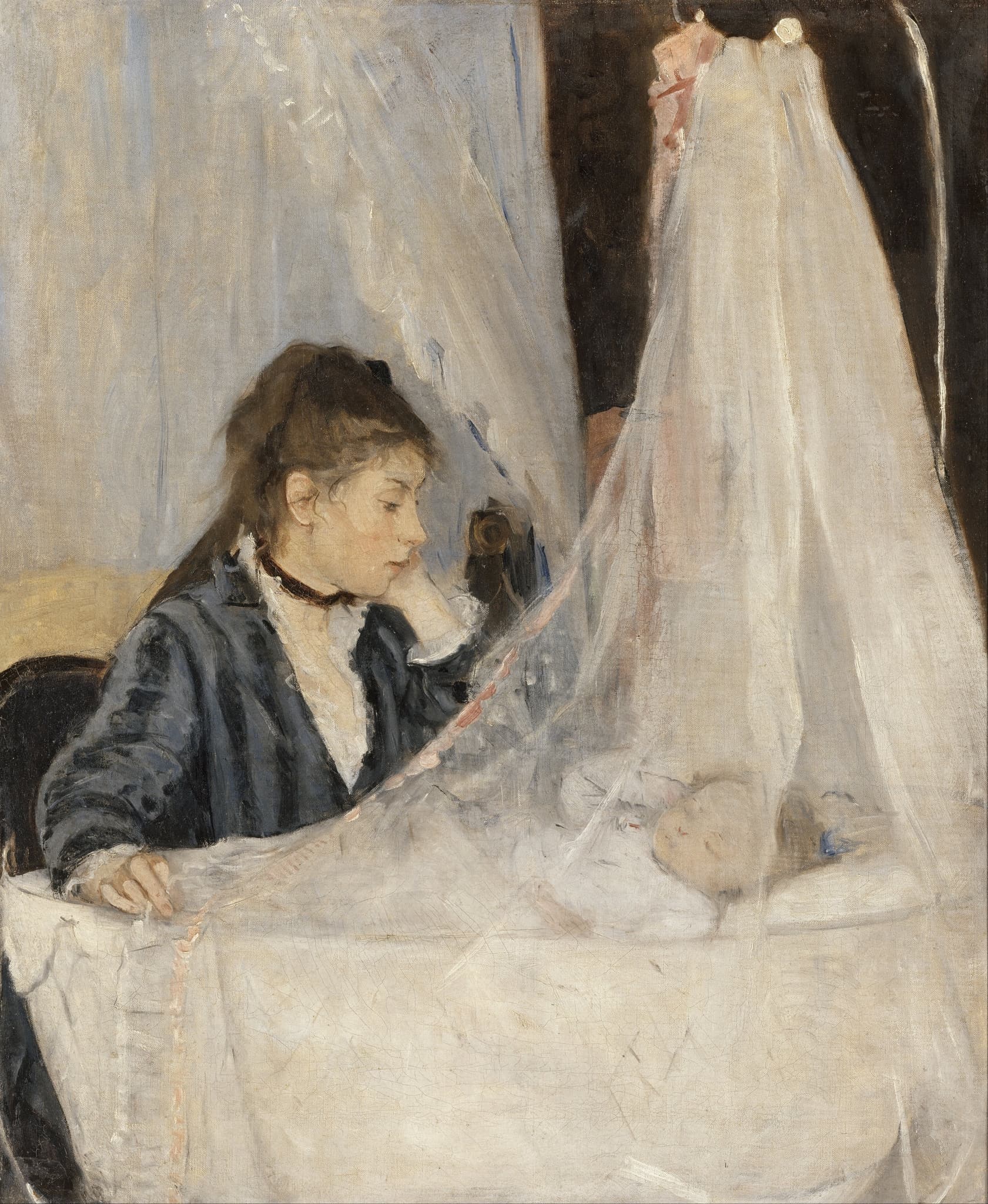
Hypothetical insurance/benchmark value for Berthe Morisot’s The Cradle is $50–65 million. This assumes the work were freely tradable and offered under optimal conditions, reflecting its status as Morisot’s signature masterpiece and an icon of early Impressionism. The figure extrapolates well above the artist’s observed record and aligns with recent trophy-level benchmarks in the category.
Valuation Analysis
Conclusion: The Cradle (1872) is a canonical image in Berthe Morisot’s oeuvre and a foundational icon of Impressionism. Although it is an inalienable work in a French national collection (Musée d’Orsay) and therefore not marketable, its realistic insurance/benchmark value today is $50–65 million, assuming unconstrained trade. This range reflects the painting’s unrivaled art-historical importance for the artist, its early exhibition at the 1874 Impressionist show, and its preeminent visibility in scholarship and museums [1][2].
Methodology: We extrapolate upward from Morisot’s observed auction ceiling and recent high-quality results, then anchor the premium to category-defining Impressionist comparables. Morisot’s current auction record is Après le déjeuner (1881) at $10.9 million (with fees, 2013) [3], with later strong results such as Fillette portant un panier (1888) at $5.31 million in 2021 [6]. These numbers understate the value of her most iconic museum-grade images because such works almost never reach the market. A masterpiece premium—common when an artist’s defining picture is hypothetically priced—justifies a multiple of the artist’s record.
Category benchmarks: The broader Impressionist trophy market demonstrates capacity in the $50 million band for museum-grade 1870s masterpieces: Gustave Caillebotte’s Jeune homme à sa fenêtre realized $53.03 million in 2021 [4]. Meanwhile, demand for historically important works by women artists has advanced, with Frida Kahlo’s record now at $54.7 million (2025) [5]. The Cradle—arguably Morisot’s single most famous image and a touchstone of modern depictions of motherhood—would reasonably compete at this level. The indicated $50–65 million range places it squarely within the lower-to-mid trophy tier for Impressionism while surpassing Morisot’s prior market evidence, as an icon would be expected to do.
Positioning and caveats: This estimate assumes pristine condition, full exportability, comprehensive provenance, and optimal sale choreography—factors that materially affect outcomes. In reality, the work is owned by the French state and is legally inalienable under the Code du patrimoine, so no market sale is possible; any figure serves as an insurance/benchmark valuation only [2]. Within these constraints, $50–65 million accurately reflects The Cradle’s singular importance, scarcity, and the current appetite for blue-chip, museum-caliber Impressionist masterworks [1][4][5].
Key Valuation Factors
Art Historical Significance
High ImpactThe Cradle is widely regarded as Morisot’s signature masterpiece and a defining image of Impressionism’s intimate, domestic modernity. Painted in 1872 and exhibited in the first Impressionist exhibition in 1874, it anchors scholarly narratives around motherhood, the private sphere, and Morisot’s pioneering handling of light and touch. Its centrality is reinforced by constant reproduction in textbooks, exhibitions, and museum displays. Among Morisot’s works, it stands at the apex of fame, recognition, and influence. That status typically commands a substantial premium over prices for high-quality but less iconic works, as collectors pay not only for authorship and date but for the cultural resonance and canon-defining nature of the image.
Provenance and Legal Status
High ImpactThe painting remained with the sitters’ family until the French State acquired it for the Louvre in 1930; it now resides at the Musée d’Orsay. This unassailable provenance and decades of institutional stewardship maximize confidence in authenticity, condition care, and scholarly stature. However, works in French national collections are inalienable by law, making any price hypothetical (insurance/benchmark only). While inalienability removes real-world liquidity, it can increase perceived cultural value; insurance valuations for traveling masterpieces of this profile are typically set at ‘trophy’ levels. Our estimate explicitly models a scenario in which legal constraints did not apply, so the figure reflects open-market comparability rather than realizable price.
Comparables and Market Benchmarks
High ImpactMorisot’s public auction record is $10.9 million (2013), with additional strong results like $5.31 million in 2021 for a child-themed oil—yet none of these are equivalents to her most emblematic image. Cross-artist benchmarks within Impressionism demonstrate market capacity around $50 million for museum-grade, 1870s icons (e.g., Caillebotte at $53.03 million). Concurrently, the top end for women artists has risen, with Kahlo’s $54.7 million record confirming a deep, global buyer pool for historically significant portraits and icons. The Cradle’s importance justifies a step-change above Morisot’s prior ceiling, aligning with these trophy comparables and supporting a $50–65 million range under optimal sale conditions.
Visibility, Exhibition, and Scholarship
Medium ImpactThe Cradle benefits from exceptional visibility: it is a permanent fixture of a premier national museum and a mainstay in major exhibitions that chart the birth of Impressionism. Its early exhibition at the first Impressionist show amplifies its documentary and historical weight. Constant scholarly attention sustains the work’s relevance across generations, reinforcing demand from top-tier collectors and institutions when comparably significant works appear. While museum residence means there is no direct market testing for this specific picture, institutional prominence typically correlates with higher valuations because the work’s quality, authenticity, and narrative significance are beyond dispute, and its image recognition is exceptionally high.
Sale History
The Cradle has never been sold at public auction. It has been held by Musée d’Orsay, Paris.
Berthe Morisot's Market
Berthe Morisot is a core Impressionist whose market has strengthened with sustained scholarship and institutional focus. Supply of top-tier oils is thin, and the artist’s public auction record—Après le déjeuner at $10.9 million (2013)—reflects the scarcity of true masterpieces on the block rather than limited demand. High-quality oils from the 1870s–1880s with family and domestic themes remain the most contested. Recent results, including $5.31 million in 2021 for Fillette portant un panier and mid–seven-figure day and evening placements in 2024–2025, indicate steady depth. As museums and collectors rebalance art history to foreground women Impressionists, Morisot’s best works are positioned to command significant premiums when they emerge.
Comparable Sales
Après le déjeuner (After Lunch), 1881
Berthe Morisot
Artist’s current auction record; major oil of domestic life and a canonical Morisot subject, useful to anchor the artist’s observed ceiling.
$10.9M
2013, Christie's London
~$14.7M adjusted
Femme et enfant au balcon (Woman and Child on a Balcony), 1872
Berthe Morisot
Same year as The Cradle and closely related mother-and-child theme; strong proxy for subject/time-period demand in oils.
$5.1M
2017, Christie's London
~$6.5M adjusted
Fillette portant un panier (Little Girl with a Basket), 1888
Berthe Morisot
Major child-themed oil with blue-chip provenance; demonstrates recent high-end pricing for Morisot oils with related subject matter.
$5.3M
2021, Christie's New York (The Cox Collection)
~$6.2M adjusted
Jeune homme à sa fenêtre (Young Man at His Window), 1876
Gustave Caillebotte
Iconic, museum-grade Impressionist interior from the 1870s; a trophy benchmark showing current top-end capacity for the movement.
$53.0M
2021, Christie's New York
~$61.5M adjusted
Jeanne (Spring), 1881
Édouard Manet
Trophy-level late 19th-century figure painting by a core Impressionist-era master; widely cited benchmark for female-figure icons of the period.
$65.1M
2014, Christie's New York
~$87.3M adjusted
Current Market Trends
The Impressionist market has trended toward a flight to quality: while overall volumes softened in 2024, trophy-level works retained strong demand, with renewed momentum in 2025. Landmark sales such as Caillebotte’s $53.03 million result signal enduring capacity for canonical 1870s masterpieces. Monet’s robust outcomes in 2024–2025 further underline confidence in blue-chip names, even as supply tightens. Simultaneously, the broader top end for works by women artists has advanced, evidenced by Kahlo’s $54.7 million record in 2025. In this environment, museum-caliber, historically pivotal works like The Cradle would command significant premiums over an artist’s observed auction record under unconstrained sale conditions.
Study print
Study this painting as a print
Pair the full artwork with a museum-style study sheet focused on one meaningful detail.
Sources
- Musée d’Orsay – Le Berceau (The Cradle) artwork page
- Code du patrimoine (France), L451-5 – Inalienability of public museum collections
- Christie’s Post-Sale Release (Feb 6, 2013): Impressionist & Modern Evening Sale – Morisot record
- Christie’s Results (Nov 11, 2021): Cox Collection – Caillebotte at $53.03m
- PBS NewsHour: Frida Kahlo auction record set at $54.7m (Nov 20, 2025)
- The Art Newspaper: Christie’s Cox Collection auction report (Nov 12, 2021)