How Much Is The Railway Worth?
Last updated: January 14, 2026
Quick Facts
- Current Location
- National Gallery of Art, Washington, D.C.
- Methodology
- extrapolation
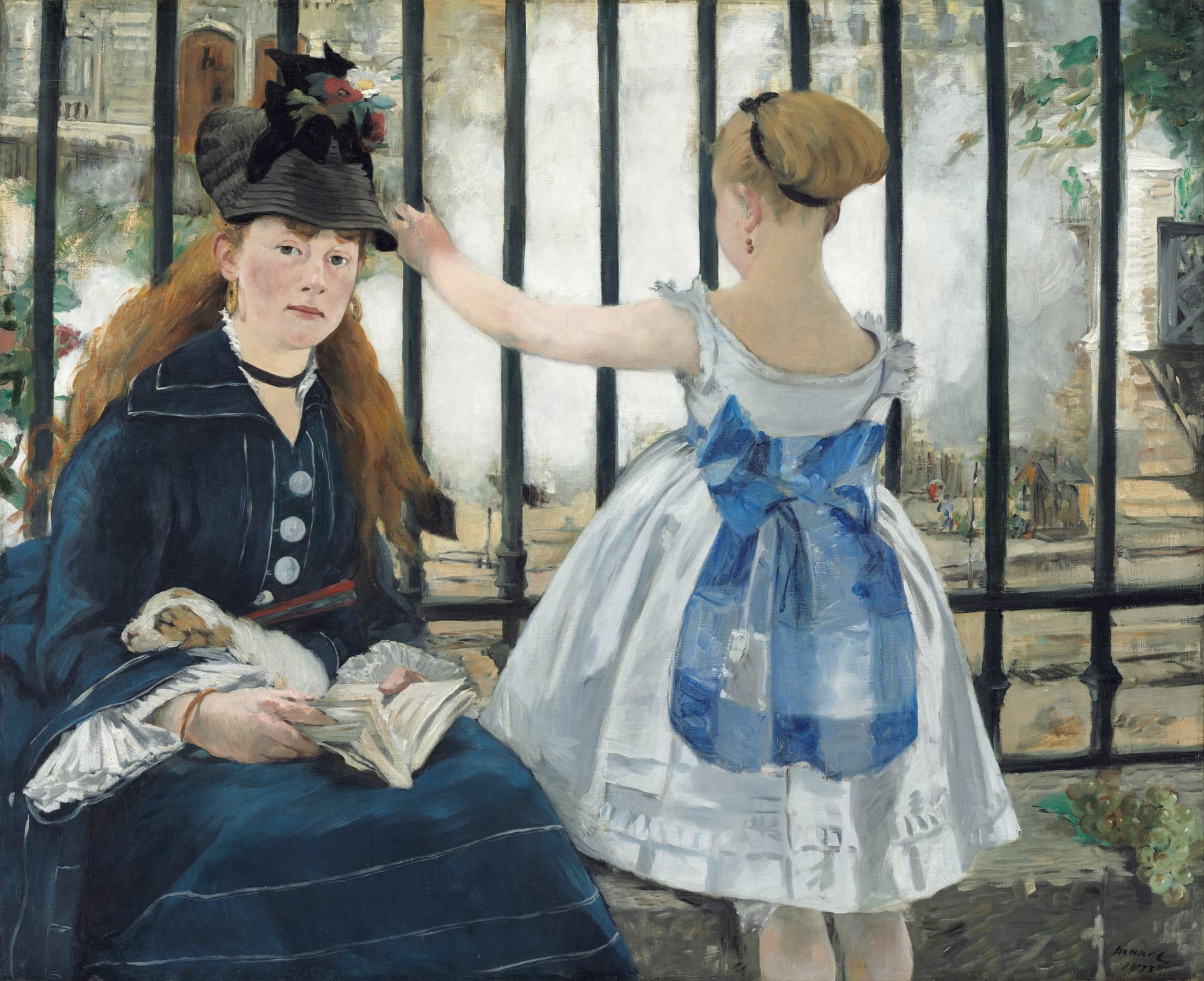
The Railway (1873) is a canonical Manet at the National Gallery of Art and a cornerstone of 19th‑century modernity. If hypothetically deaccessioned and offered without restrictions, it would rank among the most valuable Manets and plausibly achieve $120–200 million, materially above the artist’s current auction record. This range extrapolates from Manet’s top public price and trophy‑level results for peer masters, adjusted for the work’s exceptional art‑historical stature.
Valuation Analysis
Conclusion: The Railway (1873) is a top‑tier, museum‑defining Manet: a landmark of modern life featuring Victorine Meurent, painted at a pivotal moment and shown at the 1874 Salon. It is among the artist’s most reproduced and discussed compositions and resides at the National Gallery of Art, Washington, D.C. [1] On an unrestricted, marquee-evening platform, a realistic fair‑market range is $120–200 million.
Method: Because the picture has no modern public sale history, the valuation is an upward extrapolation from Manet’s record alongside cross‑category trophy benchmarks. Manet’s standing auction record is $65,125,000 (Jeanne, or Le Printemps; Christie’s New York, 2014) [2]. The Railway carries greater art‑historical weight—earlier in date, richer in modern‑life content, and far more central in scholarship—so an exceptional premium over the record is warranted.
Market evidence: Recent Manet auctions confirm robust demand for quality, even when the works are not canonical. A late still life brought $10.1 million at Sotheby’s New York (May 2024), underscoring liquidity for solid examples and the scarcity premium when best‑of‑type material appears [3]. At the top end, the broader trophy market has repeatedly supported nine‑figure prices for iconic late‑19th‑ and early‑20th‑century works, demonstrating sufficient buyer capacity to reset artist records when a once‑in‑a‑generation masterpiece surfaces [4].
Why this range: The lower bound ($120m) reflects a step‑change above Manet’s 2014 benchmark, calibrated to the painting’s canonical status, prime 1870s date, celebrated sitter, and pervasive scholarly presence [1][2]. The upper bound ($200m) captures competitive upside typical of institution‑grade icons with global name recognition in a well‑supplied financing and private‑wealth environment [4]. Visibility from recent Manet/Degas scholarship and the 150‑years‑of‑Impressionism cycle further supports demand at the apex of the category [5].
Key sensitivities: The range assumes strong, well‑documented condition and an unrestricted sale. Any material conservation issues would compress the estimate; conversely, pristine condition and a resonant sale narrative (provenance, loans, publication history) would support the top decile of the range. As a U.S. museum‑held masterpiece, practical availability is near zero; this is a fair‑market hypothetical, while loan insurance values could sit at or above the high end.
Key Valuation Factors
Art Historical Significance
High ImpactThe Railway is a touchstone of Manet’s modern-life project: painted in 1873, exhibited at the 1874 Salon, and centered on Victorine Meurent, the artist’s emblematic model. Its compressed urban space, frontal modernity, and enigmatic psychology make it a staple of art-historical discourse and museum survey texts. Among Manet’s oeuvre, it stands just below Olympia and Le Déjeuner sur l’herbe in fame—placing it in the absolute top tranche of works by significance. That stature translates directly into pricing power at auction, as masterpieces with this level of scholarly centrality and public recognition command premiums over other works of similar date and scale.
Rarity and Supply
High ImpactHigh-quality, canonical Manet oils from the 1870s reside overwhelmingly in museums. Major modern-life compositions almost never appear on the open market, and supply is further constrained by institutional collecting and deaccession norms. When trophy-caliber Manets do surface, they can reset artist records, as seen in 2014. The Railway’s status as a widely reproduced, institution-grade picture—a once-in-a-generation opportunity if ever offered—supports a substantial scarcity premium. In category terms, it would be among the most sought-after 19th-century works available at any given time, attracting both private collectors and institutional bidders (or endowment-backed museum buyers), thereby driving competitive pricing.
Provenance, Exhibition, and Publication
High ImpactThe painting’s ownership chain—artist to leading 19th-century collector/dealer circles to the Havemeyer family and ultimately the National Gallery of Art—reads as a who’s who of connoisseurship. Frequent citation in scholarship, regular display, and high-profile loans contribute to its visibility and cultural imprint. Such pedigrees reduce perceived risk, increase bidder confidence, and often justify pricing above purely aesthetic comparables. For masterpieces, proven public exhibition histories and inclusion in major catalogues and retrospectives function as value multipliers by underscoring authenticity, condition stewardship, and the work’s sustained relevance across generations.
Trophy-Market Dynamics
Medium ImpactAt the apex of the market, best-of-category works compete for global private wealth and institutional budgets. Recent cycles show nine‑figure capacity for canonical late‑19th‑century icons, with aggressive competition when supply is truly exceptional. The Railway would benefit from this dynamic: it has the narrative, the image recognition, and the scholarship to mobilize multiple top-tier bidders. While macro conditions can influence the breadth of the buyer pool, the scarcity of opportunities to acquire a “catalogue-cover” Manet should sustain demand. Well-orchestrated sale strategy, pre-sale guarantees, and museum interest could all help realize the upper end of the estimate.
Sale History
The Railway has never been sold at public auction. It has been held by National Gallery of Art, Washington, D.C..
Édouard Manet's Market
Édouard Manet is a blue‑chip cornerstone of 19th‑century Modernism whose best works are concentrated in museums, resulting in extremely tight supply. His public auction record stands at $65.1 million (Jeanne, or Le Printemps; 2014), a result that reflects strong, global bidding for an A‑tier work despite its later date and modest scale. Recent sales—such as a late floral at $10.1 million in 2024—demonstrate continued liquidity and appetite for quality examples. Given Manet’s foundational status and the scarcity of major modern‑life oils in private hands, an appearance by a canonical painting would likely set a new high-water mark for the artist, with competition from both leading private collectors and institutions.
Comparable Sales
Jeanne (Spring)
Édouard Manet
Same artist; late, iconic single-figure ‘modern life’ portrait and current Manet auction record—key benchmark for top-tier Manet oils despite smaller size and later date than The Railway.
$65.1M
2014, Christie's New York
~$88.6M adjusted
Self-Portrait with a Palette
Édouard Manet
Same artist; a trophy-caliber, extremely rare self-portrait. Useful for gauging market appetite for A‑tier, museum-level Manets.
$33.1M
2010, Sotheby's London
~$49.0M adjusted
Le bal de l’Opéra
Édouard Manet
Same artist, same year (1873), and a ‘modern life’ subject. Smaller and less celebrated, but directly relevant to period and theme.
$3.9M
2022, Christie's New York
~$4.3M adjusted
La Gare Saint-Lazare (from the series)
Claude Monet
Different artist but same iconic subject (the Saint-Lazare station) from the same era; anchors demand for this motif at the top end.
$33.6M
2018, Christie's London
~$43.0M adjusted
Jeune homme à sa fenêtre (Young Man at His Window)
Gustave Caillebotte
Contemporary of Manet; major 1870s ‘modern life’ interior. Shows current pricing for first-rank Realist/Impressionist figure compositions of the period.
$53.0M
2021, Christie's New York
~$63.1M adjusted
Meules (Haystacks)
Claude Monet
Different subject but the benchmark for trophy-level Impressionism. Demonstrates the nine-figure ceiling for canonical, museum-grade works of this era.
$110.7M
2019, Sotheby's New York
~$139.5M adjusted
Current Market Trends
After a heated 2022 and a more selective 2023–2024, demand in the upper tiers has refocused on truly best‑in‑class material with impeccable provenance and condition. Recent auctions show that works with clear narratives and museum-level stature attract aggressive bidding, even as mid-tier lots face more scrutiny. The Manet segment reflects this bifurcation: strong prices for fresh, high‑quality works and the potential for record resets when an icon surfaces. Broader trophy behavior—evidenced by nine‑figure outcomes for other canonical late‑19th‑century masters—underscores ample capacity to absorb a masterpiece Manet at a nine‑figure level, provided market timing and sale strategy are well aligned.
Study print
Study this painting as a print
Pair the full artwork with a museum-style study sheet focused on one meaningful detail.
Sources
- National Gallery of Art – The Railway object page
- Christie’s – 2014 Impressionist & Modern Evening Sale results (Manet record)
- The Art Newspaper – Sotheby’s Modern Evening Sale (May 2024) highlights
- Sotheby’s – The New York Sales, Nov 2025 results and market context
- The Metropolitan Museum of Art – Manet/Degas exhibition press release (2023–2024)