Most Expensive William-Adolphe Bouguereau Paintings
Few 19th-century academic painters command the market gravitas of William-Adolphe Bouguereau, whose canvases routinely fetch seven-figure sums and, in the case of masterworks like The Birth of Venus, are valued at an extraordinary $40–60 million. Collectors prize Bouguereau for his immaculate technique, porcelain-like flesh tones, classical compositions and sentimental mythology—qualities that have driven prices for Song of the Angels into the $3–15 million range and placed Nymphs and Satyr and La Charité comfortably in the $3,000,000–$8,000,000 and $3,000,000–$7,000,000 brackets respectively. Even his smaller, more intimate scenes command significant money: The Nut Gatherers is estimated at $1,000,000–$6,000,000, Chansons de printemps at $2.0–4.5 million, Dawn at $1,000,000–$4,000,000 and Pietà at $2.5–$4.0 million. The Shepherdess and The Young Shepherdess underscore the breadth of his market, ranging from $1.8–3.0 million down to $400,000–$1,500,000. Rarity, impeccable provenance and continued museum and private demand make Bouguereau’s work both a cultural touchstone and a durable investment for discerning collectors.
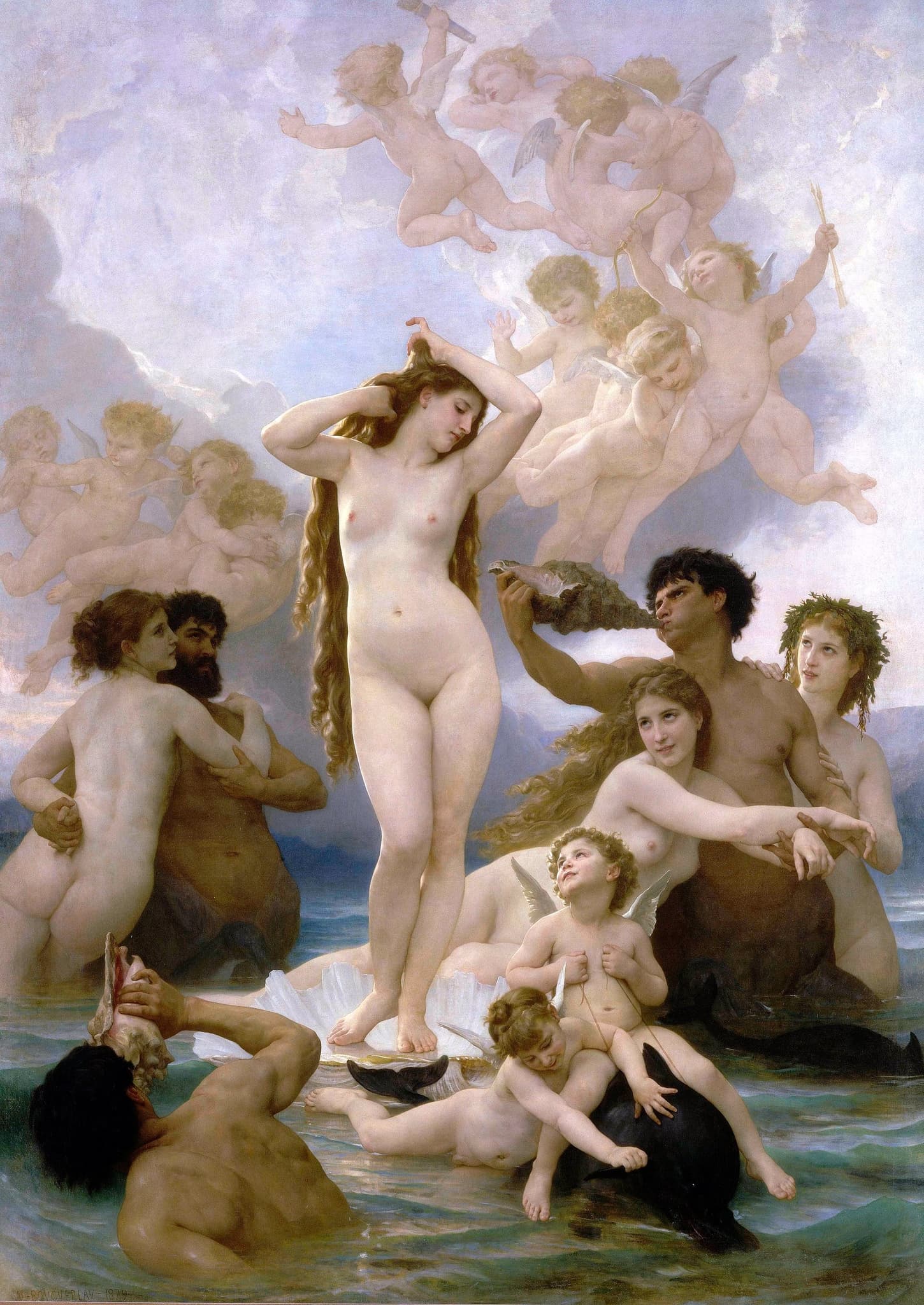
$40-60 million
Valued at $40–60M for insurance/hypothetical market, reflecting its salon‑scale stature and status as Bouguereau’s most recognized, apex Academic masterpiece with mid–eight‑figure capacity.
$3-15 million
Estimated $3–15M (mid‑case $5–10M) contingent on authentication and excellent condition; currently held by Forest Lawn Museum and has not appeared on the modern public market.
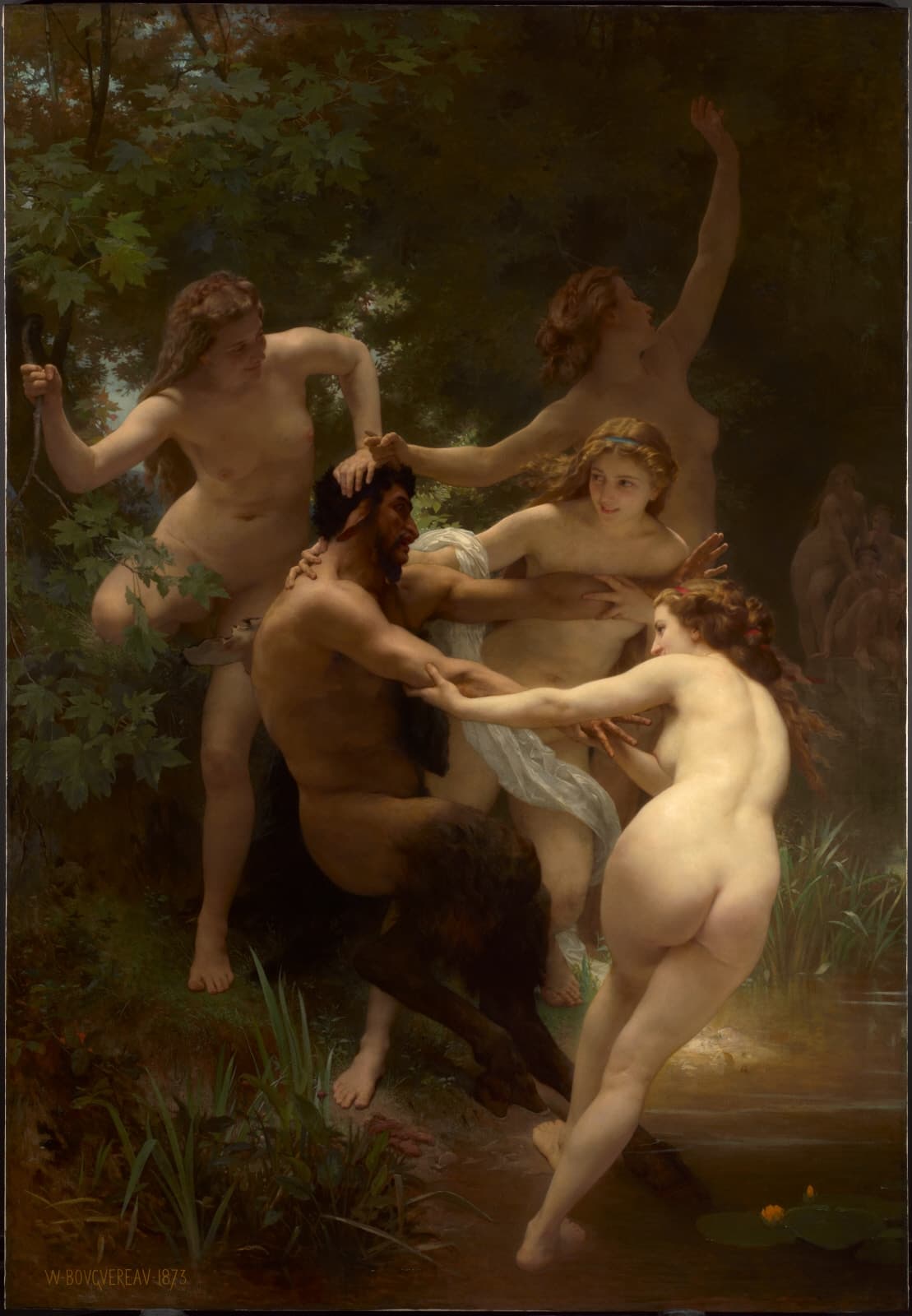
$3,000,000-$8,000,000
If the canonical 1873 Salon canvas, market estimate is $3–8M; later variants, studio replicas or reductions commonly command materially less ($500K–$3M).
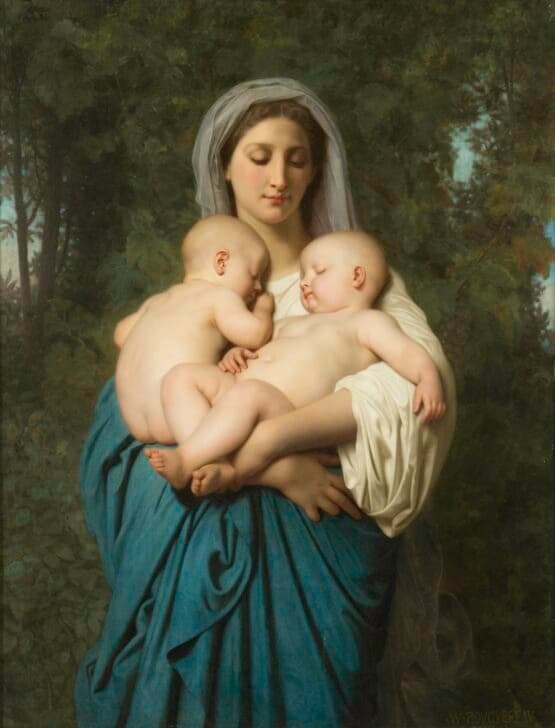
$3,000,000–$7,000,000
If the documented 1878 salon‑scale La Charité with Knoedler/Drexel provenance and good original condition, auction estimate is $3.0–7.0M; lacking provenance or condition, value likely compresses.
$1,000,000 - $6,000,000
For an accepted autograph 1882 salon‑scale oil in excellent condition with solid provenance, market estimate is $1–6M, derived from recent Bouguereau comparables.
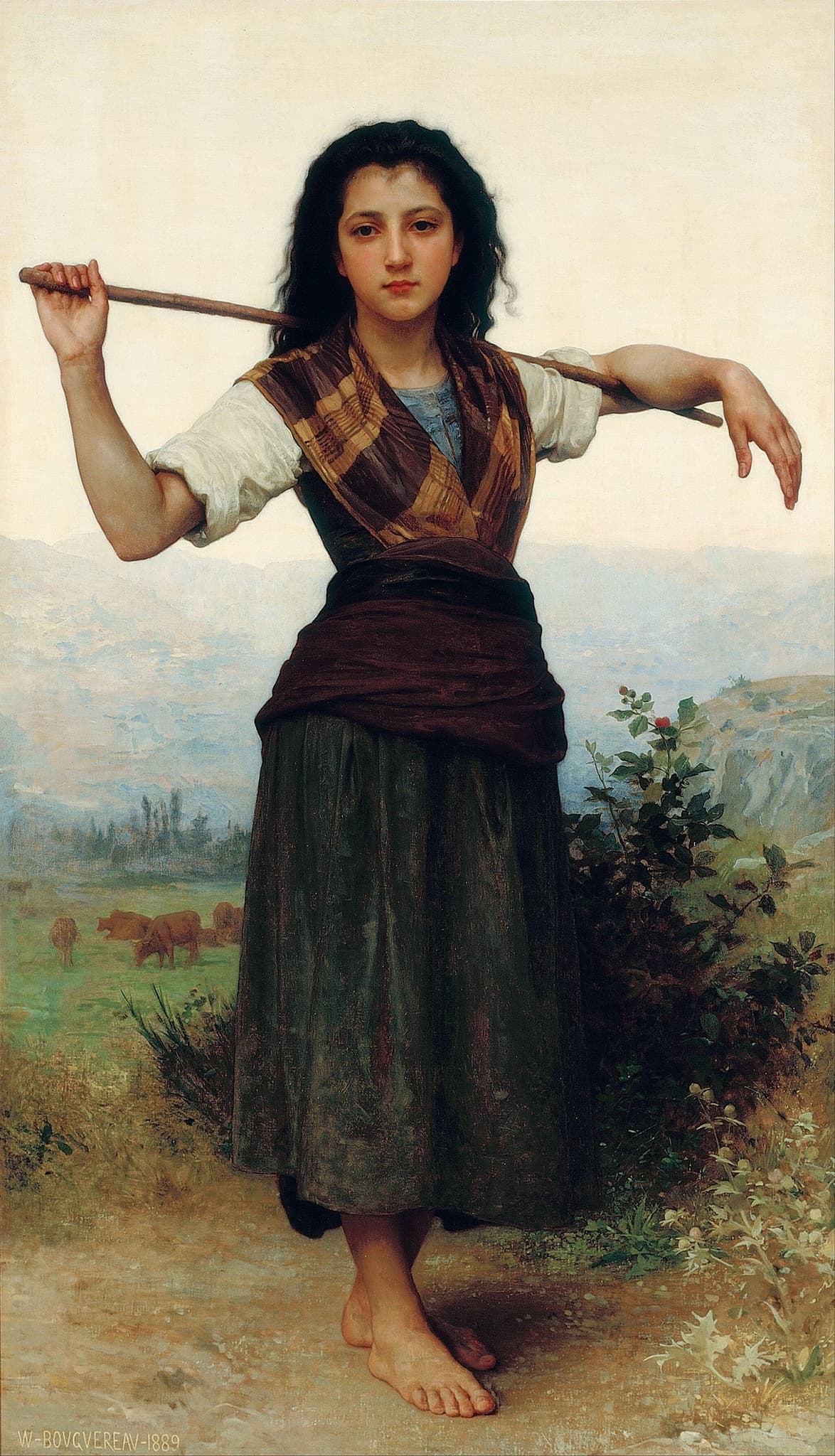
$3-5 million
Estimated $1.8–3.0M for The Shepherdess (1889, Philbrook) reflecting its prime date, life‑size scale, and liquidity within Bouguereau’s benchmark figure types and recent top‑tier results.

$2.0-4.5 million
Anchored to the 2019 Christie’s NY sale (price realized $3,615,000 including premium), current auction range is approximately $3.0–4.5M (private‑sale floor $2.0–3.0M).
$2.5–$4.0 million
Desk valuation anchored to Christie’s NY sale of Bouguereau’s Pietà (1876) yields a recommended market range of $2.5–4.0M for the authenticated, salon‑scale picture in good condition.
$1,000,000–$4,000,000
Based on museum documentation and recent salon‑scale comparables, L'Aurore (1881) would likely realize approximately $1.0–4.0M at a major‑house sale, assuming sound condition and attribution.
$400,000–$1,500,000
Held by San Diego Museum of Art with no public auction record; a reasoned market estimate if offered today is $400K–1.5M, driven by attribution, condition and venue.
What Drives Value in William-Adolphe Bouguereau's Work
Subject & Scale: Salon‑scale mythologies and allegories outperform genre pictures
For Bouguereau the difference between a monumental, multi‑figure allegory (Birth of Venus, Les Nymphes et le Satyre, La Charité, Pietà) and an intimate genre scene (The Nut Gatherers, Young Shepherdess) is decisive. Large mythological or devotional canvases attract museum interest and trophy buyers and therefore carry a substantial premium (the Birth of Venus supports an insurance band far above normal market levels). Even strong studio works (Chansons de printemps realized $3.615M) sit below the top memorial/monumental tier.
Museum Provenance & Exhibition History: institutional custody elevates perceived value
Bouguereau works with clear institutional chains — e.g., Birth of Venus in the French state collection, Les Nymphes et le Satyre at the Clark, Song of the Angels at Forest Lawn, The Shepherdess at Philbrook — command higher buyer confidence and often higher price expectations. Museum ownership both signals curatorial vetting (raising demand) and removes comparable supply, creating scarcity; however, institutional custody also makes actual market offerings rare, inflating implied valuations for comparable private examples.
Condition, Conservation & Technical Dossier: pristine surfaces and technical proof are non‑negotiable
Bouguereau’s enamel‑like finish and subtle modeling mean conservation history and technical imaging materially affect price. Documented treatment (Song of the Angels conserved under Getty partnership, technical imaging) reduces attribution risk and supports top estimates; conversely, heavy relining, overpainting or unstable structure will depress outcomes. In Bouguereau’s market, two comparably provenanced canvases can separate by multiples purely on condition and the completeness of the IRR/X‑ray/pigment dossier.
Autograph Status, Studio Variants & Rarity of Iconic Compositions
Bouguereau’s studio produced repetitions and workshop variants of popular motifs (Young Shepherdess/Shepherdess types, Nut Gatherers), so unequivocal autograph attribution and catalogue‑raisonné inclusion are critical. An unambiguous artist‑signed, unique composition—especially a canonical mythological image—commands substantial premiums, while ambiguous authorship or workshop participation triggers steep discounts. The market values rarity of a true autograph masterpiece (Birth of Venus type) far above frequently reproduced or studio‑led compositions.
Market Context
William‑Adolphe Bouguereau occupies a secure, specialist position in the 19th‑century academic market: institutional holdings, major retrospectives and specialist collectors sustain steady demand, with the auction record at $3.615 million (Chansons de printemps, Christie’s, 2019) and houses acknowledging eight‑figure potential for undisputed salon icons (e.g., Sotheby’s $25–35M estimate for La Jeunesse de Bacchus, 2019, unsold). Market activity was selective after pandemic disruption and a 2024 softening but showed partial recovery in 2025–26, with improved sell‑throughs for fresh, museum‑quality works. The market is stratified—trophy, well‑provenanced, large allegories outperform, while mid‑tier, compromised or heavily restored pictures face constrained liquidity—so sale placement, provenance and condition remain the primary drivers of outcomes.