How Much Is Turquoise Marilyn Worth?
Last updated: February 24, 2026
Quick Facts
- Last Sale
- $80.0M (2007, Private sale (brokered by Larry Gagosian))
- Methodology
- comparable analysis
We estimate Andy Warhol’s Turquoise Marilyn (1964, 40-inch) at $180–240 million. The range is anchored by the like-for-like 2022 sale of Shot Sage Blue Marilyn at $195.04 million and supported by Turquoise Marilyn’s widely cited status as the only un-shot example and its circa $80 million private sale in 2007. Full-market exposure with strong guarantees could yield a result at or above the midpoint; discreet private placement would likely track the lower bound.
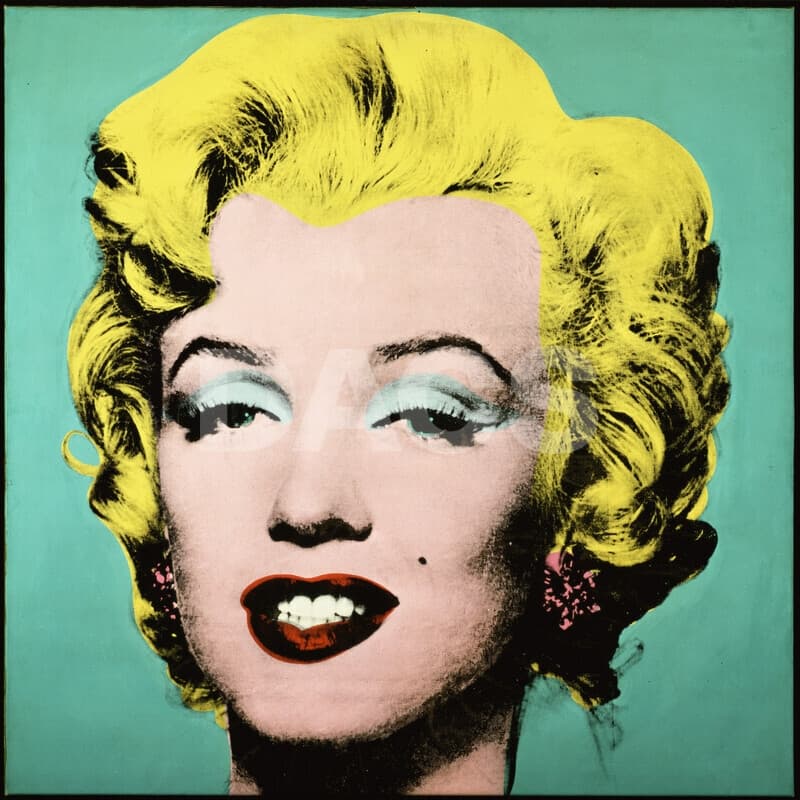
Turquoise Marilyn
Andy Warhol, 1964 • Synthetic polymer (acrylic) and silkscreen ink on canvas/linen
Read full analysis of Turquoise Marilyn →Valuation Analysis
Conclusion: Turquoise Marilyn is valued at $180–240 million. This reflects its position at the absolute apex of Warhol’s market—the five 40 x 40 inch 1964 Marilyns—combined with the most relevant public benchmark: Shot Sage Blue Marilyn’s $195.04 million price at Christie’s in May 2022, a record for Warhol and for a 20th‑century artwork at auction [1].
Market comparables: Among Warhol’s oeuvre, only the 40-inch 1964 Marilyns have publicly demonstrated durable, near–quarter‑billion-dollar auction liquidity. The 2022 result provides a like‑for‑like anchor for Turquoise Marilyn. Additional top-tier 1960s Warhols corroborate the nine-figure environment for masterpieces, including White Disaster (White Car Crash 19 Times) at $85.35 million in November 2022, and large 1964 Flowers at $35.5 million in May 2024—evidence of sustained depth for canonical 1960s Pop even as the broader market has been more selective [4][5].
Work-specific factors: Turquoise Marilyn is widely described as the only 40-inch Marilyn not physically pierced in the 1964 Factory shooting incident, a distinction that can command a premium given condition sensitivity and the series’ mythology [3]. Its reported private sale in May 2007 for approximately $80 million (seller Stefan Edlis; buyer Steven A. Cohen; broker Larry Gagosian) remains a pivotal benchmark. Adjusted for inflation and for the series’ re‑rating post‑2022, that price aligns with a present-day nine‑figure valuation well within the stated range [2].
Valuation rationale and sensitivity: The $180–240 million range brackets parity with the 2022 Shot Sage Blue result while allowing for: (i) colorway preferences and individual condition; (ii) the potential premium attached to Turquoise’s un‑shot status; and (iii) current market selectivity at the ultra‑high end. Under marquee evening‑sale conditions—global marketing, an irrevocable bid/third‑party guarantee, and at least two motivated buyers—outcomes near or modestly above the midpoint are reasonable. In a low‑visibility private transaction, pricing could gravitate toward the lower bound; conversely, a competitive auction or private bidding war could exceed the top end.
Key dependencies: Final pricing hinges on a recent, independent condition report (front/back imaging, screen registration, paint layer stability, and any conservation), confirmation of unencumbered title and provenance, and sale mechanics (venue, timing, marketing, and guarantee structure). With those elements in place, Turquoise Marilyn should trade at or above parity with the best-in-class 40-inch Marilyn benchmark set in 2022 [1][3].
Key Valuation Factors
Art Historical Significance
High ImpactThe 40-inch 1964 Marilyns are among the most iconic images in postwar art, distilling Warhol’s synthesis of celebrity, mass media, and repetition at a scale and vividness unmatched elsewhere in his oeuvre. Turquoise Marilyn, as one of only five distinct colorways in this format, sits at the apex alongside institutional touchstones like Gold Marilyn (MoMA) and Marilyn Diptych (Tate). Its centrality to Pop Art’s narrative, and to Warhol’s public identity, confers enduring museum-level importance and the strongest tier of collector demand—critical determinants of nine-figure pricing for the absolute best examples.
Rarity and Specific Colorway/Condition
High ImpactScarcity is extreme: only five 40 x 40 inch Marilyn canvases exist, each a unique colorway. Turquoise is widely cited as the only example that was not physically pierced in the Factory “shot” incident—an attribute that can carry a premium in a series where surface integrity and screen registration are paramount. Colorway desirability for turquoise is consistently rated high by specialists and collectors. Verified, excellent condition—supported by recent conservation imaging—would reinforce competition at the top of the range.
Provenance and Market Pedigree
High ImpactThe reported 2007 transaction at approximately $80 million—then a Warhol record—between highly visible market principals (Edlis to Cohen, brokered by Gagosian) provides strong pedigree and a credible pricing milestone. Public loans (e.g., Sotheby’s ‘Women’ exhibition, 2009) have reinforced visibility and scholarship without overexposing the work to repeated sale attempts. A clean, well‑documented ownership chain without encumbrances, coupled with selective public exhibition, typically correlates with higher confidence among guarantors and principal bidders.
Comparable Sales and Current Market Selectivity
High ImpactThe most persuasive comp is Shot Sage Blue Marilyn at $195.04 million in 2022. Adjacent top‑tier 1960s Warhols—White Disaster at $85.35 million (2022) and large 1964 Flowers at $35.5 million (2024)—confirm deep demand for blue‑chip Pop even as the broader market has grown more selective. Today’s ultra‑high‑end buyers are disciplined on quality and provenance, and guarantees are often necessary to secure top consignments. With best‑in‑class marketing and at least two committed bidders, Turquoise Marilyn should realize parity with, or a modest premium to, the 2022 Marilyn benchmark.
Sale History
Private sale (brokered by Larry Gagosian)
Andy Warhol's Market
Andy Warhol remains a blue‑chip cornerstone with global, cross‑category demand from institutions, top private collections, and brand‑adjacent patrons. His market is unusually deep and liquid: prints and multiples maintain steady volumes, while prime 1960s paintings anchor marquee evening sales. The 2022 $195.04 million result for Shot Sage Blue Marilyn reset expectations for the apex tier, placing the 40‑inch Marilyns among the most valuable images in all postwar art. Subsequent sales—such as White Disaster at $85.35 million and strong prices for key Flowers and Jackie works—demonstrate resilience for best‑in‑class material despite a more discerning macro environment. Warhol’s name recognition, institutional presence, and broad subject appeal continue to support robust long‑term valuation.
Comparable Sales
Shot Sage Blue Marilyn
Andy Warhol
Best like-for-like: same artist, year (1964), and 40 x 40 in Marilyn format; sets the marquee public benchmark for the series.
$195.0M
2022, Christie's New York
~$210.8M adjusted
White Disaster (White Car Crash 19 Times)
Andy Warhol
Blue-chip 1963 Death and Disaster from the same period; demonstrates depth of demand and price ceiling for prime 1960s Warhols.
$85.4M
2022, Sotheby's New York
~$90.6M adjusted
Flowers (1964)
Andy Warhol
Iconic, large-scale 1964 canvas (same year) showing current demand for top-tier 1960s Warhols in evening sales.
$35.5M
2024, Christie's New York
~$36.1M adjusted
Sixteen Jackies
Andy Warhol
1964 celebrity-portrait series from the same moment; strong benchmark for Pop portrait demand though below Marilyn’s market apex.
$25.9M
2023, Christie's New York
~$26.9M adjusted
Nine Marilyns
Andy Warhol
Same subject (Marilyn) in a different 1962 multi-image format; confirms deep demand specifically for the Marilyn motif.
$47.4M
2021, Sotheby's New York
~$53.9M adjusted
Silver Car Crash (Double Disaster)
Andy Warhol
Former Warhol auction record pre-2022; a canonical 1963 masterpiece indicating the $100m+ zone for top-grade 1960s Warhols.
$105.4M
2013, Sotheby's New York
~$143.0M adjusted
Current Market Trends
The high end of the art market has shifted from the trophy‑driven surge of 2021–2022 to more selective bidding. 2024 saw a contraction in aggregate value as fewer ultra‑expensive lots traded, even as volumes held up; by 2025, confidence improved but buyers remained disciplined on quality, provenance, and price. Within this context, blue‑chip Pop Art—especially canonical 1960s Warhols—continues to perform when works are fresh, well‑marketed, and properly guaranteed. Guarantees and discreet private sales are common tools to manage risk and secure consignments. For top‑tier works with undeniable scarcity and cultural resonance, competitive outcomes remain achievable, particularly in marquee New York evening auctions.
Study print
Study this painting as a print
Pair the full artwork with a museum-style study sheet focused on one meaningful detail.
Sources
- Christie’s: May 2022 Marquee Week results (includes Shot Sage Blue Marilyn at $195.04m)
- The Art Newspaper: Report on Warhol private sale (Edlis to Cohen) at c.$80m (2007)
- Smithsonian Magazine: Background on the 40-inch Marilyns and the 1964 Factory ‘shot’ incident
- Artnet News: Sotheby’s Nov 2022 evening sale (White Disaster at $85.35m)
- Artnet News: By the Numbers—Christie’s May 2024 20th-Century sale (Flowers at $35.5m)