How Much Is Olympia Worth?
Last updated: January 15, 2026
Quick Facts
- Current Location
- Musée d’Orsay, Paris
- Methodology
- extrapolation
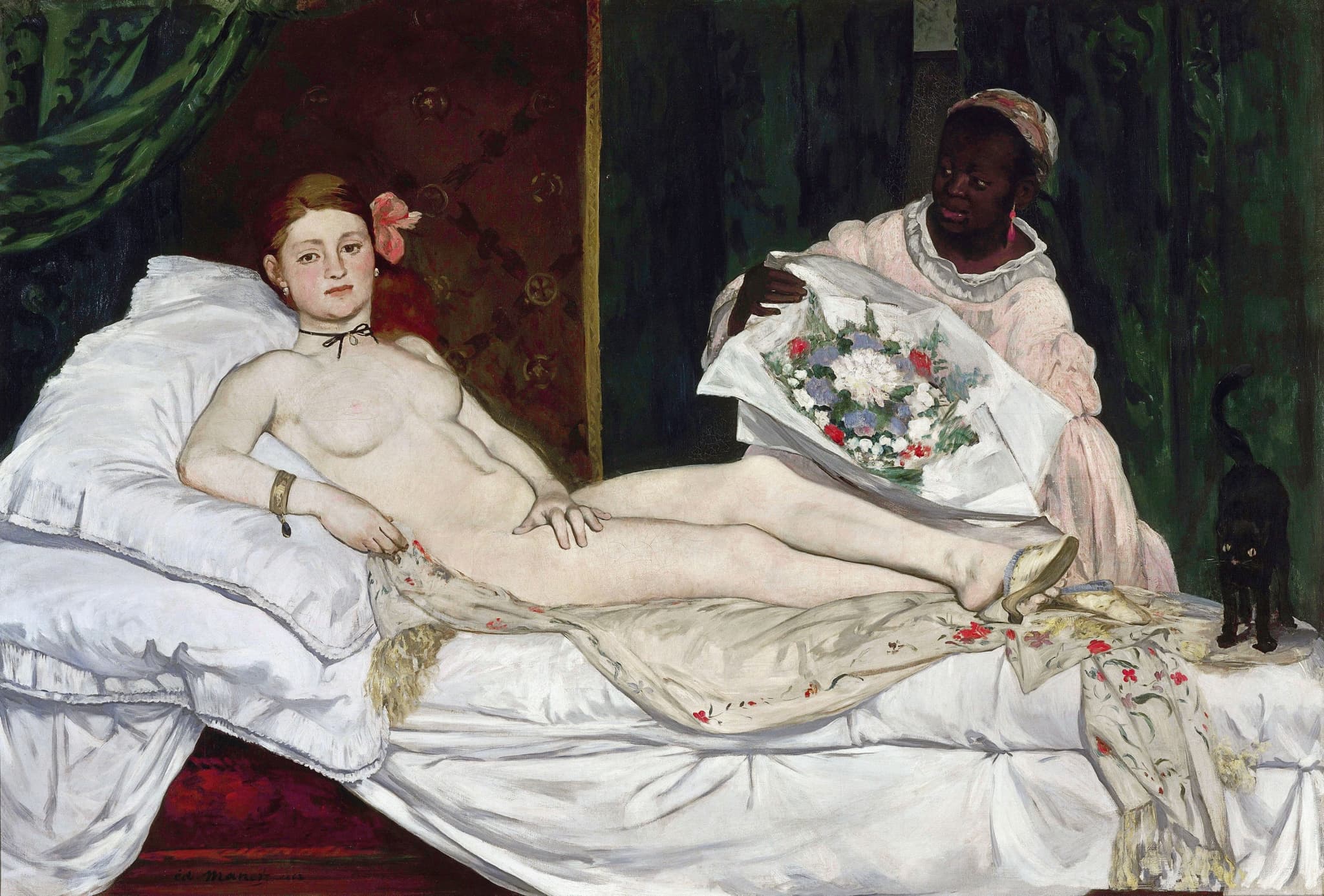
On a hypothetical market basis, Manet’s Olympia would command approximately $400–600 million. This range extrapolates decisively above the artist’s $65.1 million auction record using trophy-tier comparables and the work’s unmatched art-historical status. The painting is French national patrimony and not marketable, but its risk/indemnity value would sit firmly in this top global tier.
Valuation Analysis
Conclusion: For valuation purposes, Édouard Manet’s Olympia (1863) is assessed at $400–600 million. This is a hypothetical, market-consistent range for an apex, museum‑defining masterpiece and reflects both the painting’s unique art‑historical weight and the demonstrated pricing power of comparable blue‑chip trophies. The work is owned by the French State (Musée d’Orsay) and is legally inalienable, so this estimate addresses underwriting and hypothetical sale contexts rather than an actual disposal scenario [1][2].
Methodology and anchors: We extrapolate upward from Manet’s public auction record—Le Printemps (Spring), which realized $65.1 million at Christie’s in 2014—because Olympia is categorically more important than any Manet that has traded and belongs to the small set of images that define 19th‑century modern painting [3]. In trophy pricing, such icons attract a substantial premium over an artist’s record when they surface or when insurers/indemnity programs quantify risk.
Comparable context: Within the closely adjacent historical cohort, Cézanne’s The Card Players was widely reported above $250 million in a 2011 private sale (≈$340+ million in recent dollars), establishing a durable floor for canonical pre‑1900 masterpieces [4]. Public markets have since validated ultra‑high demand: Gustav Klimt’s Portrait of Elisabeth Lederer achieved $236.3 million at auction in 2025, and the broader trophy segment has sustained nine‑figure liquidity across cycles [5]. Leonardo da Vinci’s Salvator Mundi at $450.3 million (2017) illustrates the upper bound for a picture with singular cultural pull and deep global competition [6]. Relative to these, Olympia’s cultural centrality and visibility justify placement in the upper band of current trophy pricing.
Why $400–600 million: Olympia is among a handful of works—alongside Manet’s Déjeuner sur l’herbe and A Bar at the Folies‑Bergère—that anchor the narrative of modern art. Its authorship, provenance, and scholarship are unassailable, eliminating due‑diligence friction that sometimes tempers top‑end bids. Supply is effectively zero for anything comparable by Manet; when quality Manets do appear, they secure strong outcomes, but nothing near Olympia’s level of significance. The $400–600 million range captures (i) the icon premium above Manet’s record, (ii) alignment with high‑end private and public benchmarks in adjacent masters, and (iii) the intensified, globally diversified buyer base for singular museum‑grade trophies [3][4][5][6].
Legal and practical note: Under the French Heritage Code, Olympia is inalienable public property and cannot be sold; declared values when it travels are not public [1][2]. In practice, indemnity underwriters would ascribe a high‑hundreds‑of‑millions figure consistent with the range above to cover concentration and irreplaceability risk.
Key Valuation Factors
Art Historical Significance
High ImpactOlympia is one of the foundational images of modern art, redefining the nude as a contemporary subject and catalyzing debates around realism, modernity, and the gaze. Shown at the 1865 Salon, it became a lightning rod for the shift from academic tradition to modern life—placing it on a plane with Manet’s Déjeuner sur l’herbe. As a textbook image, it underpins teaching, scholarship, and exhibitions globally, ensuring unmatched cultural visibility. This centrality translates directly to demand in any hypothetical market setting: the painting is not just a major Manet, it is among the very few 19th‑century canvases considered “museum‑defining,” a status that supports ultra‑prime valuation multiples over standard artist benchmarks.
Scarcity and Legal Inalienability
High ImpactThe vast majority of Manet’s most important works reside in museums; true masterpieces are effectively unobtainable. Olympia’s ownership by the French State and its inalienability under the French Heritage Code eliminate market supply entirely. While this prevents any real sale, it amplifies hypothetical and insurance valuations: underwriting must price near-total replacement impossibility, cultural centrality, and concentration risk. Scarcity dynamics are amplified by demand from global institutions and collectors for works that can singularly anchor a collection. In short, absolute scarcity and legal protections underpin a valuation framework in the high hundreds of millions, consistent with how comparable national‑treasure‑level works are quantified for risk.
Market Comparables and Trophy Liquidity
High ImpactTop‑tier 19th‑century and early‑Modern icons have repeatedly cleared nine figures. Cézanne’s Card Players was widely reported above $250 million in 2011, Klimt’s Portrait of Elisabeth Lederer brought $236.3 million at auction in 2025, and the broader trophy market has sustained depth around $150–450 million for singular, culturally resonant works. Against this backdrop, Olympia’s stature justifies a position at or above the upper cohort. The estimate also recognizes that Manet’s public record ($65.1 million) reflects the scarcity of masterpieces offered, not a ceiling for apex Manet icons. Today’s diversified global buyer base and institutional competition further support liquidity at the proposed range.
Provenance, Scholarship, and Condition Context
Medium ImpactProvenance is impeccable: acquired from Manet’s widow via public subscription and presented to the French State, then held continuously in the national collection. Authorship and literature are unassailable, which strengthens underwriting confidence and removes attribution risk. While detailed condition reports are not public, the work’s stature and institutional stewardship indicate a high standard of care; even with routine age‑related conservation, condition would be unlikely to alter its trophy status. For valuation, this clean narrative is material: at the top end of the market, perfect provenance and scholarship de‑risk transactions and support tighter bid‑ask spreads, reinforcing the $400–600 million range.
Sale History
Olympia has never been sold at public auction. It has been held by Musée d’Orsay, Paris.
Édouard Manet's Market
Édouard Manet is a cornerstone of 19th‑century art whose prime works are exceptionally scarce on the market. His auction record stands at $65.1 million for Le Printemps (Christie’s, 2014), a late‑career masterpiece acquired by the Getty. Since then, only select, smaller oils and late florals have appeared, with strong results relative to estimates—underscoring consistent demand but also the near‑absence of major museum‑grade subjects at auction. Because most of Manet’s canonical paintings are in institutions, pricing at the top end is extrapolated from adjacent trophy benchmarks rather than frequent same‑artist comparables. In practice, this means true icons like Olympia would command a multiple of Manet’s record if ever hypothetically marketable.
Comparable Sales
Jeanne (Spring) [Le Printemps]
Édouard Manet
Same artist; late-career masterpiece and Manet’s auction record, anchoring what top Manet oils can achieve publicly.
$65.1M
2014, Christie's New York
~$85.2M adjusted
Self-Portrait with Palette
Édouard Manet
Same artist; museum-grade portrait that set the Manet benchmark before 2014; shows depth for prime Manet oils.
$33.1M
2010, Sotheby's London
~$47.0M adjusted
Vase de fleurs, roses et lilas
Édouard Manet
Same artist; strong recent price for a late floral, illustrating current demand and liquidity for quality Manet oils.
$10.1M
2024, Sotheby's New York
~$10.3M adjusted
The Card Players
Paul Cézanne
Apex 19th‑century icon; widely reported >$250m private price establishes a trophy benchmark for canonical pre‑1900 masterpieces.
$250.0M
2011, Private sale (reportedly Qatar Museums)
~$345.0M adjusted
Nafea faa ipoipo? (When Will You Marry?)
Paul Gauguin
Apex Post‑Impressionist trophy; credible private price around $210m underscores the market floor for 19th‑century icons.
$210.0M
2014, Private sale (reported)
~$274.9M adjusted
Portrait of Elisabeth Lederer
Gustav Klimt
Recent public auction trophy in a closely adjacent historical category; confirms current top‑end liquidity near $200m–$250m.
$236.3M
2025, Sotheby's New York
Current Market Trends
The historic (Impressionist/19th‑century) segment contracted in 2023 but stabilized through 2024–25, with a pronounced rebound at the trophy level. Liquidity remains deepest for culturally definitive, well‑provenanced works, while mid‑tier consignments face selectivity. Recent seasons confirmed robust demand for singular masterpieces (e.g., Klimt surpassing $200 million), indicating that top‑end appetite is intact even as broader markets recalibrate. Within this context, valuations for national‑treasure‑caliber pictures appropriately sit in the high‑hundreds‑of‑millions band. For Manet specifically, scarcity is the governing force: with icons sequestered in museums, pricing is set by extrapolation against apex comparables rather than frequent artist‑specific trades.
Study print
Study this painting as a print
Pair the full artwork with a museum-style study sheet focused on one meaningful detail.

Sources
- Musée d’Orsay – Olympia object record
- French Heritage Code – Inalienability of public collections
- Christie’s – Post‑sale release (Manet record for Le Printemps, 2014)
- Vanity Fair – Qatar Buys Cézanne’s The Card Players for More Than $250 Million
- The Art Newspaper – Klimt record at Sotheby’s New York (2025)
- Christie’s – Leonardo da Vinci’s Salvator Mundi (2017)