How Much Is Early Sunday Morning Worth?
Last updated: May 1, 2026
Quick Facts
- Current Location
- Whitney Museum of American Art
- Methodology
- comparable analysis
Hypothetical market valuation for Edward Hopper's Early Sunday Morning (1930): USD 35–75 million. Range is driven by the painting’s canonical status and museum ownership; final outcome would depend on condition, provenance detail, and sale mechanism (marquee evening auction or rare private placement).
Valuation Analysis
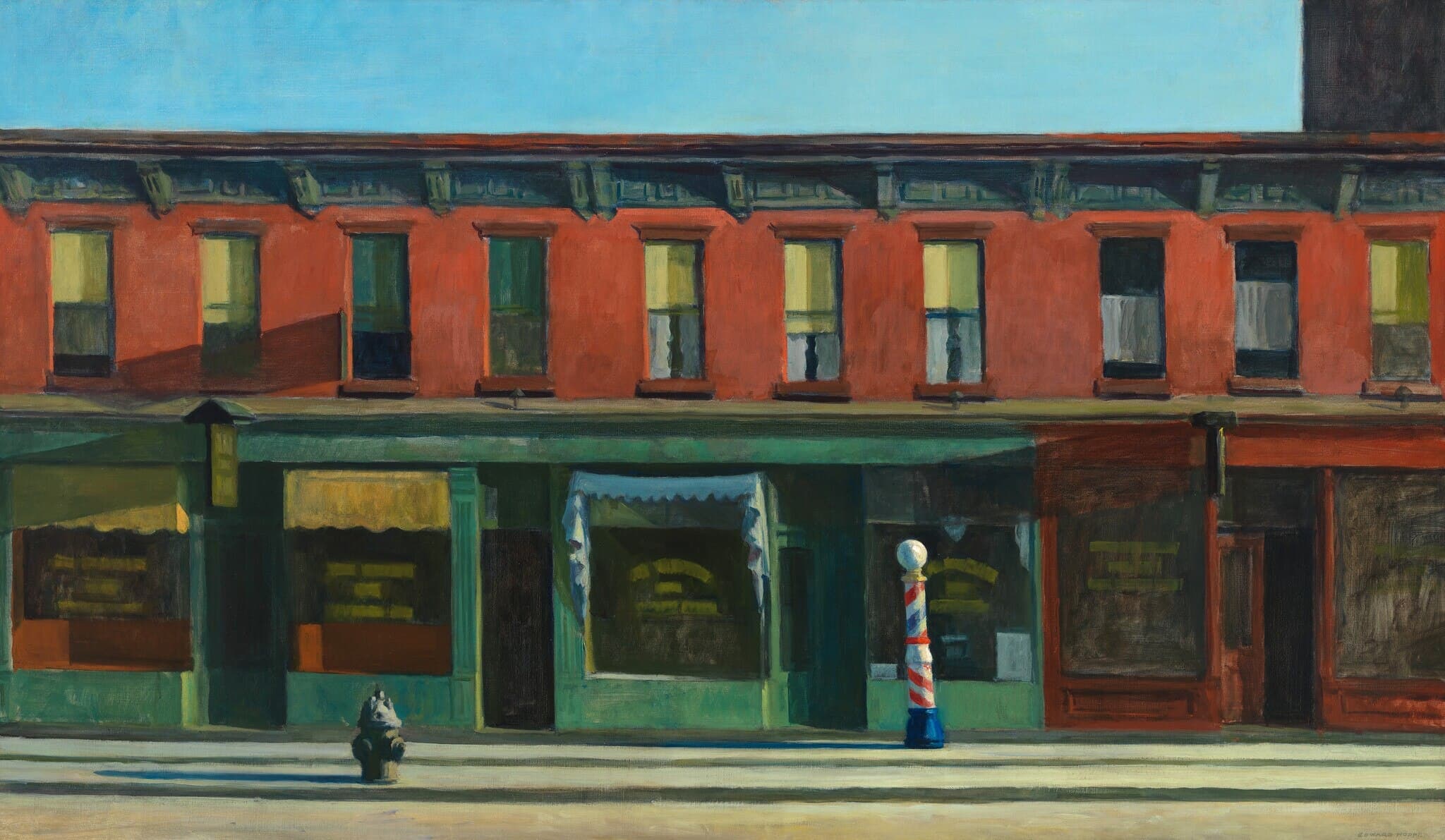
Valuation conclusion: Based on public comparables for Edward Hopper’s museum‑quality oils and the painting’s institutional ownership, my reasoned market estimate for Early Sunday Morning (1930) is USD 35–75 million. The work is held in the Whitney Museum collection and has not been a modern auction anchor, so this is a theoretical, contingent valuation premised on a hypothetical market offering [1].
Comparable anchors and market context: The upper bound for Hopper is demonstrated by the Christie’s 2018 sale of Chop Suey, which realized approximately USD 91.9 million and establishes the market ceiling for the artist’s most iconic canvases [2]. Mid‑tier, museum‑quality Hopper oils have realized results in the tens of millions (for example East Wind Over Weehawken, Christie’s 2013), while other well‑published urban works have sold in the high single to low double‑digit millions; sale context matters greatly—deaccessions and day‑sale lots typically trade at materially lower levels than marquee evening‑sale works [3][4].
Adjustment rationale for Early Sunday Morning: This painting’s iconic status, frequent reproduction and centrality to Hopper’s oeuvre support a premium relative to lesser known works. Because it is museum‑held, provenance is likely clear and attractive to major buyers, but institutional ownership also means the piece is effectively off‑market under normal circumstances. The assumed starting point for a sale therefore combines (a) high intrinsic desirability and (b) limited market supply, producing the mid‑to‑upper tens‑of‑millions range. Condition, exhibition history, and any encumbrances would be the principal modifiers of that estimate.
Sale mechanics and sensitivity: Price outcomes would vary by route to market. A marquee evening sale with active bidding (museums, blue‑chip private collectors, deep international buyers) could push realization toward or above the top of the range; a single‑buyer private placement or a deaccession may produce lower results. Macroeconomic liquidity, contemporary auction calendar competition, and buyer appetite for 20th‑century American masters at the time of sale are also decisive.
Next steps to refine valuation: To tighten this estimate to a useful appraisal band I recommend obtaining an institutional condition report, complete provenance and exhibition documentation, and targeted comparable sales pulled from subscription databases. Given the work’s museum status, any formal transactional or insurance valuation should be completed on‑site by an accredited specialist.
Key Valuation Factors
Art Historical Significance
High ImpactEarly Sunday Morning is widely recognized as one of Edward Hopper’s signature images and one of the defining urban/architectural works of American modernism. Painted in 1930, it encapsulates the thematic pairings—light, empty urban spaces, and a mood of quiet isolation—that make Hopper both commercially and culturally important. The painting’s frequent reproduction in books and exhibitions amplifies name recognition among institutional buyers and high‑net‑worth collectors. That canonical status directly supports premium pricing: collectors pay a measurable premium for iconic, culturally resonant works because they confer curatorial and market prestige as well as liquidity in a rare sale scenario.
Provenance & Institutional Ownership
High ImpactThe painting’s long‑standing placement in a major public collection (commonly cited as the Whitney Museum) both enhances and constrains its market value. Institutional provenance reduces title risk and verifies exhibition/publication pedigree—attributes that increase buyer confidence. At the same time, museum ownership makes an actual sale unlikely; when institutions do deaccession landmark works, results are driven by different dynamics than typical evening auctions (sometimes lower realization, sometimes a targeted transfer to another institution). For valuation purposes, museum provenance supports a higher theoretical ceiling but lowers the practical probability of a public market transaction.
Market Comparables & Auction Records
High ImpactHopper’s auction record and high‑profile sales provide the primary empirical basis for valuation. Chop Suey (2018) set an artist ceiling near USD 92M; other important oils have realized roughly USD 20M–40M in different cycles. These discrete results create a wide but informative band: marquee, museum‑quality canvases can achieve very high outcomes while less prominent or smaller works trade materially lower. Comparable sales must be adjusted for sale context (evening sale vs deaccession), date, subject, and condition to model a realistic estimate for Early Sunday Morning.
Condition & Conservation
Medium ImpactPhysical condition is a critical value modifier for a high‑tier painting. Stable original paint, minimal invasive restoration, and a traceable conservation history sustain buyer confidence and allow top pricing. Conversely, significant restorations, relining, or structural issues can reduce competitive bidding among top buyers and materially depress realization. Because Early Sunday Morning is museum‑held, condition is likely well documented, but an on‑site assessment and treatment history are required to rule out any discounts tied to conservation concerns.
Market Liquidity & Timing
Medium ImpactEven for blue‑chip names, liquidity is episodic—demand concentrates around rare, high‑quality offerings. The timing of a potential sale relative to market liquidity, competing high‑value works on offer, interest rates, and geopolitical/economic conditions will materially influence realized price. Private sales can sometimes exceed auction results via negotiated premiums, but they require the right buyer match. For a museum‑quality Hopper, optimal timing and sale route (evening auction vs private placement) are decisive factors in achieving the upper end of the valuation range.
Sale History
Early Sunday Morning has never been sold at public auction. It has been held by Whitney Museum of American Art.
Edward Hopper's Market
Edward Hopper is a blue‑chip, museum‑anchored American modernist whose most important oils rank among the highest‑realizing 20th‑century American paintings. The artist has a deep institutional presence in major U.S. museums, strong market recognition globally, and an auction record that demonstrates both a high ceiling and significant price dispersion by subject, date, and scale. Watercolors and works on paper trade at much lower levels than museum‑quality oils, but highly visible canonical canvases attract intense collector and institutional interest. Hopper remains a reliable price leader within the American‑scene/realist niche.
Comparable Sales
Chop Suey
Edward Hopper
Artist auction record; iconic, museum-quality oil from the same late-1920s/early-1930s period—serves as the market ceiling for Hopper's top-tier works.
$91.9M
2018, Christie's New York
~$113.9M adjusted
East Wind Over Weehawken
Edward Hopper
Major urban landscape oil by Hopper from the same era; strong high‑mid‑tier result that is directly relevant for valuing large, museum-quality cityscapes.
$40.5M
2013, Christie's New York
~$55.9M adjusted
Blackwell's Island
Edward Hopper
Earlier urban/architectural subject; useful to gauge the lower end of museum-quality urban works by Hopper in the market.
$19.2M
2013, Christie's New York
~$26.4M adjusted
Cobb's Barns, South Truro
Edward Hopper
Whitney deaccession sale (museum provenance); shows realized prices for Hopper works when sold via institutional deaccession—often below marquee evening-sale results.
$7.2M
2023, Sotheby's New York
~$7.6M adjusted
Hotel Window
Edward Hopper
High-quality later-period Hopper canvas that achieved a strong result in an earlier market cycle; useful for long‑term appreciation and cross-period comparisons.
$26.9M
2006, Sotheby's New York
~$43.0M adjusted
Current Market Trends
Demand for blue‑chip 20th‑century American masters remains resilient among institutions and deep private collectors, though transaction timing is sensitive to macroeconomic liquidity and competing market offerings. Auction markets continue to reward rarity and exhibition pedigree; deaccessions and private placements are important liquidity channels but often produce divergent price outcomes. Overall, selective appetite for marquee Hopper paintings is strong, supporting high potential realizations in optimal sale circumstances.
Sources
- Whitney Museum of American Art — Collection entry for Early Sunday Morning
- Christie's — Coverage of the Barney Ebsworth Collection sale (Chop Suey, 2018)
- Christie's press materials / sale records (selected Hopper comparables)
- The Art Newspaper — coverage of Sotheby's sales and Whitney deaccession context (May 2023)