How Much Is East Wind Over Weehawken Worth?
Last updated: May 1, 2026
Quick Facts
- Last Sale
- $40.5M (2013, Christie's, New York)
- Methodology
- recent sale
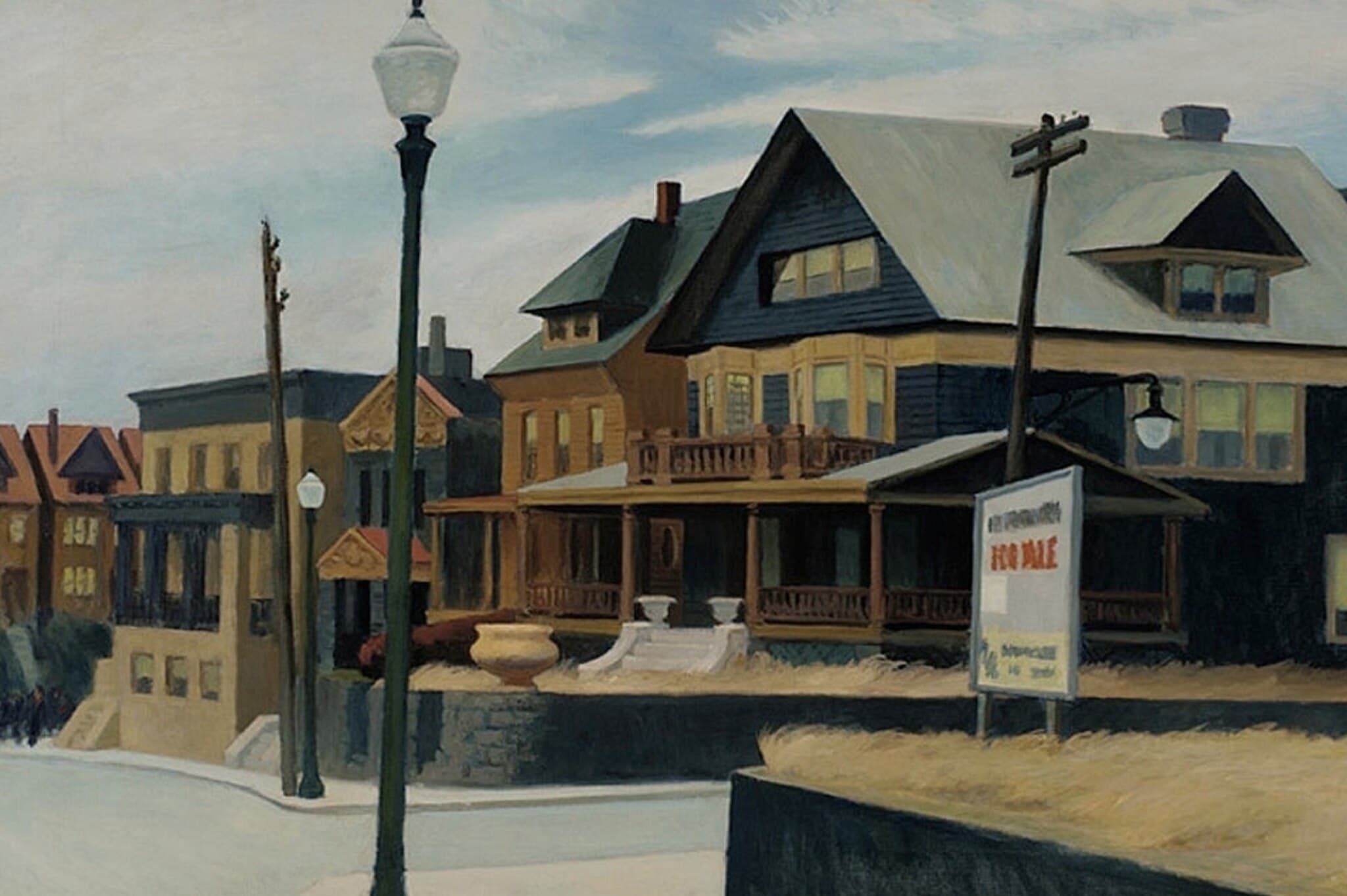
Anchored to the confirmed Christie's New York sale on 2013-12-05 (price realized $40,485,000 incl. premium), the current fair‑market estimate for Edward Hopper’s East Wind Over Weehawken is $40–75M. The low end reflects a standard re‑offer anchored to the 2013 result; the high end presumes strong sale conditions (blockbuster week placement, museum interest, competitive bidding).
Valuation Analysis
Anchor and approach: This valuation is anchored to the publicly recorded Christie’s New York sale on 5 December 2013, when East Wind Over Weehawken realized $40,485,000 (price realized, including buyer’s premium) after being deaccessioned by the Pennsylvania Academy of the Fine Arts [1]. That concrete result establishes the base market datum. I apply a recent‑sale methodology that uses the 2013 transaction as the primary anchor and adjusts upward for the artist’s subsequent market ceiling and persistent institutional demand, with attention to sale conditions, provenance, condition and exhibition potential [1][2].
Comparables and market context: Edward Hopper’s market ceiling rose notably when Chop Suey set a new record at public auction in 2018, demonstrating that top‑quality Hopper works can achieve substantially higher sums under optimal circumstances [3]. East Wind Over Weehawken is not usually treated as one of Hopper’s canonical single‑image masterpieces, but the 2013 sale shows strong collector/museum willingness to pay high prices for museum‑quality Hopper examples. Use of Chop Suey as a high‑end comparable frames upside scenarios; the 2013 result remains the most direct and reliable comp for a re‑offer in today’s market [3].
Key drivers of value: Provenance and exhibition history are strong positives here — the painting passed through Rehn Galleries and was acquired by PAFA in 1952 and appeared in historical exhibitions (Whitney and others), which materially increases buyer confidence and institutional interest [1][5]. Condition, size, and technical findings (conservation, original varnish, restoration history) are decisive and can swing final price materially. Sale venue, timing (placement during a high‑visibility American art sale week), catalogue presentation, and museum loan potential will determine whether the work sells near the 2013 anchor or achieves a substantial premium [1][6].
Valuation conclusion and scenarios: Reasonable fair‑market range as of 1 May 2026: $40–75M (display). The baseline re‑offer estimate equals or closely tracks the 2013 price realized ($40.485M) and assumes similar conditions and unchanged attribution/condition. A strong, well‑marketed auction (or highly competitive private sale with museum lending and fresh scholarship) could lift the painting into the $75M+ band; the extreme top‑end outcomes (>$120M) remain unlikely given the painting’s relative standing versus Hopper’s most iconic trophy pictures [1][3].
Next steps to firm a formal appraisal: obtain the Christie’s lot sheet and PAFA deaccession documentation, commission an in‑hand condition/conservation report, verify catalogue raisonné entry (Gail Levin and subsequent scholarship), and compile closed comparables for Hopper works of similar date, size and exhibition history. With that in‑hand information, the estimate can be narrowed to a tighter single‑figure number and a formal written appraisal prepared for insurance, sale or estate purposes [1][2][5].
Key Valuation Factors
Art Historical Significance
Medium ImpactEast Wind Over Weehawken dates to 1934, within Edward Hopper’s mature period when his themes of urban solitude and light were fully developed. While it is not typically cited at the level of Nighthawks or Chop Suey, it demonstrates hallmark Hopper concerns—architecture, angled light and human absence/ambiguity—and is accompanied by preparatory studies in institutional collections. That places the work in the mid‑to‑upper tier of Hopper’s market relevance: important to specialists and appealing to institutional collectors, but not automatically a museum anchor that would command the absolute top‑end premiums reserved for a small handful of canonical images. Its significance therefore supports a high market base, with the potential to appreciate if re‑evaluated by scholarship or high‑profile exhibitions.
Provenance & Exhibition History
High ImpactDocumented museum provenance (acquisition by the Pennsylvania Academy of the Fine Arts in 1952) and historic exhibition history (Whitney and Corcoran listings) materially enhance the painting’s marketability and buyer confidence. Museum provenance reduces attribution risk, increases the likelihood of institutional interest, and typically commands a premium at auction. The 2013 sale was a PAFA deaccession, which generated heightened market attention; works coming directly from museum collections often attract competitive bidding when marketed with full provenance and exhibition documentation. Any gaps or ambiguities in the chain of ownership would reduce value, so certified documentation is a major value driver.
Artist Market & Auction Record
High ImpactEdward Hopper is a blue‑chip American modernist with demonstrable willingness among collectors and institutions to pay high sums. His auction ceiling rose substantially after the 2018 Chop Suey record, confirming strong demand for top examples. Despite that, liquidity is concentrated in a relatively small subset of iconic works; lesser‑known but museum‑quality paintings (such as East Wind Over Weehawken) command very strong prices but typically sit below the artist’s peak trophies. The existence of a documented $40.485M public sale in 2013 provides a robust market anchor that informs present valuation scenarios.
Condition & Technical State
High ImpactCondition and any conservation history are decisive. Original surface and stable paint film increase buyer confidence; significant restorations, overcleaning, relining or structural issues (canvas tears, extensive inpainting) can reduce value materially—often by tens of percent for blue‑chip works. Conversely, a pristine surface or positive technical findings (original ground, consistent pigment chemistry) can support or add a premium. Prospective sellers/buyers should commission an in‑hand technical and conservation report prior to sale; auction houses will require condition reports and may highlight any issues in the catalogue, which directly affects bidding dynamics.
Rarity & Availability
Medium ImpactOil paintings by Hopper of comparable quality and clear museum provenance appear only intermittently in the market, making each offering relatively scarce. The 2013 museum deaccession was a rare opportunity that brought concentrated collector attention; scarcity typically tightens competition and supports higher prices. However, not every rare work reaches the highest price tier—rarity interacts with desirability, subject, and perceived iconic status. Availability (auction versus private sale) also alters realized price: public auctions can establish new benchmarks, while discreet private placements might achieve comparable pricing with less volatility but sometimes lower headline results.
Sale History
Christie's, New York (Sale 2750, Lot 17)
Edward Hopper's Market
Edward Hopper is a firmly established blue‑chip artist in the market for 20th‑century American art. Demand from museums and major private collectors is strong and sustained; supply is limited because the number of museum‑quality oils in private hands is small. Auction records (most notably Chop Suey in 2018) demonstrate a high ceiling for the artist’s most iconic works, while well‑provenanced, museum‑quality mid‑tier works regularly trade in the multi‑million dollar range. Hopper’s market behavior rewards provenance, exhibition history and condition, and top results depend heavily on sale circumstances and marketing.
Current Market Trends
Top‑tier American modernism remains highly sought after, and Hopper continues to be a market leader within that category. Scarcity of quality works combined with institutional collecting interest sustains strong pricing. Realized prices are sensitive to sale timing, venue and macroeconomic sentiment; properly presented museum‑provenance works during major sale weeks continue to attract competitive bidding.
Sources
- Christie's — Lot: East Wind Over Weehawken (Sale 2750, Lot 17, 5 December 2013)
- Christie's press release — Results: American Art achieves … (December 2013)
- Forbes — Edward Hopper's Chop Suey Fetches Record (Nov 2018)
- CNBC coverage of the Christie’s 2013 sale
- Whitney Museum — related studies/preparatory works (collection entry)
- Pennsylvania Academy of the Fine Arts — deaccession announcement / press context (PRWeb 2013)