How Much Is Hotel Window Worth?
Last updated: May 1, 2026
Quick Facts
- Last Sale
- $26.9M (2006, Sotheby's New York)
- Methodology
- comparable analysis
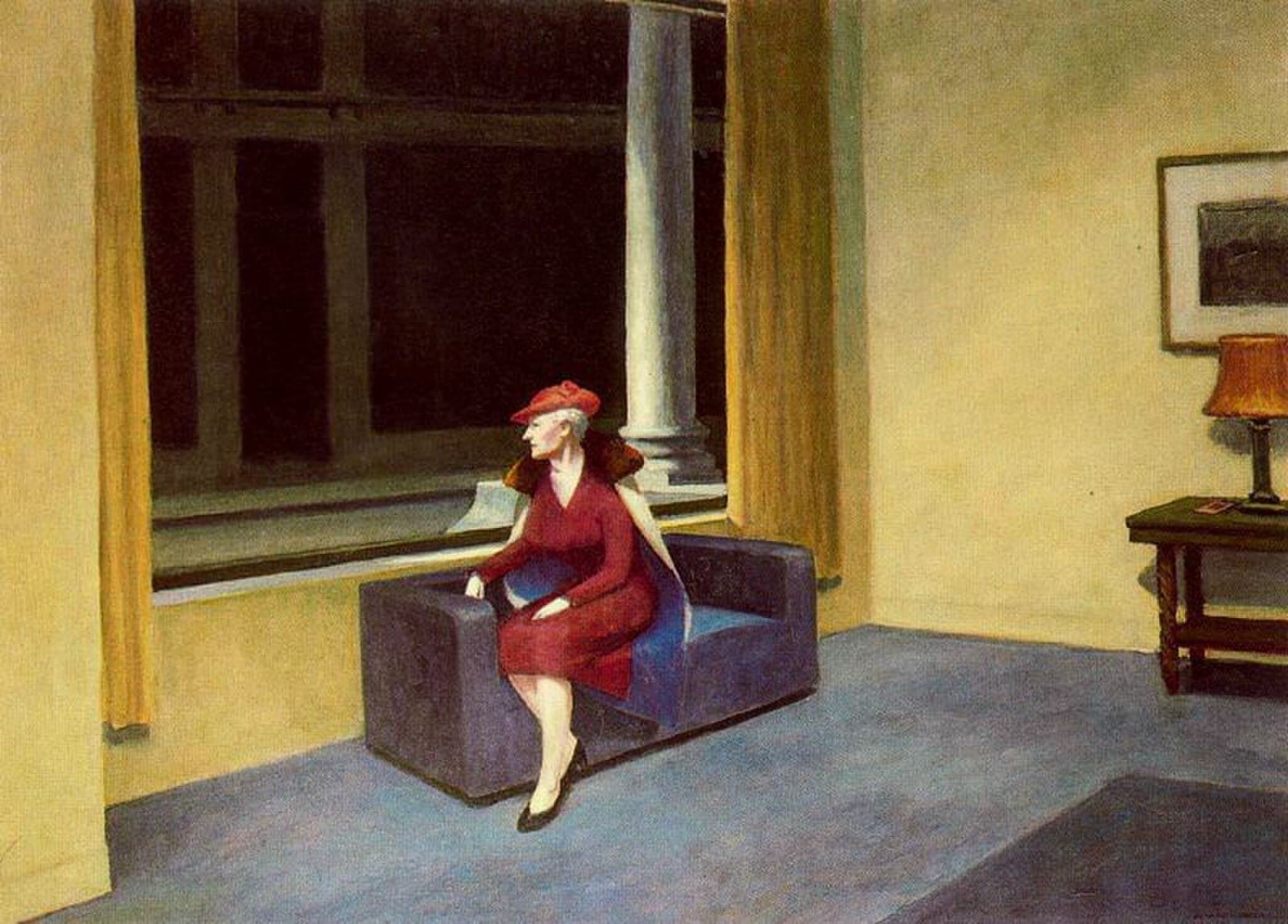
Based on its Gail Levin catalogue‑raisiné attribution, strong museum‑quality provenance and the 2006 Sotheby’s realized price (US$26,896,000), I estimate Edward Hopper’s Hotel Window (1955, 40 x 55 in.) today at US$35–75 million. The range reflects an inflation/market adjustment to the 2006 anchor plus the observed ceiling set by top Hopper oils (e.g., Chop Suey) and variability driven by condition, exhibition history and auction dynamics.
Valuation Analysis
Valuation conclusion: After weighing the painting's catalogue‑raisiné status, continuous high‑quality provenance and its 2006 Sotheby’s hammer/realized price (US$26,896,000), my contemporary market estimate for Edward Hopper's Hotel Window is US$35–75 million. The 2006 sale provides a concrete historical anchor and the work's size (approx. 40 x 55 in.) and 1955 date place it firmly in Hopper's mature, market‑favoured period [1].
Provenance and institutional interest: Hotel Window has a trackable, museum‑grade provenance (Rehn Gallery → Olga H. Knoepke → collectors including Forbes; reported private resale to Steve Martin) and appears in Gail Levin's raisonné. That chain reduces attribution risk and materially improves institutional and private buyer confidence, translating directly into higher realized prices than comparable works with insecure histories.
Comparables and market ceiling: The painting should be valued against both intermediate and top‑tier Hopper results. Its 2006 price, when adjusted for inflation and market appreciation, sits in the low tens of millions in contemporary dollars; larger jumps at the top end of the market are demonstrated by Chop Suey’s record sale (Christie’s, 2018) and East Wind Over Weehawken’s strong outcome, which together establish a multi‑tens‑of‑millions to nine‑figure ceiling for the very best Hopper oils [2]. Hotel Window’s position within that band is driven by condition, exhibition history and the intensity of competition at sale.
Why the US$35–75M band: The low end (~US$35M) reflects an inflation‑and‑market‑adjusted anchor from 2006 plus a conservative premium for pedigree; the high end (~US$75M) assumes near‑ideal condition, recent high‑profile exhibition/loan history, and an auction environment that attracts multiple institutional and deep‑pocketed private bidders. Final hammer will be sensitive to conservation findings, the timing/season of sale, and marketing strategy—each of which can move the outcome substantially.
Practical next steps: obtain an up‑to‑date condition and technical report (X‑ray, IRR, pigment analysis), collate full exhibition/publication documentation, and discuss sale strategy with a major house (season, private treaty vs. auction). With full technical and provenance dossiers, the painting should command strong interest and land inside the stated band; absent favourable condition or complete provenance, expect realized outcomes toward the lower half or below the band.
Key Valuation Factors
Art Historical Significance
High ImpactHotel Window (1955) sits in Hopper's mature period when his interrogation of light, architecture and human isolation reached stylistic clarity. While not necessarily at the absolute apex of Hopper's most famous icons, the work embodies the compositional restraint and narrative ambiguity collectors and museums prize. Inclusion in Gail Levin's catalogue raisonné confirms attribution and scholarly acceptance, a prerequisite for blue‑chip valuation. The canvas dimensions and execution indicate a full‑scale oil intended as a finished work rather than a study, which elevates institutional desirability. Because Hopper produced a finite number of large oils, authenticated mature examples like this command outsized market interest relative to studies or unsigned works.
Provenance & Exhibition
High ImpactA continuous, high‑quality provenance (Rehn Gallery to Olga Knoepke; later ownership by Forbes and a reported private sale to Steve Martin) materially strengthens market value. Provenance linking a work to respected private and institutional collections reduces buyer uncertainty and enhances appeal to museums. Exhibition and publication history that can be presented to buyers—loan records, catalogue citations, and use in major Hopper retrospectives—can add significant premium. In practice, strong provenance and exhibition dossiers often account for tens of percentage points in realized price compared with comparable works lacking such documentation.
Condition & Conservation
Medium ImpactCondition is a decisive determinant of final value. A well‑preserved original surface with minimal later intervention supports top‑end bidding; conversely, heavy restoration, inpainting, or structural instability (severe relining, canvas distortions) can reduce competitive appetite and discount the estimate by 20–40% or more on high‑value lots. For Hotel Window a technical survey (X‑ray, IRR, pigment analysis) and a full conservator's report are necessary to lock the estimate. Any conservation history should be fully disclosed and professionally documented before marketing to avoid last‑minute buyer renegotiation.
Market Comparables & Auction Record
High ImpactHotel Window's 2006 Sotheby's realization of US$26.9M provides a firm historic anchor [1]. Adjusting that anchor for inflation and the mid‑market appreciation of premier Hopper oils places the work in a substantially higher contemporary band. Top‑tier comparables, notably Chop Suey (Christie's, 2018), demonstrate the market ceiling and institutional willingness to pay aggressively for canonical Hopper oils [2]. Intermediate comparables such as East Wind Over Weehawken confirm sustained multi‑ten‑million outcomes for mature large oils. Auction dynamics, seasonality and competing lots will ultimately determine the final outcome within the estimated band.
Rarity & Collector Demand
Medium-high ImpactLarge, authenticated Hopper oils are scarce because many important canvases are already held in museums or long‑term private collections; supply is therefore limited. This scarcity, coupled with ongoing institutional acquisition programs and a base of deep‑pocketed private collectors, sustains strong demand for high‑quality works. That said, buyer concentration in a relatively small collector pool makes outcomes sensitive to who is active at a given sale. When multiple institutions or marquee collectors compete, prices accelerate; if demand is narrower, realized outcomes can fall to the lower part of the estimate band.
Sale History
Frank K.M. Rehn Gallery → Olga H. Knoepke
Sotheby's (Andrew Crispo/IRS dispersal) → Forbes Collection
Private sale (Forbes → Steve Martin, reported)
Sotheby's New York
Edward Hopper's Market
Edward Hopper is a blue‑chip name in 20th‑century American art; his major oils are institutionally prized and rarely available. Auction and private sale records show a bifurcated market: canonical, well‑provenanced oils reach multi‑tens to nine‑figure outcomes in strong markets, while studies, watercolours and works with limited provenance sell for substantially less. Hopper's scarcity of large oils, strong museum interest and clarity of attribution underpin a durable pricing floor and periodic record highs when museum‑quality works reach the block.
Comparable Sales
Chop Suey
Edward Hopper
Same artist; canonical, museum‑quality oil on canvas that set the auction record for Hopper — establishes the top end of the market for premier Hopper oils.
$91.9M
2018, Christie's New York
~$116.3M adjusted
East Wind Over Weehawken
Edward Hopper
Same artist; large, high‑profile urban landscape from Hopper's mature period that achieved a strong multi‑million result — a near‑tier comparable for scale and market standing.
$40.5M
2013, Christie's New York
~$55.3M adjusted
Hotel Window
Edward Hopper
The subject work itself — authenticated Hopper oil (1955) with strong provenance and a major public auction result in 2006; serves as the primary baseline comparable.
$26.9M
2006, Sotheby's New York
~$42.4M adjusted
Current Market Trends
Through 2023–2026, the blue‑chip market for mid‑century American painting has remained resilient. Institutional buying and wealthy private collectors sustain demand for marquee works, but macroeconomic volatility and shifting collecting priorities can compress buyer depth on specific lots. Supply remains constrained for top Hopper oils, supporting a high floor, while headline records for a few exceptional works indicate that the market still rewards canonical, well‑provenanced pieces.