How Much Is House by the Railroad Worth?
Last updated: May 1, 2026
Quick Facts
- Current Location
- The Museum of Modern Art (MoMA)
- Methodology
- comparable analysis
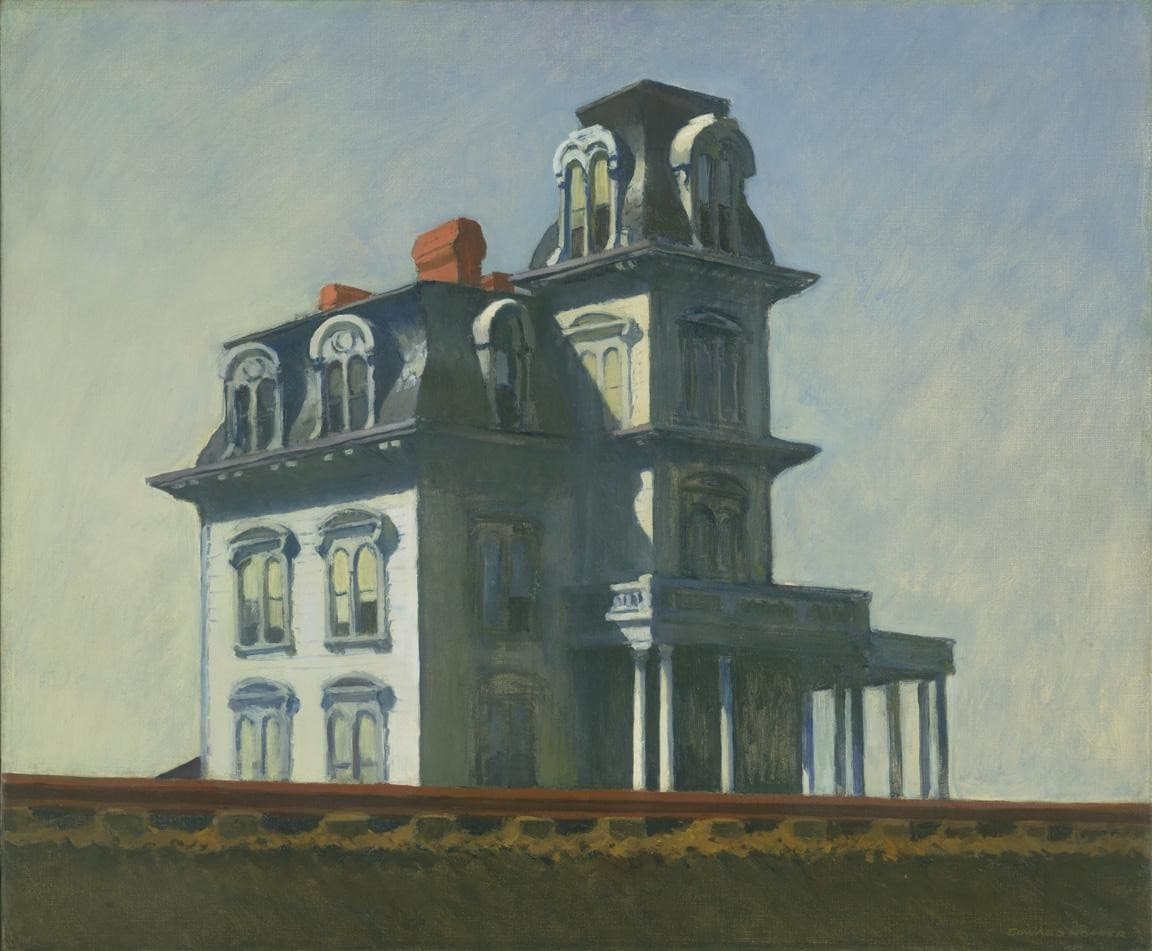
If offered on the open market under extraordinary circumstances, Edward Hopper’s House by the Railroad (1925) would likely realize between $40–80 million. This range is based on trophy‑Hopper comparables (Chop Suey; East Wind Over Weehawken), the painting’s canonical status and long museum ownership, and pragmatic discounts for deaccession constraints and buyer‑pool effects.
Valuation Analysis
Valuation conclusion: I estimate a realistic market value for Edward Hopper’s House by the Railroad (1925) at USD 40–80 million if it were to come to market today under exceptional circumstances (deaccession or a private institutional sale). This assessment assumes the painting is in sound, original condition with no donor restrictions that legally bar sale and that the transaction is conducted through a major auction house or as a controlled private placement.[1]
The principal methodology is a comparables analysis anchored to clear public evidence: the artist’s auction record, Chop Suey (1929), which established Hopper in the trophy tier in 2018, and the earlier major oil sale East Wind Over Weehawken (1934) in 2013, which provides a documented lower bound for top‑quality Hopper oils. Chop Suey demonstrates peak willingness to pay for a high‑profile Hopper, while East Wind demonstrates a credible realized level for a major canvas—together they bracket the realistic market zone into which House by the Railroad falls because of its iconic imagery and museum provenance.[2][3]
Key price drivers pushing toward the top of the range are the painting’s iconic status, extensive exhibition and scholarly history, and impeccable MoMA provenance, which together create broad institutional and private demand. Offsetting factors that justify a lower‑end result include the painting’s permanent placement in MoMA since 1930 (limiting sale likelihood and potentially tightening the buyer pool if deaccession rules apply), possible donor restrictions, and the fact that deaccession sales or constrained institutional private placements can depress competitive bidding dynamics relative to an open market trophy sale.[1]
Practical sale scenarios change outcomes materially: a consensual private transfer to another major museum or a strategic brokered sale could realize mid‑to‑high range pricing with limited publicity; a high‑profile auction with strong marketing and provenance narrative might push the painting toward or above the high end if multiple deep‑pocketed bidders compete. Conversely, legal/donor limitations, poor timing, or undisclosed conservation issues would reduce realizable value materially.
Next steps to firm the estimate: (1) Confirm deaccession eligibility and any donor restrictions in MoMA archives; (2) obtain a current condition/conservation report; (3) compile full exhibition, publication and provenance dossier; and (4) request formal pre‑sale opinion(s) from Christie’s and Sotheby’s estimate desks. With those items, the range can be tightened and a preferred sale channel selected.[1][2][4]
Key Valuation Factors
Art Historical Significance
High ImpactHouse by the Railroad is one of Edward Hopper’s most widely recognized and culturally resonant works. Painted in 1925 it marks a pivotal moment in Hopper’s thematic development—combining architectural isolation, cinematic composition and an iconic domestic silhouette that has informed film and popular culture (famously cited in relation to Psycho’s Bates house). Its recurrent reproduction in scholarship and popular media enhances name recognition and institutional desire to hold or acquire the work. This high symbolic value translates directly into pricing power: collectors and museums pay a premium for works that define an artist’s public image, particularly when those works anchor narratives about American modernism.
Rarity & Supply
High ImpactTop‑tier Hopper oils are exceptionally scarce on the market because the majority of his canonical canvases reside in major public collections. Scarcity of supply creates episodic, trophy‑driven bidding when important oils do appear; however, the rarity also means museum‑held works rarely enter the market and when they do it is often under deaccession rules that can limit buyer competition. House by the Railroad’s long‑term museum holding magnifies its rarity: absence from recent auction records means valuation must be extrapolated from the small universe of comparable high‑end Hopper oils, increasing uncertainty but also supporting a substantial scarcity premium.
Provenance & Ownership
High ImpactThe painting has been in the Museum of Modern Art’s collection since 1930 (accessioned early in MoMA’s holdings), and that institutional provenance is a major positive for marketability and buyer confidence. A clear, museum‑quality provenance reduces title risk and enhances exhibition and publication history—both strong value drivers. Conversely, long museum ownership can create legal or donor restrictions that complicate sale (deaccession policies, donor‑imposed conditions). Confirming the exact gift terms and any restrictions is therefore essential before any sale; unrestricted museum provenance typically pushes realizable value upward.
Comparables & Auction Evidence
High ImpactPublic auction evidence is limited but decisive: Chop Suey (1929) established the artist’s trophy ceiling when it sold for USD 91.875 million in 2018, while East Wind Over Weehawken (1934) sold for approximately USD 40.485 million in 2013—these sales bracket the likely zone for a museum‑quality Hopper oil. Works on paper trade at far lower levels (commonly $1–2M for prime watercolors), demonstrating variation by medium. Comparative adjustment considers size, subject prominence, exhibition history and sale channel; House by the Railroad’s iconic status and museum provenance place it near the upper half of this comparables band.
Condition & Exhibition History
Medium ImpactLong institutional ownership and repeated inclusion in major exhibitions typically indicate sound condition and strong documentation—both positive for value. MoMA stewardship suggests appropriate conservation standards, which reduces buyer due diligence friction and supports higher bids. Nonetheless, any previously undocumented restoration, frame alterations, or structural concerns would materially reduce value; a current conservation report is required to certify condition. Exhibition and publication pedigree amplifies demand and can justify placement near the top of the estimated range when fully documented.
Sale History
House by the Railroad has never been sold at public auction. It has been held by The Museum of Modern Art (MoMA).
Edward Hopper's Market
Edward Hopper is a blue‑chip, trophy‑level American modern whose major oils command the highest prices in the American 20th‑century market. Institutional ownership of his key canvases is extensive (Whitney, MoMA, major regional museums), which both limits supply and concentrates buyer interest into a small group of deep‑pocketed collectors and institutions. Hopper’s auction record (Chop Suey, 2018) demonstrates the ceiling; mid‑market activity is dominated by watercolors, prints and drawings. Overall, Hopper is highly collectible, with pricing outcomes driven by rarity, iconicity and museum‑grade provenance.
Comparable Sales
Chop Suey
Edward Hopper
Artist's auction record; large, museum‑quality 1929 oil—sets the upper bound for trophy Hopper oils and demonstrates peak willingness‑to‑pay for an iconic Hopper.
$91.9M
2018, Christie's New York
~$112.1M adjusted
East Wind Over Weehawken
Edward Hopper
Major Hopper oil sold at auction (1934); provides a public lower bound for top‑tier Hopper oils and is useful for calibrating a realistic estimate for a museum‑quality canvas.
$40.5M
2013, Christie's New York
~$51.8M adjusted
Coast Guard Cove
Edward Hopper
High‑quality 1929 watercolor sold in a major sale; shows continued collector demand for Hopper works on paper in the low‑to‑mid seven‑figure range and recent market appetite for 1920s imagery.
$2.0M
2023, Christie's New York (Paul G. Allen sale)
~$2.1M adjusted
Four Dead Trees
Edward Hopper
Watercolor (1942) sold in a Modern American sale; supports mid‑market pricing for Hopper works on paper and indicates active demand at seven‑figure levels.
$1.5M
2023, Christie's New York (Modern American sale)
~$1.6M adjusted
Spurwink Church
Edward Hopper
Recent (May 2025) watercolor sale demonstrating ongoing demand for Hopper works on paper; useful for short‑term market calibration and liquidity indications.
$1.0M
2025, Sotheby's New York
Current Market Trends
Since 2022–2025 the market has shown renewed institutional and collector interest in historical American art, with major exhibitions elevating demand for high‑quality works. Supply of trophy Hopper oils remains constrained, so price movements are episodic—significant when top works appear, otherwise steady at mid‑market levels for works on paper. Macro factors and timing will affect any sale, but institutional narratives and strong comparables keep Hopper in a favorable position.