How Much Is New York Movie Worth?
Last updated: May 1, 2026
Quick Facts
- Methodology
- comparable analysis
Hypothetical market range for Edward Hopper’s New York Movie (1939) is $40,000,000–$90,000,000. The range is anchored to Hopper’s auction ceiling (Chop Suey, 2018) and adjusted for museum ownership, rarity, and recent market comparables for Hopper oils versus works on paper.
Valuation Analysis
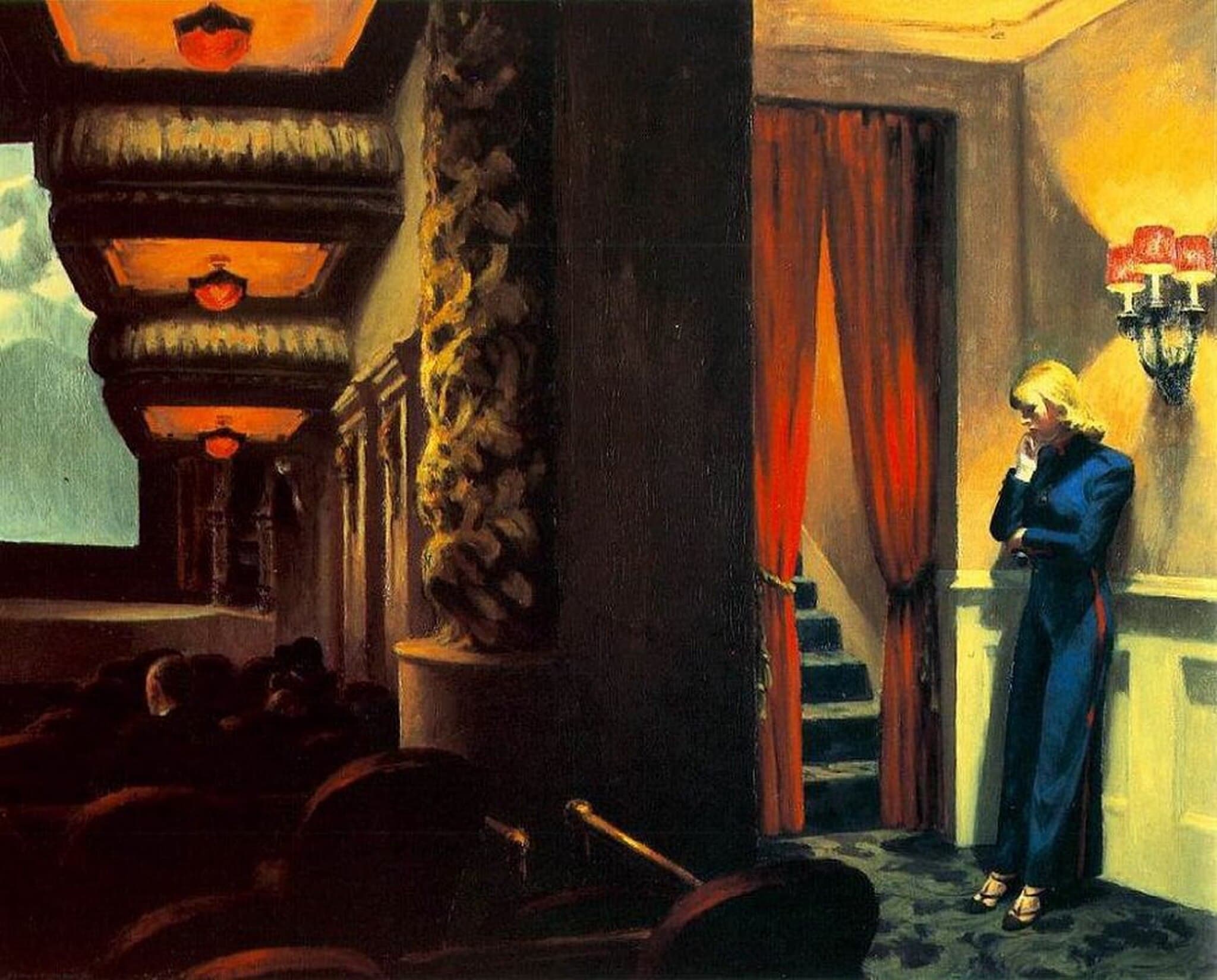
Valuation Summary: Using a comparable-analysis methodology, this appraisal places Edward Hopper’s New York Movie (1939) in a hypothetical market range of $40,000,000–$90,000,000. The range is derived from the artist’s auction ceiling (Chop Suey, 1929, sold in 2018 for approximately $91.9M including premium), tempered by the historical price distribution for Hopper oils and the more frequently traded works on paper that have recently realized in the low millions. Because New York Movie is in the Museum of Modern Art collection and has no public sale history, this valuation is theoretical and contingent on sale mechanics, condition, and market climate [1][2].
Methodology and comparables: The upper bound is set by the established Hopper record; that sale demonstrates what top-tier Hopper interiors can achieve under optimal auction conditions and motivated bidding [2]. The lower bound reflects realistic market outcomes for major museum‑quality works that lack recent market exposure and for which buyers must price in acquisition friction, deaccession complexity, and a limited pool of comparables. Recent Christie’s results for Hopper watercolors and works on paper (in the $1–2M band) illustrate the market’s tiering and the premium attached to oil paintings of comparable scale and historical significance.
Work significance: Painted in 1939, New York Movie exemplifies Hopper’s mature exploration of cinematic interior space, atmospheric light and urban solitude. It sits with Hopper’s most collectible interiors and is widely published and exhibited, which increases cultural recognition and buyer confidence. Its thematic proximity to Nighthawks and Chop Suey strengthens its relevance as a comparably high‑value oil should it be offered.
Ownership, condition and sale mechanics: MoMA ownership confers impeccable provenance and exhibition history—positive value drivers—but also renders an actual sale unlikely and introduces deaccession complexity. A current conservation/condition report would be required to confirm physical integrity; museum stewardship suggests good condition, but documentation is essential. Sale venue is decisive: a marquee evening sale with international marketing and multiple institutional/private bidders could push the work toward the top of the range; a private treaty or constrained deaccession will likely produce a lower outcome.
Conclusion and next steps: The $40M–$90M band is a reasoned, market‑anchored hypothetical for New York Movie. The high end approaches Hopper’s realized maximum only in exceptional competitive sale conditions; the low end reflects market frictions and the absence of a public sale record. To refine this estimate obtain MoMA acquisition and conservation records, compile a detailed comp list of major Hopper oils (hammer vs premium), and consult senior specialists at Christie’s and Sotheby’s for market testing and pre-sale interest gauging [1][2].
Key Valuation Factors
Art Historical Significance
High ImpactNew York Movie is a textbook example of Edward Hopper’s mature interior work and carries strong art‑historical weight. Executed in 1939, the painting expresses the artist’s signature use of cinematic light, spatial composition and themes of urban solitude—attributes that place it among his most collectible images. Its frequent inclusion in scholarly literature and major exhibitions, together with MoMA ownership, amplifies cultural recognition and collector demand. Works that are demonstrably central to an artist’s oeuvre typically command premium pricing because buyers value canonical status, reproducibility, and curatorial validation. This factor therefore exerts significant upward pressure on valuation and supports estimates toward the higher portion of a realistic market range.
Rarity/Scarcity
High ImpactMajor Hopper oils of museum quality rarely appear on the market; most of the artist’s best canvases are retained by institutions or long‑term private collections. This structural scarcity creates a meaningful supply constraint and a scarcity premium for canonical works that do come to market. When a comparable museum‑quality Hopper oil is offered at auction it typically attracts intense institutional interest and wealthy private bidders, which can produce outsized realizations. Scarcity also reduces the pool of recent, directly comparable sales, increasing valuation volatility and reliance on precedent sales such as Chop Suey. Overall, scarcity is a high‑impact factor that supports robust pricing but raises uncertainty about precise outcomes.
Condition & Conservation
Medium ImpactCondition and conservation history materially affect marketability and price, though museum stewardship often implies good preservation. A formal, up‑to‑date condition report would be required to confirm the originality of paint layers, the structural state of the canvas/ground, and any historic restorations or relining. Minor, well‑documented conservation treatments typically have limited negative impact, while major structural issues or heavy overpainting can depress value significantly. Because New York Movie is held by MoMA, condition risk is likely lower than for works from unknown custody chains, but this remains a medium‑impact factor: it serves as a gatekeeper for achieving premium valuations and must be verified prior to sale.
Provenance & Exhibition/Publication History
High ImpactProvenance anchored by MoMA and an extensive exhibition/publication record strongly enhance market value. Institutional provenance signals authenticity, curatorial endorsement and a documented exhibition history—attributes that de‑risk purchases for major collectors and museums. Inclusion in authoritative catalogues, retrospectives and high‑profile displays increases visibility and perceived importance, often justifying higher estimates. Potential encumbrances—donor conditions or accession restrictions—should be checked, as they can materially affect transferability and realized value. Overall, strong provenance and publication history are high‑impact factors that frequently justify premium pricing for canonical works.
Market Demand & Buyer Pool
High ImpactDemand for a canonical Hopper oil is concentrated among major museums, dedicated collectors of American modernism, and a small cohort of ultra‑wealthy private buyers. Auction houses with international reach can aggregate these bidders and produce competitive environments that push prices upward. Macro factors—economic conditions, philanthropic budgets, tax policy and liquidity—affect buyer appetite and timing. Recent market behavior shows robust interest in marquee American modernist works, while buyer selectivity remains high. This concentrated but deep buyer pool makes demand a high‑impact factor: under the right sale conditions the work is likely to command a strong premium, but outcomes remain sensitive to market sentiment and sale structure.
Sale History
New York Movie has never been sold at public auction.
Edward Hopper's Market
Edward Hopper occupies a top tier in the market for twentieth‑century American painting. His auction record (Chop Suey in 2018) set a low nine‑figure ceiling, but most major Hopper oils trade in the tens of millions, while works on paper and watercolors typically realize in the low‑to‑mid millions. Demand is robust for iconic interiors and urban scenes executed in Hopper’s mature period, and supply is constrained by institutional holdings and long‑term private ownership. Provenance, exhibition history and condition are decisive determinants of price; when a museum‑quality Hopper appears, institutional and high‑net‑worth private buyers often drive competitive bidding.
Comparable Sales
Chop Suey
Edward Hopper
Same artist and a major oil from Hopper's mature period; similar urban/interior subject and museum‑quality stature — provides the market ceiling for Hopper oils.
$91.9M
2018, Christie's, New York (An American Place: The Barney A. Ebsworth Collection, evening sale)
~$113.0M adjusted
Gloucester Roofs
Edward Hopper
Same artist and recent high‑profile auction (single‑owner sale); shows active demand for Hopper works in the low‑millions, but is a watercolor (different medium/scale) so only a limited comp for a major oil.
$2.0M
2022, Christie's, New York (Visionary: The Paul G. Allen Collection Part II)
~$2.2M adjusted
Coast Guard Cove
Edward Hopper
Recent sale of a Hopper watercolor from a major collection; useful to gauge market appetite and pricing for Hopper works on paper but not directly comparable to a museum‑quality oil.
$2.0M
2023, Christie's, New York (Paul G. Allen single‑owner sales)
~$2.1M adjusted
Four Dead Trees
Edward Hopper
Another recent Hopper watercolor sold at auction; indicates the lower‑tier (works‑on‑paper) price band for Hopper in the 1–2M range, underscoring the gap between these and major oils like New York Movie.
$1.5M
2023, Christie's, New York (Modern American Art sale)
~$1.6M adjusted
Current Market Trends
The market for blue‑chip American modernism is selective but resilient. Major, museum‑quality works continue to attract institutional buyers and wealthy private collectors, while mid‑tier material sees slower turnover. Economic uncertainty can temper broader bidding participation, but canonical masterpieces in strong condition and with stellar provenance still ignite competitive international interest. For Hopper specifically, scarcity of important oils combined with steady collector appetite supports premium pricing when top examples come to market.