How Much Is Sun in an Empty Room Worth?
Last updated: July 5, 2026
Quick Facts
- Methodology
- comparable analysis
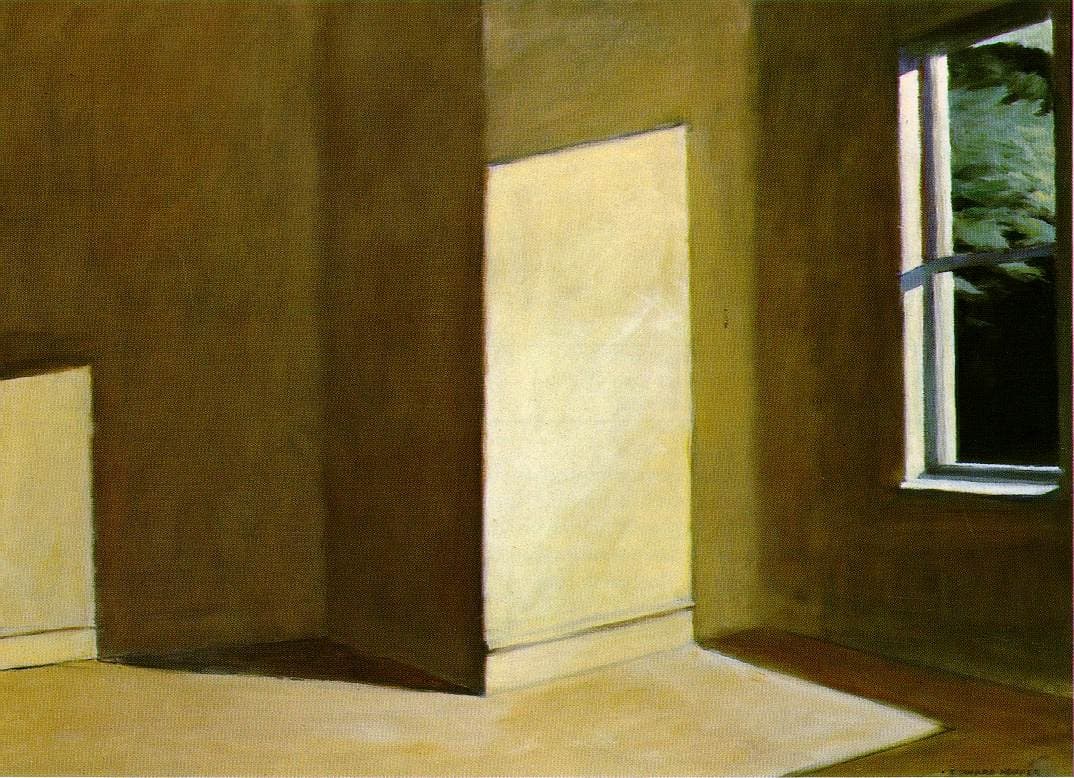
Our view is that Edward Hopper’s Sun in an Empty Room (1963, oil on canvas) would command roughly $60–90 million on the open market. The estimate is anchored to Hopper’s top interior comparables (Chop Suey at $91.9m; Hotel Window at $26.9m) and adjusted for the work’s late-period significance, scale, and the extreme scarcity of museum-caliber interiors in private hands. The painting is in a private collection and a Promised Gift to Crystal Bridges, so this valuation is hypothetical.
Valuation Analysis
Subject work and status. Sun in an Empty Room (1963) is widely recognized as one of Edward Hopper’s most distilled and significant late interiors—a summation of his lifelong preoccupation with light, architecture, and absence. The painting is held in a private collection and designated a Promised Gift to Crystal Bridges Museum of American Art, where it has been on view, with no public auction history for this specific canvas [1]. Any valuation is therefore hypothetical and framed as open‑market fair value.
How the estimate was built. We anchor this range to direct, best‑available comparables for Hopper’s major oils. The category’s ceiling is set by Chop Suey (1929), a masterpiece interior that realized $91.875 million at Christie’s in 2018—still the auction record for Hopper and a clear indicator of nine‑figure demand for top‑tier interiors [2]. A widely exhibited, blue‑chip urban scene, East Wind Over Weehawken (1934), sold for $40.485 million in 2013, establishing a durable benchmark for museum‑level Hopper oils that are a step below the very top icons [3]. A late, thematically resonant interior, Hotel Window (1955), achieved $26.896 million in 2006, demonstrating strong market appetite for Hopper’s mature, light‑driven interiors even with a solitary figure present [4].
Positioning Sun in an Empty Room. Sun in an Empty Room sits squarely within Hopper’s most coveted subject category (interiors) and is frequently cited by scholars as a culminating late statement. It lacks figures, but its austere geometry and raking light embody the quintessential Hopper mood and have acquired broad art‑historical visibility through exhibitions and scholarship. Scarcity is a powerful driver: truly major interiors by Hopper almost never come to market, and many reside permanently in institutions. Recent results for non‑trophy oils (e.g., Cobb’s Barns, South Truro at $7.29m with fees in 2023) underscore that the market is highly stratified—only works with exceptional subject, freshness, and museum‑level quality command multiples of the broader Hopper oil market [5].
The conclusion. Considering: (i) the nine‑figure ceiling set by Chop Suey [2]; (ii) the mid‑eight‑figure benchmark for first‑rate, museum‑level Hopper oils [3]; (iii) the demonstrated strength of mature interiors [4]; and (iv) the extreme scarcity of late, distilled interiors in private hands, we estimate a fair open‑market value today of $60–90 million for Sun in an Empty Room. The upper bound assumes prime condition, first‑rate provenance and literature, and a marquee sale platform with global exposure. Were condition or surface quality to be less than optimal, we would bias toward the lower half of the range; conversely, a perfectly preserved surface and exemplary exhibition history could invite competitive bidding toward the top of the indicated band [1–5].
Key Valuation Factors
Art Historical Significance
High ImpactSun in an Empty Room is widely regarded as a culminating late statement in Hopper’s oeuvre. It distills his lifelong engagement with light, architectural space, and psychological resonance into one of his most austere interiors. The painting’s figureless composition heightens the metaphysical quality central to Hopper’s legacy, making it not only instantly recognizable within the corpus but also frequently cited in scholarship and exhibitions. Works that encapsulate an artist’s core themes near the end of their career often achieve price premiums, functioning as summative icons. This positions the painting at or near the top tier of desirability among Hopper interiors, second only to the very few canonical, earlier masterpieces with deep pop‑cultural imprint.
Scarcity of Major Late Interiors
High ImpactHopper’s market is defined by extreme scarcity of museum‑grade oils in private hands; most masterpieces are institutionally held. Late interiors of distilled geometry and light—those most aligned with contemporary sensibilities—surface exceedingly rarely. When such supply constraints meet robust global demand for twentieth‑century American icons, prices can gap higher, especially in marquee evening sales with cross‑category bidding. This scarcity effect is visible in the artist’s record: the very few interior masterpieces that have traded publicly set the top of the market and continue to calibrate expectations for adjacent works. Sun in an Empty Room would directly benefit from this structural supply shortage were it ever offered.
Provenance, Exhibition, and Literature
High ImpactThe painting is in a private collection and designated a Promised Gift to Crystal Bridges Museum of American Art, where it has been on view—an institutional endorsement that supports perception of quality and importance. Its presence in major exhibitions and frequent discussion in Hopper literature further consolidates its status as a key late work. Such documentation not only reduces market risk (authenticity, dating, context) but also expands the potential buyer pool, as institutions and top private collectors typically prioritize well‑published, widely exhibited works. Strong provenance and exhibition history are consistent predictors of above‑estimate performance for blue‑chip Modern masters, and they underpin the upper half of our range.
Condition, Scale, and Medium
Medium ImpactAs an oil on canvas of substantial, display‑friendly scale, the work sits in the market’s preferred medium/format for Hopper. Condition can materially swing outcomes in this price band: original surface, healthy paint layers, and minimal conservation typically draw aggressive bidding, while lined supports, overpaint, or discolored varnish may compress demand. Our range presumes good to excellent condition as presented in leading institutional venues. Scale also matters—Hopper interiors of moderate‑large size are more competitive than very small panels. In sum, the work’s medium and likely scale are aligned with top collector preferences, with condition acting as the principal variable that could move the needle within the indicated estimate.
Sale History
Sun in an Empty Room has never been sold at public auction.
Edward Hopper's Market
Edward Hopper is a blue‑chip pillar of American modernism whose best oils are tightly held by museums and top private collections. The artist’s auction record is $91.875 million for Chop Suey (Christie’s, 2018), placing him among the most valuable 20th‑century American painters. Additional benchmarks include East Wind Over Weehawken at $40.485 million (Christie’s, 2013) and Hotel Window at $26.896 million (Sotheby’s, 2006). Recent sales show a bifurcated market: small early oils and desirable watercolors can outperform expectations in the $1–5 million range, while non‑trophy oils may underperform if subject or quality is secondary. True masterpieces, especially interiors central to Hopper’s visual language, continue to command intense global demand.
Comparable Sales
Chop Suey
Edward Hopper
Same artist; masterpiece interior and auction record for Hopper. Though earlier and figure-laden, it sets the ceiling for major interior subjects that define Hopper’s market.
$91.9M
2018, Christie's New York
~$118.2M adjusted
East Wind Over Weehawken
Edward Hopper
Same artist; museum-level 1930s urban scene widely exhibited. A core benchmark for top Hopper oils outside the absolute top-tier interior icons.
$40.5M
2013, Christie's New York
~$55.3M adjusted
Hotel Window
Edward Hopper
Same artist; late-period interior with distilled light geometry and a solitary figure. Strong subject and mood proximity to late interiors like Sun in an Empty Room.
$26.9M
2006, Sotheby's New York
~$42.4M adjusted
Cobb’s Barns, South Truro
Edward Hopper
Same artist; 1930s oil with strong exhibition history, sold recently. Useful for gauging current demand for non-trophy Hopper oils in the modern marquee context.
$7.3M
2023, Sotheby's New York
~$7.6M adjusted
Monhegan Lighthouse (oil on panel, ca. 1916–19)
Edward Hopper
Same artist; small, early oil with an iconic subject. While not an interior or late work, it provides a very recent data point on market appetite and pricing momentum.
$4.1M
2026, Sotheby's New York
~$4.1M adjusted
Current Market Trends
After a broad auction slowdown in 2024, 2025–2026 saw a selective rebound led by blue‑chip Impressionist/Modern masters. Buyers prioritized storied provenance, museum‑level quality, and fresh‑to‑market lots, with trophy works attracting deep international bidding across categories. American modernism benefited from integration into marquee evening sales, broadening the collector base beyond traditional American Art buyers. Within this environment, scarcity is decisive: when best‑in‑class works appear, they can achieve aggressive pricing despite macro volatility. Hopper’s top interiors—rare in private hands—are positioned to capitalize on this dynamic, while mid‑tier examples face more discriminating demand and tighter pricing bands.
Sources
- Crystal Bridges Museum of American Art — Sun in an Empty Room (Promised Gift)
- The Art Newspaper — Record $91.9m sale of Hopper’s Chop Suey (2018)
- Christie’s — American Art, December 2013 Results (East Wind Over Weehawken)
- Forbes — Hopper’s Hotel Window Sells for $26.9 Million (2006)
- ArtsJournal — Whitney’s ‘Unlucky 7’: Deaccession results (Sotheby’s, May 2023)