How Much Is Oedipus and the Sphinx Worth?
Last updated: April 18, 2026
Quick Facts
- Methodology
- comparable analysis
Assuming the object is a confirmed, autograph, full‑scale oil by Jean‑Auguste‑Dominique Ingres (a primary early version of Oedipus and the Sphinx), my market estimate is $15,000,000–$60,000,000. If attribution, provenance or condition downgrade the work (studio variant, later replica, or non‑autograph), value falls materially to the ranges noted below.
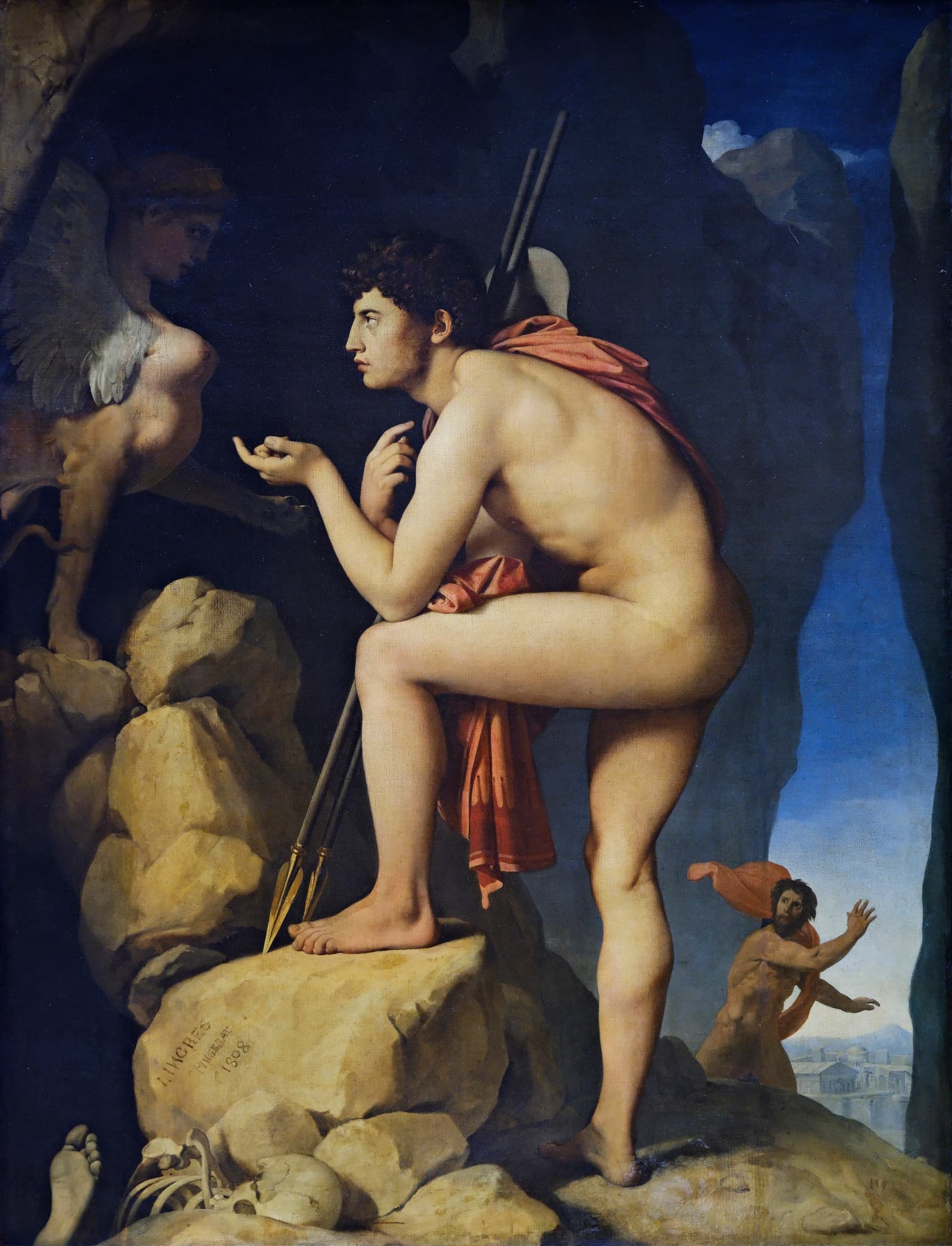
Oedipus and the Sphinx
Jean-Auguste-Dominique Ingres • Oil on canvas
View more by Jean-Auguste-Dominique Ingres →Valuation Analysis
Valuation premise: This opinion assumes the picture is a primary, autograph, full‑scale oil by Jean‑Auguste‑Dominique Ingres — one of the canonical Oedipus compositions. Under that premise I estimate a fair‑market range of $15,000,000 to $60,000,000. Canonical versions and key studies are held in major institutions (notably the Louvre and a small oil sketch in the National Gallery, London), which reduces available market supply and strengthens a scarcity premium for any undisputed private example [1].
Comparables and market anchors: The public auction record for securely attributed Ingres oils is thin and concentrated in portraits or smaller works; a commonly cited modern comparable is Portrait de la comtesse de La Rue (Christie’s, 2009), which sold for approximately €2,000,000 (reported) and illustrates the pricing ceiling for the kinds of Ingres oils that do appear on the market, albeit not for a major early history composition [2]. Because museum‑quality history paintings by Ingres rarely leave institutional collections, an undisputed full‑scale Oedipus would command a substantial premium above these portrait/genre anchors.
Why the wide estimate band: The $15M–$60M interval reflects a realistic spectrum of market outcomes given variable buyer competition, provenance depth, condition, and exhibition potential. The low end presumes solid attribution, good physical condition, and credible but not exceptional provenance that generates interest from wealthy private collectors and a handful of institutions. The high end assumes outstanding continuous provenance, exemplary original condition (minimal invasive restoration), strong exhibition and literature placement, and an auction or private sale that triggers museum participation or competitive international bidders — circumstances that historically produce substantial premiums for rare canonical works.
Downside cases and immediate next steps: If technical study or provenance research downgrades authorship to a studio or later copy, expect materially lower values: authenticated secondary versions commonly sit in the low‑millions ($2M–$10M), while workshop copies or later replicas typically trade in the low‑hundreds of thousands or less. I recommend immediate steps: assemble full provenance and exhibition records, provide high‑resolution recto/verso photographs, and commission technical analysis (X‑ray, IRR, pigment sampling) followed by specialist review (catalogue raisonné author, Musée Ingres/ Louvre curators, and major auction house specialists). Those actions will narrow the band to a market‑actionable figure.
Bottom line: On the autograph, primary‑version premise the fair‑market value is $15M–$60M. Absent firm attribution/provenance/condition support, treat this as an upper‑tier scenario and expect the price to fall into the secondary bands described above.
Key Valuation Factors
Art Historical Significance
High ImpactOedipus and the Sphinx is a formative, highly regarded composition in Ingres’s early career and a touchstone for his ambition as a history painter. A primary autograph instance functions not only as a high‑value collectible but also as a research and exhibition asset for museums and scholarship. Institutional demand for canonical works raises both the buyer pool and the price ceiling: museums and foundations are prepared to pay premiums to acquire picture‑history works that fill gaps in collections or anchor exhibitions. For these reasons the painting’s art‑historical weight is a principal upward driver of value; less important variants or copies lack this institutional pull and therefore trade at much lower levels.
Attribution & Authorship
High ImpactClear, uncontested autograph attribution is the single most decisive factor. Technical analysis (infrared reflectography, X‑radiography, pigment and binder testing) and expert concordance against the catalogue raisonné are required to confirm that the work is by Ingres himself rather than studio or later copy. A confirmed autograph opens access to the top tier of institutional buyers and private collections; any ambiguity materially depresses value because buyers price in the cost, risk, and reputational exposure of contested authorship. For an Oedipus, definitive attribution moves a candidate from secondary market comparables into museum‑quality valuation territory.
Provenance & Exhibition History
High ImpactDocumented, continuous provenance — ownership history, sales records, exhibition loans, and literature references — substantially increases buyer confidence and value. A work illustrated in major catalogues, shown in prominent exhibitions, or with direct lineage to 19th‑century collections or important private owners will command a premium. Conversely, gaps, suspicious dealer itineraries, or unverified attributions reduce liquidity and price. For canonical works, cataloguing and exhibition potential are central: museums are more likely to bid aggressively for works that can be readily integrated into scholarly programs and loan cycles.
Condition & Technical Evidence
High ImpactOriginal paint surface, stable support, and minimal invasive restoration preserve value; heavy overpainting, aggressive past restorations, or structural instability can reduce price dramatically. Technical evidence that demonstrates Ingres’s hand (pentimenti, underdrawing trends consistent with known practice) strengthens attribution and value. A clear, conservative conservation history and a professional condition report are required by major buyers and insurers; they determine whether the work is show‑ready or requires further conservation, which in turn affects market timing and realized price.
Market Rarity & Demand
Medium ImpactIngres oils of museum quality are scarce on the open market; supply constraints combined with steady institutional demand create a scarcity premium. The market for drawings and small works by Ingres is much more active (mid‑five to low‑six figures when published), but large canonical oils are rarely offered, which amplifies buyer competition when one appears. Market sentiment for Old Masters/19th‑century works has shown episodic strength, and museum buying can inflate prices above private‑collector levels. Still, overall demand is concentrated and selective, which is why the final sale price depends heavily on specific buyer interest at time of sale.
Sale History
Oedipus and the Sphinx has never been sold at public auction.
Jean-Auguste-Dominique Ingres's Market
Jean‑Auguste‑Dominique Ingres occupies a top‑tier position among 19th‑century Neoclassical masters. His market is bifurcated: drawings and small works trade relatively frequently and perform well in the mid‑five to low‑six figure range, while large oils are rare and usually retained in museum collections. When securely attributed oils do appear, they can sell in the low millions at auction, but a canonical, museum‑quality history painting would attract institutional interest and command a premium well above typical auction records. Rarity, provenance, and exhibition potential drive the highest valuations.
Comparable Sales
Portrait de la comtesse de La Rue
Jean-Auguste-Dominique Ingres
Modern auction high for a securely‑attributed Ingres oil portrait; demonstrates the private‑market ceiling for Ingres oils that have appeared at auction (though a portrait, not a canonical large history composition).
$2.6M
2009, Christie's, Paris
~$3.7M adjusted
Odalisque (attributed to Jean-Auguste-Dominique Ingres)
Jean-Auguste-Dominique Ingres (attributed)
Sale of a work by/attributed to Ingres from a prominent private collection; useful for pricing smaller oils or works with contested/authorship issues tied to Ingres.
$1.7M
2020, Christie's New York (The Private Collection of Jayne Wrightsman sale)
~$2.0M adjusted
Le Violon d'Ingres
Man Ray
High‑profile sale of an artwork that references Ingres's imagery (not by Ingres). Shows cultural/collector appetite for works tied to Ingres iconography and the premium that can attach to such references — useful contextual ceiling but not a direct authorship comparable.
$12.4M
2022, Christie's New York
~$13.3M adjusted
Pair of portraits by Jean-Hippolyte Flandrin (Ingres circle)
Jean-Hippolyte Flandrin
Works by an important pupil in Ingres's circle sold modestly and were acquired by a museum (Getty). Illustrates the much lower market for circle/student works relative to an autograph Ingres, and institutional demand for contextual material.
$80K
2024, Christie's (Nov 2024)
~$81K adjusted
Current Market Trends
Through 2023–Apr 2026 the Old Masters / 19th‑century segment has shown renewed institutional interest, particularly in works on paper; drawings have been the most active category. No blockbuster Ingres painting has entered the market in this period, so supply remains constrained. Institutional buying and exhibition programming are the principal demand drivers. Overall, scarcity of museum‑quality Ingres oils plus targeted museum interest supports high valuations for any indisputably autograph full‑scale canvas, while the broader market remains selective and segmented.