How Much Is Portrait of Monsieur Bertin Worth?
Last updated: April 18, 2026
Quick Facts
- Insurance Value
- $125.0M (Extrapolated institutional/replacement valuation (no public insurer figure))
- Methodology
- extrapolation
Portrait of Monsieur Bertin (Ingres, 1832) is a canonical Louvre masterpiece with no modern auction history; using an extrapolated institutional/replacement approach I estimate an insured/replacement value of $100–150 million. This band reflects the painting’s irreplaceability, continuous Louvre ownership, and the cultural/patrimonial premiums insurers and national collections apply (a hypothetical auction range would likely be materially lower, plausibly $20–60M).
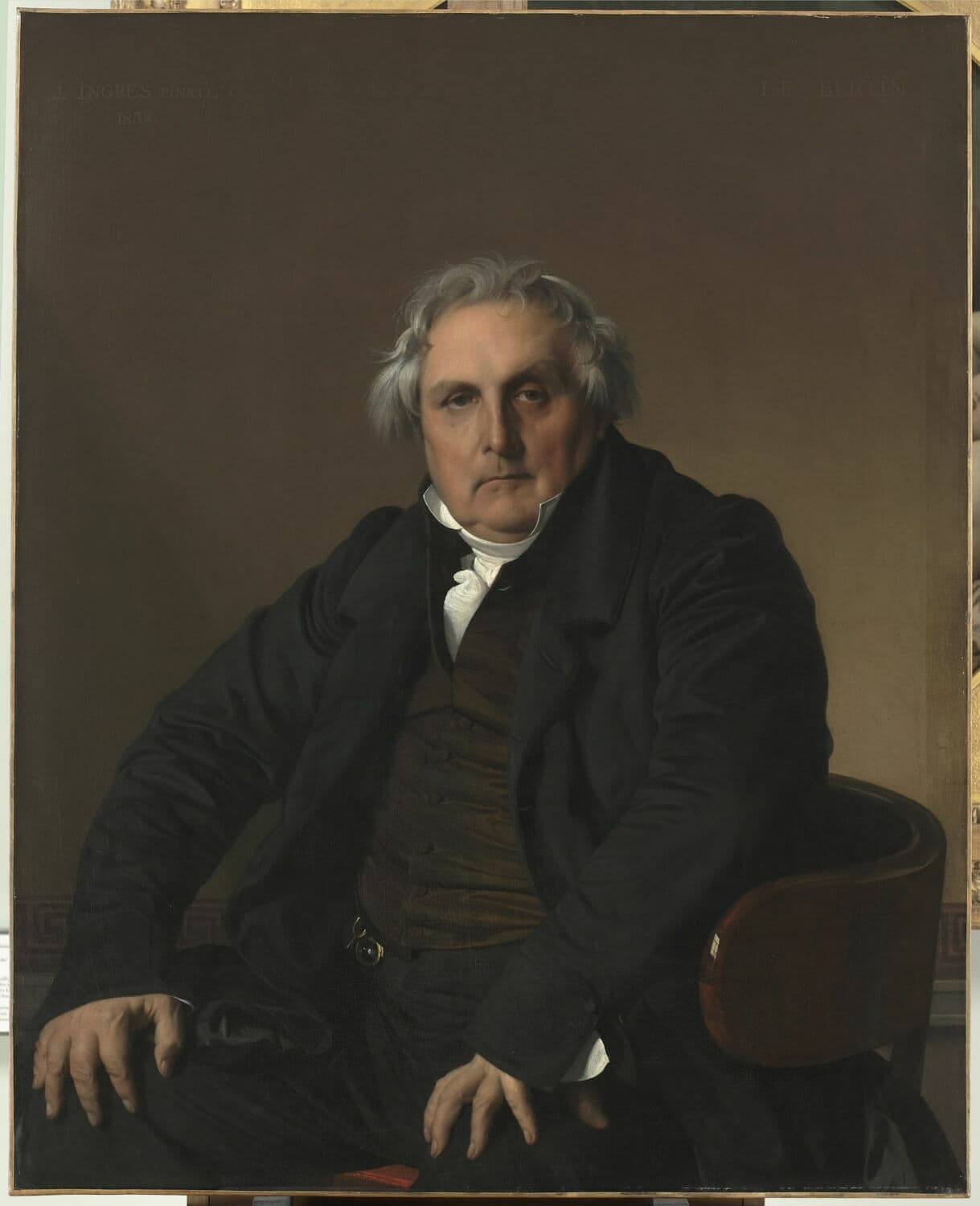
Portrait of Monsieur Bertin
Jean-Auguste-Dominique Ingres, 1832 • Oil on canvas
View more by Jean-Auguste-Dominique Ingres →Valuation Analysis
Valuation conclusion: Portrait of Monsieur Bertin (Jean‑Auguste‑Dominique Ingres, 1832) is a museum‑quality, canonical work with no modern auction history. Using an extrapolation methodology that prioritizes institutional/replacement value, the recommended valuation range is $100,000,000–$150,000,000 (USD). This range reflects the painting’s irreplaceability, continuous Louvre ownership, and the cultural premium applied by insurers and national collections.
The painting is held by the Musée du Louvre (inventory RF 1071) and was acquired from the sitter’s descendants in 1897; because it is state‑owned and part of the public patrimony it has not been offered in the modern open market [1]. The lack of a recent sale means there is no hammer price to anchor a market estimate; instead the valuation must be framed as a replacement or insurance figure that accounts for the political and practical impossibility of a comparable acquisition.
Public‑market comparables are scarce. The best modern public sale of an autograph Ingres oil often cited in the trade is the 2009 Christie’s sale associated with the Yves Saint Laurent / Pierre Bergé dispersal, which produced a multi‑million result but remains an outlier and a poor anchor for a Louvre masterpiece [2]. Most realized Ingres prices in recent years derive from drawings and small oils that trade in the mid‑five‑ to low‑seven‑figure band; by contrast, top‑tier French classical canvases (when offered) have reached tens of millions at marquee houses. Because the canonical Ingres oils are almost always museum‑held, the public auction record understates the economic value that institutions and insurers place on an irreplaceable masterpiece.
The methodology used here is extrapolation informed by comparable auctions, top‑end French classical sales and insurance practice. For an institutional/replacement valuation we apply multiple premiums to a hypothetical market baseline: (1) scarcity premium for an extremely rare, museum‑held canonical oil; (2) provenance/political premium due to national patrimony; and (3) contingent‑loss premium reflecting replacement impossibility and reputational cost to the owner. This produces the $100–150M replacement band. Separately, a hypothetical open‑market auction estimate — were export and sale practicable and the canvas to appear in a marquee sale — would likely sit materially lower (a plausible, conservative auction band is $20–60M) because the buyer pool and bidding dynamics differ from an insured replacement scenario.
Key caveats: this figure is conditional on no material, undisclosed conservation problems and on continued cultural protections that keep the work off normal market cycles. To refine the estimate to a formal insured value or an auction pre‑sale opinion, the next steps are: obtain a full Louvre curator’s condition report and technical imaging, pull a comprehensive Artnet/Artprice lot‑by‑lot comparables table, and obtain consultative opinions from senior Old Master specialists at Sotheby’s/Christie’s/Artcurial. In sum, the $100–150M band is a defensible institutional/replacement valuation reflecting the painting’s singular cultural and market position.
Key Valuation Factors
Art Historical Significance
High ImpactPortrait of Monsieur Bertin stands among Ingres’s most acclaimed portraits and is widely reproduced and cited in scholarship; its formal authority and psychological acuity exemplify the artist’s mature portrait style. The painting functions as a key teaching and exhibition object in studies of 19th‑century French portraiture and neoclassical technique, which enhances its cultural valuation beyond pure market demand. Scholarly prominence reduces attribution risk, increases institutional desire, and—critically for insurers—magnifies reputational loss should the work be damaged or displaced. Because art‑historical importance is directly convertible into insurance and contingent‑loss premiums, this factor is a major upward driver in a replacement valuation model and explains why the painting commands a premium relative to ordinary market comparables.
Provenance & Museum Ownership
High ImpactAcquired from the Bertin family in 1897 and inventoried by the French State (Louvre RF 1071), the work’s uninterrupted, high‑quality provenance is a strong positive for value. Museum ownership eliminates attribution uncertainty and signals institutional endorsement, but it also creates legal, political and practical constraints that effectively remove the painting from normal trade. Those constraints materially increase replacement valuations because insurers and government appraisers price the cost of irreplaceability, potential diplomatic sensitivity, and the market distortion that would occur if an iconic national treasure were to be offered. In practice this dual effect—higher reputational/replacement premiums paired with near‑zero liquidity—drives insurance figures well above what an open‑market auction would likely realize.
Rarity & Market Liquidity
High ImpactAutograph Ingres oils of the Bertin painting’s caliber almost never enter the market; most public sale evidence for Ingres relates to drawings or small studies. The scarcity of comparable auction transactions creates a wide valuation variance and weakens the statistical power of conventional comparables analysis. In auction terms, the record is therefore a poor guide: singular event sales can both underprice (because sellers manage circumstances) or produce anomalous premiums. For insurers and appraisers this illiquidity translates to a higher uncertainty buffer and contingent‑loss premium: they must assume that replacement would require extraordinary negotiation, potential state intervention, or a brokered private sale involving museum buyers. Illiquidity therefore pushes replacement estimates materially higher than routine auction expectations.
Condition & Conservation
Medium ImpactThe Louvre’s custodianship strongly suggests professional conservation oversight, but no public condition report was provided in this exercise; therefore condition remains a material but currently unquantified factor. Condition reports and technical imaging (X‑ray, infrared, pigment analysis) can reveal previous restorations, structural compromises, or unstable varnish layers that would reduce auction realizability or increase insured value because of restoration costs and risk. For valuation purposes we treat condition as medium impact: it can shift a final insured or auction figure meaningfully if adverse findings emerge, but absent negative disclosures the Louvre’s stewardship supports an assumption of good, stable condition. Formal valuation must be contingent on receiving the museum’s most recent conservation report.
Institutional Demand & Cultural Patrimony
High ImpactThe principal buyer set for a work of this nature is institutional — national museums, major encyclopedic institutions, or sovereign collections — rather than the typical private collector base. When acquisition involves a widely recognized national treasure, governments and cultural agencies often exert control (export licenses, acquisition rights, legal protections), which limits normal market competition but increases replacement cost because insurers assume any purchase would require extraordinary negotiation or a government‑level transaction. The cultural‑patrimony dynamic both elevates perceived value and discourages open‑market liquidity; for insurers this translates into a substantial cultural premium, used to calculate an insured amount that more accurately reflects the social, reputational and diplomatic costs of loss or transfer.
Sale History
Portrait of Monsieur Bertin has never been sold at public auction.
Jean-Auguste-Dominique Ingres's Market
Jean‑Auguste‑Dominique Ingres is a canonical 19th‑century French master whose principal oil paintings are concentrated within major museums worldwide. Because his autograph large oils rarely come to market, public auction evidence is dominated by drawings and smaller studies that typically sell in the mid‑five‑figure to low‑seven‑figure range; these sales underrepresent what an important museum canvas might command. Ingres’s market therefore is institutionally driven: attribution, provenance, exhibition history and catalogue raisonné acceptance are the primary drivers of value. When an exceptional Ingres oil is offered at a marquee sale it attracts specialized institutional interest, but recorded hammer prices remain modest relative to top Old Master or Impressionist benchmarks due to scarcity of supply.
Comparable Sales
Portrait de la comtesse de La Rue
Jean-Auguste-Dominique Ingres
Autograph Ingres oil portrait sold at a high-profile sale; closest public-market oil-by-Ingres comparable available from the modern era.
$2.7M
2009, Christie's (Yves Saint Laurent / Pierre Bergé sale), Grand Palais, Paris
~$3.9M adjusted
Christ among the Doctors (drawing)
Jean-Auguste-Dominique Ingres
High-quality Ingres work on paper sold at a major house; useful to show collector demand and price levels for autograph Ingres material (drawings) versus oils.
$411K
2010, Christie's New York, Old Masters & 19th-century sale
~$595K adjusted
Portrait de la Reine Caroline Murat (drawing)
Jean-Auguste-Dominique Ingres
Ingres portrait drawing (portrait subject comparable to Monsieur Bertin) — indicates market levels for high‑provenance Ingres portrait studies on paper.
$224K
2015, Christie's Paris, Old Masters & 19th-century drawings sale
~$298K adjusted
Small Ingres-attributed portrait (regional sale)
Jean-Auguste-Dominique Ingres (attributed/traditional id.)
Low-end market example for attributed or small Ingres-related portraits at regional sales; useful to show the market floor when autograph status/quality is uncertain.
$3K
2024, Bonhams, London (regional / attributed lot)
~$3K adjusted
Le Melon entamé (The Begun Melon)
Jean-Siméon Chardin
Top-tier sale of a canonical French master (contextual comparable for market appetite for museum-quality French classical paintings); not the same artist but useful as an upper‑end indicator.
$31.3M
2024, Christie's Paris (major Old Masters / French classics sale)
~$32.2M adjusted
Current Market Trends
Current market conditions show a bifurcated Old Masters/19th‑century landscape: top‑quality, well‑provenanced works attract competitive institutional demand, while mid‑tier material faces buyer selectivity. Demand for drawings and rare canonical canvases remains strong among museums and specialist collectors, but liquidity is thin and price discovery is limited for museum‑held masterpieces. Currency swings, institutional budget pressures, and heightened transport/conservation costs further influence buyer behavior. Recent top‑tier French classical sales demonstrate there is appetite at the tens‑of‑millions level for suitably comparable works.