How Much Is The Art of Painting Worth?
Last updated: February 23, 2026
Quick Facts
- Methodology
- comparable analysis
If Johannes Vermeer’s The Art of Painting could be freely and cleanly sold today, it would command a ‘trophy among trophies’ price. On the weight of its canonical status, scale, and extreme rarity within Vermeer’s tiny oeuvre, a defensible open‑market range is $300–600 million, with clear upside in a competitive bidding scenario.
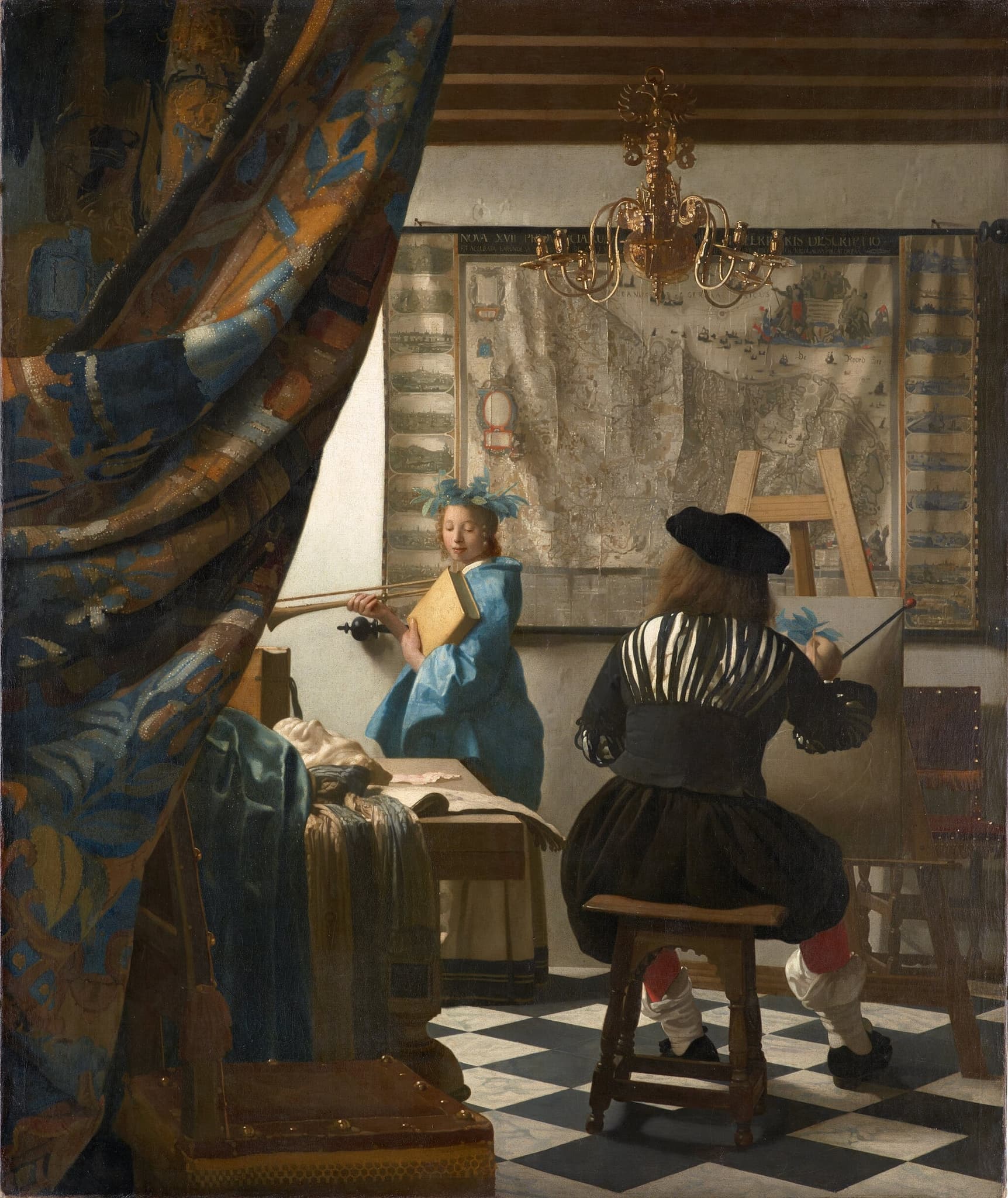
The Art of Painting
Johannes Vermeer, c. 1666–1668 • Oil on canvas
Read full analysis of The Art of Painting →Valuation Analysis
Conclusion: Vermeer’s The Art of Painting (Kunsthistorisches Museum, Vienna) is a consensus masterpiece at the apex of 17th‑century painting. If it could be legally and freely sold on today’s global market, a price of $300–600 million is justified by its art‑historical importance, exceptional quality and scale, and the uniquely thin supply of unimpeachable Vermeers. The work is museum‑held and effectively not for sale, but this range reflects likely open‑market dynamics for a sovereign‑level icon [1].
Method and comps: There is no modern public‑auction benchmark for a first‑rank, undisputed Vermeer of this magnitude. The last widely accepted Vermeer at auction—A Young Woman Seated at a Virginal (Sotheby’s London, 2004)—made $30.1 million; that picture is far smaller and was attributionally sensitive, rendering it an inadequate ceiling for a masterpiece like The Art of Painting [2]. Accordingly, we triangulate from top Old Master trophies where true scarcity, universal renown, and cross‑category demand converge.
Trophy benchmarks: Leonardo’s Salvator Mundi achieved $450.3 million in 2017, establishing the modern high‑water mark for an Old Master when multiple global bidders compete [3]. Botticelli’s Young Man Holding a Roundel brought $92.2 million in 2021, evidencing deep, cross‑sector appetite for best‑in‑class Renaissance pictures [4]. The joint Louvre/Rijksmuseum acquisition of Rembrandt’s pendant portraits at roughly €160 million further confirms sovereign‑ and museum‑level demand for apex Dutch Golden Age works [7]. Against these comparables, the stature of The Art of Painting—often bracketed with Vermeer’s very greatest—supports a level at or above the low‑to‑mid nine figures.
Supply, demand, and status: Only roughly three dozen Vermeer paintings are generally accepted, with the overwhelming majority in museums. The Rijksmuseum’s 2023 Vermeer exhibition (28 works; sold‑out demand) underscored the artist’s extraordinary public appeal and cultural visibility—key drivers of trophy pricing when a unique example becomes available [6]. Within this already tiny corpus, The Art of Painting stands out for its scale, complexity, and meta‑pictorial theme (the artist in his studio), making it one of the most written‑about and reproduced Vermeers [1].
Title, condition, and constraints: The picture’s WWII‑era history includes a coerced 1940 sale to Adolf Hitler for 1.65 million Reichsmarks (recovered postwar and retained by Austria), a factor that would require meticulous legal review in any hypothetical transaction and could shape deal structure, but not the intrinsic value signal [5]. The work is generally regarded as well‑preserved and is rarely lent; a fresh independent condition report would refine pricing within the proposed band [1].
Positioning: Taking these inputs together—canonical status, extreme scarcity, and trophy‑market precedents—a $300–600 million range is well supported, with upside plausible if multiple sovereign, museum‑adjacent, or ultra‑high‑net‑worth buyers pursue it. While the work is effectively inalienable today, this estimate reflects where the market would likely clear under unconstrained, competitive conditions.
Key Valuation Factors
Art Historical Significance
High ImpactThe Art of Painting is widely regarded as one of Vermeer’s supreme masterpieces. Its complex, meta‑pictorial subject (the artist in his studio), orchestration of light, and intricate spatial construction have made it a cornerstone of Vermeer scholarship and an icon of Dutch Golden Age painting. The composition condenses signature Vermeer motifs—map, chandelier, curtain, tiled floor—into an ambitious statement about the art of representation itself. Canonical status translates directly into trophy‑level demand when works of this renown are hypothetically available, as buyers pay premiums for universally recognized masterpieces with deep museum‑exhibition histories.
Rarity and Supply
High ImpactVermeer’s oeuvre numbers roughly three dozen accepted paintings, with the overwhelming majority in public collections. Public‑auction opportunities are essentially nonexistent: only one widely accepted Vermeer has sold at open auction in recent decades, and it was a small, comparatively minor work. Against this backdrop of near‑total illiquidity, the emergence of a consensus, large‑scale Vermeer would trigger intense, cross‑category competition among collectors, institutions, and sovereign buyers. Extreme rarity is the single most powerful price driver at the summit of the Old Masters market and justifies a step‑function increase above historical Vermeer auction records.
Quality, Scale, and Subject
High ImpactWithin Vermeer’s compact oeuvre, The Art of Painting ranks at or near the very top for ambition and finish. It is among his largest canvases and showcases the exquisite light modulation and perspectival control that define his best work. The studio‑interior narrative is not only visually compelling but also intellectually resonant, broadening the painting’s appeal beyond Old Master specialists to a wider cross‑category buyer base. Quality, scale, and an iconic subject typically command disproportionate premiums, particularly when aligned with the artist’s highest critical tier, as here.
Provenance and Legal/Title Considerations
Medium ImpactThe painting’s WWII‑era coerced sale to Adolf Hitler, subsequent recovery, and long‑running restitution scrutiny introduce legal and ethical complexities. Austria’s state ownership and cultural‑property restrictions effectively remove the work from the market under normal circumstances. In a hypothetical sale scenario, comprehensive legal diligence and stakeholder engagement would be required. While such factors can constrain buyer pools or shape transaction mechanics, they do not reduce the intrinsic market value signal for valuation purposes; rather, they are modeled as execution risk that could affect time to sale or structure, not core price.
Market Benchmarks and Cross-Category Demand
High ImpactAt the trophy level, Old Masters can achieve prices rivaling top modern and contemporary art when uniqueness and global recognition align. Leonardo’s Salvator Mundi at $450.3m and Botticelli’s $92.2m portrait demonstrate the market’s capacity for iconic pre‑1800 works; the Rembrandt pendant portraits at ~€160m confirm sovereign‑ and museum‑level demand for peak Dutch Golden Age pictures. Vermeer’s brand equity, reinforced by blockbuster exhibitions and cultural ubiquity, positions The Art of Painting to compete at the very top of this spectrum, supporting a $300–600m range under competitive conditions.
Sale History
Private sale (to Adolf Hitler for the planned Linz museum)
Coerced sale by Count Jaromir Czernin for RM 1,650,000; USD value shown is an approximate conversion at the then-official exchange rate. Recovered after WWII and transferred to the Austrian state.
Johannes Vermeer's Market
Johannes Vermeer is among the rarest blue‑chip Old Masters, with roughly 34–36 paintings generally accepted and nearly all in museums. Public‑auction appearances are extraordinarily scarce; the best‑known modern sale is Sotheby’s London (2004), A Young Woman Seated at a Virginal, at about $30.1 million, a small work with a complex attribution history. In practical terms, there is no open‑market benchmark for a universally accepted, first‑rank Vermeer of major scale. Demand is broad and global—extending well beyond Old Master specialists—thanks to the artist’s cultural prominence and the intense public interest evidenced by blockbuster exhibitions. A consensus, prime Vermeer would likely reset pricing toward record Old Master territory.
Comparable Sales
A Young Woman Seated at a Virginal
Johannes Vermeer
Same artist; only widely accepted Vermeer to sell at public auction in the modern era—establishes the last open-market datapoint for the oeuvre (albeit small and attributionally sensitive vs. The Art of Painting).
$30.1M
2004, Sotheby's London
~$50.2M adjusted
Salvator Mundi
Leonardo da Vinci
Ultimate trophy Old Master sale; demonstrates ceiling dynamics for uniquely scarce, museum-caliber works when multiple global bidders compete.
$450.3M
2017, Christie's New York
~$579.6M adjusted
Portraits of Maerten Soolmans and Oopjen Coppit (pair)
Rembrandt van Rijn
Top-tier 17th‑century Dutch Golden Age benchmark; state-level joint acquisition of uniquely important, large-scale works—signals museum and sovereign-level demand for apex Old Masters.
$180.0M
2016, Private sale (joint acquisition by the Louvre and Rijksmuseum)
~$236.0M adjusted
Young Man Holding a Roundel
Sandro Botticelli
Recent marquee Old Master portrait that drew broad cross-category bidding; shows modern appetite for best-in-class Renaissance trophies with impeccable quality and rarity.
$92.2M
2021, Sotheby's New York
~$107.1M adjusted
The Massacre of the Innocents
Peter Paul Rubens
Precedent-setting Old Master auction result for a Baroque masterpiece; useful historical anchor for top-level pricing of canonical 17th‑century works.
$76.7M
2002, Sotheby's London
~$134.2M adjusted
The Rest on the Flight into Egypt
Titian
Fresh, widely reported Old Master trophy from 2024; indicates current liquidity and global bidding for prime Renaissance pictures, confirming robust demand at the apex.
$22.3M
2024, Christie's London
~$22.6M adjusted
Current Market Trends
Old Masters remain a supply‑constrained market characterized by selectivity and volatility at the top: when great works surface, results can be spectacular, but high‑end offerings are rare. After a soft 2024 (few $10m+ lots), 2025 rebounded on stronger consignments, and early 2026 saw fresh records in works on paper—evidence of renewed appetite for best‑of‑category material. The buyer base is increasingly global and cross‑category, with guarantees and private sales playing larger roles. In this context, a universally canonical, museum‑quality Vermeer would attract intense competition and could challenge or exceed recent Old Master price watermarks.
Study print
Study this painting as a print
Pair the full artwork with a museum-style study sheet focused on one meaningful detail.
Sources
- Kunsthistorisches Museum, Vienna – The Art of Painting (object page)
- The Art Newspaper – £16.2m Vermeer led patchy sales (2004 archive)
- Christie’s – Press release: Leonardo da Vinci’s Salvator Mundi sells for $450,312,500
- Sotheby’s – Press release: Sandro Bottelli’s ‘Young Man Holding a Roundel’ achieves $92.2m
- Lexikon Provenienzforschung – Czernin, Jaromir (WWII sale to Hitler)
- Rijksmuseum – Vermeer exhibition most successful in its history (press)
- Musée du Louvre – Press: Rembrandt’s portraits of Maerten Soolmans and Oopjen Coppit