How Much Is Bal du moulin de la Galette (Dance at Le Moulin de la Galette) Worth?
Last updated: March 10, 2026
Quick Facts
- Methodology
- comparable analysis
The canonical 1876 Bal du moulin de la Galette (Musée d'Orsay) is effectively off‑market; hypothetically, if lawfully saleable, a defensible market range is USD 100–150 million. That band balances direct comparables (the smaller Moulin de la Galette sold at Sotheby’s in 1990), modern Impressionist trophy ceilings, and the damping effect of patrimony/legal constraints.
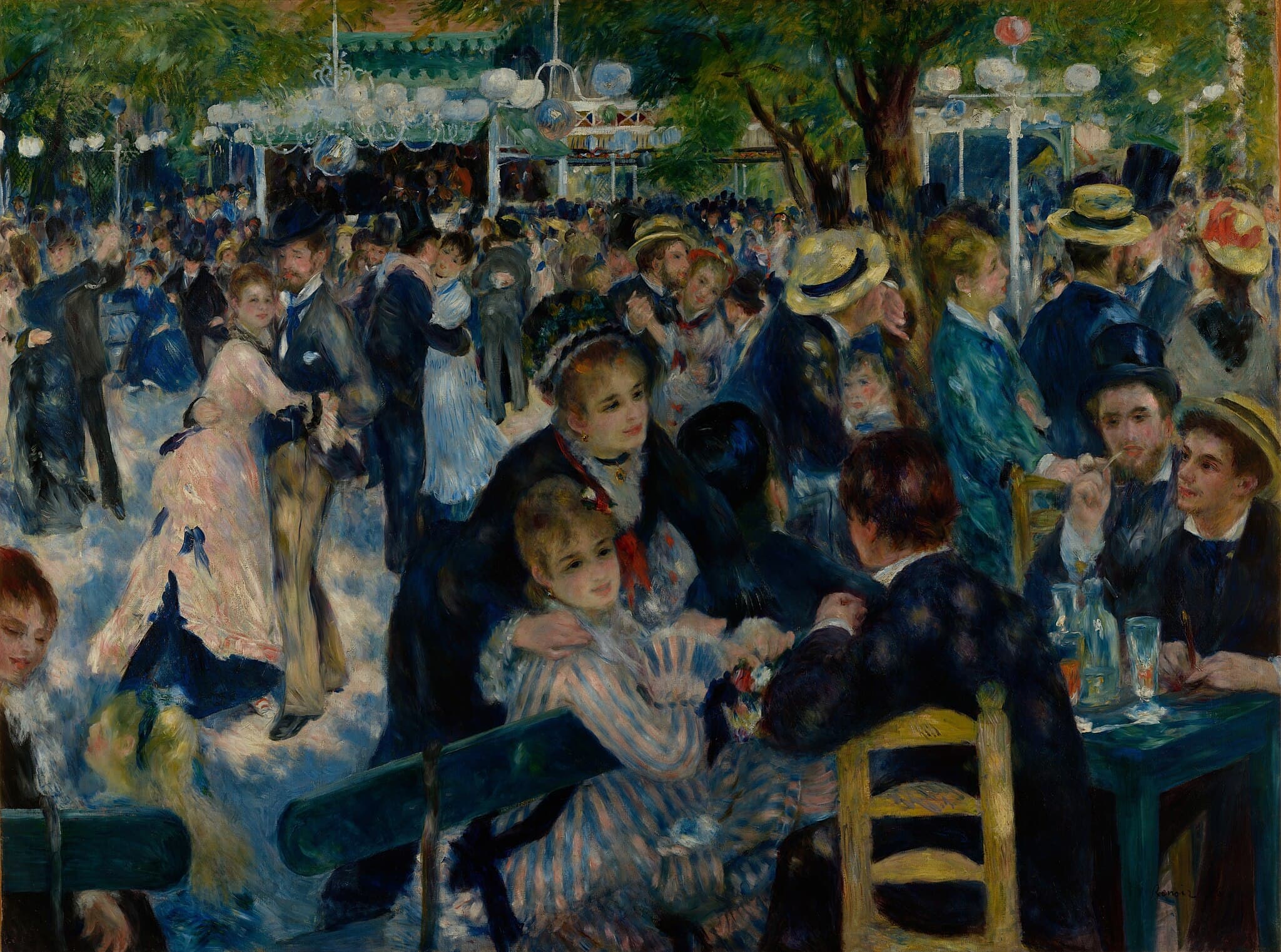
Bal du moulin de la Galette (Dance at Le Moulin de la Galette)
Pierre-Auguste Renoir, 1876 • Oil on canvas
View more by Pierre-Auguste Renoir →Valuation Analysis
Bottom-line: The canonical 1876 Bal du moulin de la Galette (Musée d'Orsay, accession RF 2739) is a museum‑held masterpiece and effectively off‑market; any numeric valuation below assumes a hypothetical, legally and politically permissible sale. Based on comparable trophy Impressionist sales and recent market dynamics, a defensible market range if sellable is USD 100–150 million. The range balances direct precedent, contemporary auction ceilings and the damping effect of patrimony/legal constraints [1].
Comparables drive the quantitative anchor. The most directly comparable public precedent is the smaller Moulin de la Galette variant sold at Sotheby's New York in May 1990 for a reported USD 78.1M—showing purchaser willingness to pay large sums for this composition but requiring careful size and condition adjustments because that was a different, smaller canvas sold under distinct market circumstances [2]. Monet's Meules (Haystacks) realized USD 110.7M at Sotheby's in 2019 and functions as a modern ceiling for marquee Impressionist trophies, demonstrating the market's capacity to place canonical works in the low‑to‑mid nine‑figure band [3]. Contemporary prime Renoir results (generally in the high single‑digit millions to low tens of millions) establish the baseline for non‑trophy material; the canonical Moulin de la Galette sits far above this baseline in rarity and desirability.
Legal, provenance and condition constraints are decisive. The Orsay picture was accepted from Caillebotte's bequest and is state property; French patrimony rules and museum inalienability make a lawful sale improbable and politically fraught [1]. Even for a privately held variant, export permits, clear title, conservation dossiers and an unimpeachable exhibition/provenance history are prerequisites for top valuation. Condition reports, technical analysis and an exhibition record materially affect insurability and buyer confidence; any major conservation history will change the estimate by multiples.
Why USD 100–150M? The low end (USD 100M) recognizes that a canonical, large‑scale Renoir with museum provenance commands a significant premium over ordinary market lots; it sits safely above recent prime Renoir auction realizations and above the nominal 1990 sale after adjustment for size and comparability. The high end (USD 150M) reflects the trophy potential evidenced by other Impressionist masterpieces when frictional factors (export, legal obstacles, limited bidder pool) are relatively managed—e.g., through a marquee evening auction with guarantees or a negotiated private treaty attracting billionaire collectors or sovereign buyers. Given the real‑world legal and political frictions for the Orsay canvas, the most probable realistic sale outcome (if ever permitted) would cluster in this band; exceptional competition could push the price higher, while legal impediments or condition issues could materially lower realization.
Refinement steps: to move from hypothetical band to a formal appraisal we must confirm the exact variant/accession, obtain a complete provenance and title chain, secure a current conservation/technical report, and evaluate legal/patrimonial impediments and insurability. I can produce a prioritized comparable matrix (size/condition/provenance adjustments) and a tailored sales‑strategy memo (auction vs private treaty, guarantee scenarios) on request.
Key Valuation Factors
Art Historical Significance
High ImpactBal du moulin de la Galette (1876) is one of Renoir’s signature works and an emblematic image of Impressionism: a large, publicized canvas with sustained scholarly and curatorial attention. Its iconographic status and extensive exhibition/publication history raise its prestige well above the artist’s median output. Collectors and institutions prize such canonical works because they define historical narratives and public recognition, attracting an elite buyer subset and institutional interest. That cultural primacy increases the theoretical market ceiling substantially while simultaneously reducing the probability of market appearance (museum ownership/patrimony), creating both a high premium and low liquidity profile.
Provenance & Legal Status
High ImpactProvenance here is decisive. The canonical canvas was bequeathed via Gustave Caillebotte and accepted by the French state; national patrimony rules, accession conditions and museum inalienability typically prevent commercial sale and complicate export. For any variant, a clean title, clear chain of custody, absence of liens and documented acceptance by national authorities (if applicable) are essential to obtain export permits, insurance and buyer confidence. Legal or political obstacles materially reduce buyer pool and can depress realizations; conversely, clear private provenance with strong exhibition loans increases price certainty and supports a higher estimate.
Comparables & Auction Record
High ImpactDirect comparables are limited but influential. The smaller Moulin de la Galette variant fetched a reported USD 78.1M at Sotheby's New York (May 1990), establishing a precedential willingness to pay for the composition, though size and market conditions differ [2]. Monet’s Meules (2019) at USD 110.7M demonstrates contemporary trophy ceilings for canonical Impressionist canvases [3]. Most recent prime Renoir public sales cluster in the high single‑digit to low two‑digit millions, so a canonical Orsay‑scale Moulin de la Galette would command a substantial premium over typical market entries—hence the broad but defensible high‑end potential.
Condition & Conservation
Medium ImpactCondition is a binary lever on price: an unambiguous, well‑documented original surface and stable support preserves trophy value; significant restorations, structural issues or unstable varnish can reduce marketability and premiums by substantial percentages. A museum‑kept canvas is likely well conserved, but a formal, up‑to‑date technical dossier (infrared, x‑ray, cross‑sections) is required to validate market assumptions. Conservation findings also influence exhibition loan potential, insurance rates and buyer appetite—factors that directly affect realized price in high‑end sales.
Market Demand & Timing
Medium ImpactMacro and cyclical market conditions determine whether the work reaches its ceiling. Since 2023 the market has shown a selective recovery with a demonstrable 'flight to quality': top museum‑grade Impressionist works have outperformed average lots. Auction format, guarantees, concurrent museum programming, and geopolitical/economic factors (currency, tax, cross‑border restrictions) shape buyer participation. A marquee auction with multiple competitive bidders and guarantees will tend to produce the highest outcome; private treaty sales attract different buyer pools and pricing dynamics. Timing relative to exhibitions or market sentiment meaningfully alters expected realizations.
Sale History
Bal du moulin de la Galette (Dance at Le Moulin de la Galette) has never been sold at public auction.
Pierre-Auguste Renoir's Market
Pierre‑Auguste Renoir occupies a secure position among major Impressionists: widely exhibited, heavily published and consistently collected. Most Renoir works trade in the mid six‑figure to low seven‑figure range at auction, but a small number of canonical, museum‑quality canvases have historically realized dramatically higher sums. Renoir does not have the consistent nine‑figure headline frequency of Monet, but precedent exists (notably the 1990 Moulin de la Galette variant) that demonstrates exceptional upside for the right composition, size, provenance and market conditions. Rarity of top examples concentrates value and creates steep price dispersion across the oeuvre.
Comparable Sales
Bal du moulin de la Galette (small version; Whitney consignment)
Pierre-Auguste Renoir
Directly same subject/title and artist — the best market precedent (smaller variant of Moulin de la Galette sold publicly in 1990). Shows historical willingness to pay very high sums for this composition; size/provenance differences limit exact comparability.
$78.1M
1990, Sotheby's New York
~$185.1M adjusted
Meules (Haystacks)
Claude Monet
Top Impressionist auction record and a useful cross-artist ceiling: demonstrates that museum-quality, canonical Impressionist canvases can reach low‑to‑mid nine figures at auction.
$110.7M
2019, Sotheby's New York
~$140.4M adjusted
Baigneuse
Pierre-Auguste Renoir
Recent high-quality Renoir sale (Nov 2025) showing present-day demand and realised price levels for strong Renoirs — useful for anchoring the current market band for prime Renoir works (mid-seven to low‑eight figures).
$10.4M
2025, Christie's New York
Bouquet de lilas
Pierre-Auguste Renoir
Recent Sotheby's London sale converted to USD; a relevant recent market result for a quality Renoir in the mid-seven-figure band and a useful comparator for present-market expectations.
$8.7M
2024, Sotheby's London
~$9.0M adjusted
Current Market Trends
The market favors scarcity and a 'flight to quality.' After a mid‑cycle cooling in 2023–24, late‑2025 saw renewed appetite for top‑tier Impressionist trophies driven by major museum exhibitions and guarantee structures. Buyers are selective: guaranteed/private sales dominate the apex while public auctions clear many mid‑tier Renoirs in the high six‑ to low seven‑figure band. Macro factors—rates, currency volatility and patrimony sensitivities—continue to shape the effective buyer pool for ultra‑high‑value works.