How Much Is La Grenouillère Worth?
Last updated: March 11, 2026
Quick Facts
- Methodology
- comparable analysis
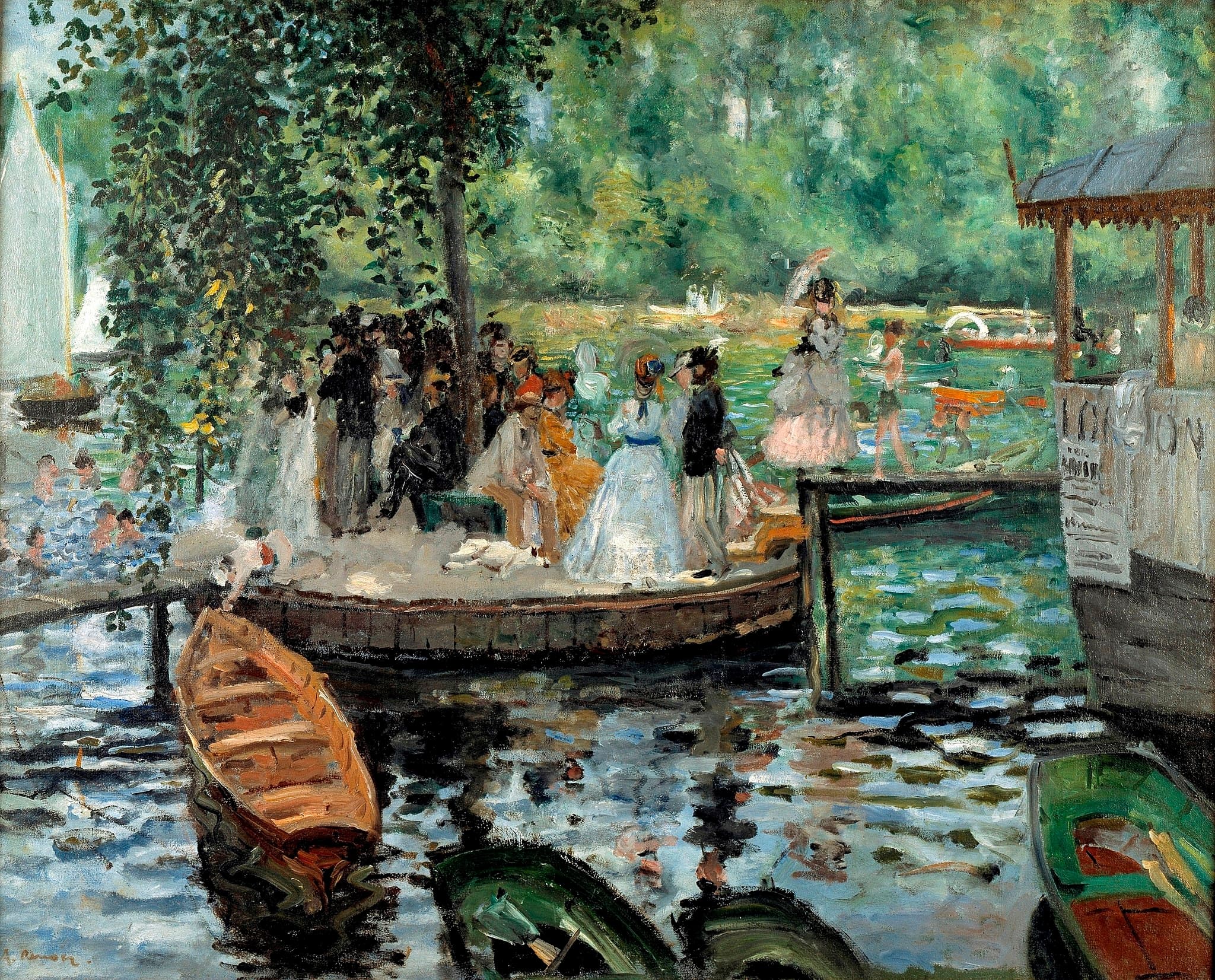
For a privately held, well‑attributed oil by Pierre‑Auguste Renoir titled La Grenouillère (c.1869), the auction estimate range is approximately $3,000,000 to $20,000,000. The canonical 1869 canvas is in the Nationalmuseum, Stockholm and not market‑available; the range below applies to comparable private examples and is highly sensitive to attribution, provenance, condition, size and catalogue‑raisonné/exhibition history [1][2].
Valuation Analysis
Overview and conclusion: Based on a side‑by‑side analysis of recent Renoir auction results and established benchmarks, a privately offered, well‑documented La Grenouillère by Renoir is market‑indicatively worth between $3,000,000 and $20,000,000 at public auction. The wide band reflects the extreme sensitivity of price to critical validating factors (authorship certainty, provenance, condition and publication/exhibition history). Note that the autograph 1869 canvas is held by the Nationalmuseum, Stockholm and therefore not a market lot [1].
Comparables and market context: Renoir's historical ceiling is demonstrated by the trophy sale of Au Moulin de la Galette ($78.1M in 1990) and more recent evening‑sale results show high‑quality works fetching mid‑seven to eight‑figure sums; well‑provenanced non‑trophy oils commonly attract low‑to‑mid single‑digit millions, while discovery/regional sales and studies can trade in the low millions or below [2][3]. The £6.88M / ~ $8.7M Sotheby’s London result for a high‑quality still life (2024) and the $11.9M Christie’s result (2023) for mature Impressionist park scenes illustrate how provenance and museum‑level quality push prices well above the floor [3].
Key price drivers: (1) Attribution/authentication: inclusion in the recognised Renoir catalogue raisonné and supporting technical analysis (IRR, X‑ray, pigment/canvas tests) materially increases value. (2) Provenance & exhibition/publication history: continuous ownership, notable collections and major loans or catalogue citations sharply elevate buyer confidence and price. (3) Condition/conservation history: original paint and stable lining command premiums; heavy restorations or losses depress value substantially. (4) Size & composition: larger, finished salon‑quality pictures outperform small sketches or études. (5) Market timing and sale venue: marquee evening sales at Christie’s or Sotheby’s achieve the best realization rates, whereas regional or day sales reduce competitive tension.
Implication for the subject work: If the candidate La Grenouillère is an autograph, catalogue‑listed, well‑preserved oil of the Stockholm dimensions and with strong provenance, it is most likely to fall in the mid‑to‑upper portion of the stated band (approximately $6M–$20M). If it is a studio work, study, poorly conserved piece, or lacks catalogue‑raisonné entry and clear provenance, the likely range moves toward the $300k–$3M floor. Recommended next steps: provide high‑resolution recto/verso images, full dimensions, documented provenance, and commission technical imaging and a conservator report; submit the dossier to a major auction house for a formal pre‑sale estimate and catalogue‑raisonné cross‑check [1][3].
Key Valuation Factors
Art Historical Significance
High ImpactLa Grenouillère is a historically important Impressionist subject painted by both Monet and Renoir in 1869; works on this subject carry scholarly interest and museum relevance beyond an ordinary genre scene. That art‑historical weight creates institutional demand when a canvas is demonstrably autograph, published and exhibited, which in turn raises its market ceiling. A recognised La Grenouillère in excellent condition with documentation is treated as an early, formative Renoir and typically commands a premium over non‑canonical subjects.
Attribution & Authentication
High ImpactClear, widely accepted attribution is decisive. Inclusion in established catalogue raisonnés, corroborating technical imaging (X‑ray, infrared reflectography), pigment/canvas analysis, and endorsements from recognised Renoir scholars or institutions can move a candidate from speculative to market‑grade. Conversely, ambiguous attribution, conflicting catalogue opinions, or lack of technical support materially erode bid confidence and reduce realized value by multiples.
Provenance & Exhibition History
High ImpactA continuous, prominent provenance (notable collectors, gallery records, or institutional loans) and a recorded exhibition/publication history are strong multipliers. Works with gaps in provenance, wartime/uncertain ownership, or absence from scholarly literature frequently sell at discounts; proven, published canvases attract institutional buyers and competitive bidding, often pushing prices into the multi‑million range.
Condition & Conservation
High ImpactPhysical state directly affects marketability. Original varnish and stable paint layers, minimal retouching, and an intact lining enable top results. Significant abrasions, heavy inpainting, discolored varnish, or structural instability reduce aesthetic appeal and raise restoration costs that buyers deduct from bids. A professional conservation report and before/after documentation greatly reduce purchaser uncertainty and preserve value.
Market Comparables & Demand
High ImpactRecent comparable sales show a wide dispersion: trophy Renoirs set an historic ceiling, evening‑sale museum‑quality works sell for $10M–$30M+, while discovery/regional sales and studies land in the low millions or below. Current buyer appetite is selective—top works with provenance and scholarship still attract aggressive bids. Choosing the right sale (evening marquee vs. specialist sale) and timing (major exhibitions/retrospectives) materially influences final price.
Sale History
La Grenouillère has never been sold at public auction.
Pierre-Auguste Renoir's Market
Pierre‑Auguste Renoir is a blue‑chip Impressionist whose best works remain highly collectible and capable of commanding multi‑million to multi‑tens‑of‑millions results. The market has bifurcated: museum‑quality, well‑provenanced canvases continue to perform strongly at marquee evening sales, while smaller, later or poorly documented works face greater price sensitivity. Authentication, provenance and exhibition history are now critical filters for buyers; trophy results remain exceptional but set the artist's ceiling.
Comparable Sales
Au Moulin de la Galette (small version)
Pierre‑Auguste Renoir
Trophy‑level Renoir by the same artist and period; sets the market ceiling for Renoir and demonstrates top demand for major Impressionist social/figure compositions.
$78.1M
1990, Sotheby's New York
~$192.4M adjusted
Berthe Morisot et sa fille, Julie Manet
Pierre‑Auguste Renoir
High‑quality, well‑provenanced Renoir portrait sold in a marquee evening sale (2022); useful as a near‑term benchmark for top‑tier, museum‑quality Renoirs on the market.
$24.4M
2022, Christie's New York
~$26.9M adjusted
Square de la Trinité
Pierre‑Auguste Renoir
Mid‑to‑upper market Renoir (park/street scene) sold strongly in 2023; comparable for scale and market interest in quality works from Renoir's mature Impressionist period.
$11.9M
2023, Christie's New York
~$12.6M adjusted
Bouquet de lilas
Pierre‑Auguste Renoir
Recent mid‑market sale (still life) illustrating demand and pricing for high‑quality but non‑trophy Renoir oils in the mid‑to‑high single‑millions.
$8.7M
2024, Sotheby's London
~$8.9M adjusted
Previously unknown Renoir (discovery sale)
Pierre‑Auguste Renoir
A discovery/regional sale of a previously lesser‑known Renoir that still commanded low‑seven to low‑eight‑figure euro results; useful as a floor/example for attribution/condition/provenance‑sensitive works.
$2.1M
2025, Drouot (Paris)
Current Market Trends
The contemporary Impressionist market is selective: top examples continue to draw institutional and private bidders, but mid‑tier works face price pressure. Recent years show a two‑speed pattern—strong results at curated evening sales and weaker realizations in day/regional auctions. Major retrospectives and catalogue raisonné activity can temporarily lift demand for a given artist or subject.