How Much Is Luncheon of the Boating Party (Le Déjeuner des Canotiers) Worth?
Last updated: March 10, 2026
Quick Facts
- Last Sale
- $125K (1923, Private sale (Durand‑Ruel to Duncan Phillips / acquired by The Phillips Collection))
- Methodology
- comparable analysis
Luncheon of the Boating Party is a museum‑held, canonical Renoir masterpiece and effectively off‑market. In a hypothetical, highly competitive sale among major institutions or ultra‑high‑net‑worth buyers, a defensible market range is $100–300 million, with a practical best‑guess around $150 million+.
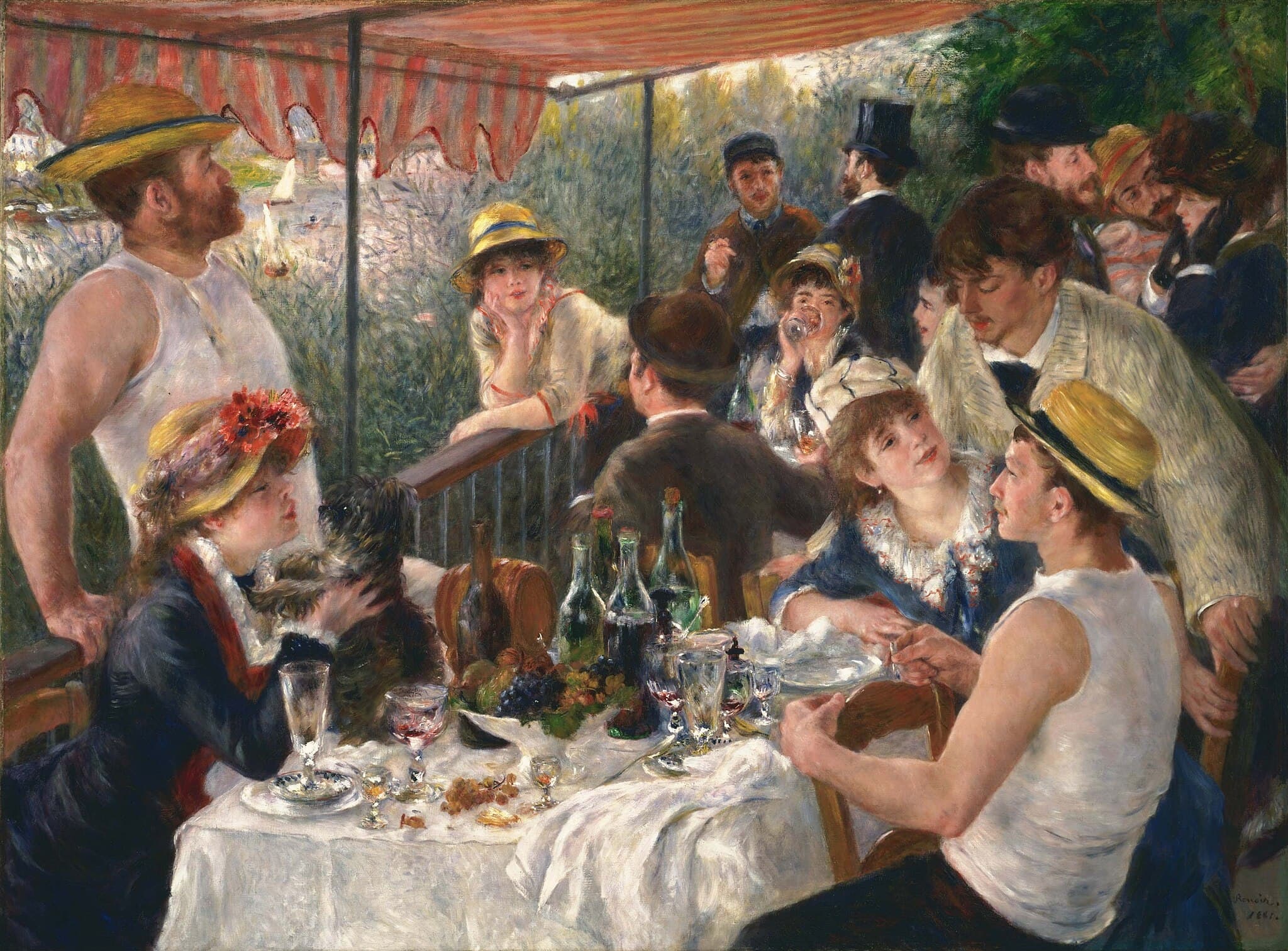
Luncheon of the Boating Party (Le Déjeuner des Canotiers)
Pierre-Auguste Renoir, 1881 • Oil on canvas
View more by Pierre-Auguste Renoir →Valuation Analysis
Valuation conclusion: Pierre‑Auguste Renoir’s Luncheon of the Boating Party (1880–81) is a canonical Impressionist masterpiece in long‑term public ownership; for practical purposes it is functionally priceless. However, applying a comparables‑based market analysis and adjusting for a trophy premium, a realistic hypothetical sale range today is $100,000,000–$300,000,000, with a best‑guess near the low‑to‑mid triple‑digits (roughly $150M+) under highly competitive sale conditions.
Why this range: The painting’s institutional provenance (acquired from Durand‑Ruel by Duncan Phillips in 1923 and held by The Phillips Collection) confers maximum cultural importance and public visibility but simultaneously reduces liquidity and the available buyer pool to museums, sovereign entities and a handful of ultra‑wealthy private collectors [1]. Public auction records for Renoir show strong demand for quality examples (recent top Renoir lots generally trade in the mid‑seven to low‑eight‑figure band), while trophy Impressionist/Post‑Impressionist examples have achieved triple‑digit millions—e.g. Claude Monet’s Meules in 2019—establishing the market precedent for canonical works to reach the low‑hundreds of millions under the right circumstances [2][3].
Comparables & market logic: Renoir’s modern auction high (Au Moulin de la Galette, 1990) and more recent high‑end Renoir results (e.g., mid‑teens to low‑twenties of millions for top portrait/genre works) set the baseline for the artist’s trade band. Trophy pieces by closely related masters (Monet, Van Gogh, etc.) that were market‑available in recent decades provide the upper bound used here. The combination of inflation on older trophy sales, exceptional provenance/exhibition history, and buyer competition drives the plausible ceiling to the low‑hundreds of millions; absent intense bidding, the work would likely fall toward the lower end of the modeled range.
Key caveats: The Phillips Collection’s stewardship, donor covenants, and museum deaccession policies make an actual sale highly unlikely and would create legal, ethical and reputational barriers if attempted. Condition and any conservation history materially influence insurability and marketability—an on‑site technical and condition report is essential before any formal appraisal. Finally, sale format matters: public auction with active multiple bidders tends to maximize headline prices; private treaty to an institutional buyer can produce a strong but often lower realized price.
Recommended next steps to formalize valuation: obtain the museum’s conservation/technical report, confirm legal or donor restrictions (deaccession rules), commission an in‑person appraisal from an Impressionist specialist at a major house and prepare a tailored comparables table with inflation adjustments and scenario modeling (auction vs private sale). I can prepare those materials and a probability‑weighted pricing model on request [1][4].
Key Valuation Factors
Art Historical Significance
High ImpactLuncheon of the Boating Party is one of Renoir’s signature compositions: a large, complex group portrait that epitomizes his 1880–81 mastery and the social, stylistic and technical concerns of Impressionism. Its frequent reproduction, scholarly attention, and centrality in exhibition histories make it a cultural touchstone for both the artist and the movement. Those qualities produce a substantial premium relative to run‑of‑the‑mill Renoirs: museums and cultural institutions place exceptional intrinsic and reputational value on such works, which elevates the price ceiling when the painting is market‑available. This factor is a principal driver of the trophy valuation assigned here.
Provenance & Ownership
High ImpactThe painting’s provenance (Durand‑Ruel → Duncan Phillips → The Phillips Collection) is clean and high quality; long‑term museum ownership enhances exhibition history and public recognition but also reduces tradability. Institutional custody typically prevents frequent market exposure and insulates the work from commercial pressures, thereby increasing its rarity and potential trophy value if it were to come to market. At the same time, donor agreements and museum charters commonly impose legal or ethical barriers to sale, which materially lower the practical likelihood of a transaction and therefore affect the market approach and expected sale mechanics.
Market Scarcity & Liquidity
High ImpactMuseum‑grade Renoirs of this scale and cultural pedigree rarely appear for sale; the thin supply of comparable trophies concentrates buyer interest among museums, sovereign‑wealth buyers and a very small pool of private collectors. Auction evidence shows most high‑quality Renoirs trade in the low‑to‑mid tens of millions, while a handful of iconic Impressionist works have achieved triple‑digit millions when market conditions and buyer competition align. This scarcity both elevates a theoretical ceiling and increases transaction uncertainty: price discovery would hinge on a narrow set of deep‑pocketed bidders.
Condition & Conservation
Medium ImpactThe painting’s physical state directly affects insurability, exportability and market confidence. While The Phillips Collection has undertaken technical study and conservation on the work, any hidden structural issues, major restorations, or pigments/ground anomalies can reduce market value materially. A modern technical condition report (including imaging, paint stratigraphy and support analysis) is required for a formal appraisal and will be central to buyer due diligence. Condition is less likely to eliminate the trophy premium entirely but can shift where in the $100–300M range a final price would fall.
Legal/Institutional Restrictions & Deaccession Policy
High ImpactInstitutional ownership introduces governance constraints: donor restrictions, museum bylaws, and professional deaccession standards typically bar the sale of major works for unrestricted cash. Public and political scrutiny also discourages sales of a collection’s most important works. Any hypothetical sale would demand legal review, board approvals, and potentially external regulatory consent—factors that reduce the realistic pool of buyers and add transaction complexity. These constraints depress the practical probability of sale and often limit negotiation leverage, even when a high theoretical value exists.
Sale History
Private sale (Durand‑Ruel → Duncan Phillips)
Sotheby's New York
Sotheby's New York
Christie's New York
Pierre-Auguste Renoir's Market
Pierre‑Auguste Renoir is a top‑tier Impressionist artist with steady global collector demand. His market shows a tiered structure: many quality works trade in the mid‑six to low‑eight‑figure range, while a few canonical compositions or exceptionally fresh museum‑quality examples can achieve much higher results. Renoir’s auction record ($78.1M in 1990) provides a historical artist‑level ceiling; however, recent decade sales for the very best Renoirs generally sit below that mark. The market rewards provenance, exhibition history and condition, and can deliver a significant trophy premium when supply is limited and buyer competition is intense.
Comparable Sales
Au Moulin de la Galette (Bal du moulin de la Galette)
Pierre-Auguste Renoir
Artist's modern public-auction record; same artist and comparable genre/period — shows the market ceiling for a museum-quality Renoir in a trophy sale.
$78.1M
1990, Sotheby's New York
~$183.6M adjusted
Portrait of Dr. Gachet
Vincent van Gogh
Top-tier Post‑Impressionist trophy sale from the same broad period — useful cross-artist cap for what world-class museum masterpieces can achieve in a competitive sale.
$82.5M
1990, Christie's (1990)
~$193.9M adjusted
Meules (Haystacks)
Claude Monet
Recent triple‑digit auction result for a top Impressionist masterpiece; strong cross-artist comparable for market appetite and pricing for canonical, museum-grade works.
$110.7M
2019, Sotheby's New York
~$138.4M adjusted
Berthe Morisot et sa fille, Julie Manet
Pierre-Auguste Renoir
Recent high-end Renoir sale (2022) — same artist and strong provenance/quality; useful as a recent-market reference point for top Renoir portraits/genre pictures.
$24.4M
2022, Christie's New York
~$25.9M adjusted
Jeune fille à la corbeille de fleurs
Pierre-Auguste Renoir
Recent mid‑to‑high eight‑figure Renoir sale (figure/portrait) — demonstrates where high-quality but non‑trophy Renoirs trade today.
$12.9M
2021, Sotheby's New York
~$14.7M adjusted
Square de la Trinité
Pierre-Auguste Renoir
2023 sale showing current market band for high-quality Renoir works at major houses — useful for near‑term market context and liquidity comparison.
$11.9M
2023, Christie's New York
~$12.1M adjusted
Current Market Trends
The Impressionist market has been selective since 2023, with a flight to quality and tighter supply of museum‑grade trophies. Top works with pristine provenance and exhibition histories continue to attract institutional and deep‑pocketed private buyers, while mid‑market material shows greater sensitivity to estimates and economic conditions. Auction guarantees and private treaty underwriting remain tools for moving stellar lots.