How Much Is Portrait of Mademoiselle Irène Cahen d'Anvers (Little Irène) Worth?
Last updated: March 11, 2026
Quick Facts
- Last Sale
- $56K (1949, Private sale (Werner Feuz to Emil G. Bührle))
- Methodology
- comparable analysis
Based on recent auction comparables for museum‑quality Renoir portraits, a reasonable market range for Portrait of Mademoiselle Irène Cahen d'Anvers is USD 20,000,000–50,000,000. This band assumes clean title, a favourable condition report and evening‑sale placement; documented wartime provenance and any technical or legal uncertainty would materially depress marketability and realized price.
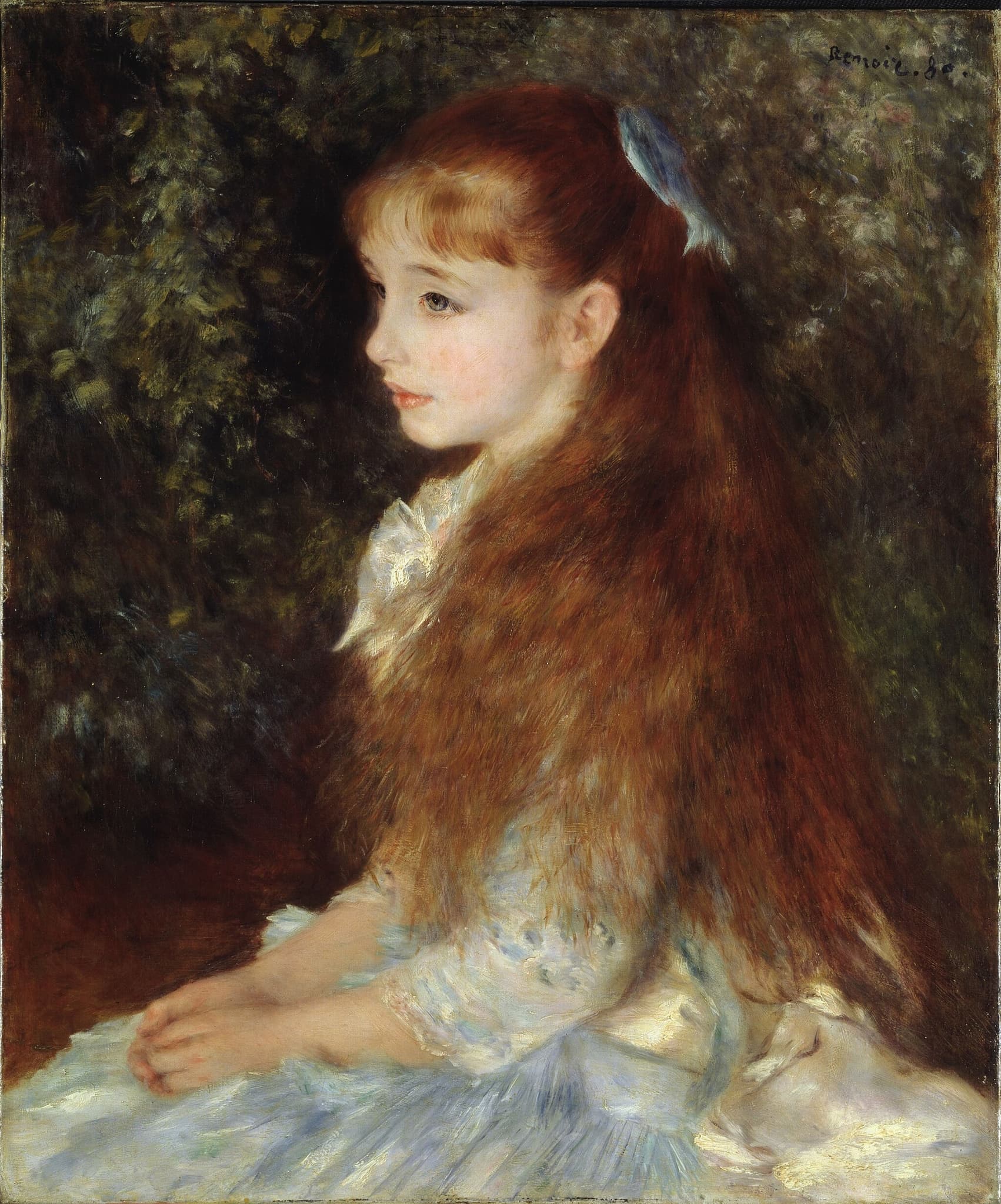
Portrait of Mademoiselle Irène Cahen d'Anvers (Little Irène)
Pierre-Auguste Renoir, 1880 • Oil on canvas
View more by Pierre-Auguste Renoir →Valuation Analysis
Valuation conclusion: Using a comparables‑driven approach, the Portrait of Mademoiselle Irène Cahen d'Anvers (Renoir, 1880) is estimated today at USD 20,000,000–50,000,000 if presented to the open market with clear title, an up‑to‑date conservator’s report and evening‑sale placement. The work’s long‑term presence in the Bührle collection, together with a documented wartime seizure and later restitution, is central to the valuation and requires full documentation prior to sale [1].
The range is anchored to recent realized prices for comparable, museum‑quality Renoir portraits and late‑period figure works: for example, Christie's New York realized ~USD 24.4M for a double‑figure portrait in 2022, and Sotheby’s New York realized ~USD 12.9M for a comparable single‑figure portrait in 2021 [2][3]. Mid‑tier late‑1870s Renoirs commonly appear in the USD 10–15M band, while canonical masterpieces form a much higher ceiling. Those outcomes support a practical open‑market band of USD 20–50M for a fresh, high‑quality Irène with no title or condition encumbrances; without those mitigants, realized values can fall into the lower teens.
Key adjustments: Provenance is a mixed upward/downward driver. Commissioned by the Cahen d'Anvers family, the painting was seized in 1941, restituted in 1946 and sold privately into the Bührle collection in 1949 (CHF 240,000) [1]. Although restitution occurred, the association with wartime movements and subsequent discussion around Bührle‑era acquisitions introduces reputational and legal sensitivity that can narrow the buyer pool—especially among institutions—unless documentation and indemnities are unambiguous [5]. Equally important is condition: absence of a modern technical report adds uncertainty. Any evidence of heavy overpaint, unstable support or major restoration would require a downward adjustment.
Market context and sale strategy: The Impressionist market since 2023 has become more selective; buyers prize catalogue‑raisonné inclusion, exhibition history and clear title, and auction houses increasingly market such works alongside institutional programming to attract competitive bidding [4]. For Irène the optimal go‑to‑market is a major evening sale (New York when seeking the highest ceiling) with prior exhibition, catalogue recognition and the option of a guarantee. If title or technical questions cannot be fully resolved, a negotiated private treaty or a conservatively priced evening lot (reserve toward the lower third of the band) is prudent.
Practical next steps: obtain catalogue‑raisonné confirmation, a full technical/conservation report, and complete provenance/legal files before setting reserve or marketing. With those mitigants in place, expect realized outcomes broadly within USD 20–50M; absent them, prepare for results toward the low end or below.
Key Valuation Factors
Art Historical Significance
High ImpactThe 1880 portrait of Irène Cahen d'Anvers is a well‑documented example of Renoir’s late‑1870s/1880 portrait practice and is frequently cited in monographs and exhibition literature. As a commissioned portrait of a prominent banking family, the sitter’s identity and social standing increase institutional interest and scholarly value. The painting embodies Renoir’s mature handling of color, texture and social portraiture—qualities that distinguish it from workshop pieces or sketches and that typically command a premium among top collectors and museums. This art‑historical prominence is a primary upward driver for market value and supports a blue‑chip pricing posture when other factors (title, condition) are clean.
Provenance & Title
High ImpactProvenance here is double‑edged. The canvas was commissioned by the Cahen d'Anvers family, seized during the Nazi era (1941), restituted in 1946 and then sold into the Bührle collection in 1949 (documented CHF 240,000 transaction). Restitution improves legal standing, but public scrutiny of Bührle‑era acquisitions and any gaps in wartime documentation materially affect institutional appetite and buyer confidence. Market participants will demand complete provenance files, postwar restitution documentation, and potentially indemnities; any residual ambiguity can narrow the buyer pool and induce discounts, so provenance/title is a high‑impact valuation consideration.
Condition & Conservation
Medium ImpactNo modern, publicly available conservation report is published for this canvas. Long residence in a major collection suggests it has been conserved and displayed, but assumptions are risky. Typical Renoir issues—discolored varnish, inpainting, relining or support instability—can materially alter value. A favorable technical report (including high‑resolution imagery, pigment analysis and treatment history) supports the high end of the estimate, whereas significant restoration needs or unstable support require downward adjustment. Commissioning a conservator’s report is essential before formal sale planning.
Market Comparables & Demand
High ImpactRecent comparable auction results for museum‑quality Renoirs drive the numeric valuation: double‑figure portrait results (e.g., ~USD 24.4M at Christie’s 2022) and single‑figure mid‑teens outcomes demonstrate buyer appetite for prime portraits. The gap between strong portrait results and canonical masterpieces underlines a hierarchical market: well‑provenanced, exhibition‑ready works performed strongly in evening sales, while less documented material underperforms. Auction house guarantees, sale timing, provenance packaging and exhibition loans can all compress or expand the realized range, making this a high‑impact market factor.
Rarity & Exposure
Medium ImpactThe painting’s long tenure in the Bührle collection and infrequent appearance on the secondary market mean few recent direct comparables exist for this exact canvas. Scarcity can create pent‑up demand among major collectors and museums, increasing potential realization; however, limited market testing also raises valuation uncertainty. Public exhibition and catalogue entries increase prestige and liquidity, but association with collections that have provenance controversies can complicate institutional acquisition appetite. Rarity therefore provides a medium positive impact contingent on provenance clearance and curated exposure.
Sale History
Pierre-Auguste Renoir's Market
Pierre‑Auguste Renoir is a blue‑chip Impressionist whose best works command strong global demand. While a handful of canonical masterpieces sit at very high historical ceilings, most high‑quality portraits and late‑19th‑century figure paintings trade in the high single‑digit to double‑digit millions, depending on provenance, condition and exhibition history. Collectors and institutions prize catalogue‑raisonné inclusion and clean title; when those elements are present, mid‑to‑upper tens of millions is realistic for prime portraits. The Renoir market is robust for the best examples but hierarchical and sensitive to documentation.
Comparable Sales
Berthe Morisot et sa fille, Julie Manet
Pierre-Auguste Renoir
Double-figure, museum-quality portrait by Renoir from the same broad period; strong provenance/exhibition history makes it an upper/mid-tier portrait benchmark for valuation.
$24.4M
2022, Christie's New York
~$26.4M adjusted
Jeune fille à la corbeille de fleurs
Pierre-Auguste Renoir
Single-figure portrait from circa 1890, comparable in subject and market segment (size/period); useful as a mid-tier portrait comp.
$12.9M
2021, Sotheby's New York
~$14.5M adjusted
Square de la Trinité
Pierre-Auguste Renoir
Late-1870s, mid-size Renoir with exhibition pedigree; demonstrates demand/ceiling for strong but not top-tier Impressionist works from Renoir's mature phase.
$11.9M
2023, Christie's New York
~$12.5M adjusted
Bouquet de lilas
Pierre-Auguste Renoir
Late-1870s still-life that outperformed expectations in a major European sale; useful as a mid-market anchor for late-19th-century Renoir demand (shows buyer appetite beyond portraits).
$8.8M
2024, Sotheby's London
~$9.1M adjusted
Au Moulin de la Galette
Pierre-Auguste Renoir
Renoir's auction record and a canonical masterpiece; sets the market ceiling for the artist and illustrates the gap between top-tier masterpieces and single-figure portraits.
$78.1M
1990, Sotheby's New York
~$185.1M adjusted
Current Market Trends
Since 2023 the high‑end Impressionist market has become more selective: aggregate volumes contracted while top, museum‑quality works still attract competitive bidding. Buyers now emphasize quality, catalogue‑raisonné validation, exhibition history and legal/ethical clarity. As a result, a fresh, well‑documented Renoir tied to significant institutional programming remains highly saleable, while works with unresolved provenance or technical issues face steeper headwinds and potential price discounts.
Sources
- Bührle Collection – Portrait of Irène Cahen d'Anvers (Little Irène)
- Christie's — Berthe Morisot et sa fille, Julie Manet (Renoir), 12 May 2022
- Sotheby's — Jeune fille à la corbeille de fleurs (Renoir), 16 Nov 2021
- Art Basel & UBS — The Art Market 2025 (market context and trends)
- Euronews — Coverage of wartime provenance and Swiss museum collections