Edward Hopper Paintings in New York — Where to See Them
New York matters for experiencing Edward Hopper because the city not only shaped much of his work but also concentrates key examples of his practice: approximately eight paintings are on permanent display across five institutions — four at the Whitney, two at The Metropolitan Museum of Art, and two at MoMA, while the Brooklyn Museum and the New‑York Historical Society currently hold none. That distribution lets you see Hopper’s urban and interior themes side by side in a handful of walkable visits, from the Whitney’s focused presentation of his later paintings to the Met and MoMA’s complementary holdings.
At a Glance
- Museums
- Whitney Museum of American Art, The Metropolitan Museum of Art, The Museum of Modern Art, Brooklyn Museum, New-York Historical Society Museum & Library
- Highlight
- See Hopper's major works at the Whitney for quintessential American urban realism.
- Best For
- Fans of American realism and solitary urban scenes
Whitney Museum of American Art
The Whitney’s strong focus on 20th-century American painting and its substantial Hopper holdings (four paintings) make it one of the clearest places to see how Hopper fits into the arc of American modernism. Seeing multiple Hopper paintings together at the Whitney lets you compare his use of light, urban isolation, and compositional framing against neighboring American artists in the same galleries, which highlights his distinctive formal choices and thematic concerns.
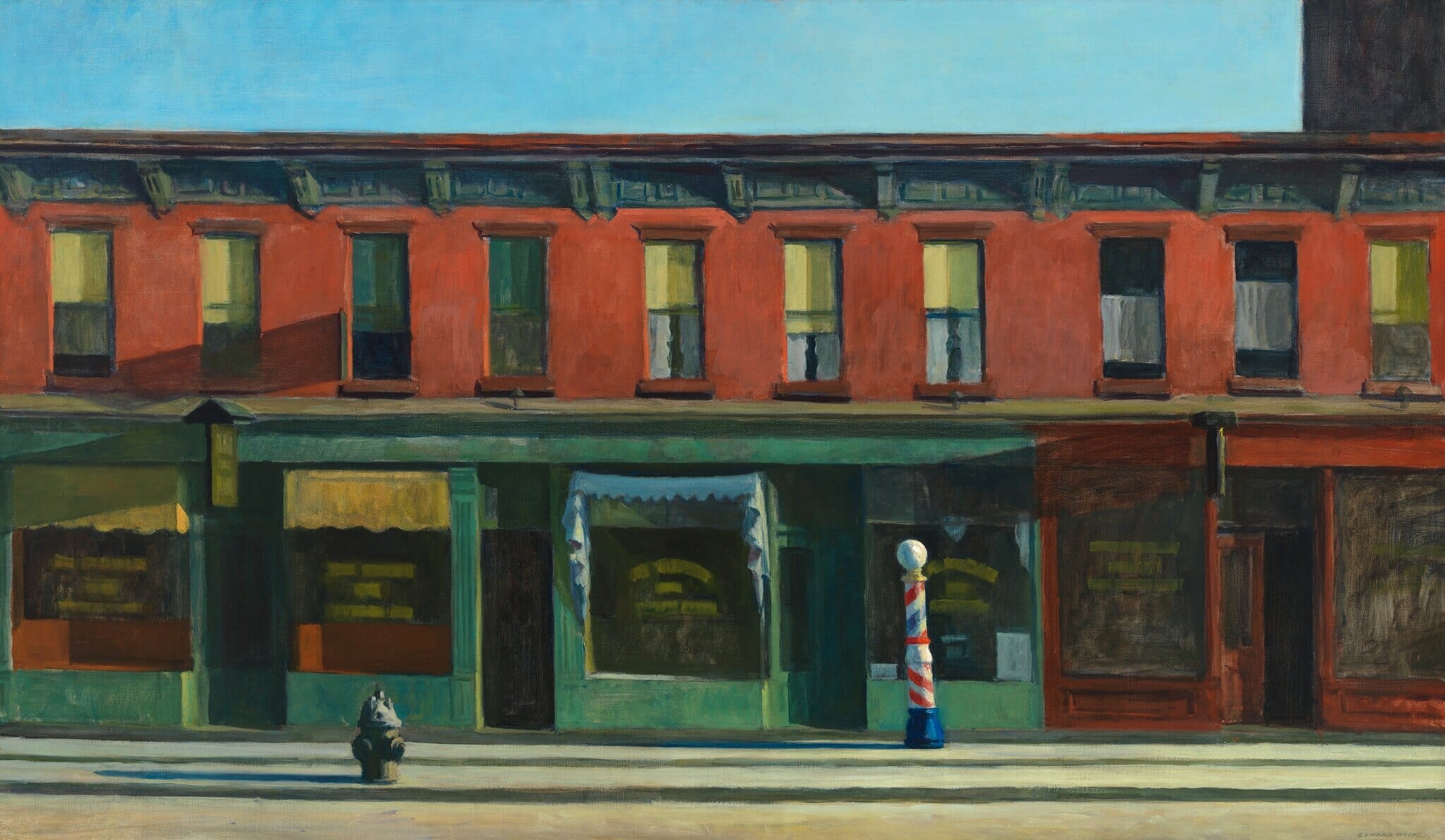
Early Sunday Morning
1930
A quiet streetscape showing a row of storefronts and apartments bathed in clear, horizontal morning light with an empty sidewalk and a lone figure far down the block. The painting is significant as an emblem of Hopper’s American realism and his exploration of urban solitude during the interwar years. Look for the strong linear composition, the rhythm of windows and awnings, and the cool-but-crisp color palette that emphasize stillness and the emotional distance between viewer and scene.
Must-see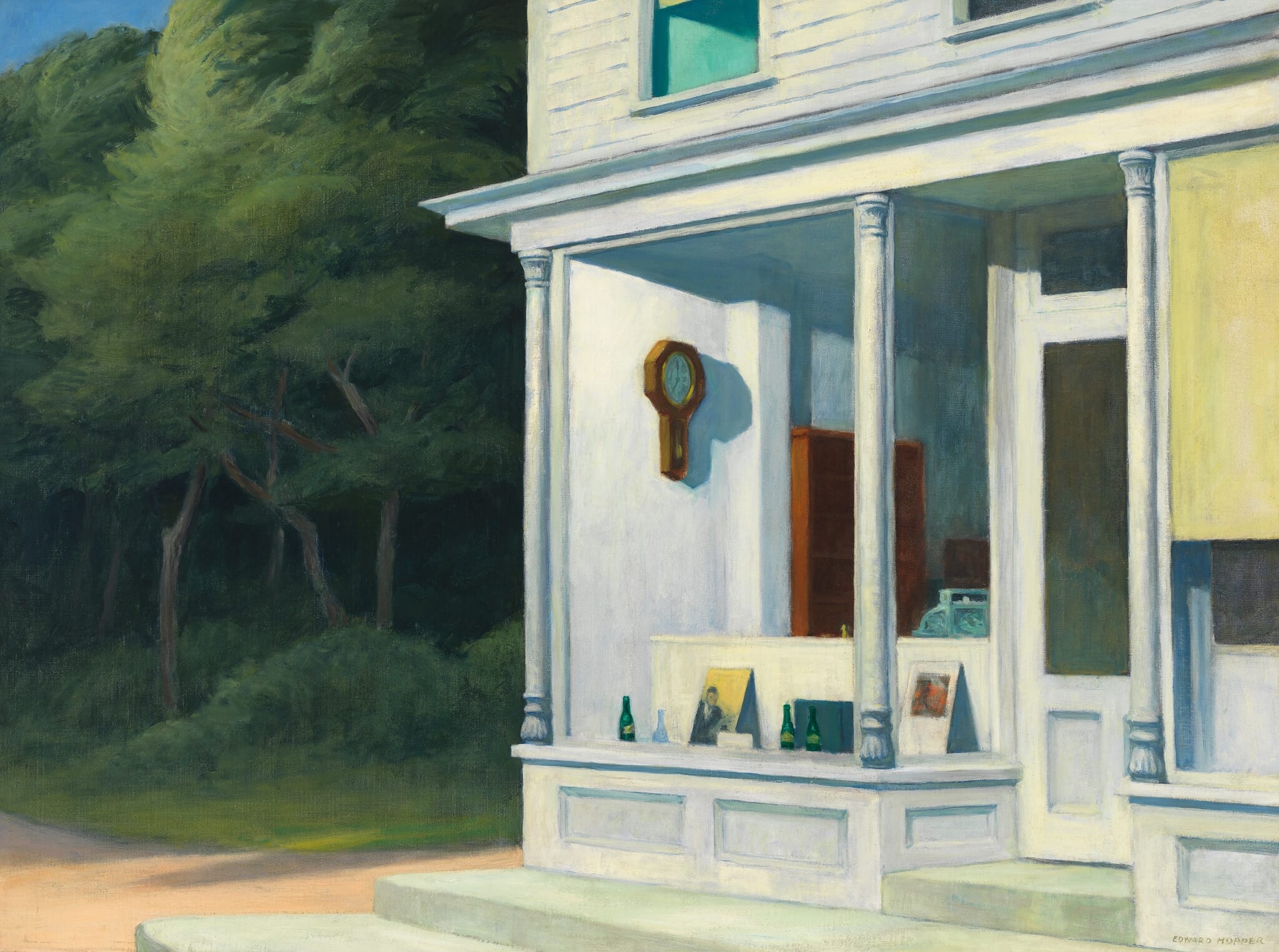
Seven A.M.
1948
A metropolitan corner at dawn where a storefront and an apartment block are rendered in precise geometry, with a solitary figure standing beneath the sign of a drugstore. The work is significant for Hopper’s late-career refinement of mood—capturing a fleeting, introspective moment of urban isolation and the interplay of artificial and natural light. Notice the sharp contrasts of shadow and light, the carefully measured perspective, and the way empty space frames the lone figure to heighten a sense of quiet expectancy.
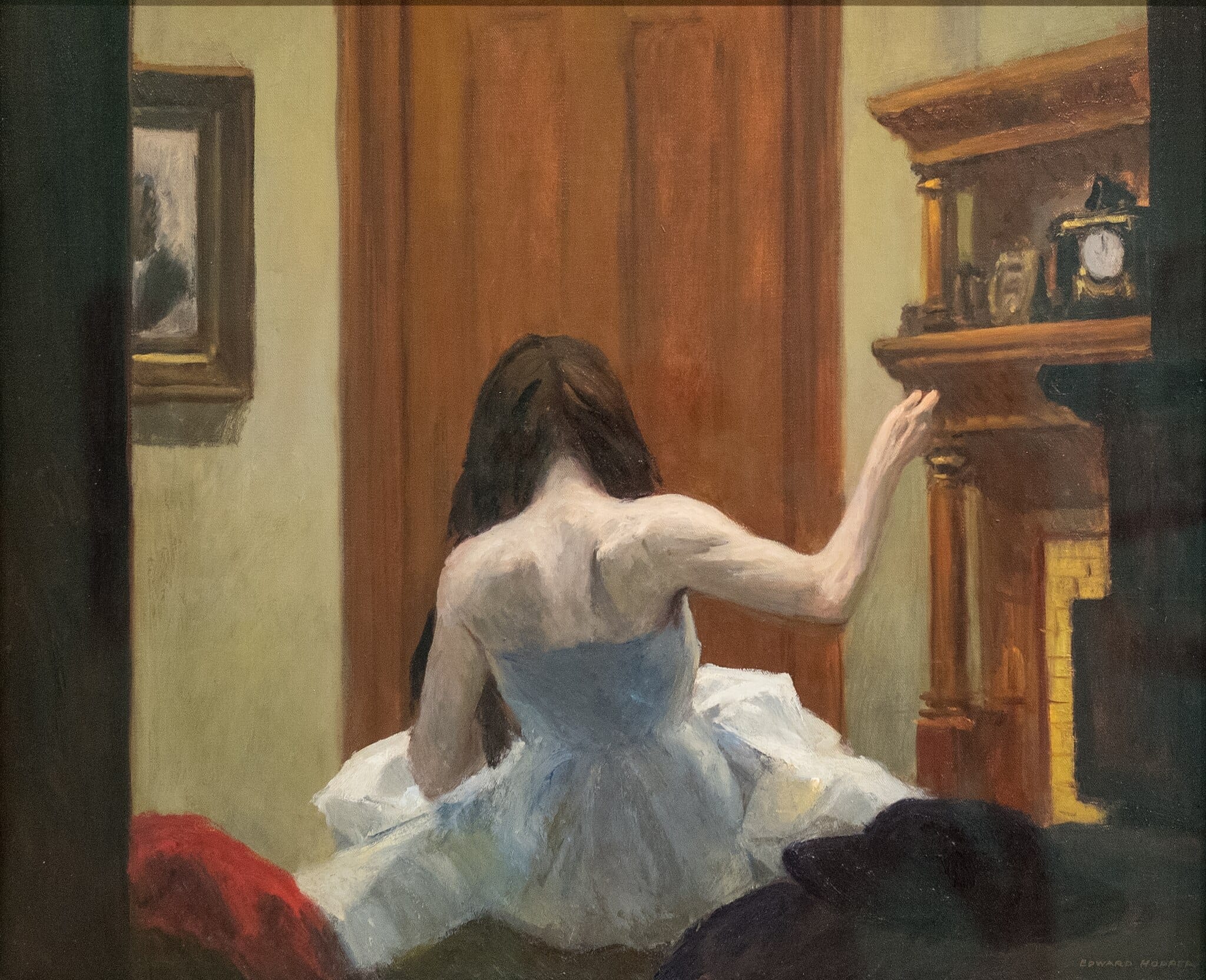
New York Interior
c. 1921
An intimate interior scene of a sparsely furnished room where two figures sit apart, bathed in cool, directional light from a window. Important as an early example of Hopper’s interest in psychological distance and domestic alienation, it announces themes he developed throughout his career. Focus on the angular architecture, the isolation of the figures within the room’s geometry, and the subtle use of reflected light that creates a tense, contemplative atmosphere.
Must-see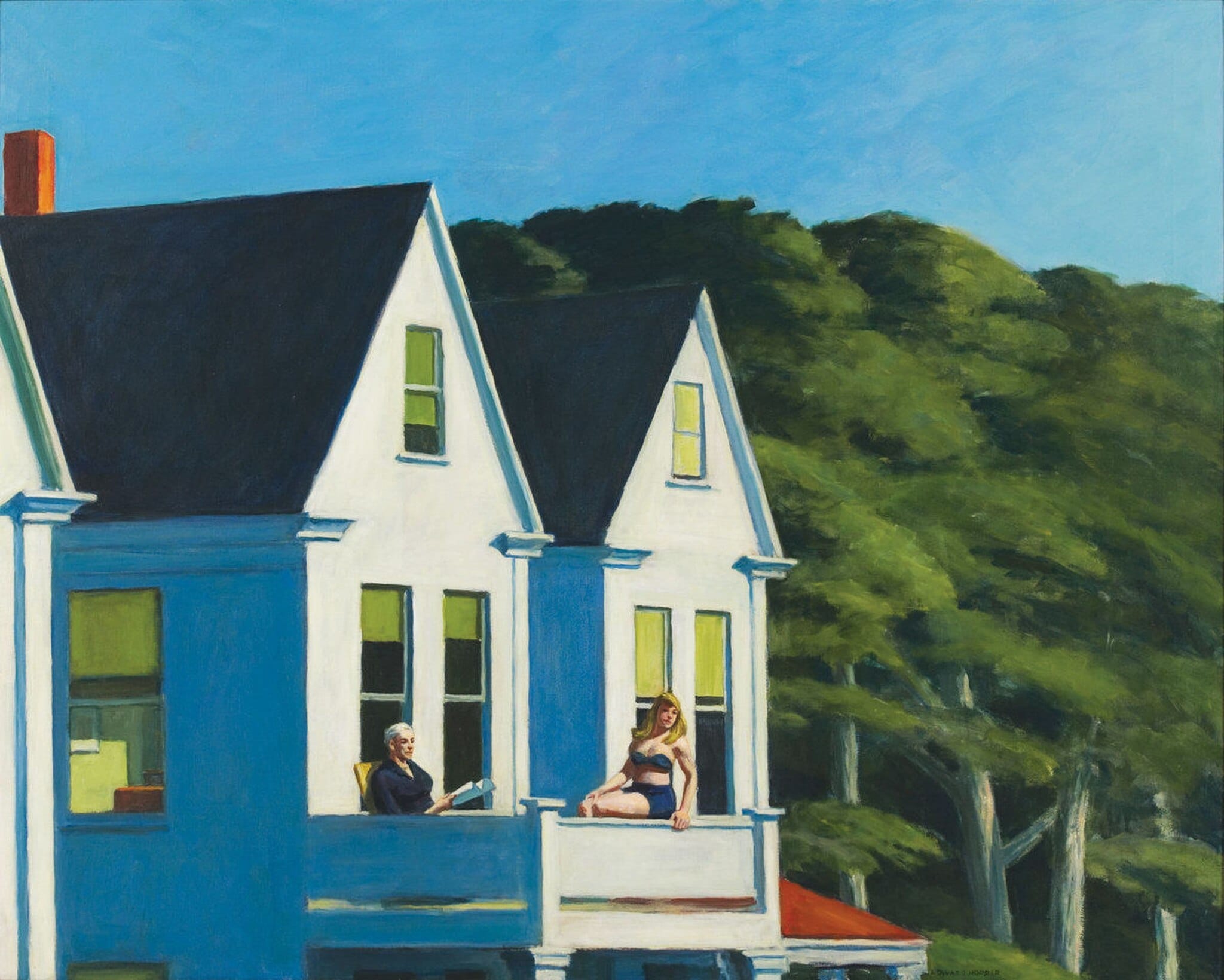
Second Story Sunlight
1960
A sunlit second-floor room where two women occupy separate activities—one seated, one standing—illuminated by a bright plane of sunlight crossing the floor and wall. This late work is significant for its lyrical handling of light and its continued meditation on solitude, memory, and the passage of time. Look for the crisp diagonal of sunlight that structures the composition, the stillness of the figures, and the way Hopper reduces detail to emphasize mood and the geometry of light.
The Metropolitan Museum of Art
With two Hopper paintings in its encyclopedic holdings, the Met places Hopper within a broader historical conversation — you can compare his modern realist approach directly alongside earlier American and European traditions that influenced him. The Met’s contextual displays illuminate how Hopper’s treatment of perspective, interior spaces, and everyday subjects dialogues with both academic painting and modernist innovations.
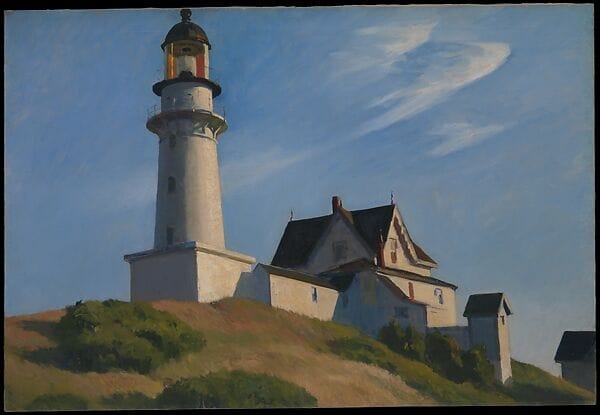
The Lighthouse at Two Lights
1929
Hopper depicts the white lighthouse and attached keeper’s house perched on a rocky Cape Elizabeth promontory against a broad, bright blue sky, the structure shown in strong sunlight with deep shadow to emphasize its sculptural form. The painting is significant as part of Hopper’s Maine works and his examinations of solitude and permanence—here the tower reads as a symbol of stubborn endurance amid change. Look for the bold silhouette, the contrast of warm sunlit planes and cool shadows, and the way Hopper crops the composition so the lighthouse seems to rise monumentally toward the viewer. ([metmuseum.org](https://www.metmuseum.org/art/collection/search/489258))
Must-see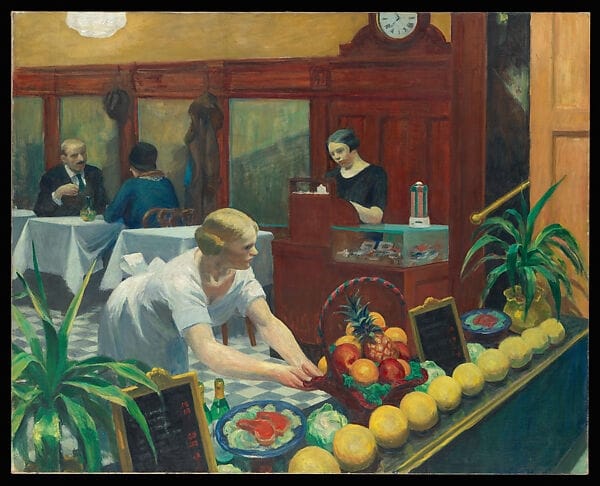
Tables for Ladies
1930
The scene shows two women seated together at a marble-topped table in a well-lit restaurant interior, their faces and postures conveying a quiet, ambiguous mood rather than overt narrative. Important for its social context, the title references the early-20th-century practice of advertising 'tables for ladies' as women became more visible in public life, and the work reflects Hopper’s interest in modern urban solitude and changing gender roles. When viewing, attend to the flattened planes, the clear geometric arrangement of tables and chairs, the restrained palette, and the subtle body language that creates psychological distance between the figures and the viewer. ([metmuseum.org](https://www.metmuseum.org/art/collection/search/487695))
Must-seeThe Museum of Modern Art (MoMA)
MoMA’s two Hopper paintings matter because the museum frames him as part of 20th-century modernism — here Hopper is read alongside contemporaries who were reshaping visual language, which clarifies his formal choices in composition and atmosphere. MoMA’s curatorial juxtapositions make it easy to see how Hopper’s restrained drama and cinematic framing contributed to modern American visual culture.
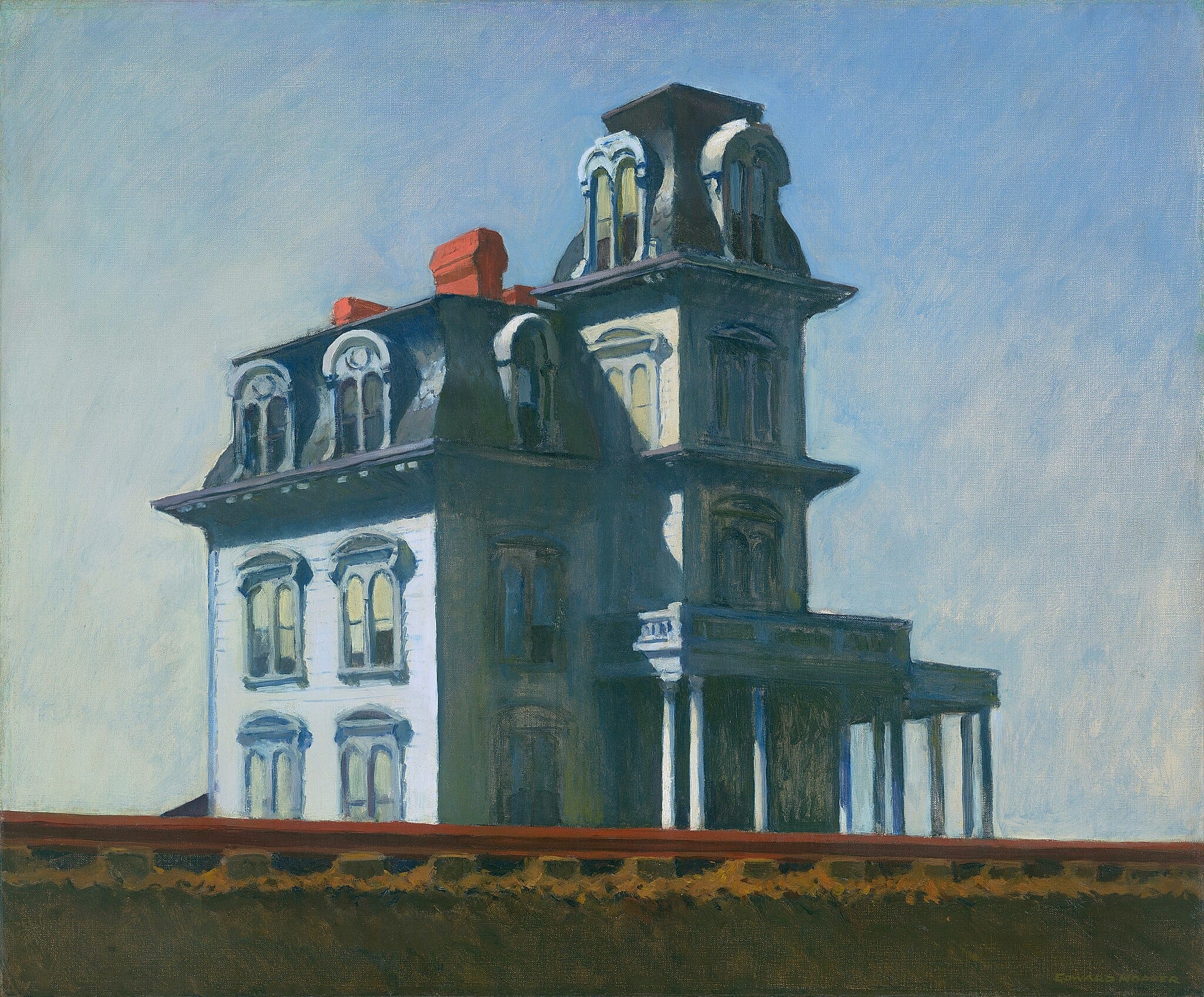
House by the Railroad
1925
A stark, almost cinematic view of a solitary, mansard-roofed Victorian house set behind a stretch of railroad track and low shrubbery; there are no figures and the building seems frozen in late afternoon light. The painting is significant as an early, definitive work of Hopper’s mature style and was one of the first major American modernist acquisitions by MoMA, helping establish Hopper’s reputation for evoking isolation in everyday settings. Viewers should look for the pronounced geometry of the roof and windows, the contrast between the ornate house and the utilitarian tracks, and the way light isolates architectural details to create a mood of uncanny stillness. ([moma.org](https://www.moma.org/audio/playlist/296/132?utm_source=openai))
Must-see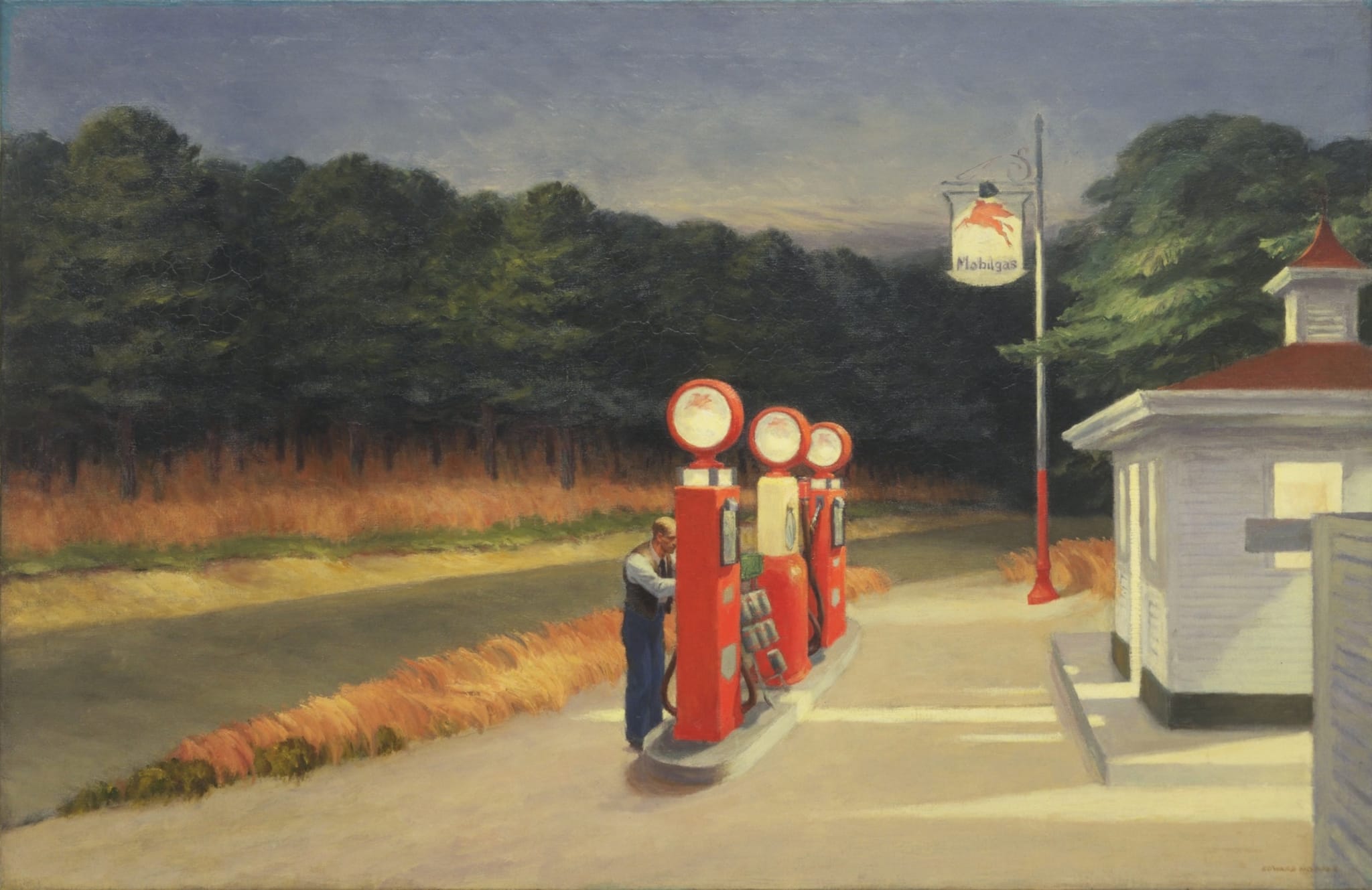
Gas
1940
A roadside service station at dusk with a single attendant and a gas pump under a canopy, set against a low landscape and an expansive sky; the scene is quiet yet charged with cinematic tension. 'Gas' is notable for its composition and lighting—Hopper transforms an ordinary, modern setting into a study of loneliness and the American vernacular, and the work is in MoMA’s collection and on public view. Viewers should notice the horizontal sweep of the composition, the artificial glow beneath the canopy, the careful placement of the attendant, and the subtle interplay of shadow and manufactured light that gives the scene its introspective stillness. ([moma.org](https://www.moma.org/collection/works/80000?sov_referrer=theme&theme_id=5113&utm_source=openai))
Must-seeBrooklyn Museum
Even without original Hopper paintings, the Brooklyn Museum matters for experiencing Hopper because its holdings and exhibitions on New York life, realism, and the city’s social history provide essential context for his urban subjects and settings. Temporary shows, prints, photography, and decorative arts in Brooklyn’s collection shed light on the neighborhoods, architecture, and social atmosphere that informed Hopper’s view of the city.
New-York Historical Society Museum & Library
Though it doesn’t hold Hopper paintings, the New-York Historical Society is invaluable for understanding the historical and documentary context of Hopper’s New York: its archives, period images, city maps, and social-history displays help you situate his scenes within the lived urban environment of his time. Research materials and exhibitions there make it easier to read Hopper’s work as responses to real places, past routines, and New York’s evolving civic life.