Edward Hopper Paintings in Chicago — Where to See Them

Chicago is home to approximately two Edward Hopper paintings on permanent display, split between the Art Institute of Chicago (1 painting) and the Terra Foundation for American Art (1 painting). Seeing these works in the city matters because the Art Institute situates Hopper within the broader narrative of modern urban painting while the Terra Foundation frames him within focused scholarship and American art exhibitions, giving visitors two complementary perspectives on his themes of light, isolation, and place.

At a Glance

Museums
Art Institute of Chicago, Terra Foundation for American Art
Highlight
See Edward Hopper's works at the Art Institute's American painting collection
Best For
Lovers of American realism and museum-goers

Art Institute of Chicago

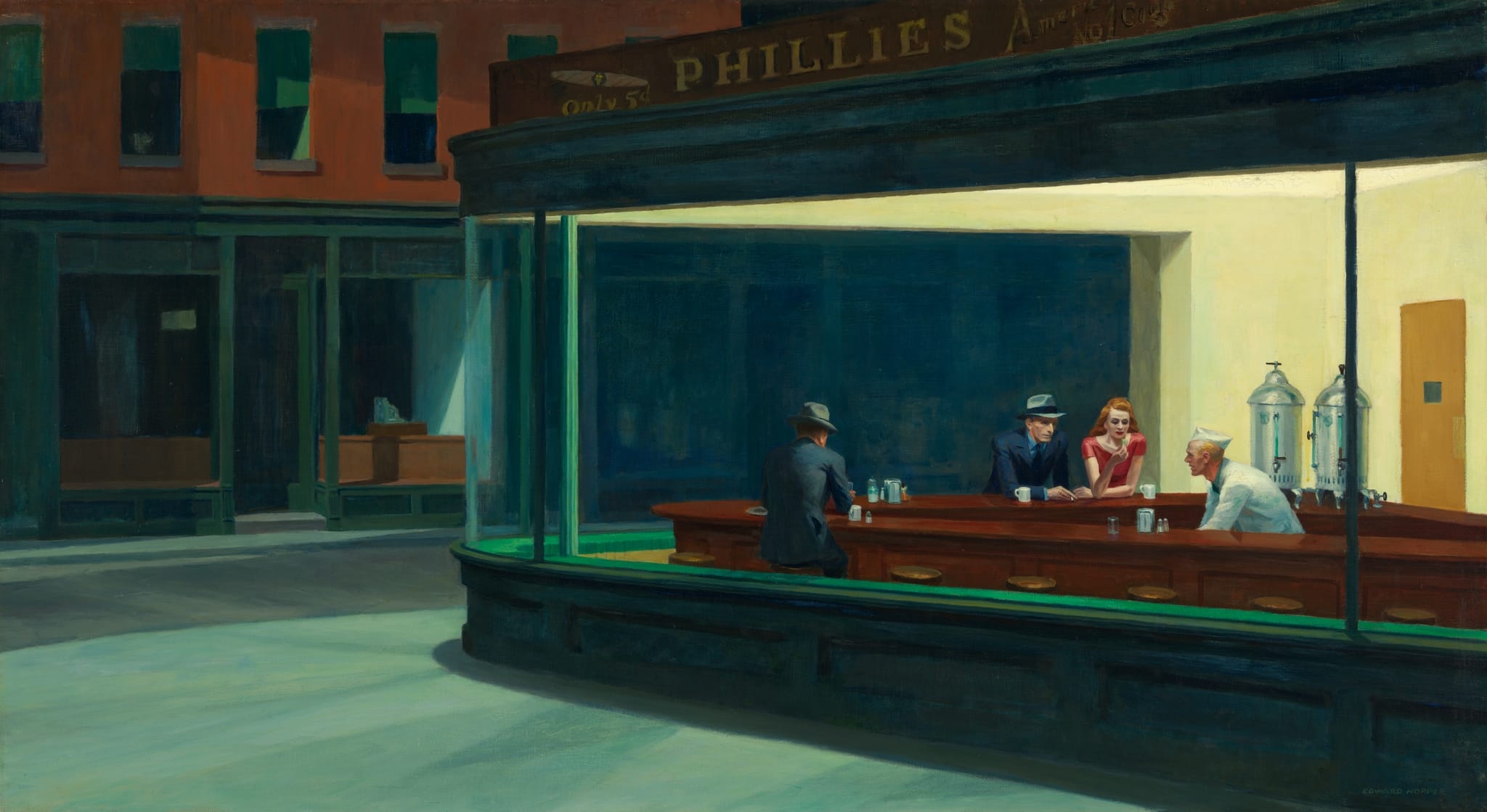
The Art Institute is indispensable for experiencing Edward Hopper because it houses Nighthawks, arguably his most famous painting; that single work has shaped how generations perceive Hopper’s use of light, urban isolation, and cinematic composition. Seeing Nighthawks in person at the Art Institute lets you appreciate the scale, texture, and subtle brushwork that get lost in reproductions, and it anchors Hopper within the museum’s strong American painting holdings so you can compare his approach directly with contemporaries and successors.
Address: 111 S. Michigan Avenue, Chicago, IL 60603
Hours: General opening hours: 10:00 AM–5:00 PM daily; extended hours Thursdays until 8:00 PM. Members get early access 10:00–11:00 AM.
Admission: General admission: Adult ticket (typical) $32; discounts and free-entry categories (Illinois residents, children, educators, etc.) and free/discount days vary — check museum site.
Tip: Go early on a weekday (right at opening) to avoid crowds around Nighthawks; stand back to take in the composition, then move close to study the brushwork and surface—many visitors only view it from one spot. Also check the American art galleries nearby to see works that help explain Hopper’s influences and context.

Terra Foundation for American Art

The Terra Foundation matters for Hopper scholarship and experience because it actively collects, researches, and loans American paintings, making it a hub for exhibitions and curatorial perspectives that place Hopper in broader narratives of 20th‑century U.S. art. Encountering a Hopper in the Terra Foundation’s care (whether in its own displays or traveling shows it organizes) often comes with richer interpretive material—catalogue essays, loans that pair Hopper with less familiar peers—and an emphasis on provenance and historical context that deepens understanding beyond the single iconic image.
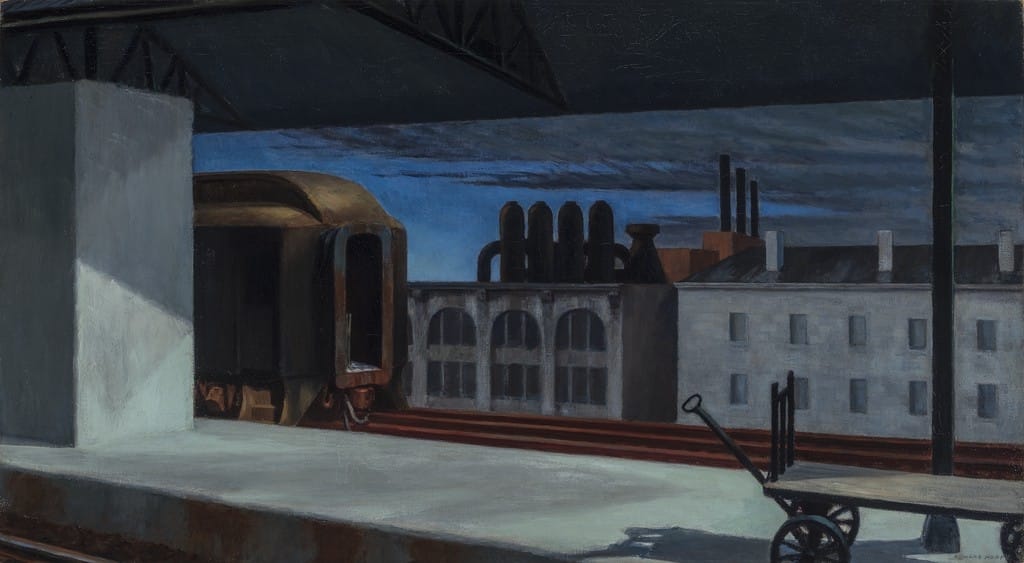
Dawn in Pennsylvania

Dawn in Pennsylvania

1942

A deserted railroad platform and adjacent industrial buildings are seen across multiple tracks, lit by a slanting, ambiguous light that suggests both lingering night and an emerging dawn; a stationary railcar and an empty cart heighten the stillness. The work is significant as a quintessential Hopper meditation on solitude, modernity, and the theatrical framing of architectural space during the 1940s. Viewers should look for the conflicting light sources, the painting’s broad horizontal composition that reads like a stage set, and small objects (the railcar and cart) that underscore the scene’s eerie lack of human presence. ([collection.terraamericanart.org](https://collection.terraamericanart.org/objects/40/dawn-in-pennsylvania?utm_source=openai))

Must-see
Address: 120 E. Erie Street, Chicago, IL 60611
Hours: Terra Foundation does not operate public exhibition galleries at 120 E. Erie Street; its collection is shared through long-term loans and partnerships with museums (e.g., Art Institute of Chicago). ([terraamericanart.org](https://www.terraamericanart.org/art-collection/?utm_source=openai))
Admission: No on-site admission (no public galleries). Works from the Terra collection are accessible to the public at partner institutions; for example, the Art Institute of Chicago houses loans from Terra — check the Art Institute for hours and ticket prices. ([terraamericanart.org](https://www.terraamericanart.org/collection/loans/?utm_source=openai))
Tip: Before you go, check the Terra Foundation’s current exhibitions and loan schedule or contact them about on‑site displays—their Hopper may appear in a themed show rather than a permanent gallery. If possible visit during a weekday when staff-led labels, catalogues, or small talks are more accessible; these resources often highlight connections and archival materials that many visitors miss.

Edward Hopper and Chicago

Edward Hopper did not live in Chicago, but the city played a recurring and consequential role in his career. The Art Institute of Chicago purchased Hopper’s first work for its collection—an etching entered via the Chicago Society of Etchers in February 1923—marking his earliest institutional acquisition there. 1 Chicago included Hopper in major surveys: the Museum of Science and Industry’s A Century of Progress (May 1933) featured Automat and four watercolors, and in 1934 Alfred H. Barr Jr.’s 1933 MoMA retrospective traveled to the Arts Club of Chicago. 12 The Art Institute repeatedly exhibited and acquired his work through the 1930s–1940s: a special display of 26 watercolors appeared in the 1939 International Exhibition, and in October 1942 Nighthawks won the Ada S. Garrett Prize and was purchased for the museum’s collection (accession recorded 1942). 13 The museum also staged special installations of Hopper oils in 1943. Later retrospectives of Hopper’s oeuvre traveled to Chicago (e.g., the Whitney/Art Institute exhibitions of the 1960s and the Museum of Fine Arts, Boston retrospective that reached the Art Institute in 2008). Together these purchases, prizes, and exhibitions made Chicago a key institutional supporter that helped cement Hopper’s national reputation. 13

Also See Edward Hopper Paintings In