Egon Schiele Paintings in Vienna — Where to See Them
Vienna matters for experiencing Egon Schiele because it was the city where he lived, worked and found much of his subject matter—its streets, studios and cultural debates are woven into his paintings. Today you can see approximately five of his works on permanent display at the Wien Museum Karlsplatz, which presents them alongside archival material and local context that make his artistic relationship with the city immediately legible.
At a Glance
- Museums
- Wien Museum (Karlsplatz)
- Highlight
- See Schiele's expressive portraits at the Wien Museum (Karlsplatz)
- Best For
- Fans of Expressionism, portraiture, and Viennese art history
Wien Museum (Wien Museum Karlsplatz)
The Wien Museum is essential for experiencing Egon Schiele because it holds five of his paintings within the city where he lived and worked, allowing visitors to see his work in the very cultural and urban context that shaped it. The museum places Schiele’s paintings alongside archival material, photographs and period objects that illuminate his networks in Vienna, his responses to the city’s social climate, and the development of his late-teen and early-adult style. Seeing these paintings here helps you connect formal features (line, pose, coloration) to the biographical and civic milieu that informed Schiele’s most charged images.
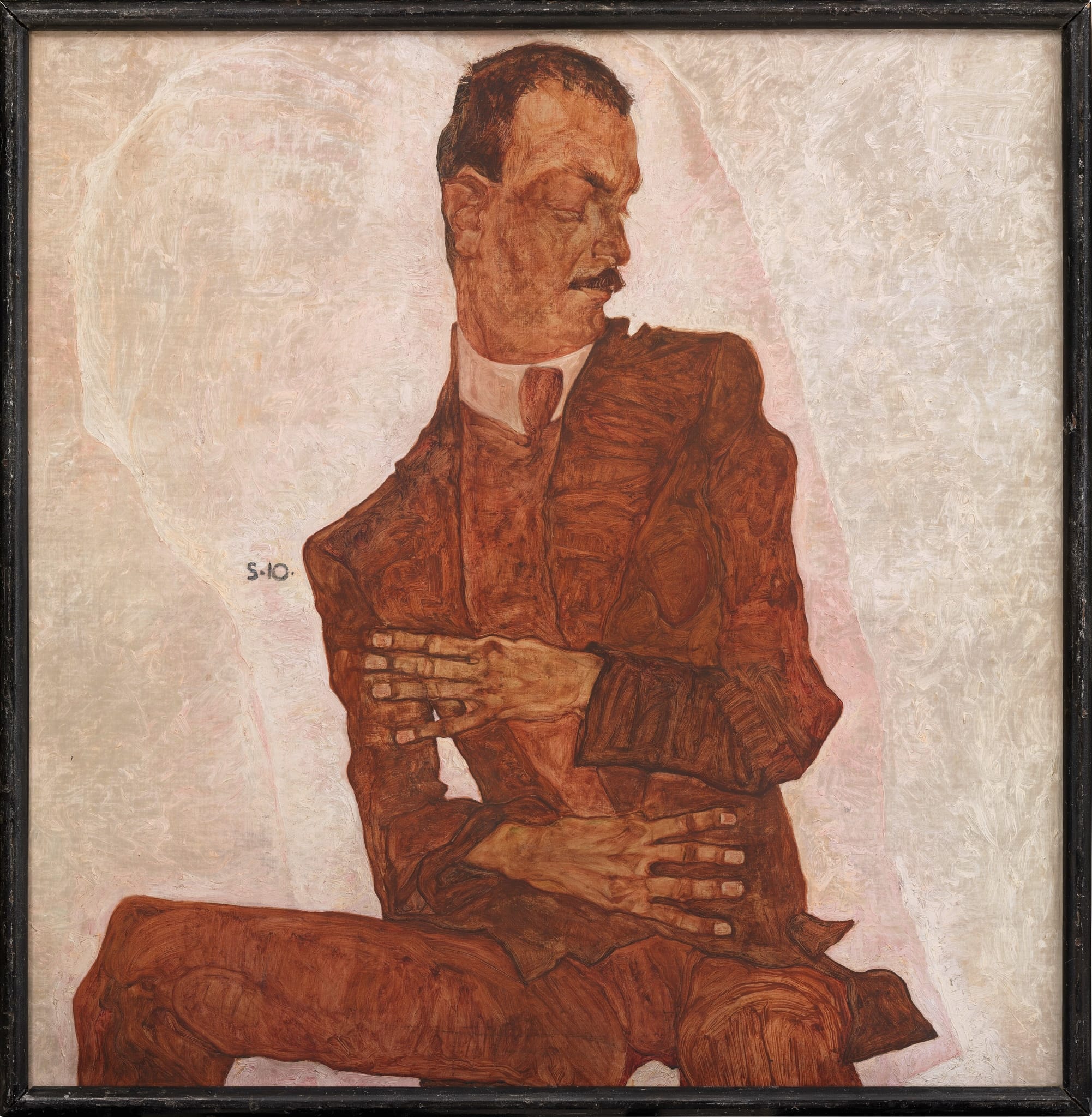
Porträt Arthur Roessler
1910
Major portrait linking Schiele to his important patron Arthur Roessler; exemplary early expressionist style.
Must-see
Sonnenblume
1909-1910
A tall, narrow oil depicting a single sunflower against a simplified field of colour, the painting transforms a familiar botanical motif into a tension-filled, almost human presence. It is important as an example of Schiele’s early experiment with elongated formats and expressive reduction of form; pay attention to the vertical composition, the emphatic outlines and the way colour and contour create an almost portrait-like monumentality. ([sammlung.wienmuseum.at](https://sammlung.wienmuseum.at/en/object/202769-sonnenblume/?utm_source=openai))
Must-see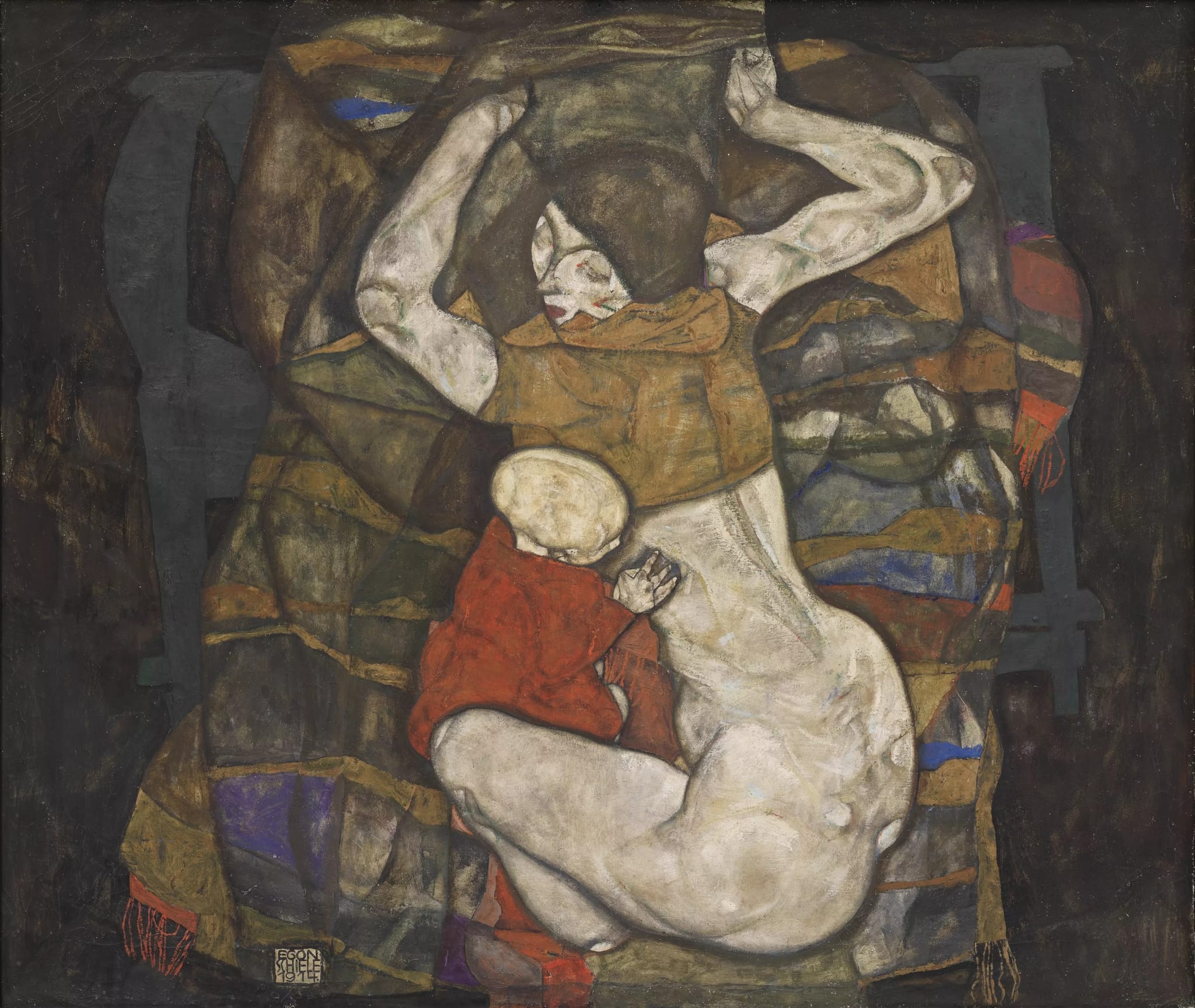
Junge Mutter
1914
Depicting a young mother with her child, this work balances tenderness with Schiele’s characteristic angularity and directness of form. The painting is notable both for its emotional immediacy and for being one of the relatively few Schiele oils preserving original surface qualities (it lacks a later varnish), so observe the raw brushwork, the fragile modeling of the child and the contrasting linear articulation of the figures. ([guide.wienmuseum.at](https://guide.wienmuseum.at/en/objekt/211?utm_source=openai))
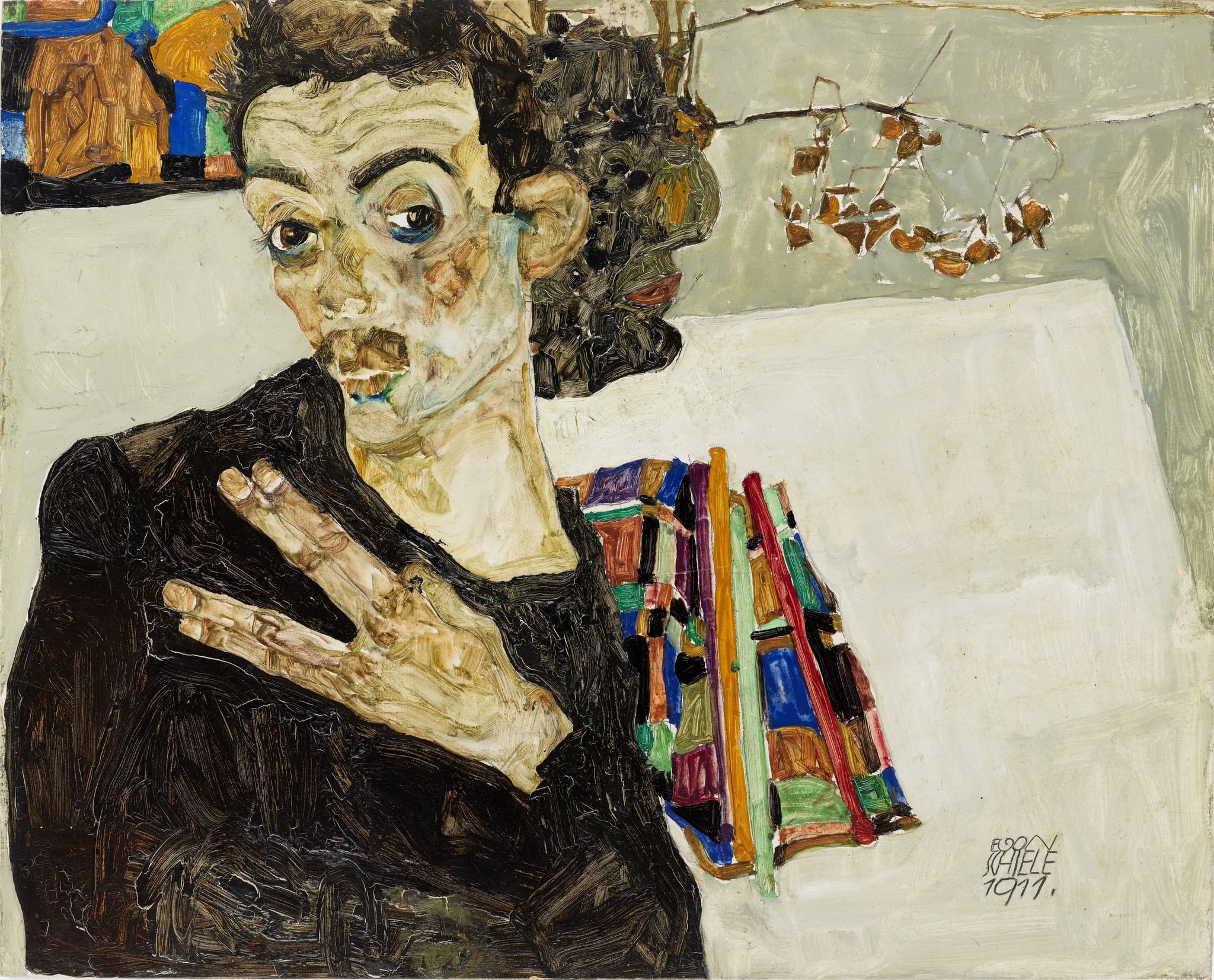
Selbstbildnis
1911
A small, concentrated self-portrait in oil that presents Schiele with frankness and a carefully composed frontal pose, combining self-exposure with painterly control. The work is significant among his many self-portraits for its compressed scale and psychological intensity; when viewing, note the direct eye contact, the economy of background, and the interplay of muted colour and sculptural line that define his face. ([sammlung.wienmuseum.at](https://sammlung.wienmuseum.at/objekt/179770-selbstbildnis/?utm_source=openai))
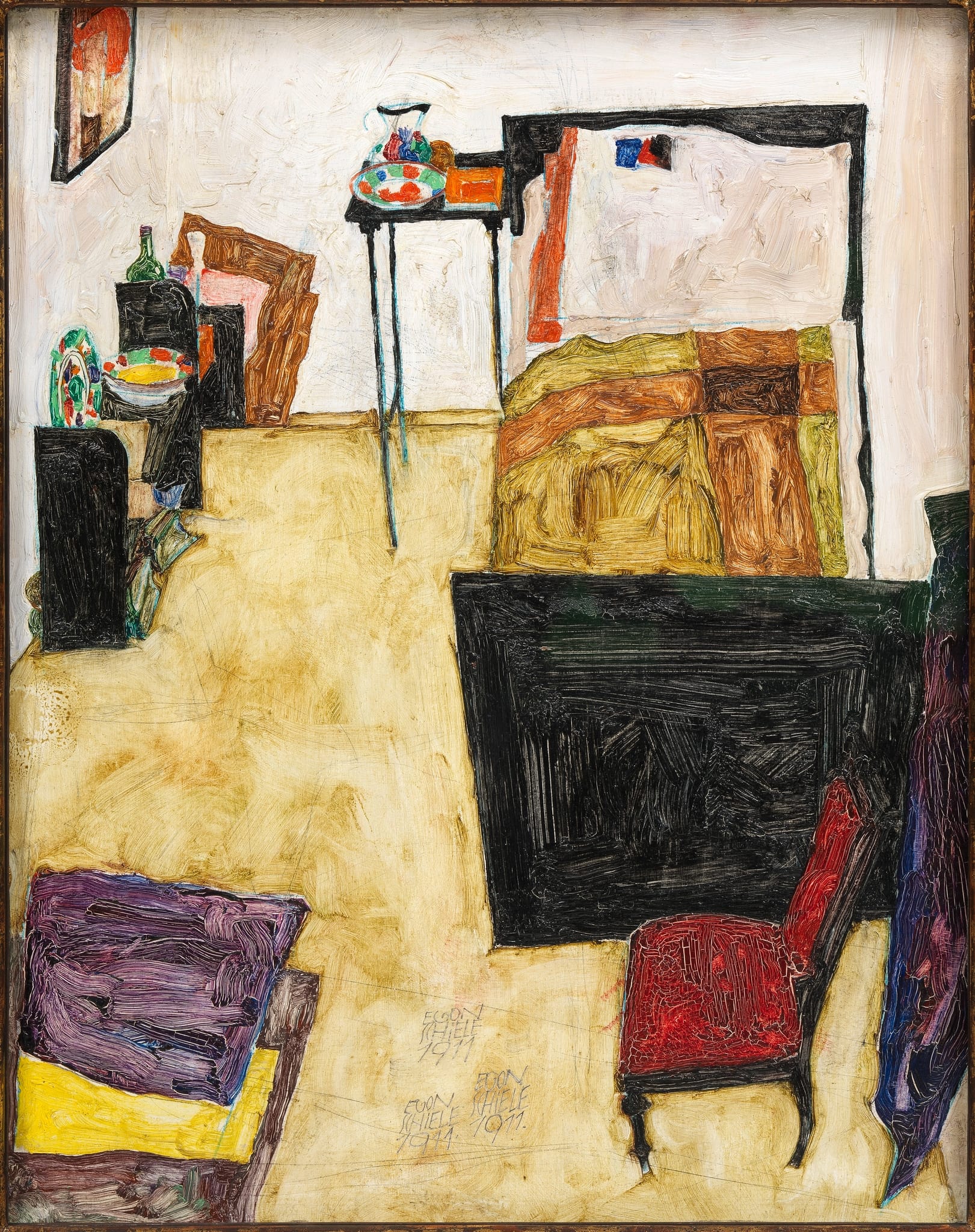
Mein Wohnzimmer (Das Zimmer des Künstlers in Neulengbach)
1911
An interior view of Schiele’s room in Neulengbach that reads less as a documentary scene and more as a psychological map of the artist’s space, with furniture and objects arranged in flattened, expressive planes. The painting matters for how Schiele uses domestic space to reflect mood and identity; look for the tilted perspective, the angular treatment of objects and the way sparse details (a chair, bed or paintings on the wall) create an uncanny, intimate atmosphere. ([sammlung.wienmuseum.at](https://sammlung.wienmuseum.at/en/object/1477-mein-wohnzimmer-das-zimmer-des-kuenstlers-in-neulengbach/?utm_source=openai))