Egon Schiele
Biography
Themes in Their Work
Where to See Egon Schiele's Paintings
Explore Egon Schiele's works on display in museums around the world.
Most Expensive Egon Schiele Paintings
Explore ranked valuations of Egon Schiele's most valuable works →
Featured Artworks
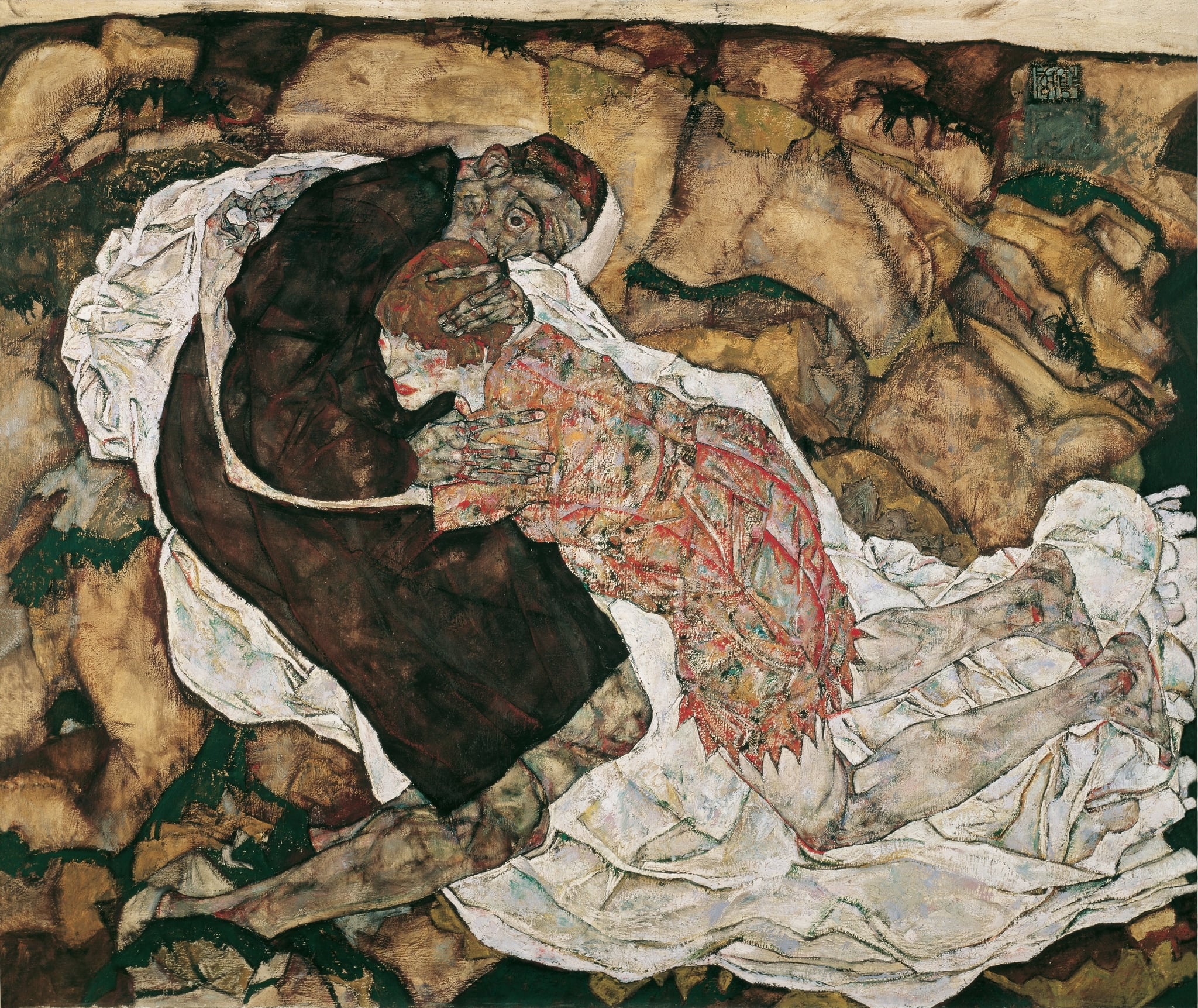
Death and the Maiden
Egon Schiele (1915)
In Death and the Maiden, Egon Schiele fuses <strong>eros and thanatos</strong> into a single, uneasy embrace: a gaunt, hooded figure in dark robes wraps himself around a young woman whose patterned dress and red mouth still signal life. On a crumpled <strong>white cloth</strong>—at once bed and shroud—their angular, ashen bodies kneel against <strong>barren ocher earth</strong>, turning intimacy into a memento of parting. The scene asserts that tenderness and terror are inseparable, especially under the shadow of war.
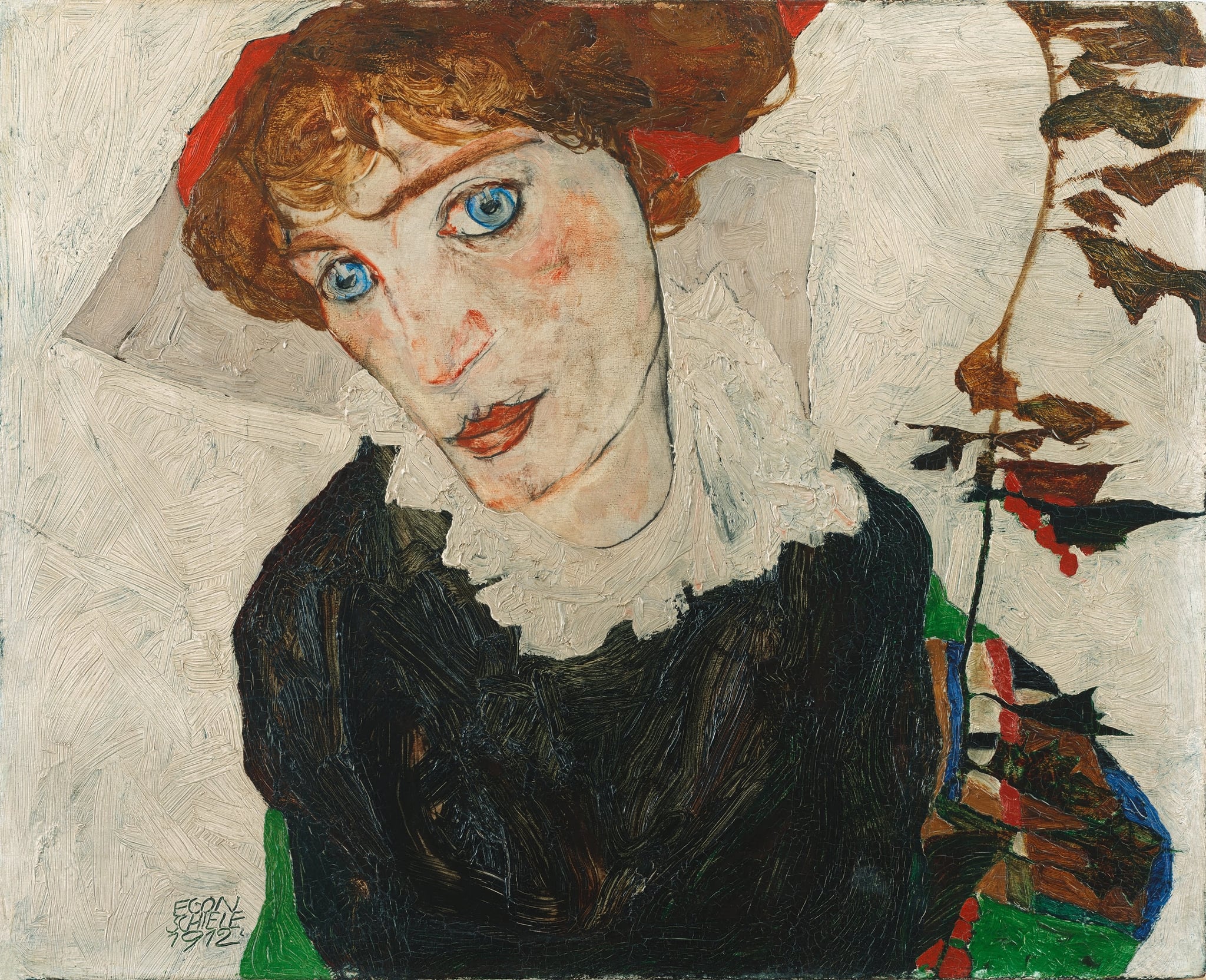
Portrait of Wally
Egon Schiele (1912)
Egon Schiele’s Portrait of Wally (1912) turns likeness into <strong>emotional topography</strong>: an oblique head, ice‑blue eyes, and a ruffled white collar flare against an <strong>impasto, airless ground</strong>. The right‑edge twig with red berries acts as a terse sign of <strong>vitality under threat</strong>, while jagged contours and a dense black dress pull the figure toward us with unsettling intimacy <sup>[1]</sup><sup>[3]</sup>.
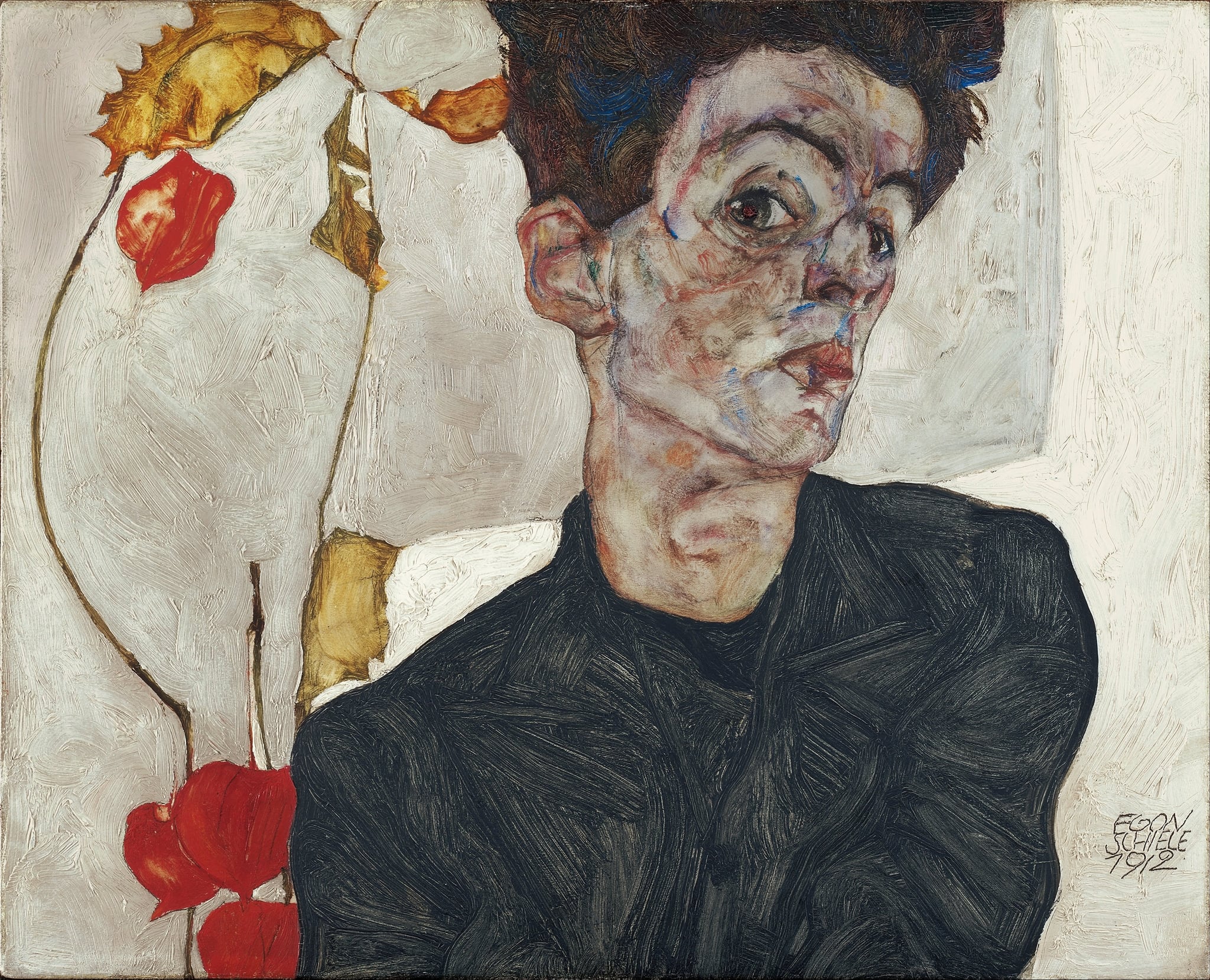
Self-Portrait with Physalis
Egon Schiele (1912)
In Self-Portrait with Physalis, Egon Schiele twists his gaunt body toward us, the face flayed by violet and blue accents and set against a scraped, chalky ground. The <strong>red-orange lantern pods</strong> flare beside his black, sharply linear jacket, a <strong>counterweight</strong> that charges the image with tension between vitality and decay <sup>[1]</sup><sup>[2]</sup>. Signed and dated <strong>1912</strong> at lower right, it crystallizes Schiele’s Expressionist self-scrutiny.
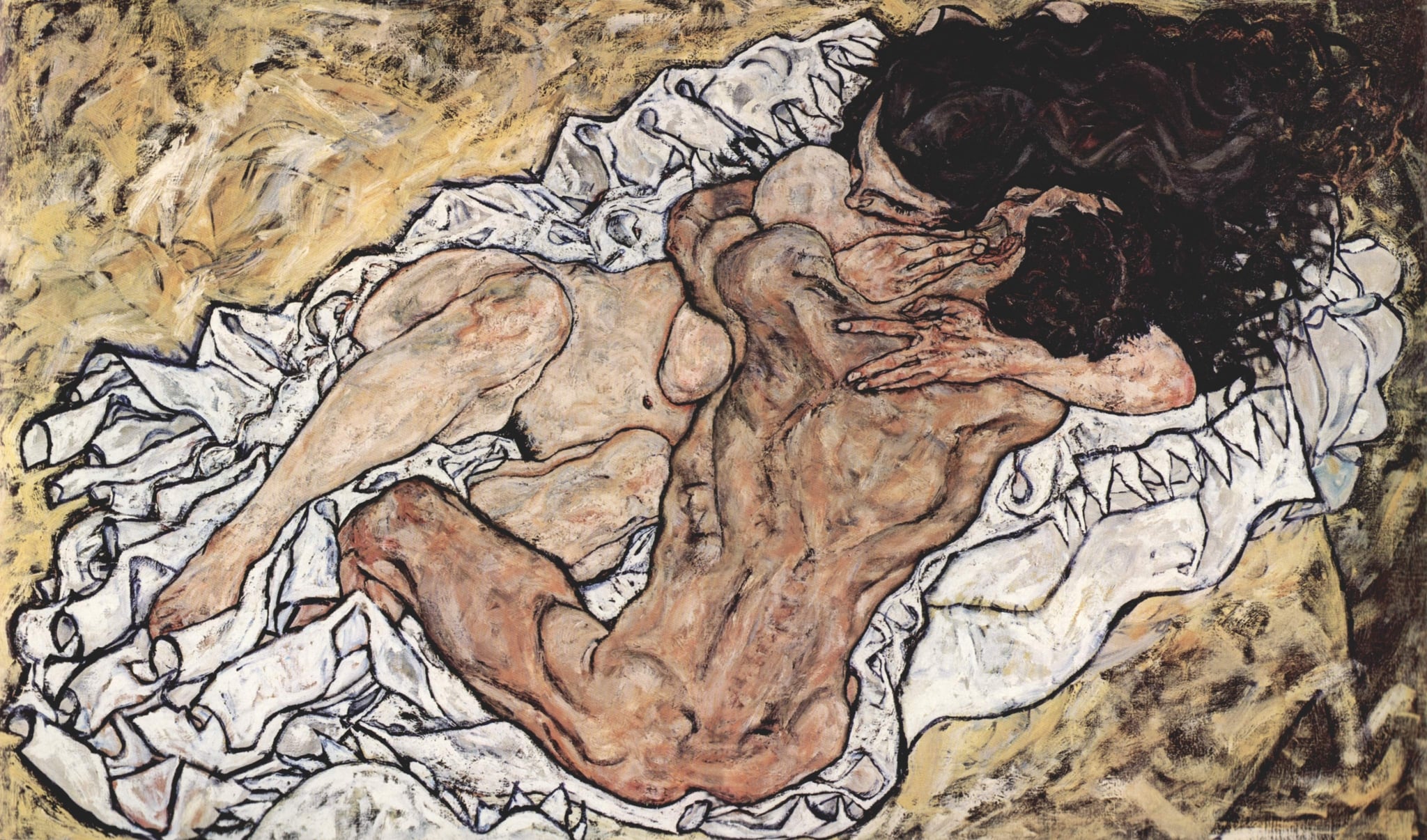
The Embrace
Egon Schiele (1917)
The Embrace fuses two nude bodies into a single, trembling organism, where <strong>tenderness</strong> and <strong>separation anxiety</strong> coexist. Schiele’s taut contours, proliferating <strong>hands</strong>, and storm‑like <strong>sheet</strong> make desire feel both sheltering and perilous <sup>[1]</sup>. From the overhead view, intimacy reads as a pact against isolation and a recognition of the body’s <strong>fragility</strong>.
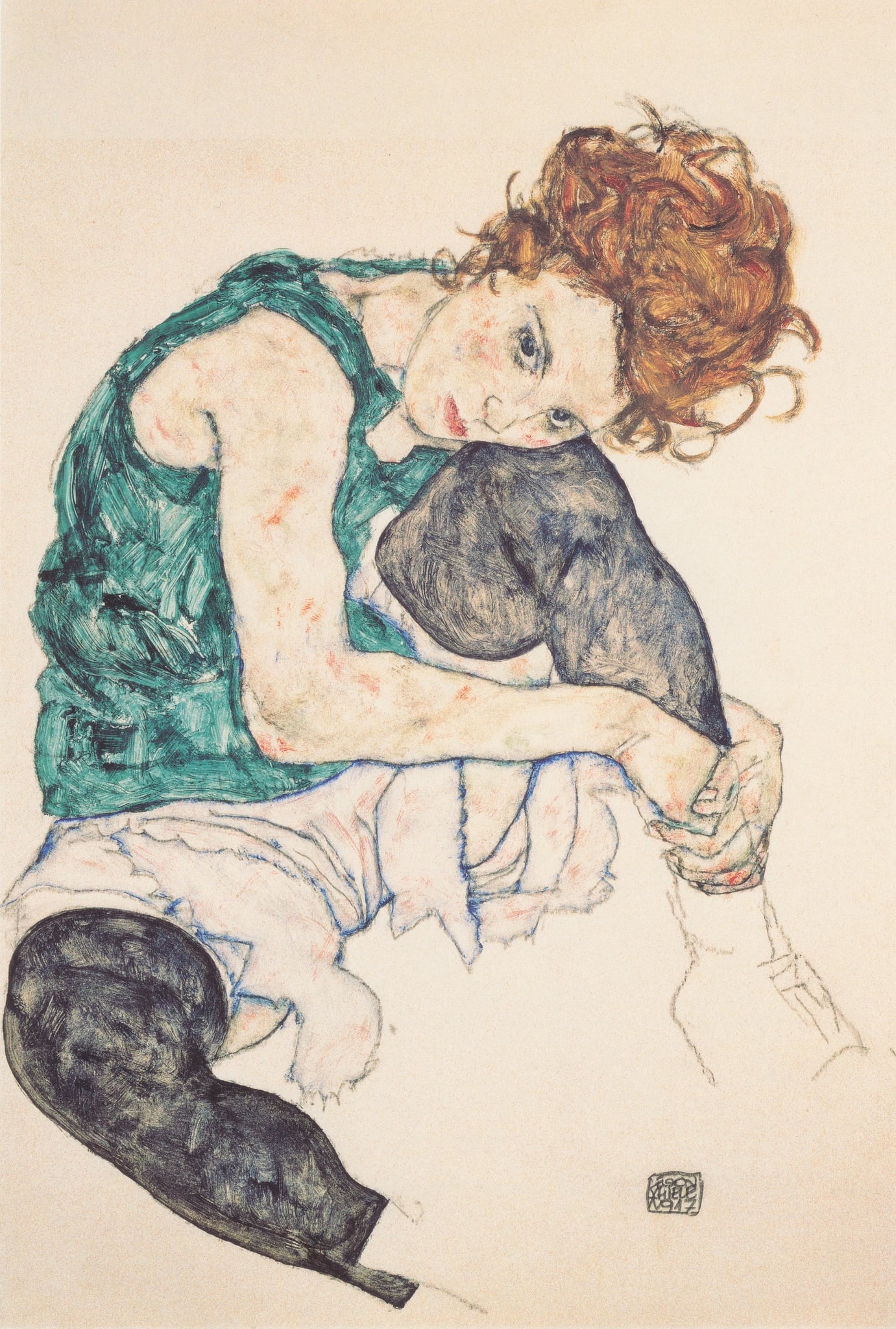
Seated Woman with Bent Knee
Egon Schiele (1917)
Egon Schiele’s Seated Woman with Bent Knee compresses the body into a tense, looping knot, fusing <strong>erotic charge</strong> with <strong>psychological vulnerability</strong>. The emerald bodice, inky stockings, and copper hair vibrate against a blank ground, while the sitter’s hands clamp her ankle, signaling <strong>self‑containment</strong> as much as display <sup>[1]</sup><sup>[3]</sup>.