Loneliness & isolation
Featured Artworks
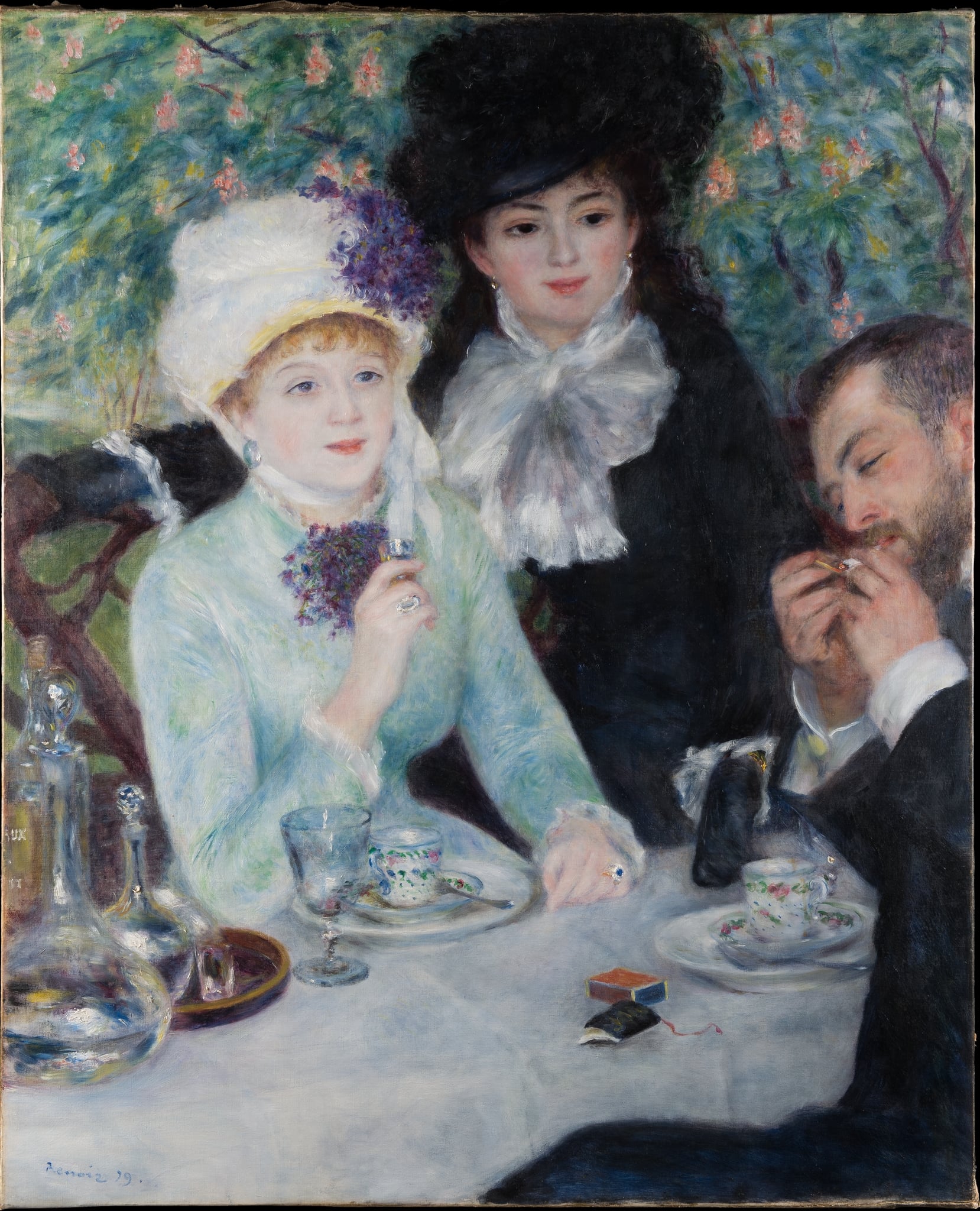
After the Luncheon
Pierre-Auguste Renoir (1879)
After the Luncheon crystallizes a <strong>suspended instant</strong> of Parisian leisure: coffee finished, glasses dappled with light, and a cigarette just being lit. Renoir’s <strong>shimmering brushwork</strong> and the trellised spring foliage turn the scene into a tapestry of conviviality where time briefly pauses.
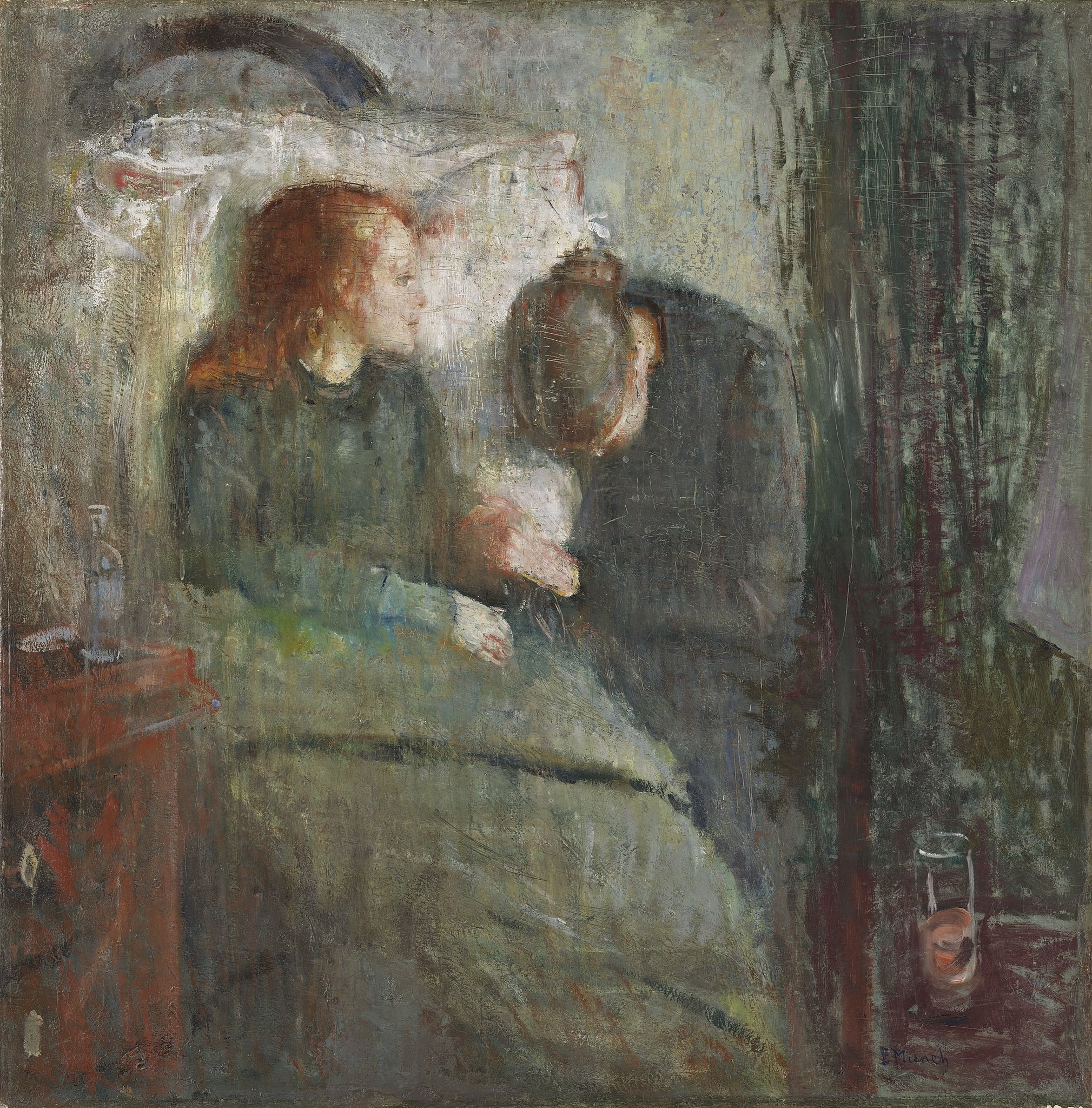
The Sick Child
Edvard Munch (1885–86)
The Sick Child condenses a bedside vigil into a stark drama of <strong>love and helplessness</strong>. A pale, copper-haired girl glows against a chalky pillow while a bowed caregiver clasps her hand; the scraped, striated paint makes grief feel <strong>present and eroding</strong> at once <sup>[1]</sup><sup>[2]</sup>. Sparse props—a bottle, a glass, a thin red line—stand as mute emblems of medicine’s limits.
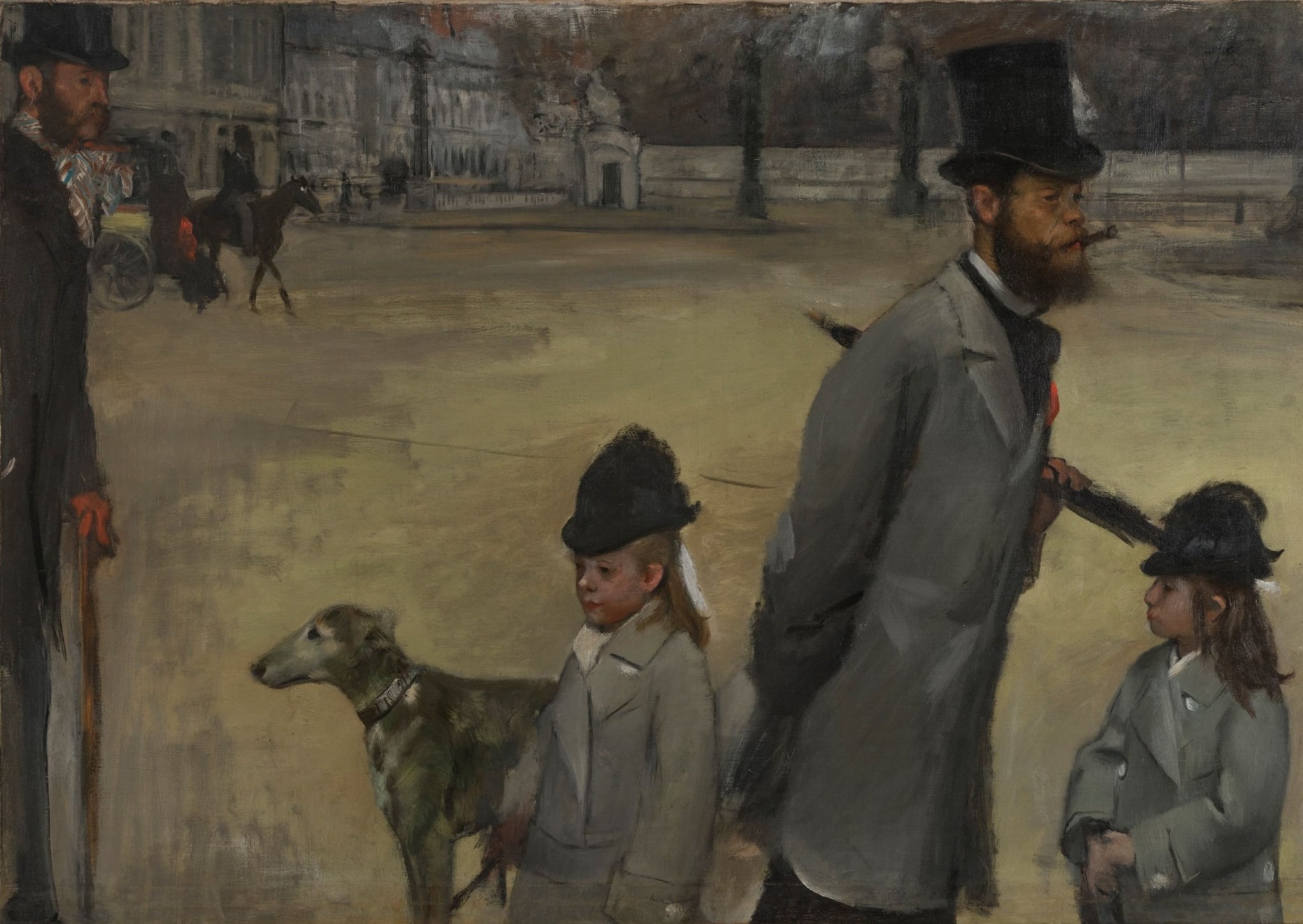
Place de la Concorde
Edgar Degas (1875)
Degas’s Place de la Concorde turns a famous Paris square into a study of <strong>modern isolation</strong> and <strong>instantaneous vision</strong>. Figures stride past one another without contact, their bodies abruptly <strong>cropped</strong> and adrift in a wide, airless plaza—an urban stage where elegance masks estrangement <sup>[1]</sup><sup>[2]</sup>.
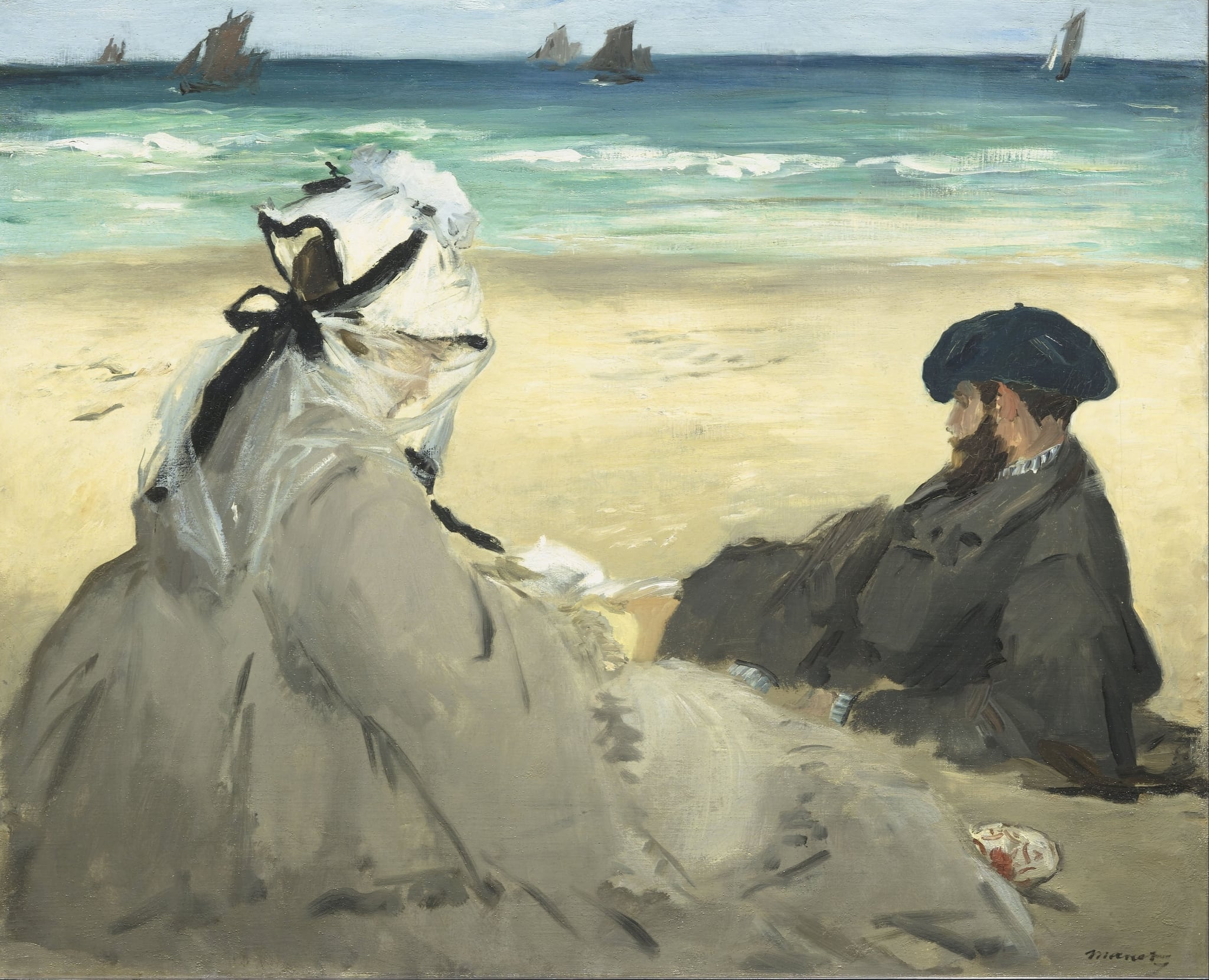
On the Beach
Édouard Manet (1873)
On the Beach captures a paused interval of modern leisure: two fashionably dressed figures sit on pale sand before a <strong>banded, high-horizon sea</strong>. Manet’s <strong>economical brushwork</strong>, restricted greys and blacks, and radical cropping stage a scene of absorption and wind‑tossed motion that feels both intimate and detached <sup>[1]</sup>.
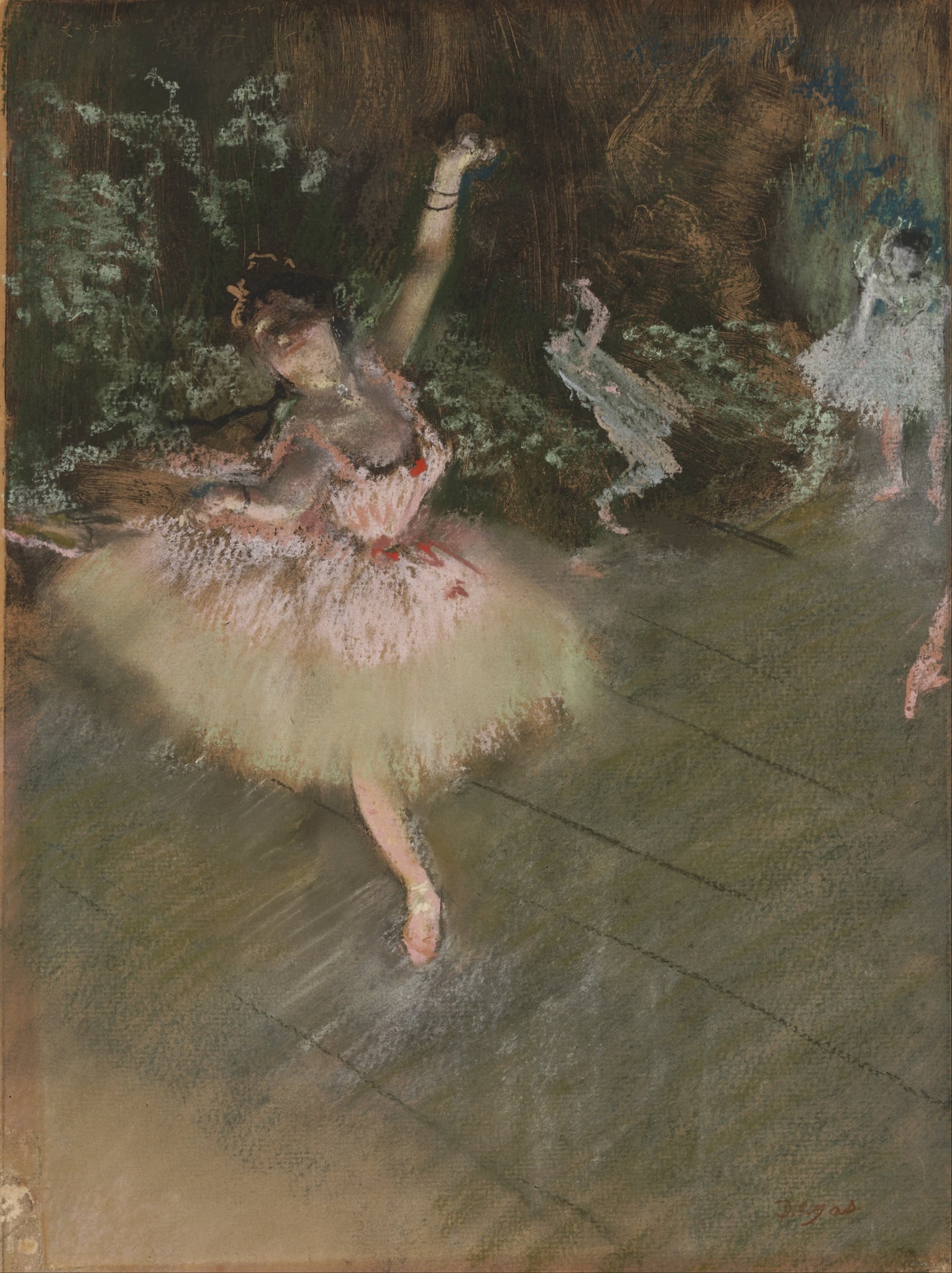
The Star
Edgar Degas (c. 1876–1878)
Edgar Degas’s The Star shows a prima ballerina caught at the crest of a pose, her tutu a <strong>vaporous flare</strong> against a <strong>murky, tilted stage</strong>. Diagonal floorboards rush beneath her single pointe, while pale, ghostlike dancers linger in the wings, turning triumph into a scene of <strong>radiant isolation</strong> <sup>[2]</sup><sup>[5]</sup>.
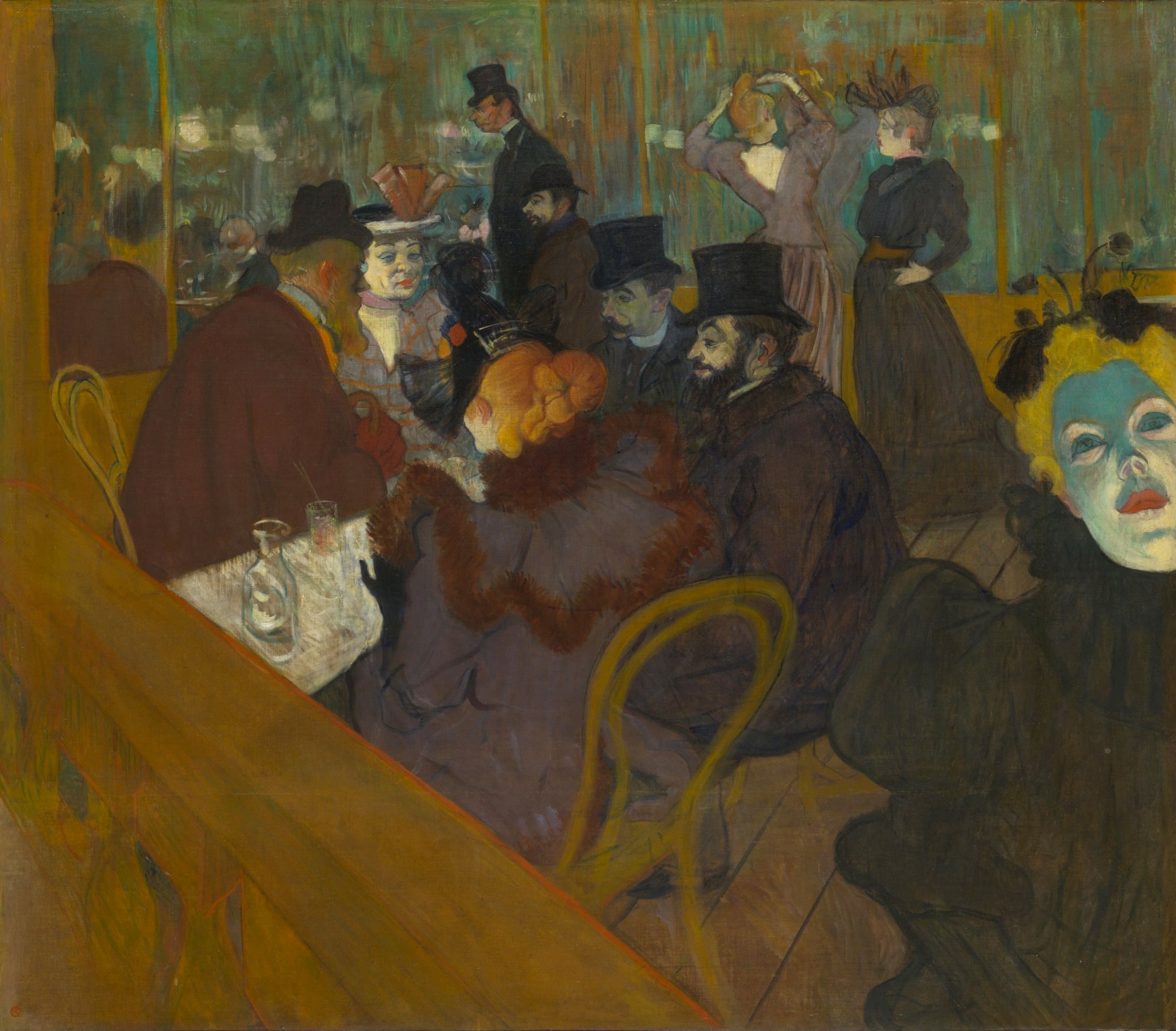
At the Moulin Rouge
Henri de Toulouse-Lautrec (1892–1895)
At the Moulin Rouge plunges us into the churn of Paris nightlife, staging a crowded room where spectacle and fatigue coexist. A diagonal banister and abrupt croppings create <strong>off‑kilter immediacy</strong>, while harsh artificial light turns faces <strong>masklike</strong> and cool. Mirrors multiply the crowd, amplifying a mood of allure tinged with <strong>urban alienation</strong> <sup>[1]</sup><sup>[3]</sup><sup>[4]</sup>.
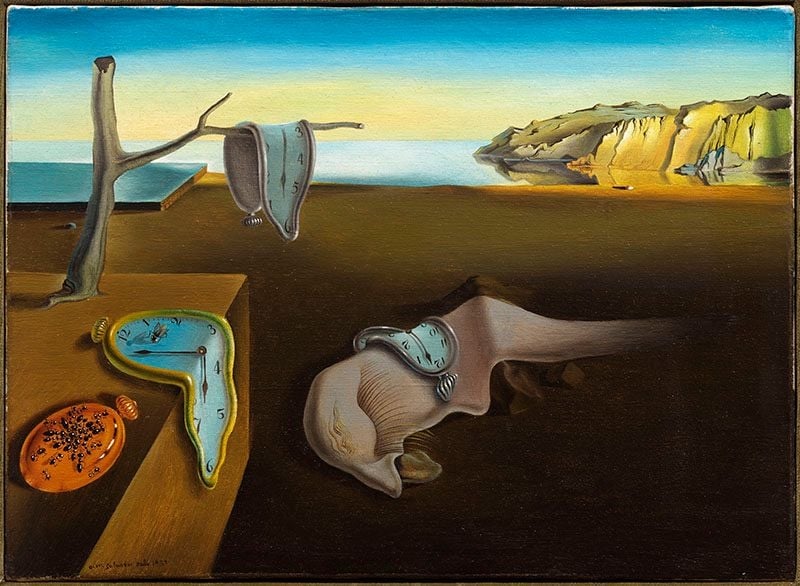
The Persistence of Memory
Salvador Dali (1931)
Salvador Dali’s The Persistence of Memory turns clock time into <strong>soft, malleable matter</strong>, staging a dream in which chronology buckles and the self dissolves. Four pocket watches droop across a barren platform, a dead branch, and a lash‑eyed biomorph, while ants overrun a hard, closed watch—a sign of <strong>decay</strong> and the futility of mechanical order <sup>[1]</sup><sup>[2]</sup>.
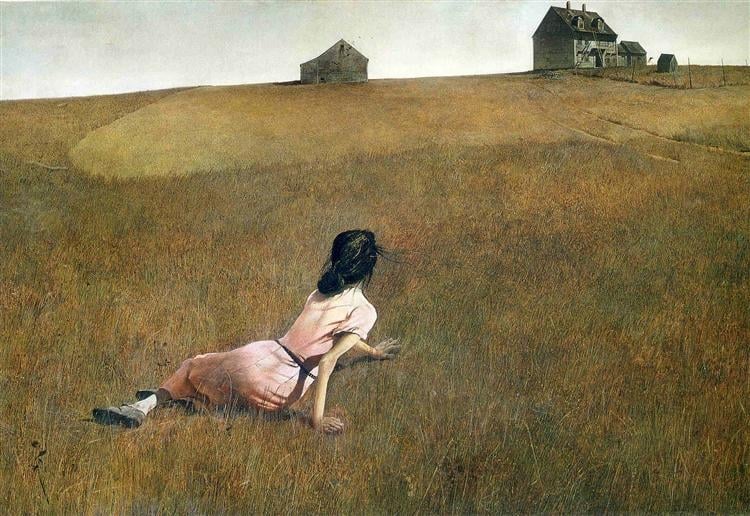
Christina's World
Andrew Wyeth (1948)
Andrew Wyeth’s Christina’s World distills vast rural space and human resolve into a single, charged image: a woman in a <strong>faded pink dress</strong> braces on the <strong>up-slope</strong> toward a weathered farmhouse. The diagonal pull between her body and the <strong>Olson House</strong> turns distance itself into <strong>yearning and endurance</strong> <sup>[1]</sup><sup>[4]</sup>. Wyeth’s spare, <strong>egg tempera</strong> surface makes every brittle grass blade feel like an act of will <sup>[1]</sup><sup>[3]</sup>.
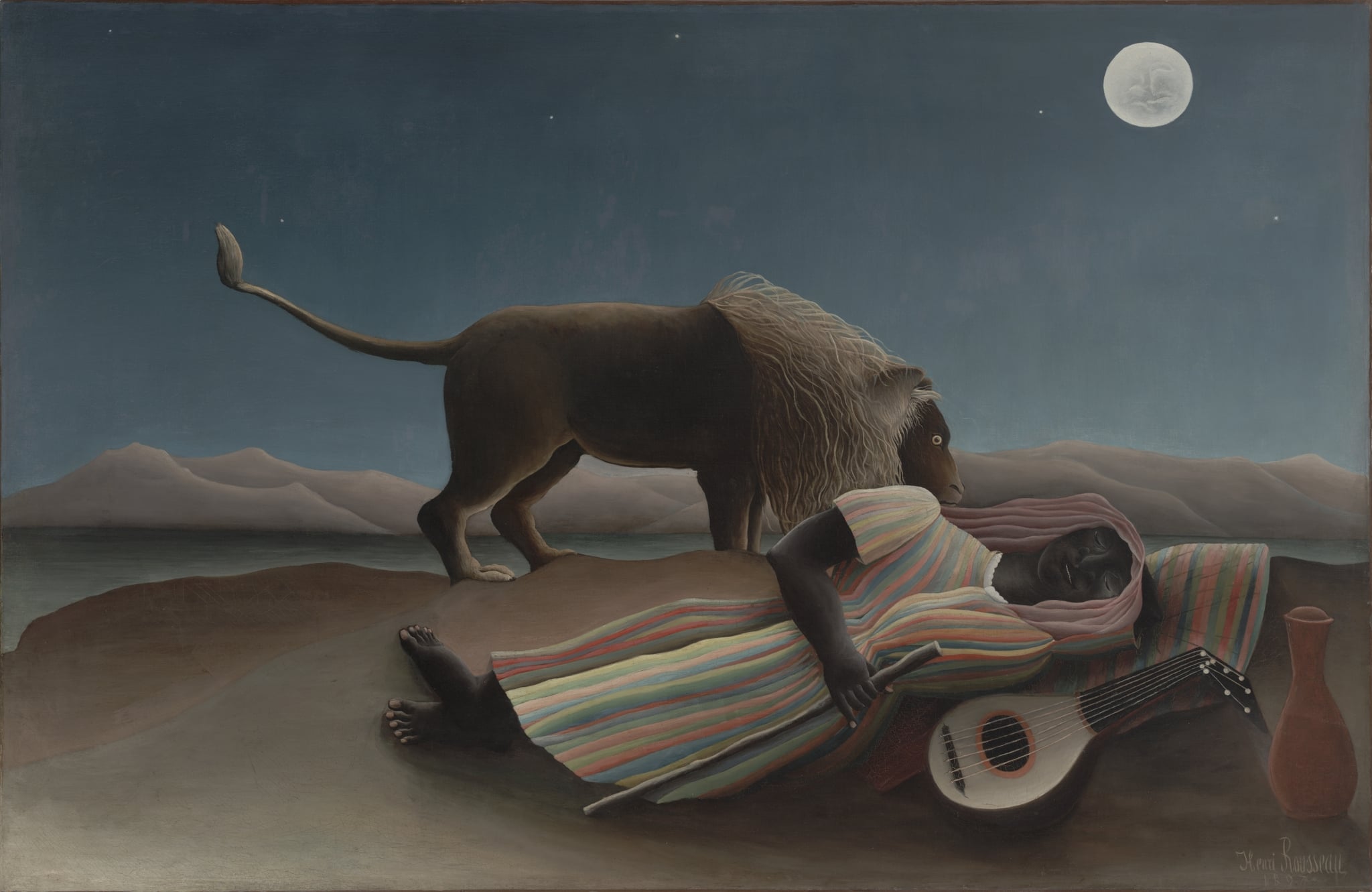
The Sleeping Shepherdess
Henri Rousseau (1897)
In The Sleeping Shepherdess, a moonlit desert holds a poised balance between <strong>vulnerability</strong> and <strong>watchful restraint</strong>. A striped‑clad traveler sleeps on a matching cushion, a <strong>mandolin</strong> and <strong>water jar</strong> at her side, while a lion, paw raised and eye wide, draws close yet does not strike. Rousseau’s flattened forms and echoing stripes create a hypnotic <strong>dream logic</strong> that turns danger into a guarded calm <sup>[1]</sup><sup>[2]</sup>.
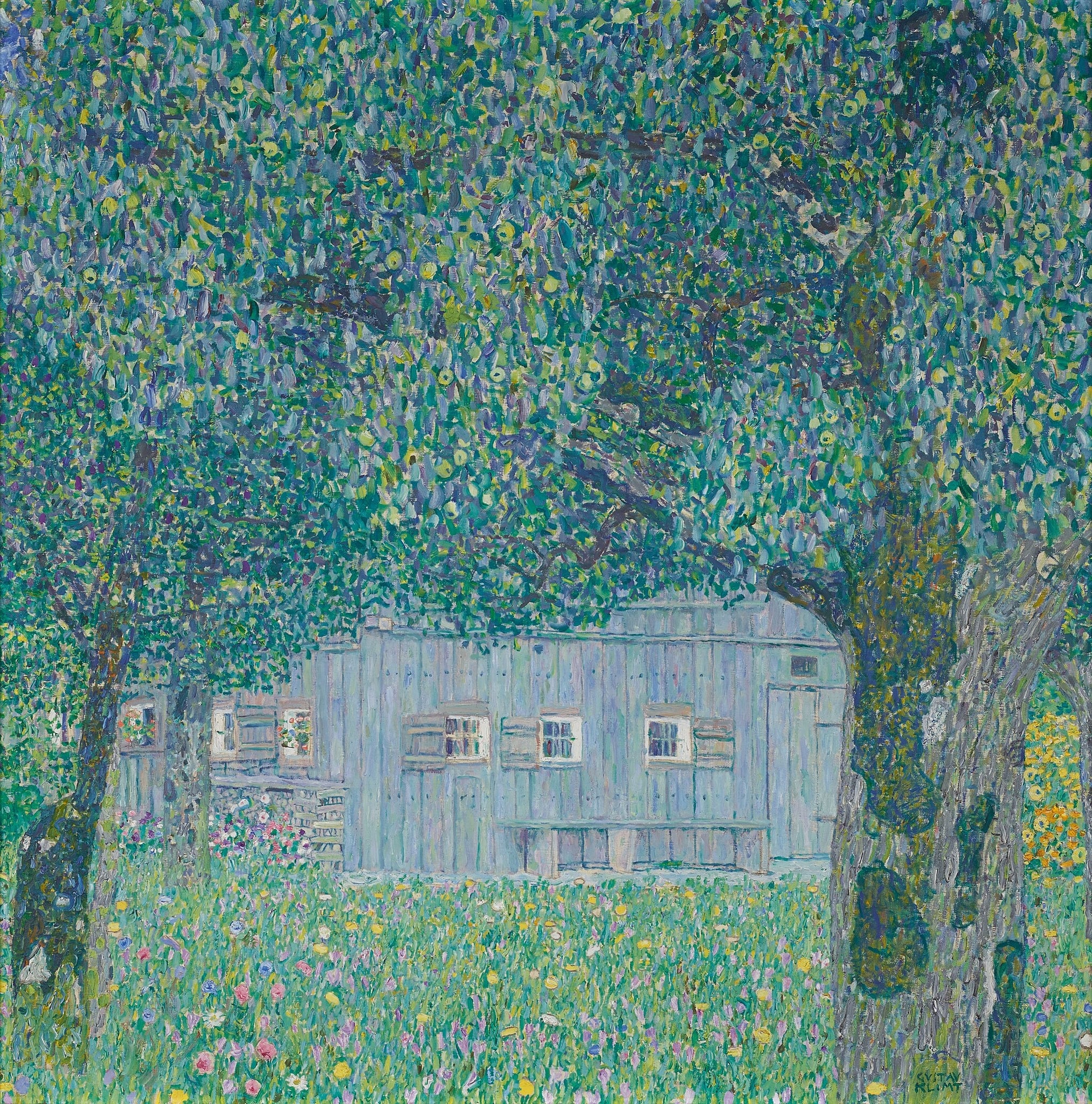
Farmhouse in Buchberg (Upper Austrian Farmhouse)
Gustav Klimt (1911)
Gustav Klimt’s Farmhouse in Buchberg (Upper Austrian Farmhouse) renders a rural dwelling almost absorbed by an orchard, its cool façade held in balance against a vibrating canopy of leaves and a jewel-like meadow. Through a square format and <strong>selective pointillism</strong>, Klimt fuses house, trees, and flowers into a contemplative, patterned field that privileges <strong>stillness</strong> over incident <sup>[1]</sup><sup>[6]</sup>. The work turns everyday architecture into an emblem of <strong>refuge within fecund nature</strong>.
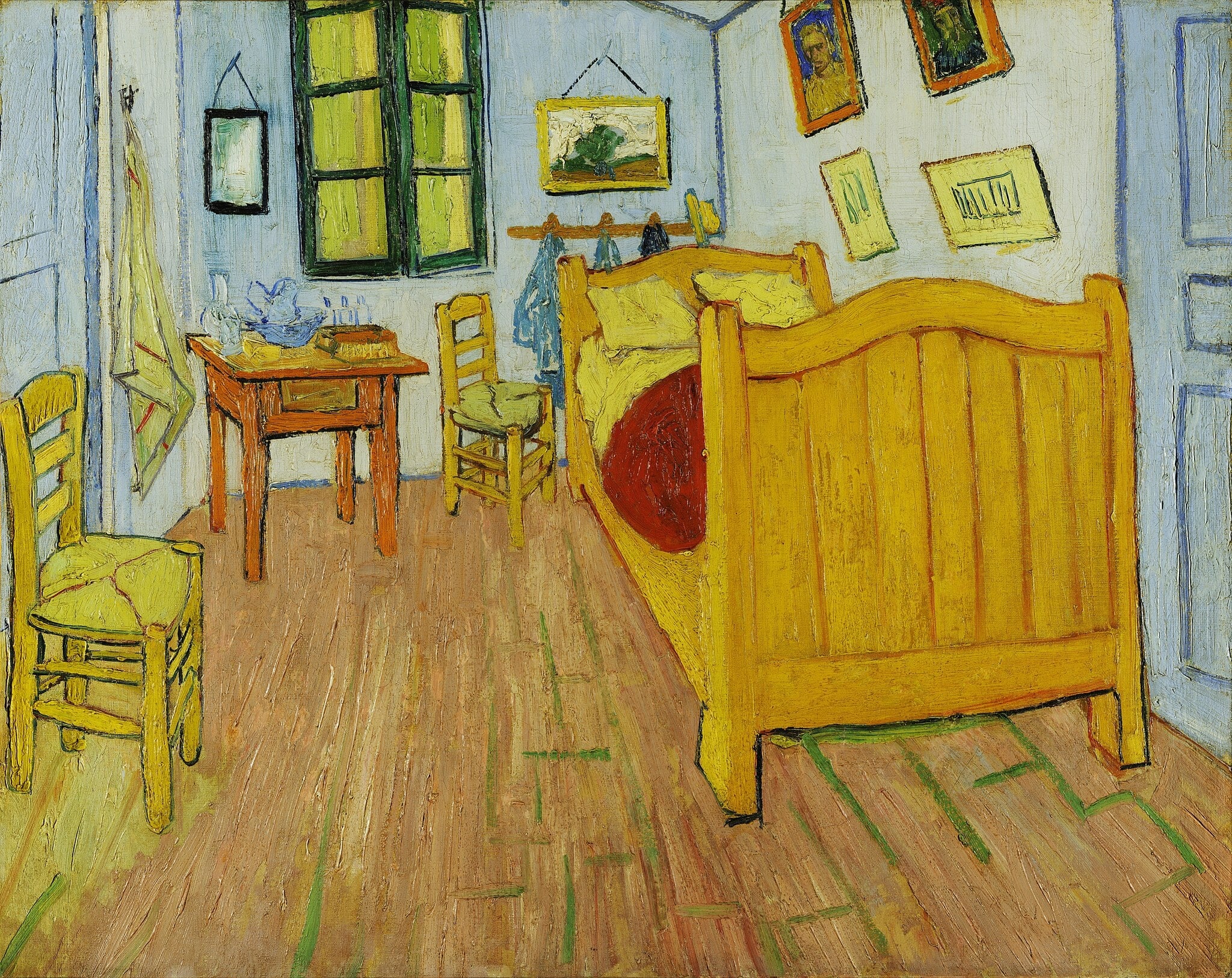
The Bedroom
Vincent van Gogh (1889)
Vincent van Gogh’s The Bedroom turns a modest room into a psychological stage, using <strong>clashing color</strong> and <strong>tilted space</strong> to test whether color alone can evoke rest. The bright yellow bed, twin chairs, and green‑shuttered window press forward as the floor tilts and pictures cant, so that <strong>refuge and unease</strong> exist side by side <sup>[1]</sup><sup>[2]</sup>.
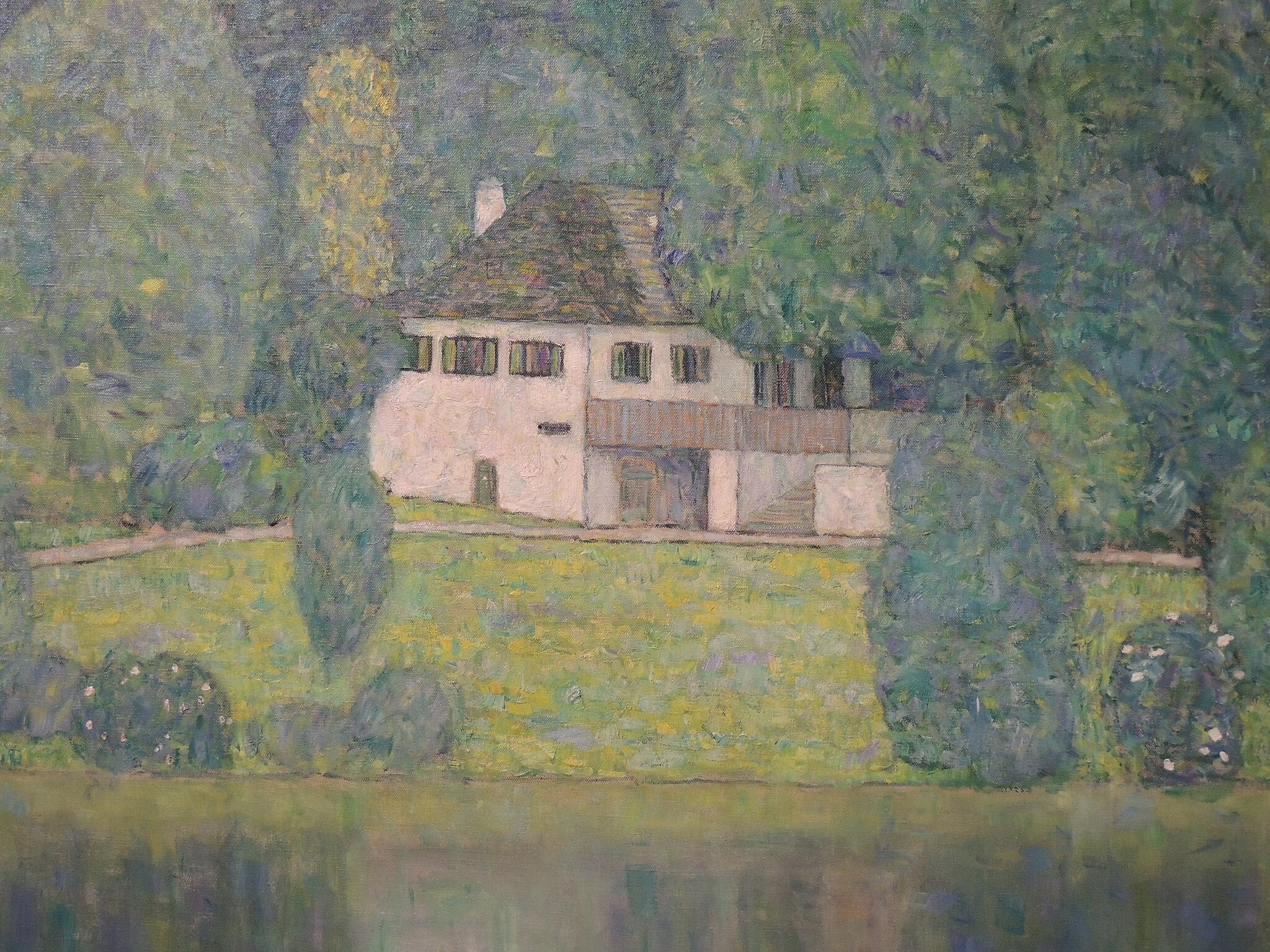
Litzlbergkeller
Gustav Klimt (1915–1916)
Litzlbergkeller distills a lakeside inn into a square, shimmering field where the house’s pale rectangle and window rhythm quietly answer the vertical screen of trees and the calm band of water below. Klimt fuses geometry and foliage into a <strong>decorative, contemplative refuge</strong>, converting observation into patterned memory <sup>[1]</sup><sup>[2]</sup>.
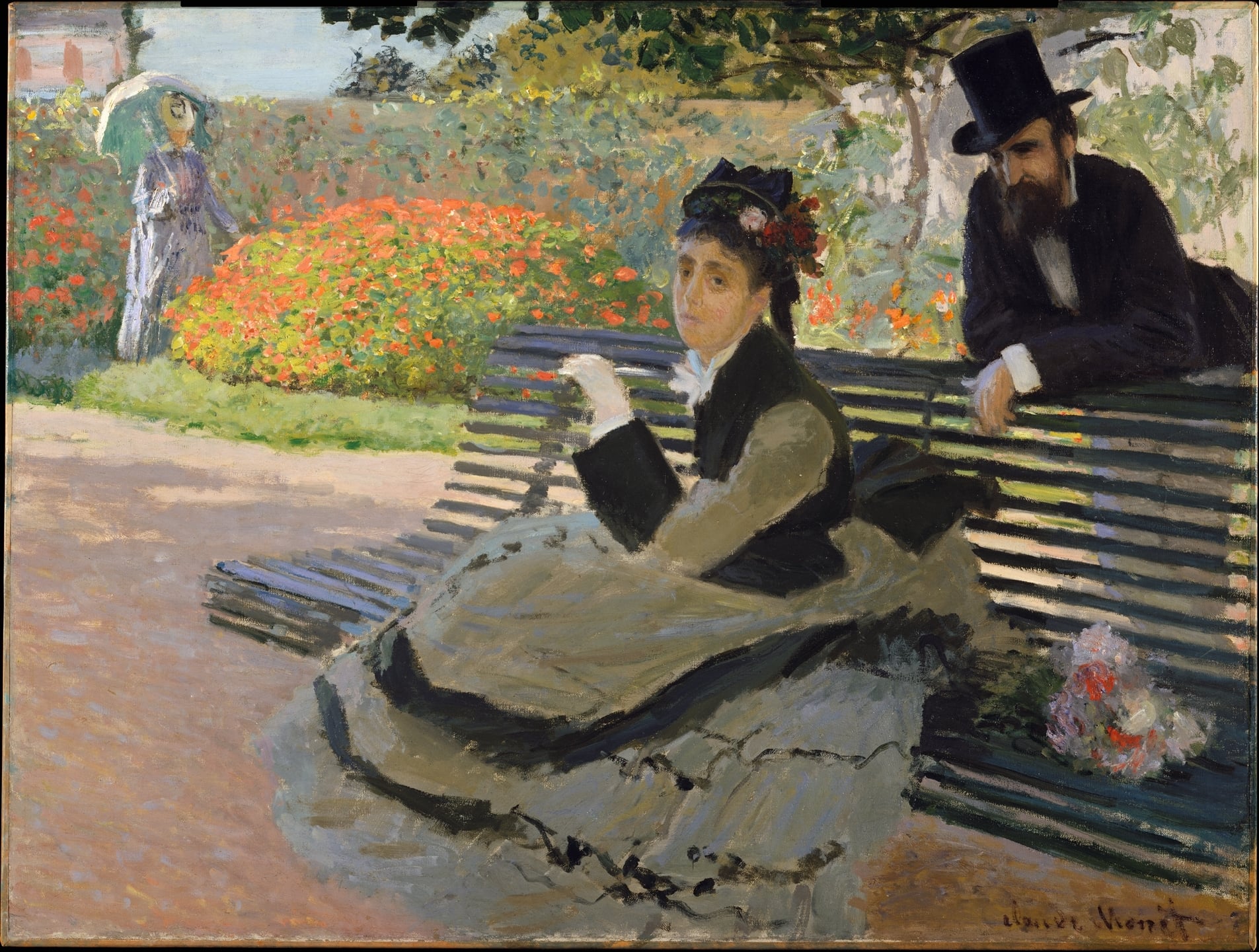
Camille Monet on a Garden Bench
Claude Monet (1873)
Claude Monet’s Camille Monet on a Garden Bench (1873) stages an intimate pause where <strong>light, grief, and modern leisure</strong> intersect. Camille, shaded and withdrawn, holds a letter while a <strong>top‑hatted neighbor</strong> hovers; a bright bank of <strong>red geraniums</strong> and a strolling woman with a parasol ignite the distance <sup>[1]</sup>. Monet converts a domestic garden into a scene about <strong>psychological distance</strong> amid fleeting sunlight.
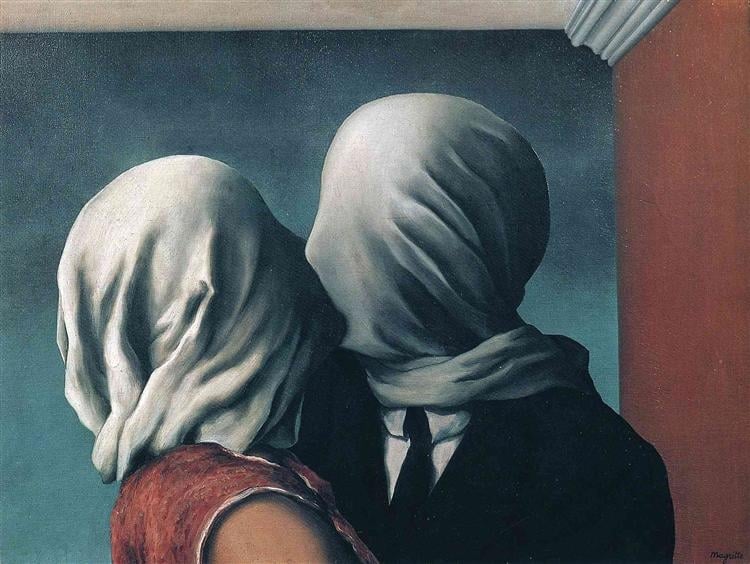
The Lovers
Rene Magritte (1928)
René Magritte’s The Lovers turns a kiss into an emblem of <strong>desire obstructed</strong>: two figures—she in red, he in a dark suit—press together while their heads are swathed in <strong>white cloth</strong>. Within a cool blue‑grey interior bounded by crown molding and a rust-red wall, intimacy becomes an image of <strong>opacity</strong> rather than revelation <sup>[1]</sup>.
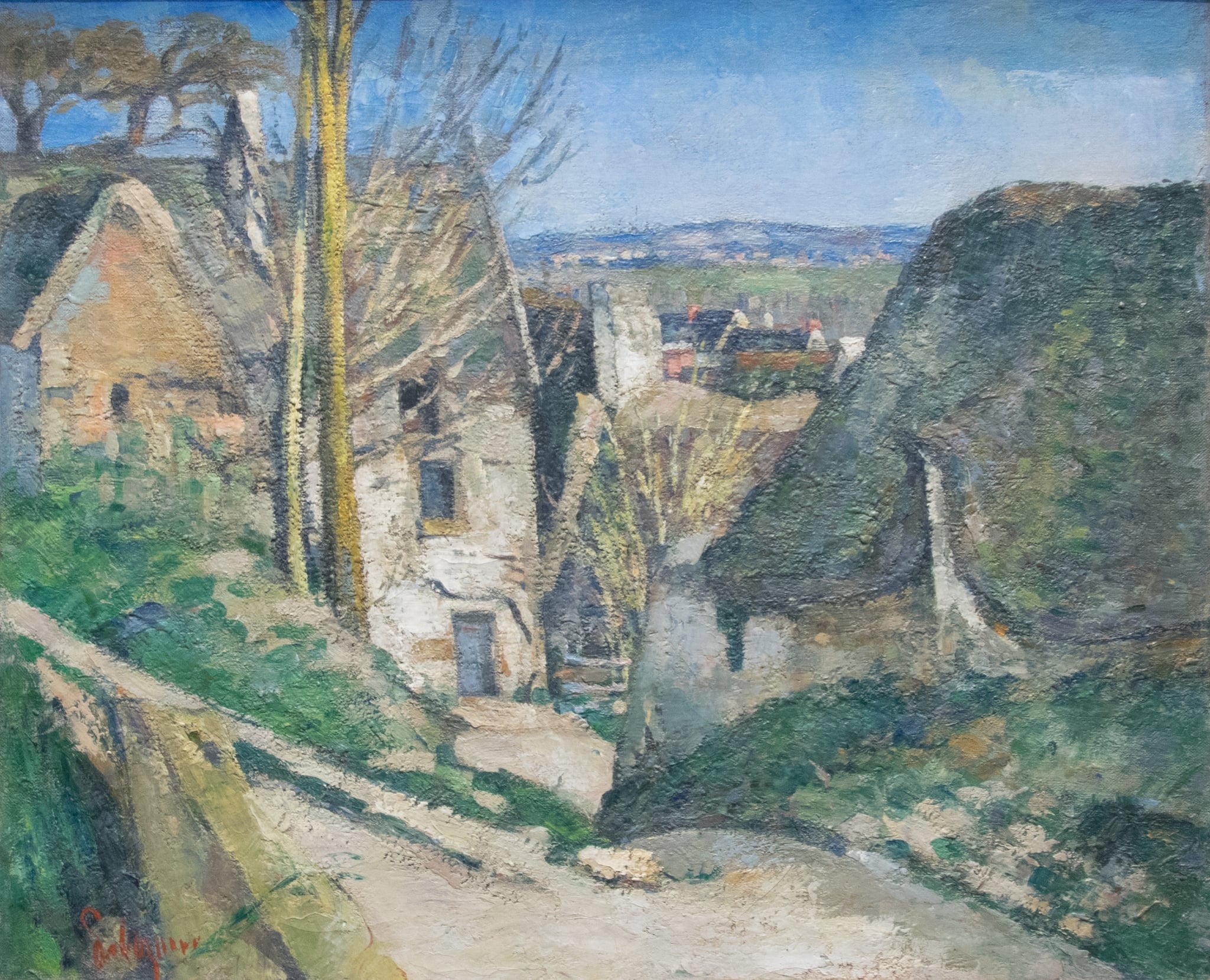
The House of the Hanged Man
Paul Cézanne (1873)
Paul Cézanne’s The House of the Hanged Man turns a modest Auvers-sur-Oise lane into a scene of <strong>engineered unease</strong> and <strong>structural reflection</strong>. Jagged roofs, laddered trees, and a steep path funnel into a narrow, shadowed V that withholds a center, making absence the work’s gravitational force. Cool greens and slate blues, set in blocky, masoned strokes, build a world that feels both solid and precarious.
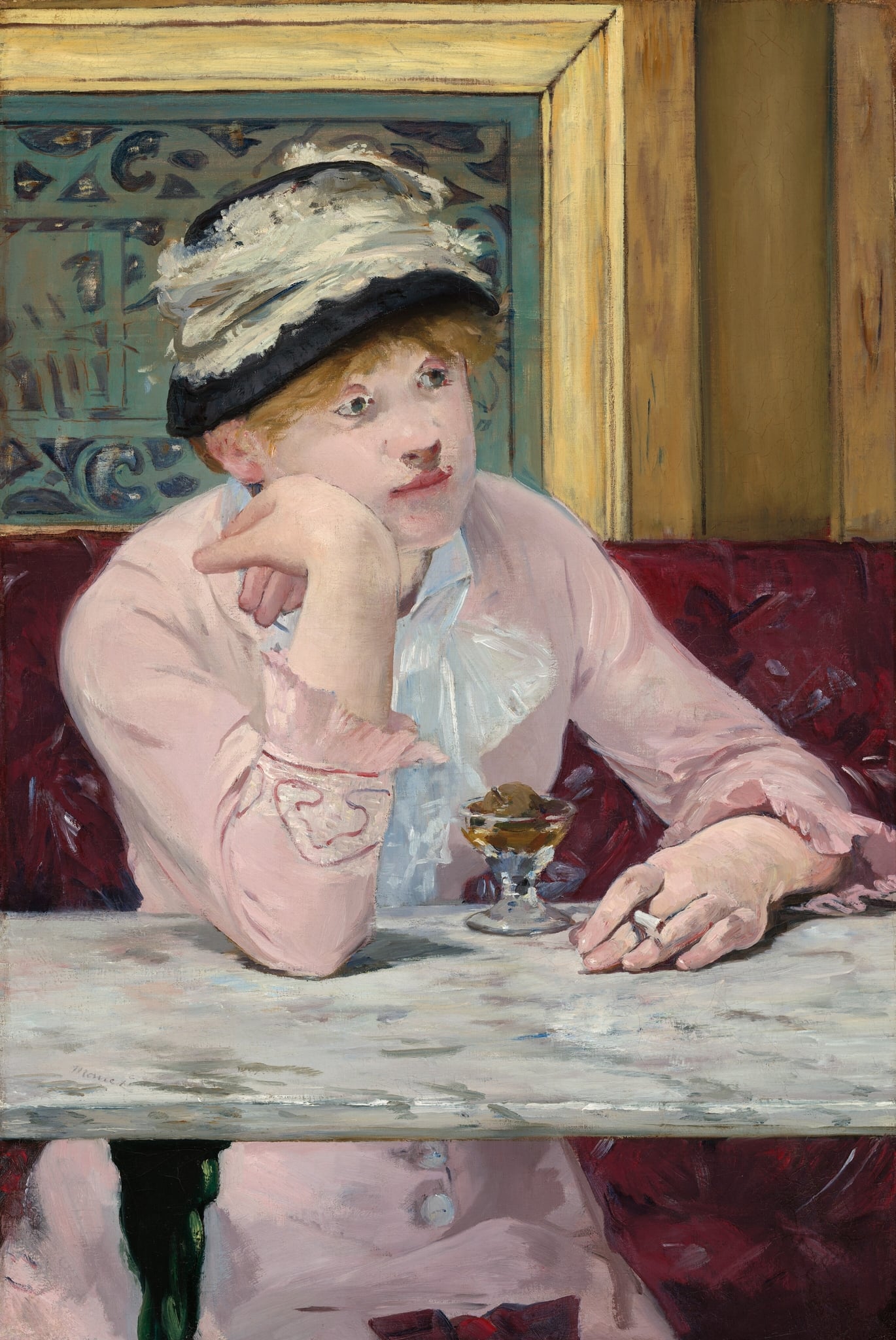
Plum Brandy
Édouard Manet (ca. 1877)
Manet’s Plum Brandy crystallizes a modern pause—an urban <strong>interval of suspended action</strong>—through the idle tilt of a woman’s head, an <strong>unlit cigarette</strong>, and a glass cradling a <strong>plum in amber liquor</strong>. The boxed-in space—marble table, red banquette, and decorative grille—turns a café moment into a stage for <strong>solitude within public life</strong> <sup>[1]</sup><sup>[2]</sup>.
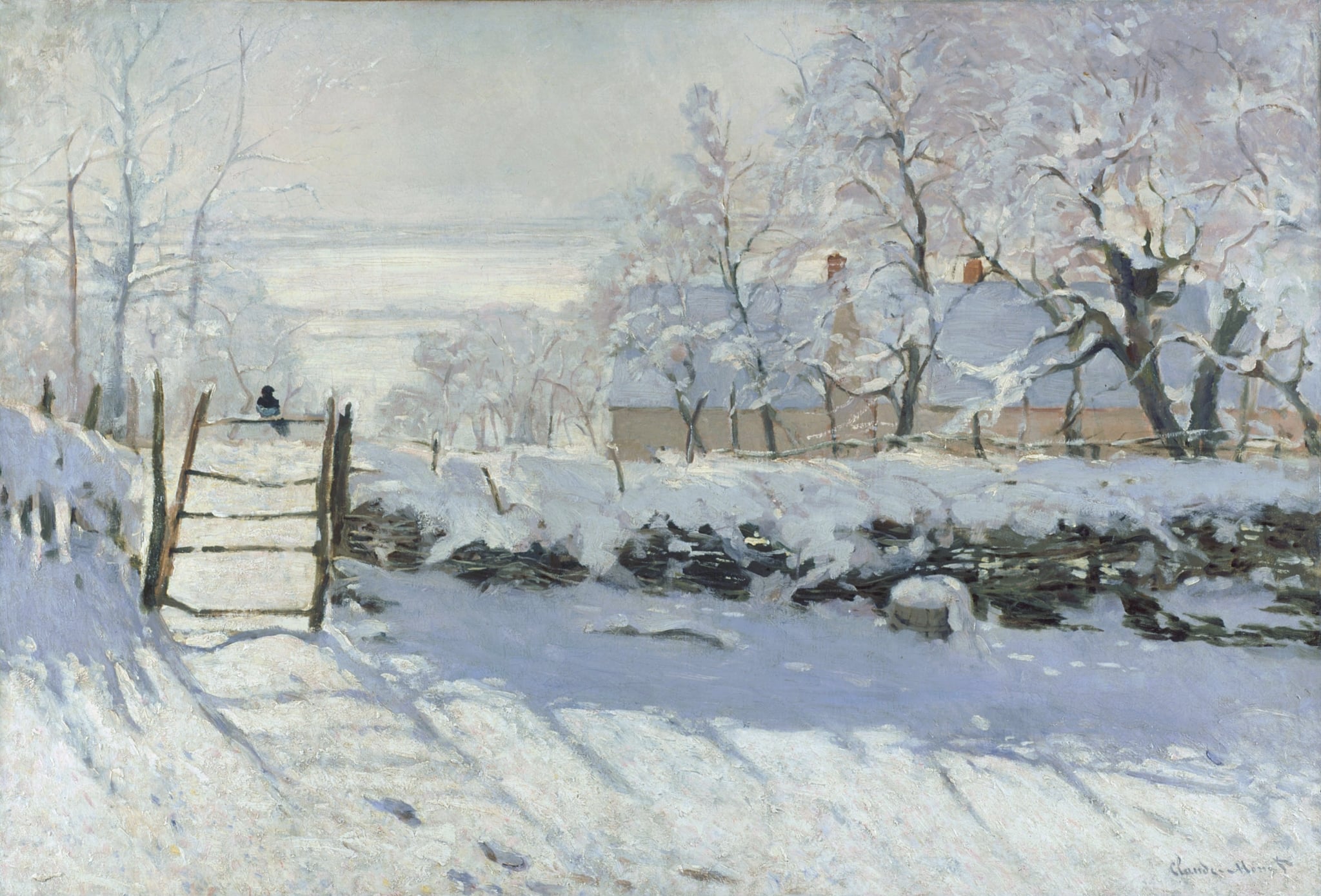
The Magpie
Claude Monet (1868–1869)
Claude Monet’s The Magpie turns a winter field into a study of <strong>luminous perception</strong>, where blue-violet shadows articulate snow’s light. A lone <strong>magpie</strong> perched on a wooden gate punctuates the silence, anchoring a scene that balances homestead and open countryside <sup>[1]</sup>.
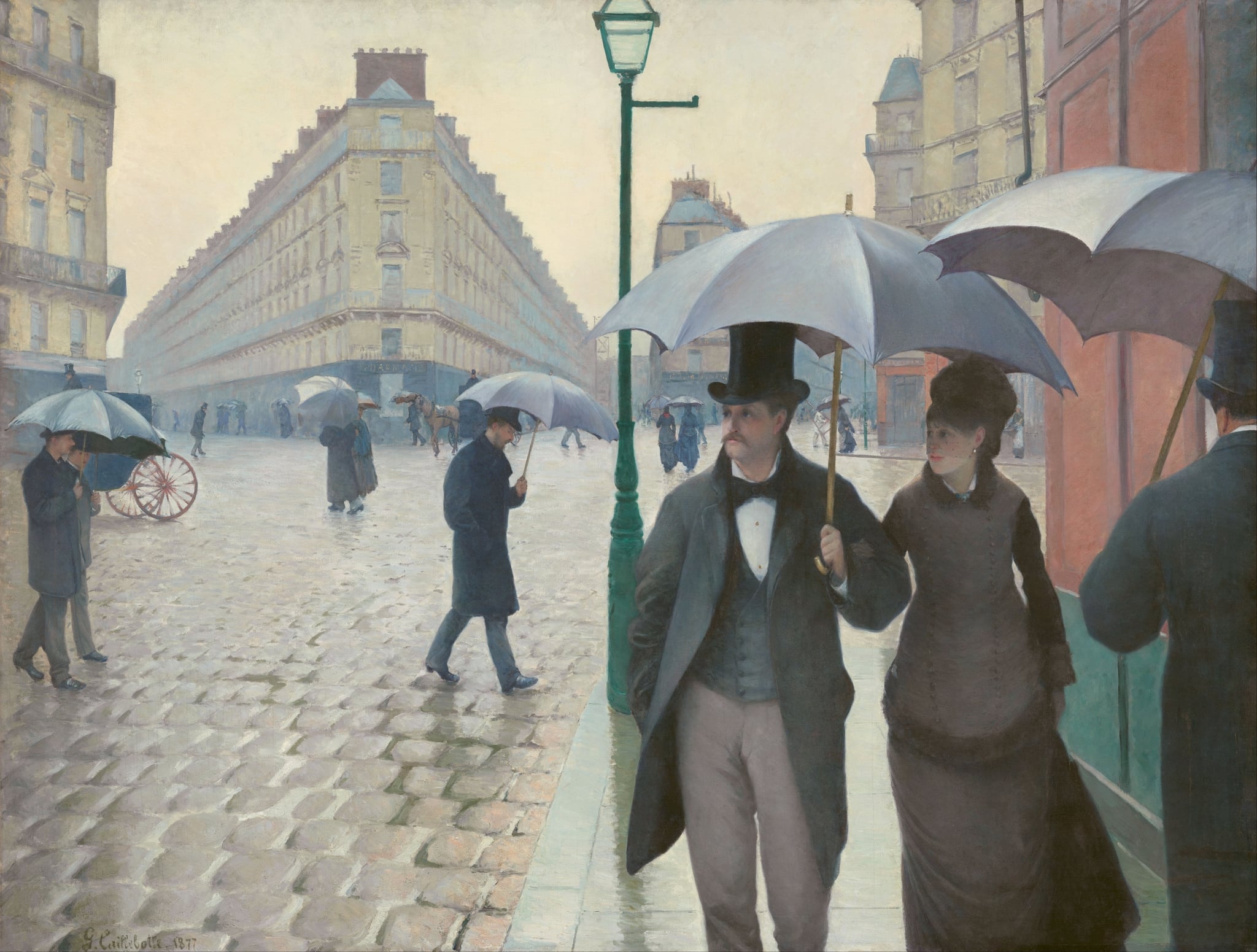
Paris Street; Rainy Day
Gustave Caillebotte (1877)
Gustave Caillebotte’s Paris Street; Rainy Day renders a newly modern Paris where <strong>Haussmann’s geometry</strong> meets the <strong>anonymity of urban life</strong>. Umbrellas punctuate a silvery atmosphere as a <strong>central gas lamp</strong> and knife-sharp façades organize the space into measured planes <sup>[1]</sup><sup>[2]</sup>.
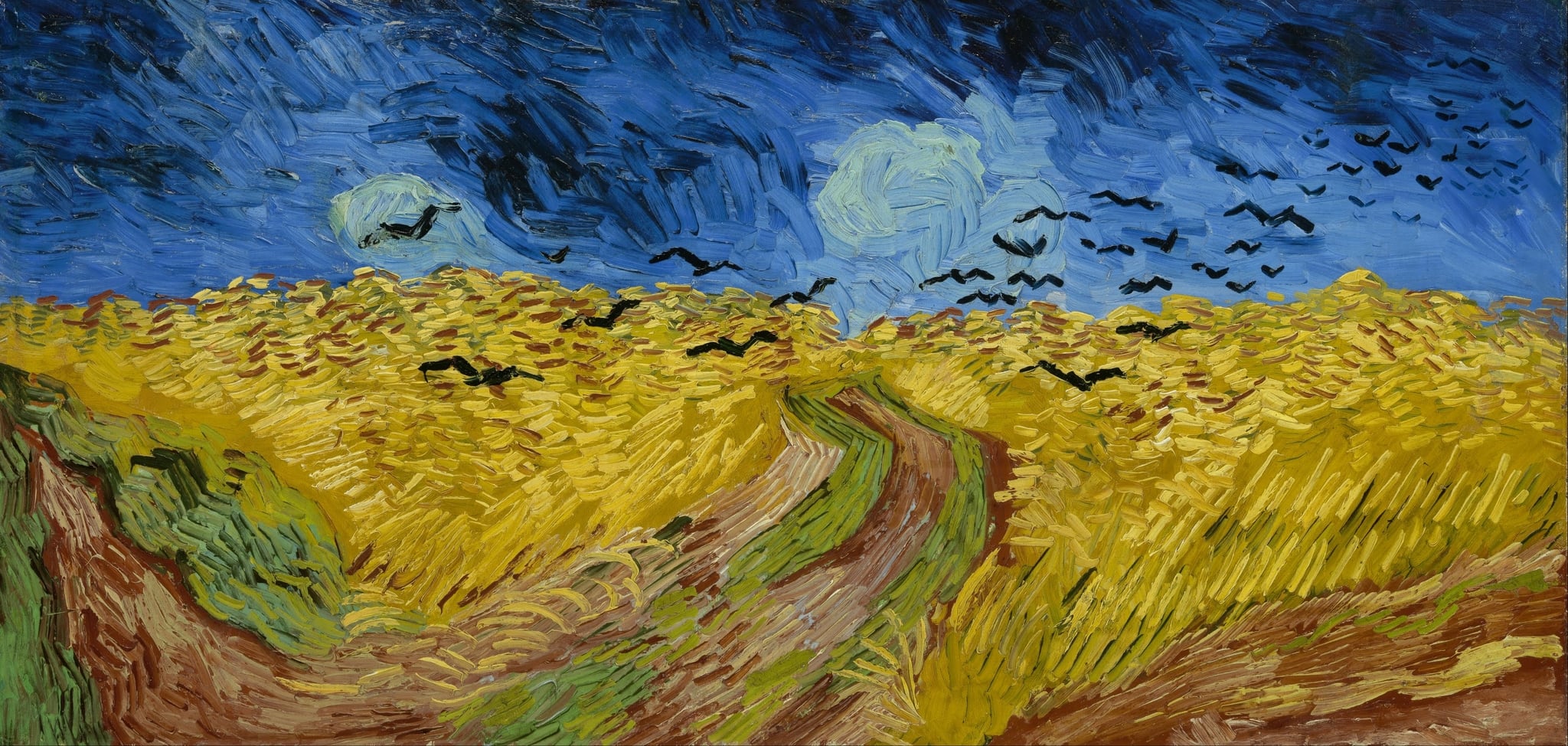
Wheatfield with Crows
Vincent van Gogh (1890)
A panoramic wheatfield splits around a rutted track under a storm-charged sky while black crows rush toward us. Van Gogh drives complementary blues and yellows into collision, fusing <strong>nature’s vitality</strong> with <strong>inner turbulence</strong>.
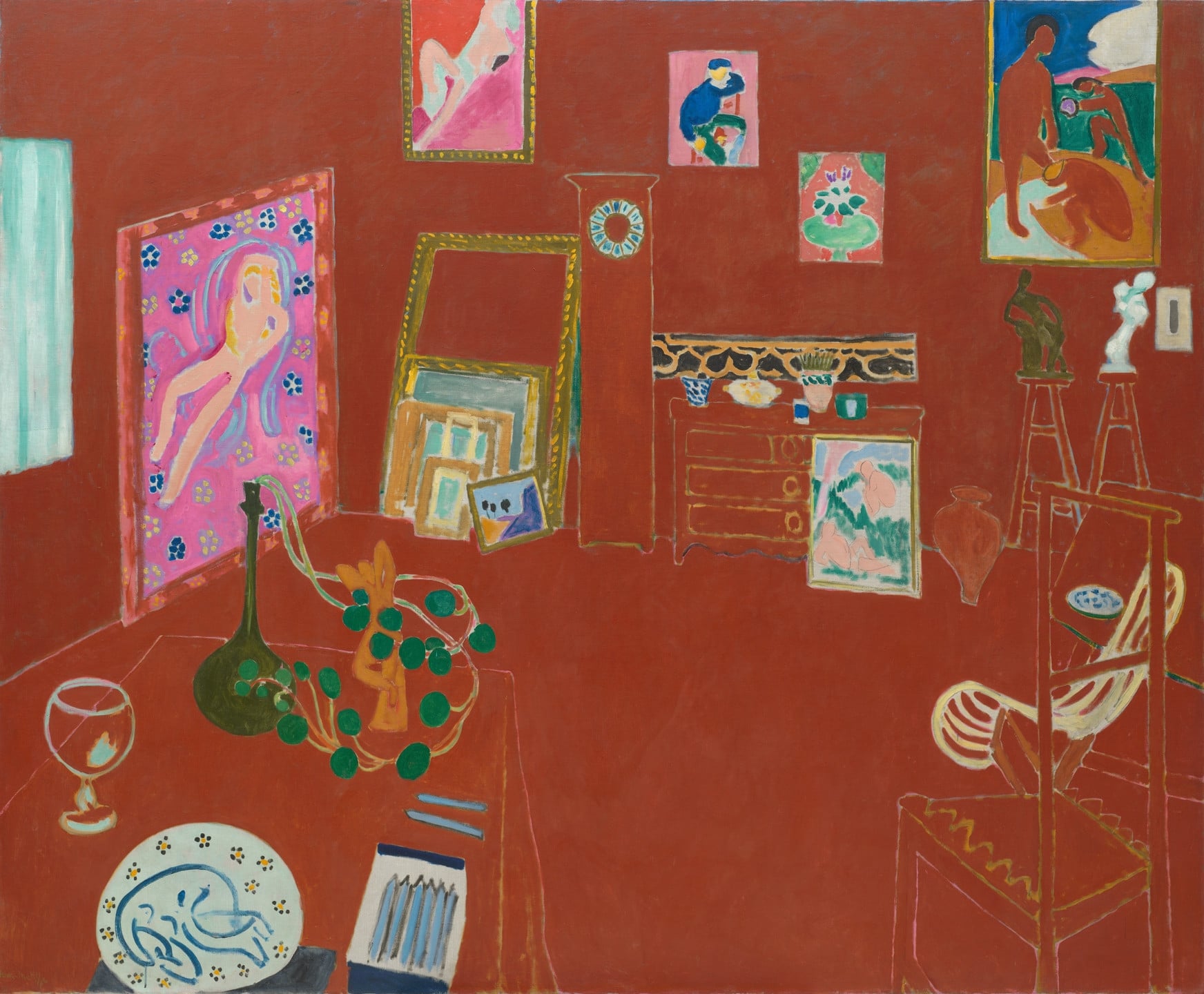
The Red Studio
Henri Matisse (1911)
Henri Matisse’s The Red Studio (1911) saturates the artist’s workspace in a continuous field of <strong>Venetian red</strong>, collapsing walls, floor, and furniture into a single chromatic plane. Objects and architecture appear as <strong>mustard-yellow reserve lines</strong> that read like drawing, while Matisse’s own paintings and sculptures retain full color, asserting art’s primacy within the room <sup>[1]</sup><sup>[2]</sup><sup>[3]</sup>. The result is a studio that feels like a <strong>mental map</strong> rather than a literal interior.
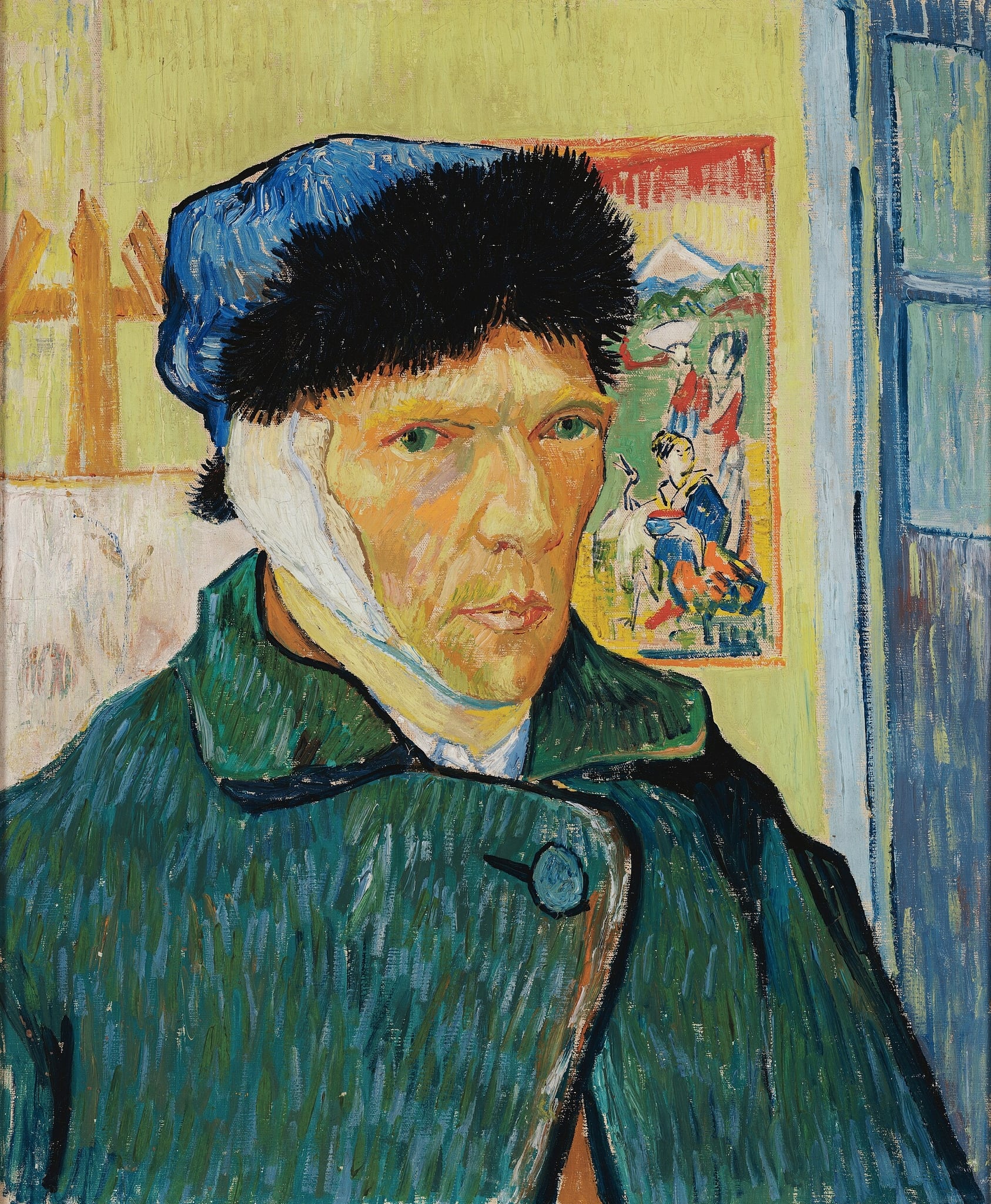
Self-Portrait with Bandaged Ear
Vincent van Gogh (1889)
In Self-Portrait with Bandaged Ear (1889), Vincent van Gogh converts a recent crisis into an image of <strong>resolve</strong>. The frontal, slightly turned pose forces attention to the white bandage at the viewer’s right, while the fur cap, heavy coat, and the nearby <strong>Japanese print</strong> declare persistence and ideals that steady him in the wake of trauma <sup>[1]</sup><sup>[2]</sup>. The painting’s cool, wintry palette and insistent strokes make suffering legible yet disciplined, transforming pain into <strong>artistic purpose</strong> <sup>[2]</sup>.
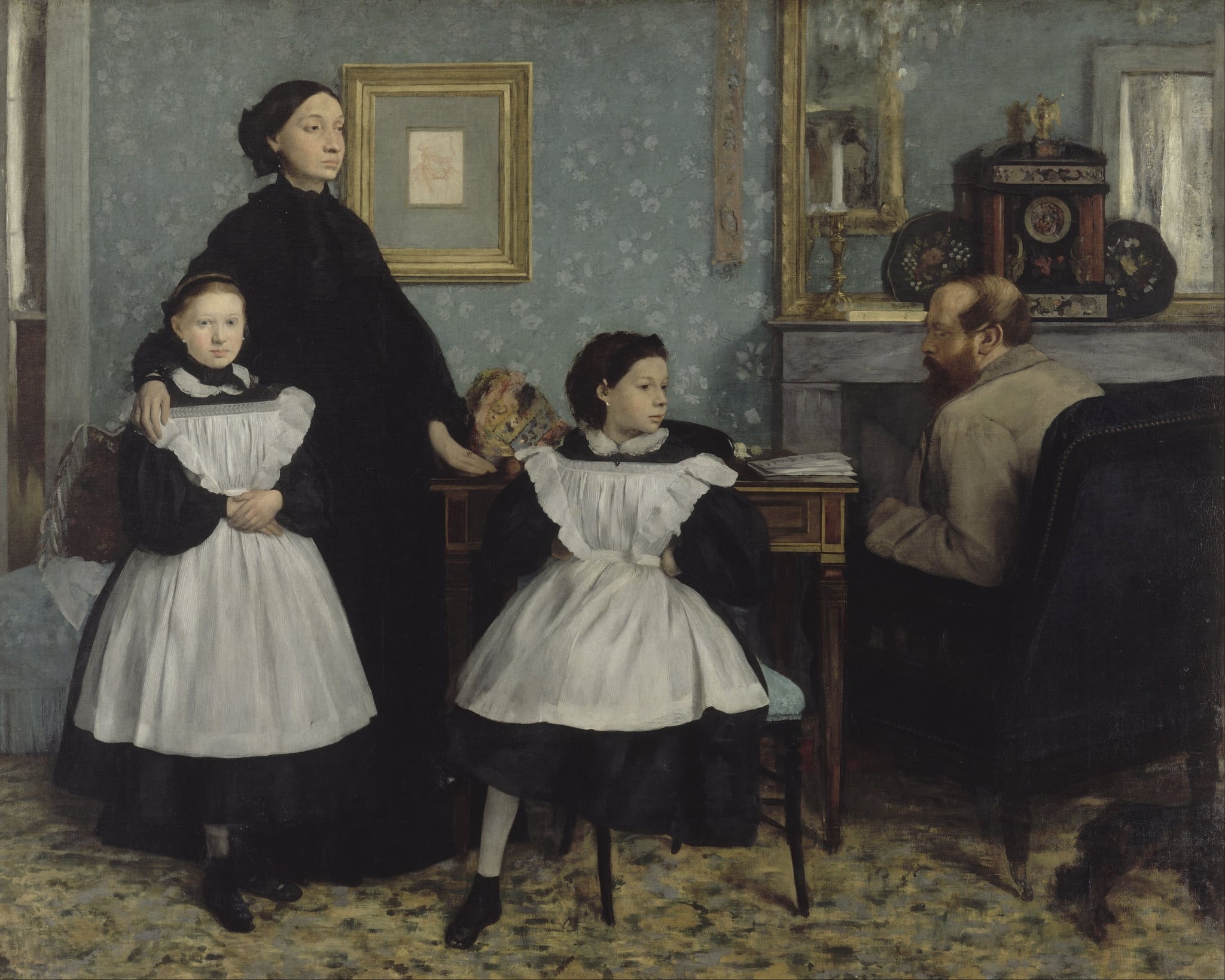
The Bellelli Family
Edgar Degas (1858–1869)
In The Bellelli Family, Edgar Degas orchestrates a poised domestic standoff, using the mother’s column of <strong>mourning black</strong>, the daughters’ <strong>mediating whiteness</strong>, and the father’s turned-away profile to script roles and distance. Rigid furniture lines, a gilt <strong>clock</strong>, and the ancestor’s red-chalk portrait create a stage where time, duty, and inheritance press on a family held in uneasy equilibrium.
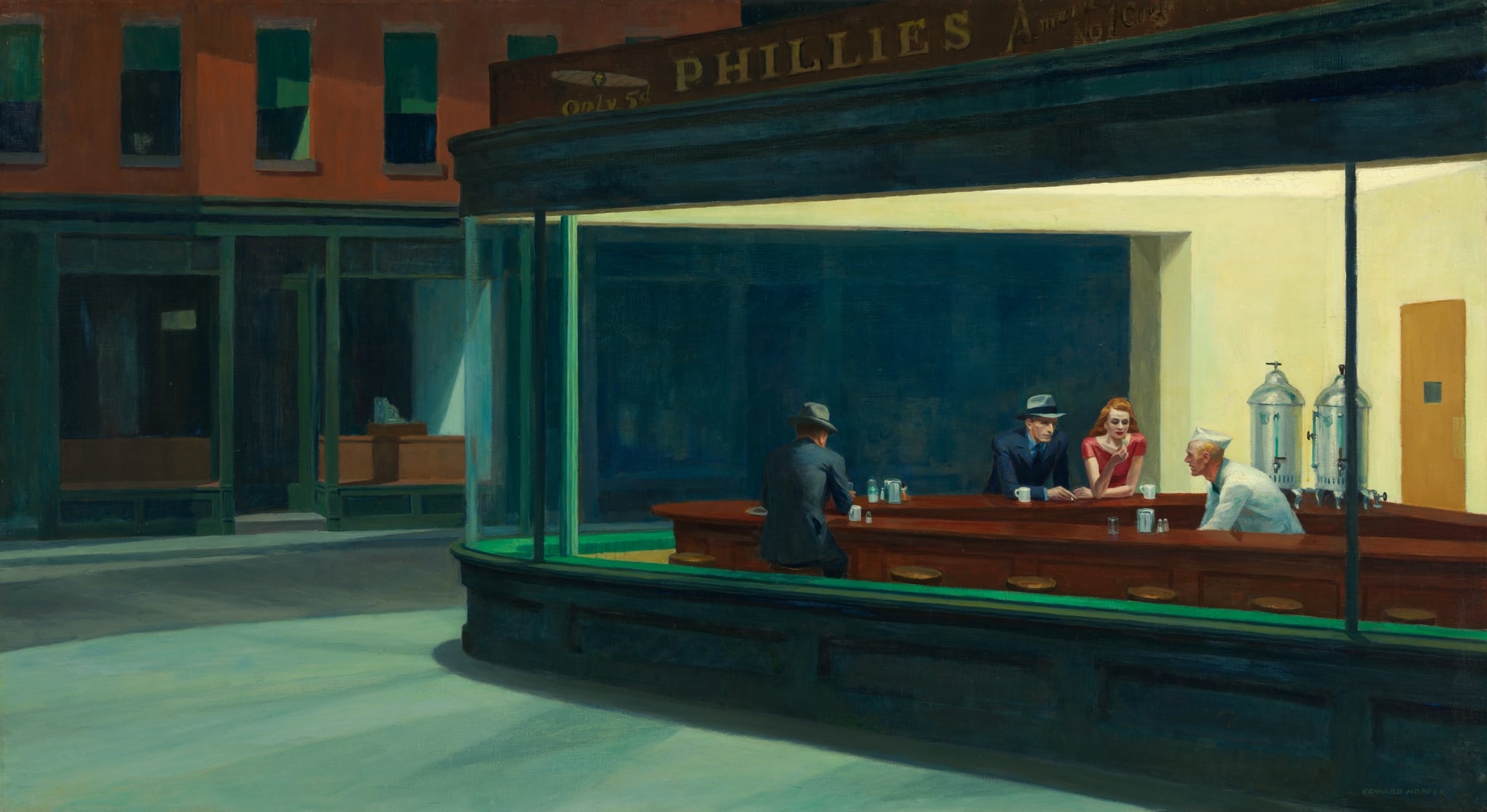
Nighthawks
Edward Hopper (1942)
Edward Hopper’s Nighthawks turns a corner diner into a sealed stage where <strong>fluorescent light</strong> and <strong>curved glass</strong> hold four figures in suspended time. The empty streets and the “PHILLIES” cigar sign sharpen the sense of <strong>urban solitude</strong> while hinting at wartime vigilance. The result is a cool, lucid image of modern life: illuminated, open to view, and emotionally out of reach.
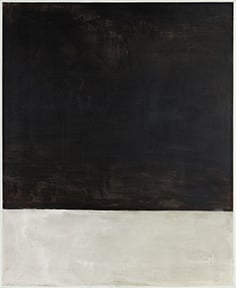
Untitled (Black on Grey)
Mark Rothko (1969–1970)
Mark Rothko’s Untitled (Black on Grey) compresses feeling into two stacked fields: a vast, softly modulated <strong>black</strong> pressing down upon a lower band of <strong>chalky grey</strong>, both ringed by a narrow white border. The blurred seam between them holds a charged <strong>threshold</strong> where descent and persistence meet <sup>[1]</sup><sup>[3]</sup><sup>[4]</sup>.
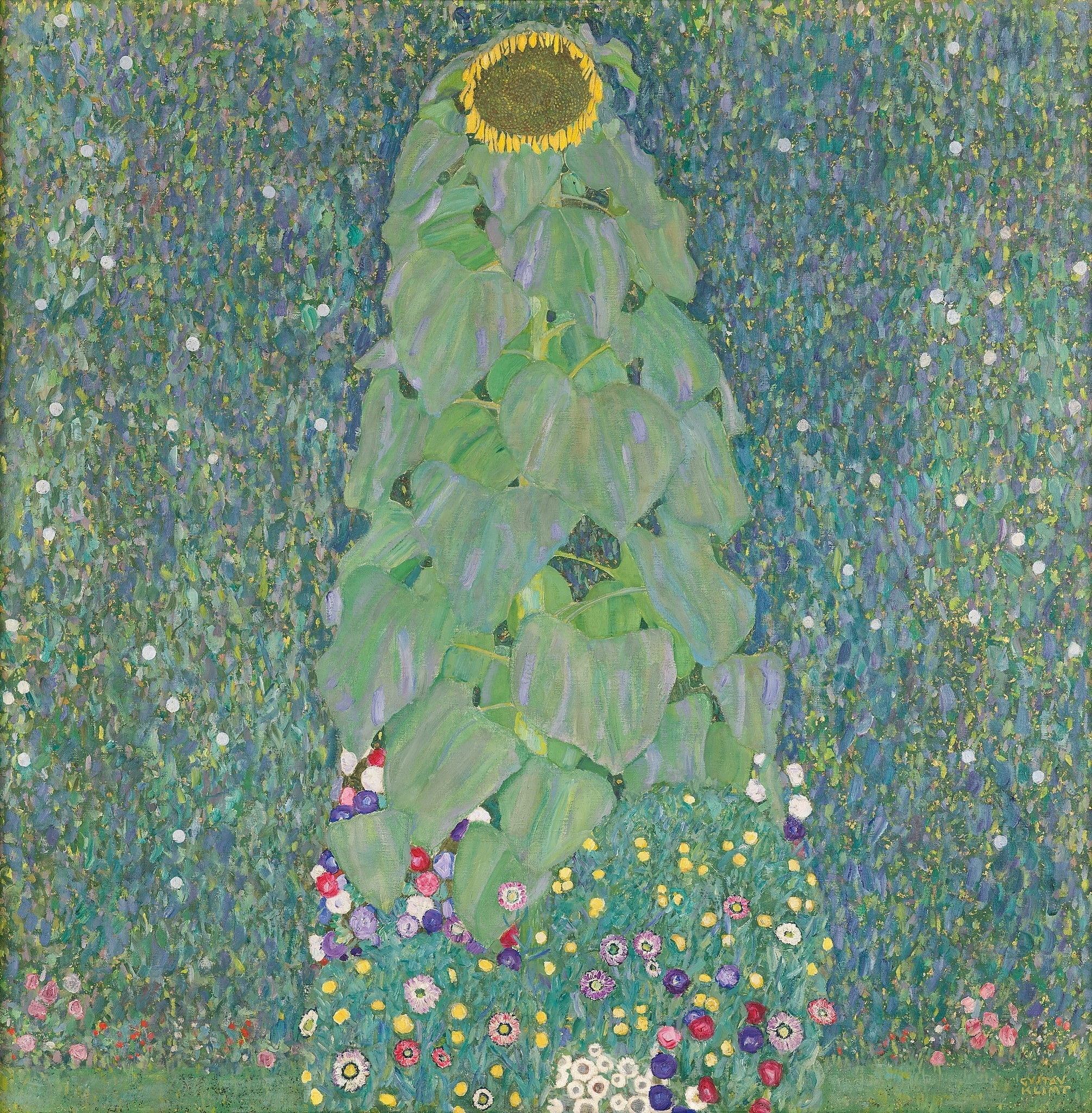
Sunflower
Gustav Klimt (1907/1908)
Gustav Klimt’s Sunflower turns a single bloom into a <strong>monumental, figure-like presence</strong>. A tapering stack of broad, drooping leaves rises from a <strong>mosaic-like carpet of round blossoms</strong>, crowned by a gold-flecked disc that glows against a cool, stippled field. The work fuses <strong>portrait, icon, and landscape</strong> into one emblem of vitality and quiet sanctity <sup>[1]</sup><sup>[2]</sup>.
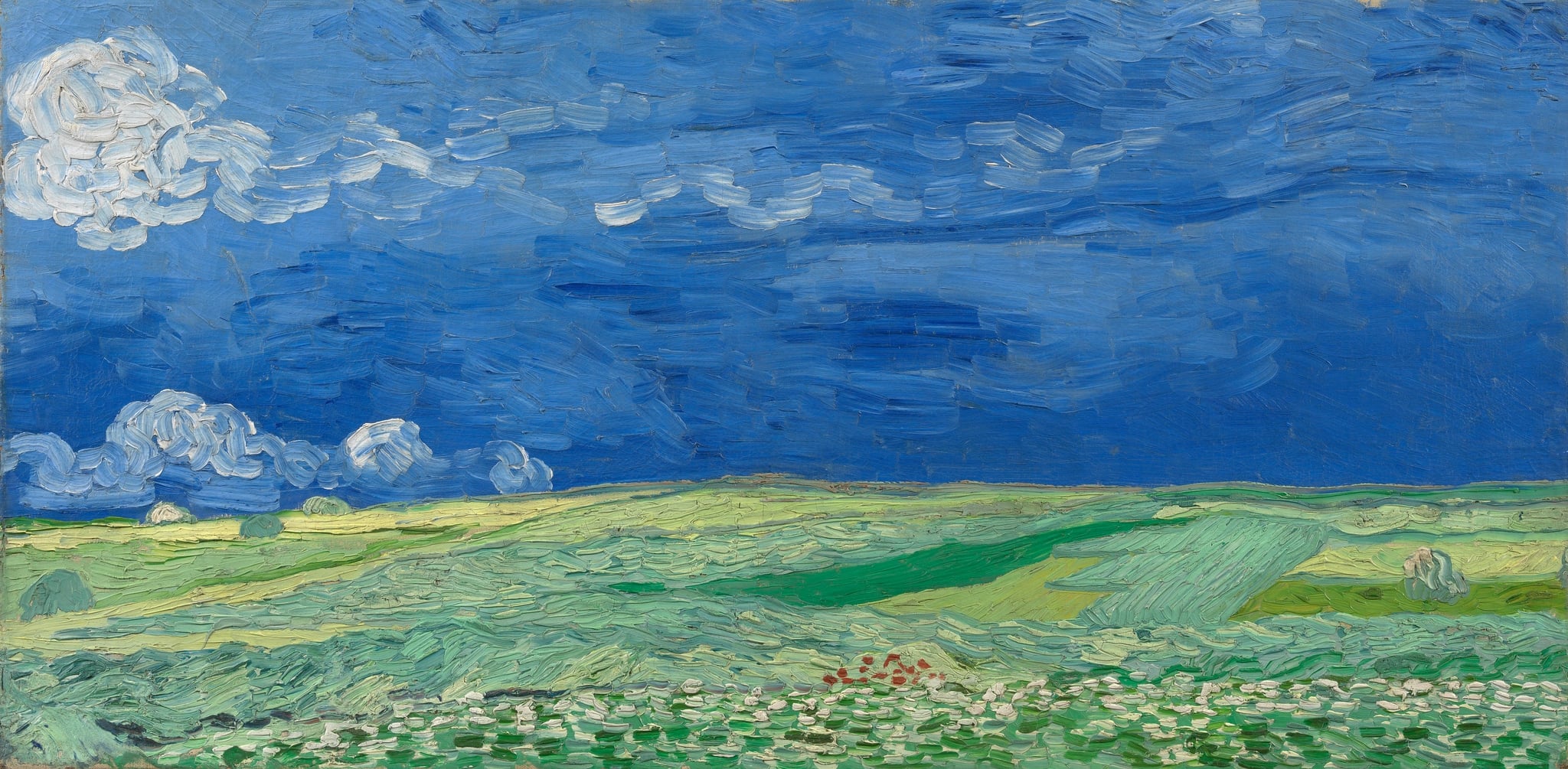
Wheatfield under Thunderclouds
Vincent van Gogh (1890)
A panoramic sweep of land and sky pits a wind‑combed wheatfield against an immense, <strong>thunder‑laden</strong> blue. Van Gogh uses a radically simple two‑band design and dense impasto to stage a confrontation between <strong>turbulence</strong> and <strong>endurance</strong> <sup>[1]</sup><sup>[2]</sup>.
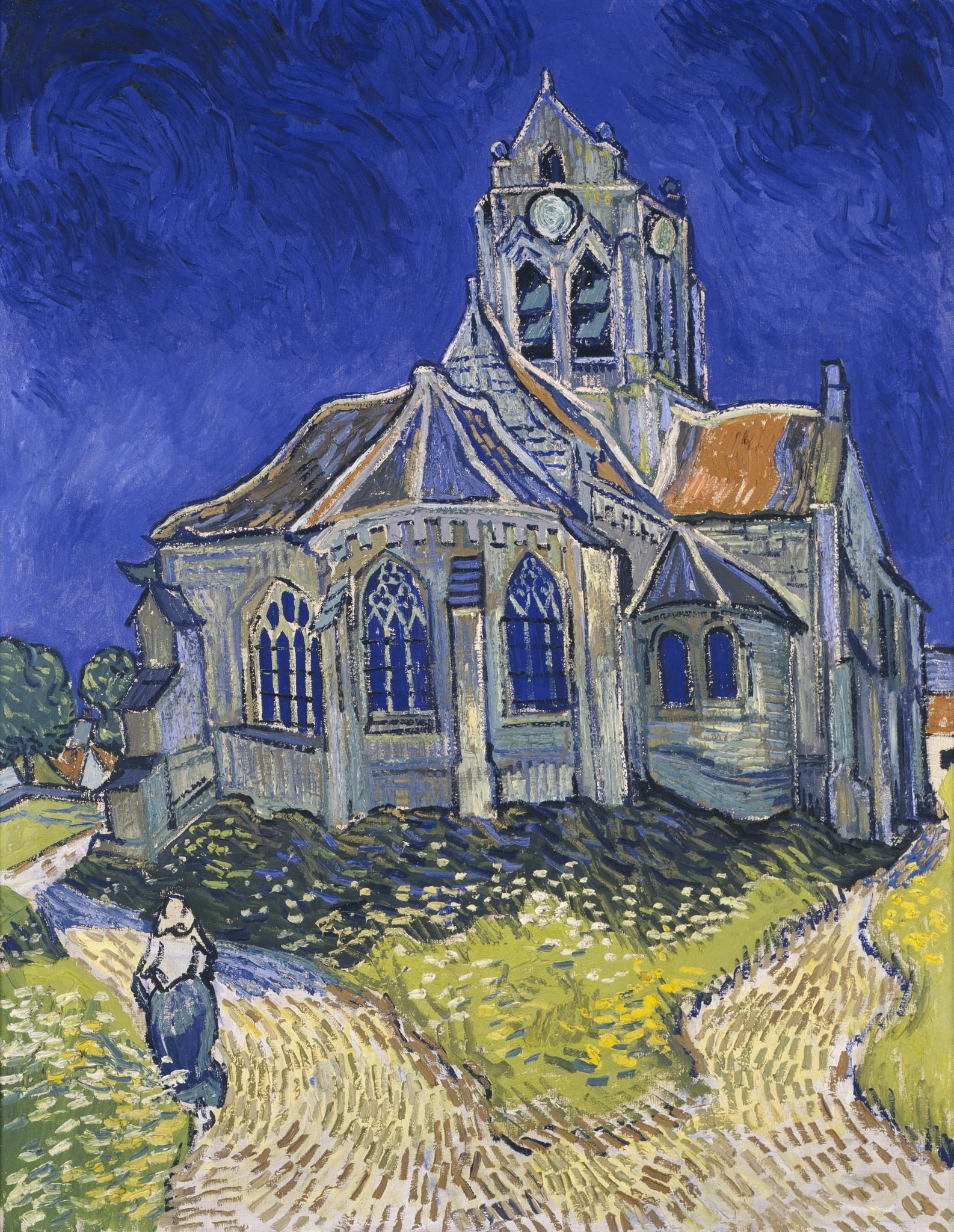
The Church at Auvers
Vincent van Gogh (1890)
In The Church at Auvers, Vincent van Gogh turns a modest Gothic church into a <strong>restless, living form</strong> against a <strong>cobalt sky</strong>. Two forked paths, a lone passerby, and windows sunk in <strong>ultramarine shadow</strong> stage a tension between the glowing world outside and the dim, unresponsive building within <sup>[1]</sup><sup>[2]</sup>.
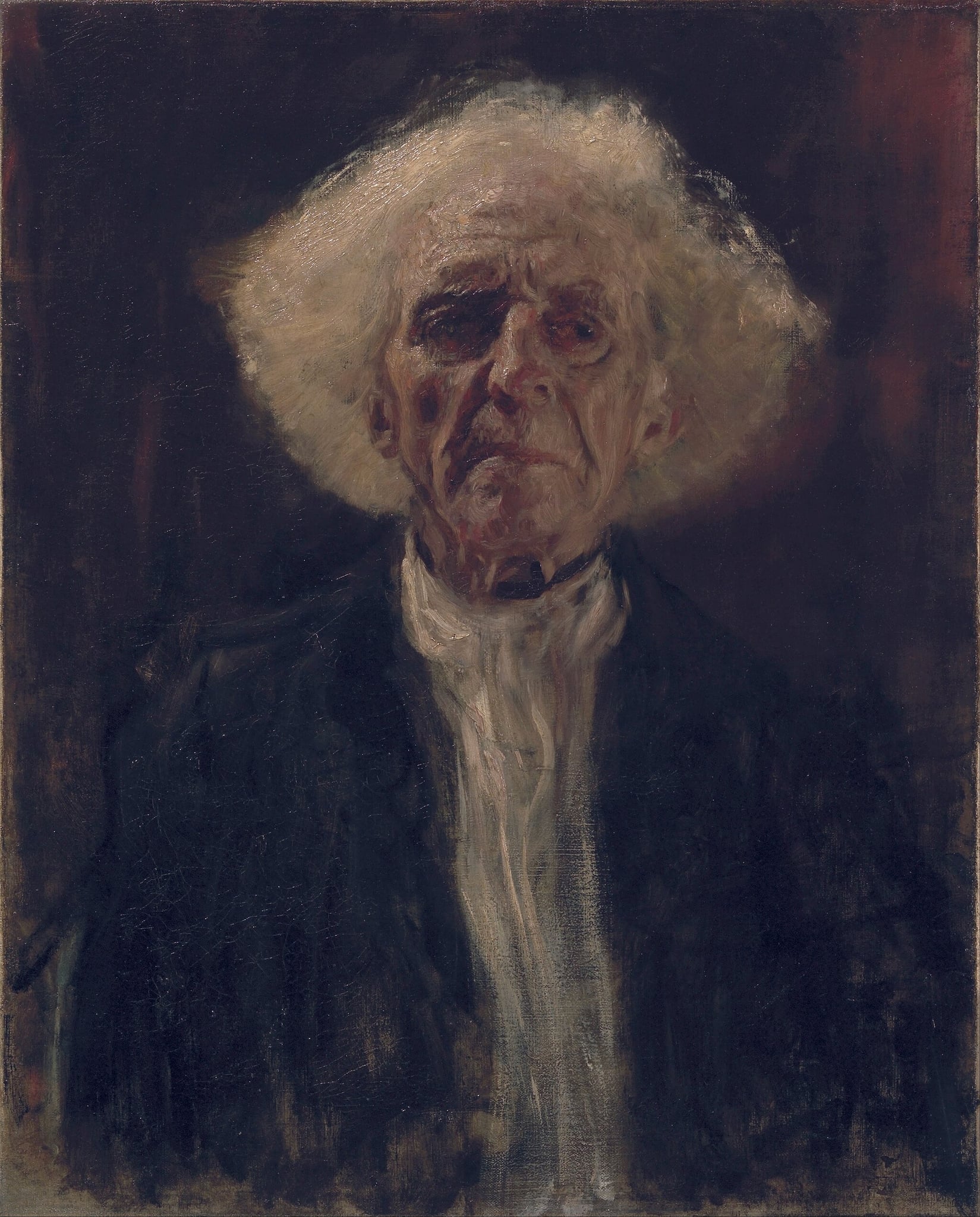
The Blind Man
Gustav Klimt (c. 1896)
Gustav Klimt’s The Blind Man confronts the viewer with a monumental head and torso emerging from a near-black field, where <strong>chiaroscuro</strong>, <strong>tactile paint</strong>, and an <strong>occluded gaze</strong> redirect attention from sight to touch and memory. The dissolving white collar and scumbled halo of hair make the figure feel carved from darkness, asserting <strong>dignity without sentiment</strong> and turning blindness into a form of inward presence <sup>[1]</sup>.
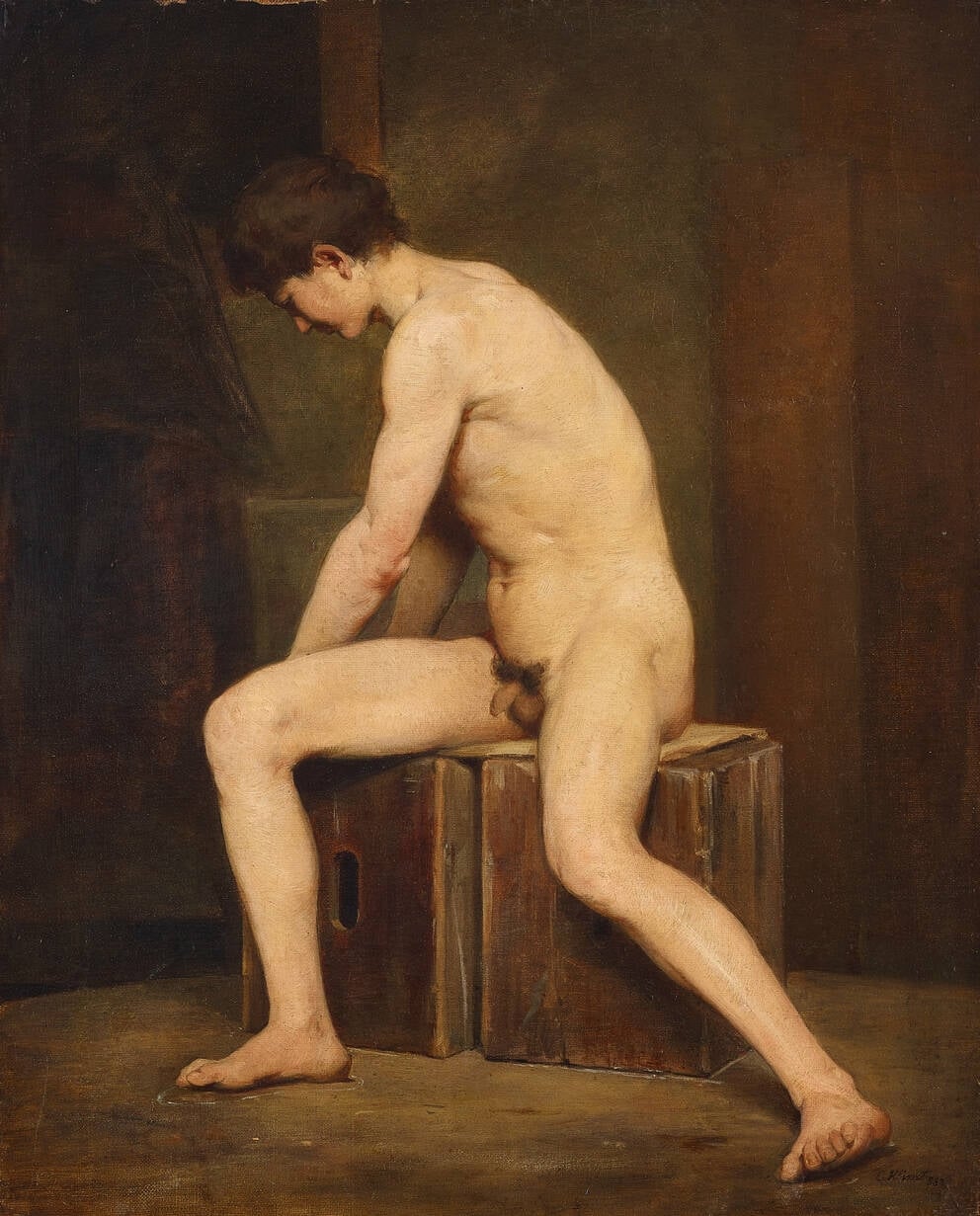
Sitting Nude Man Turned to the Left
Gustav Klimt (1883)
Painted in 1883, Sitting Nude Man Turned to the Left shows Klimt’s academic command of the male figure through a <strong>Naturalist/Realist</strong> approach. The model’s bowed head, splayed legs, and braced forearms form a taut <strong>triangular structure</strong> against rough wooden crates, where <strong>soft flesh meets hard geometry</strong> <sup>[1]</sup>. The restrained, earthy chiaroscuro isolates the body, turning a studio exercise into a quiet study of <strong>concentrated presence</strong>.
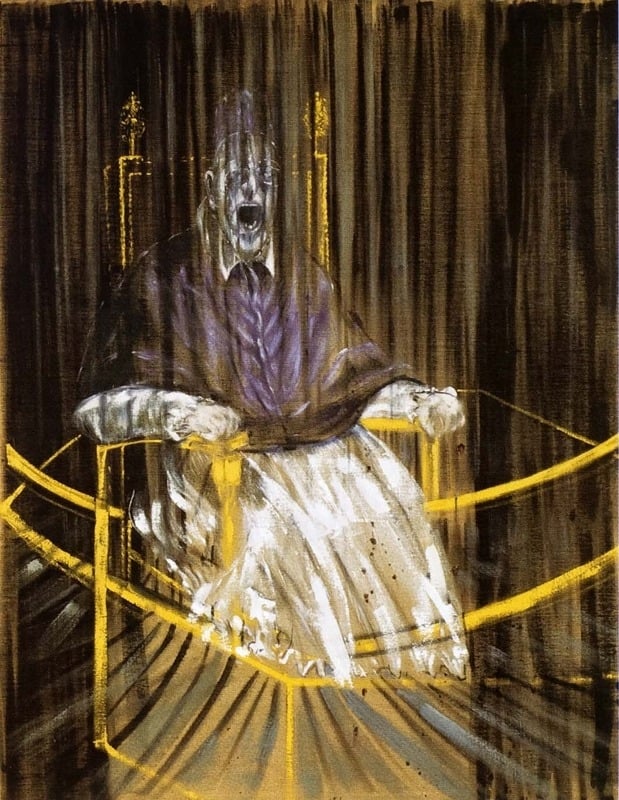
Study for Portrait of Pope Innocent X
Francis Bacon (1953)
Francis Bacon’s Study for Portrait of Pope Innocent X converts a seat of power into a <strong>cage of panic</strong>: a pontiff pinned in a golden <strong>space‑frame</strong>, mouth <strong>wrenched open</strong> beneath a torrent of vertical strokes. Violets, blacks, and acidic yellows turn vestments into a <strong>shroud</strong>, while the white robe flares like a spectral residue.
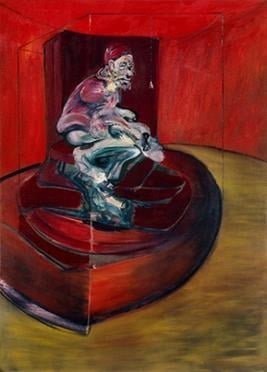
Study from Innocent X
Francis Bacon (1962)
Francis Bacon’s Study from Innocent X recasts the papal portrait as an image of <strong>enthroned vulnerability</strong>. Hemmed by thin <strong>cage-lines</strong> on a curved <strong>stage-like dais</strong>, the red-suffused figure trembles between flesh and regalia, turning authority into exposure <sup>[1]</sup><sup>[3]</sup>.
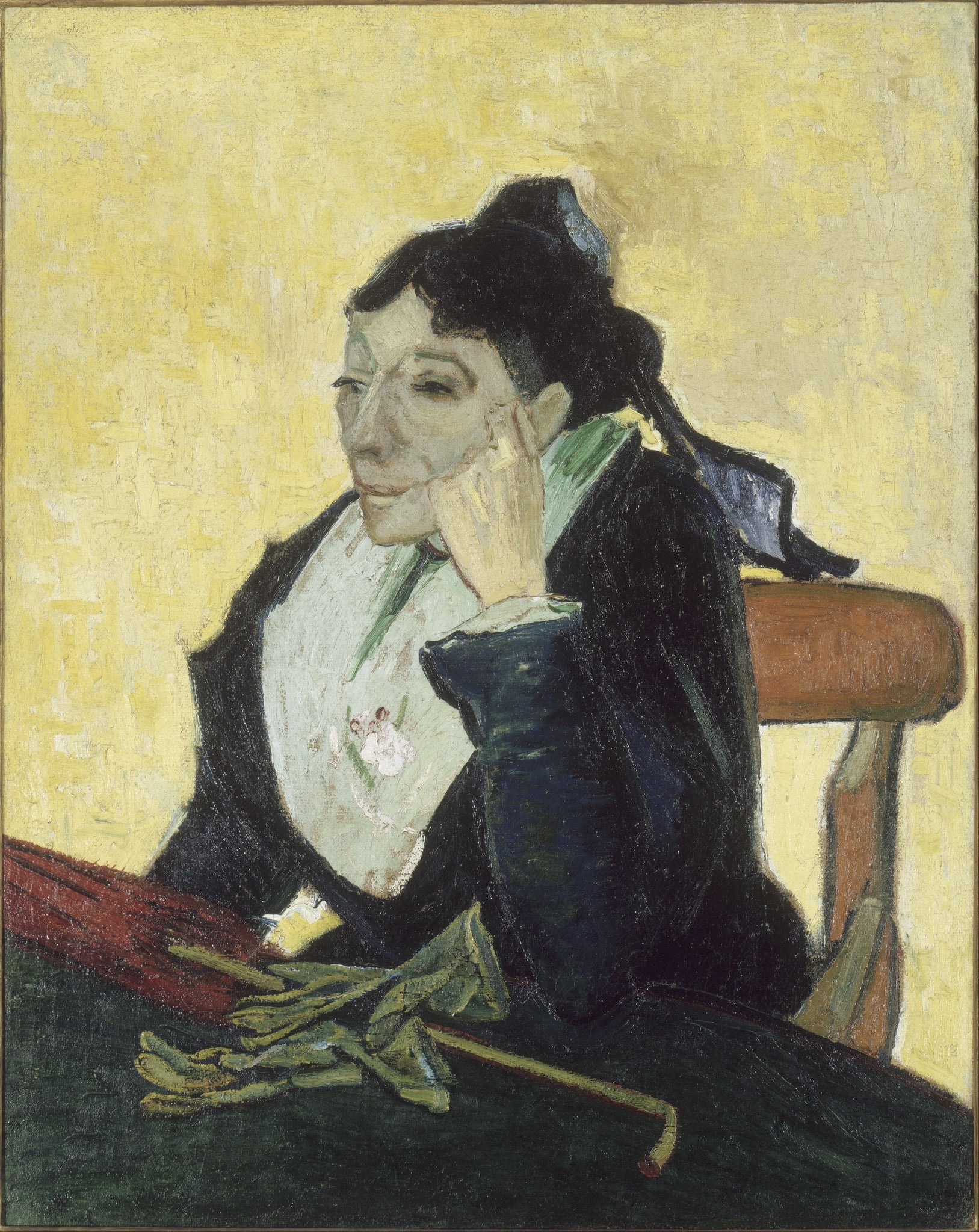
L'Arlésienne
Vincent van Gogh (1888)
In L'Arlésienne, Vincent van Gogh distills a moment of inward pause: a woman from Arles leans her cheek on her hand before a <strong>butter‑yellow wall</strong>, her <strong>black-and-blue silhouette</strong> set against a warm field. The <strong>red parasol</strong> and <strong>green gloves</strong> lie unused on the table, signaling a suspension of public persona in favor of private thought <sup>[1]</sup><sup>[3]</sup>.
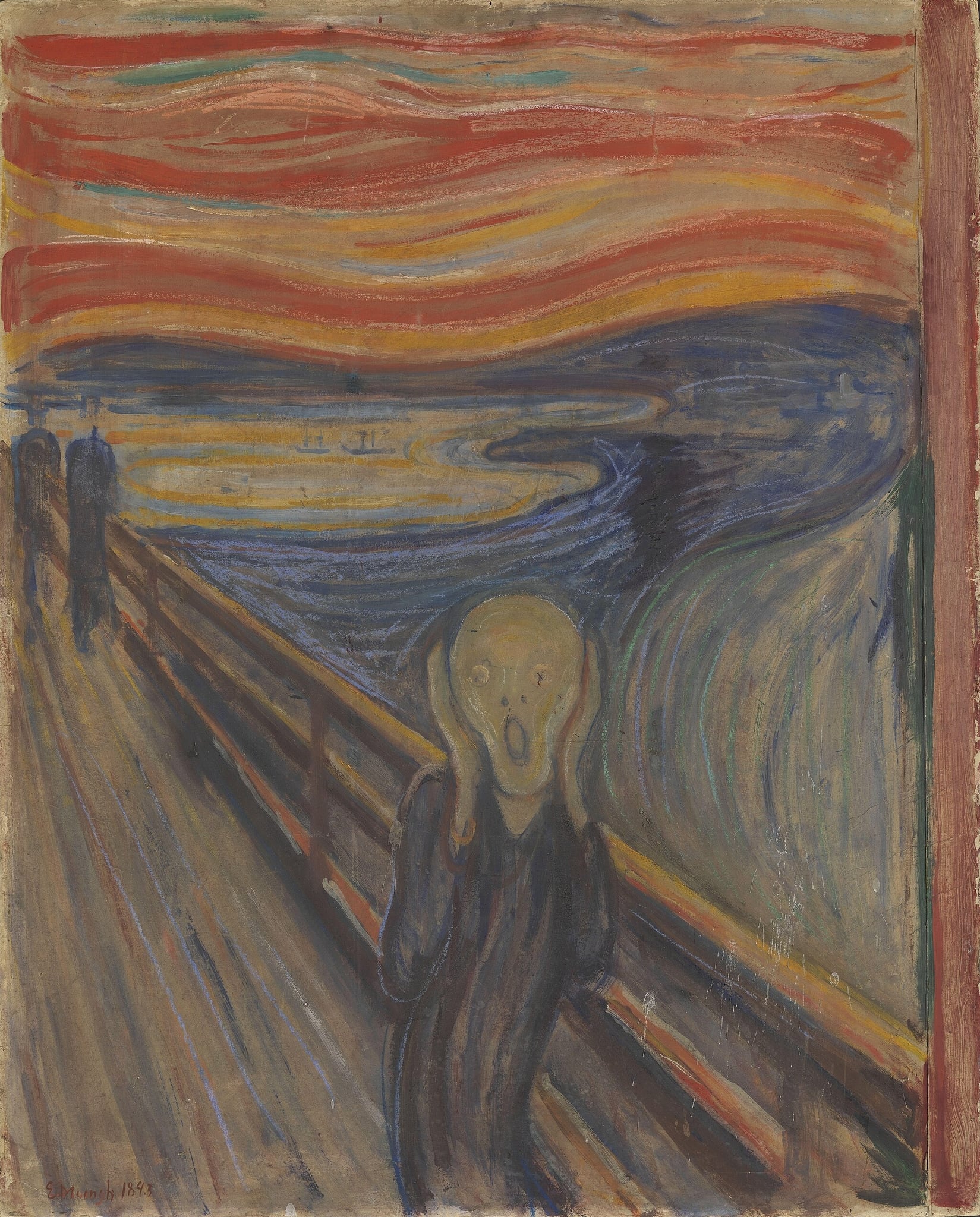
The Scream
Edvard Munch (1893)
Edvard Munch’s The Scream condenses modern dread into an image where the self and the world collapse: an androgynous, skull-like figure grips its head as a <strong>blood-red sky</strong> and <strong>vibrating shoreline</strong> pulse around it. The rigid, receding bridge rails counter the turbulence, staging a clash between <strong>inner panic</strong> and <strong>outer reality</strong> <sup>[1]</sup><sup>[2]</sup>.
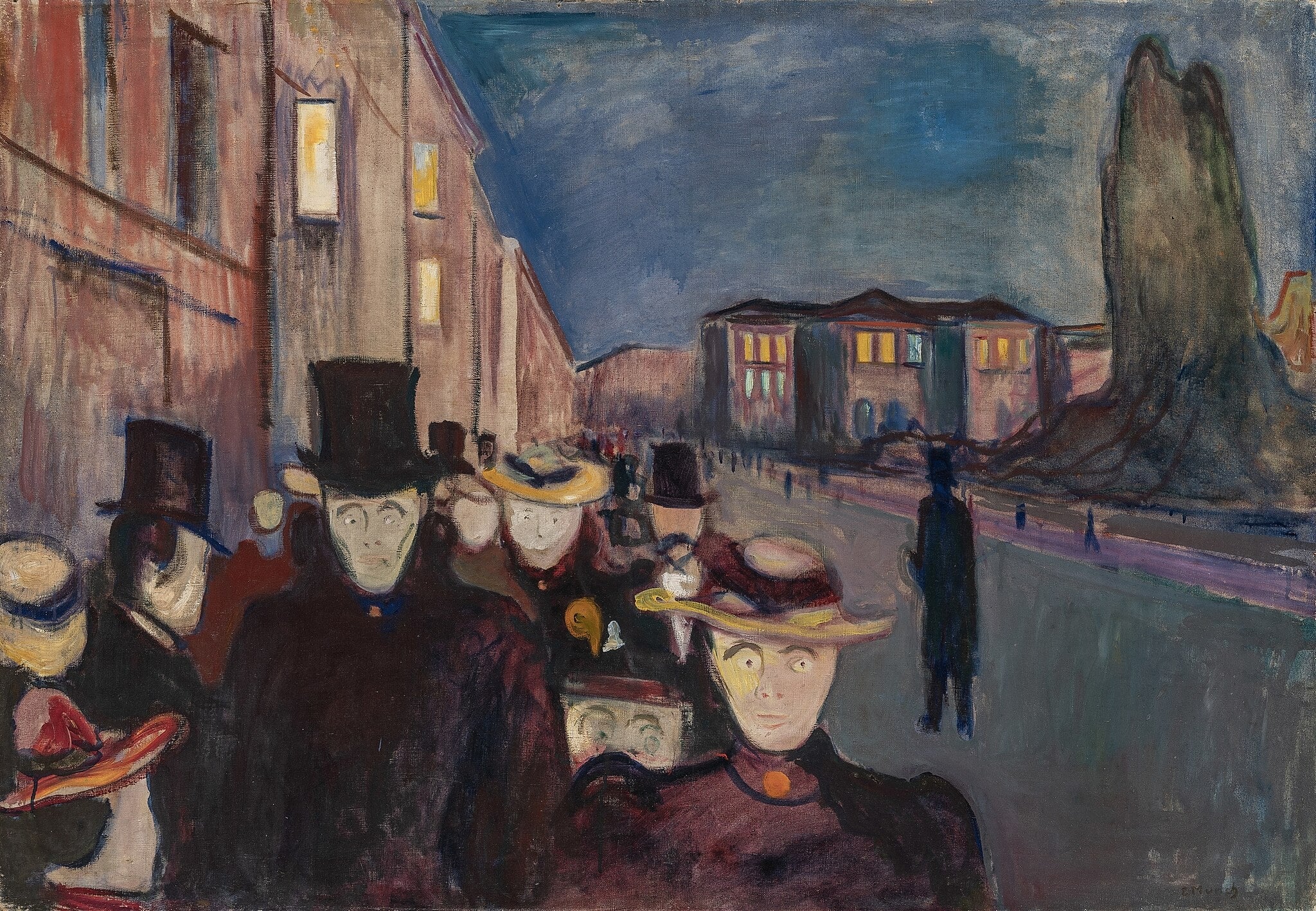
Evening on Karl Johan
Edvard Munch (1892)
Evening on Karl Johan by Edvard Munch stages a fashionable Oslo boulevard as a scene of <strong>urban dread</strong>. A mask-faced crowd in top hats surges forward while an <strong>isolated silhouette</strong> recedes at right, and tilted buildings glow with jaundiced windows under a cold blue sky. Munch converts a social promenade into a <strong>symbol of alienation</strong> through compressed space, skewed color, and nervous brushwork <sup>[1]</sup><sup>[2]</sup><sup>[3]</sup><sup>[4]</sup>.
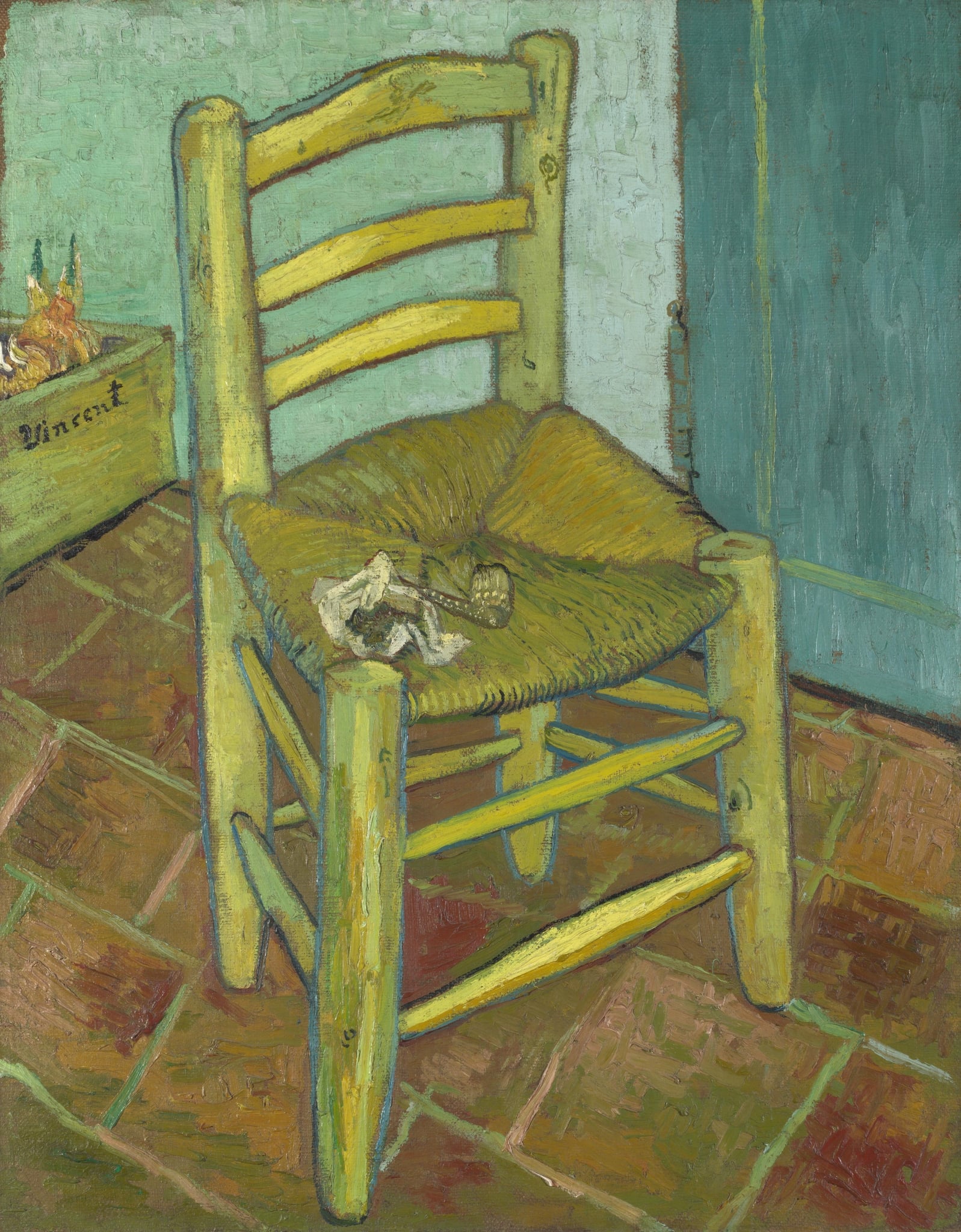
Van Gogh's Chair
Vincent van Gogh (1888; reworked January 1889)
In Van Gogh's Chair, a humble rush-seated chair blazes in <strong>radiant yellow</strong> against <strong>cool teal</strong> walls and door, its bold outlines charging the scene with tension. A <strong>pipe and tobacco pouch</strong> on the seat, a crate marked <strong>“Vincent”</strong> and sprouting onions turn this empty place into a surrogate presence, a still-life self-portrait built from things rather than a face <sup>[1]</sup><sup>[2]</sup>.
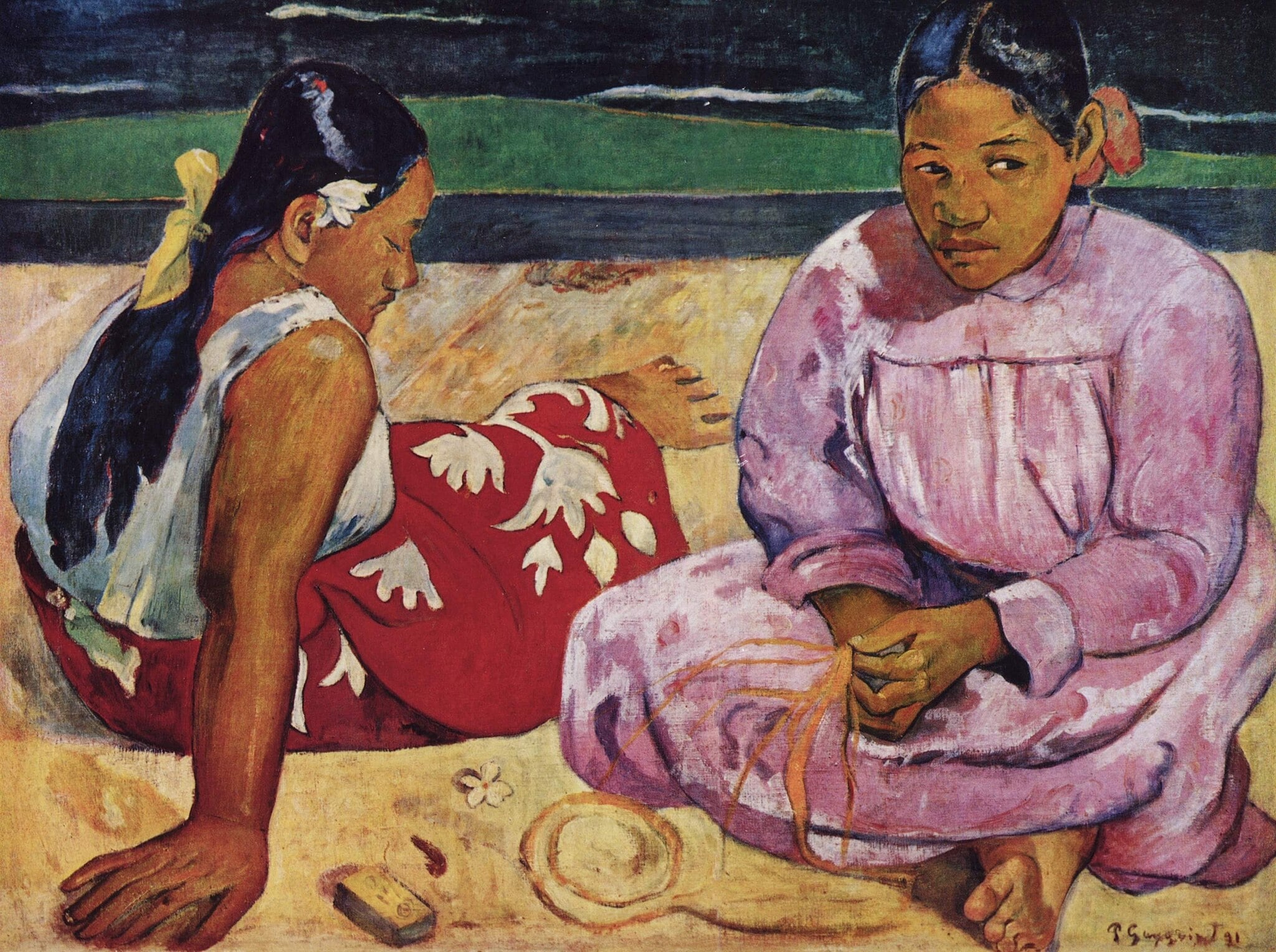
Tahitian Women on the Beach
Paul Gauguin (1891)
In Tahitian Women on the Beach, Paul Gauguin stages a tense duet between <strong>tradition</strong> and <strong>colonial modernity</strong>. Flat bands of sea and shore frame two monumental figures—one in a red <strong>pareo</strong>, the other in a pink <strong>missionary dress</strong>—whose guarded poses and averted gazes turn a casual beach scene into an <strong>iconic meditation on identity</strong> <sup>[1]</sup><sup>[2]</sup>. Modest objects on the sand—a flower, a coil, a bar-shaped stone—read like quiet <strong>tokens</strong> anchoring everyday life to ritual feeling <sup>[1]</sup>.
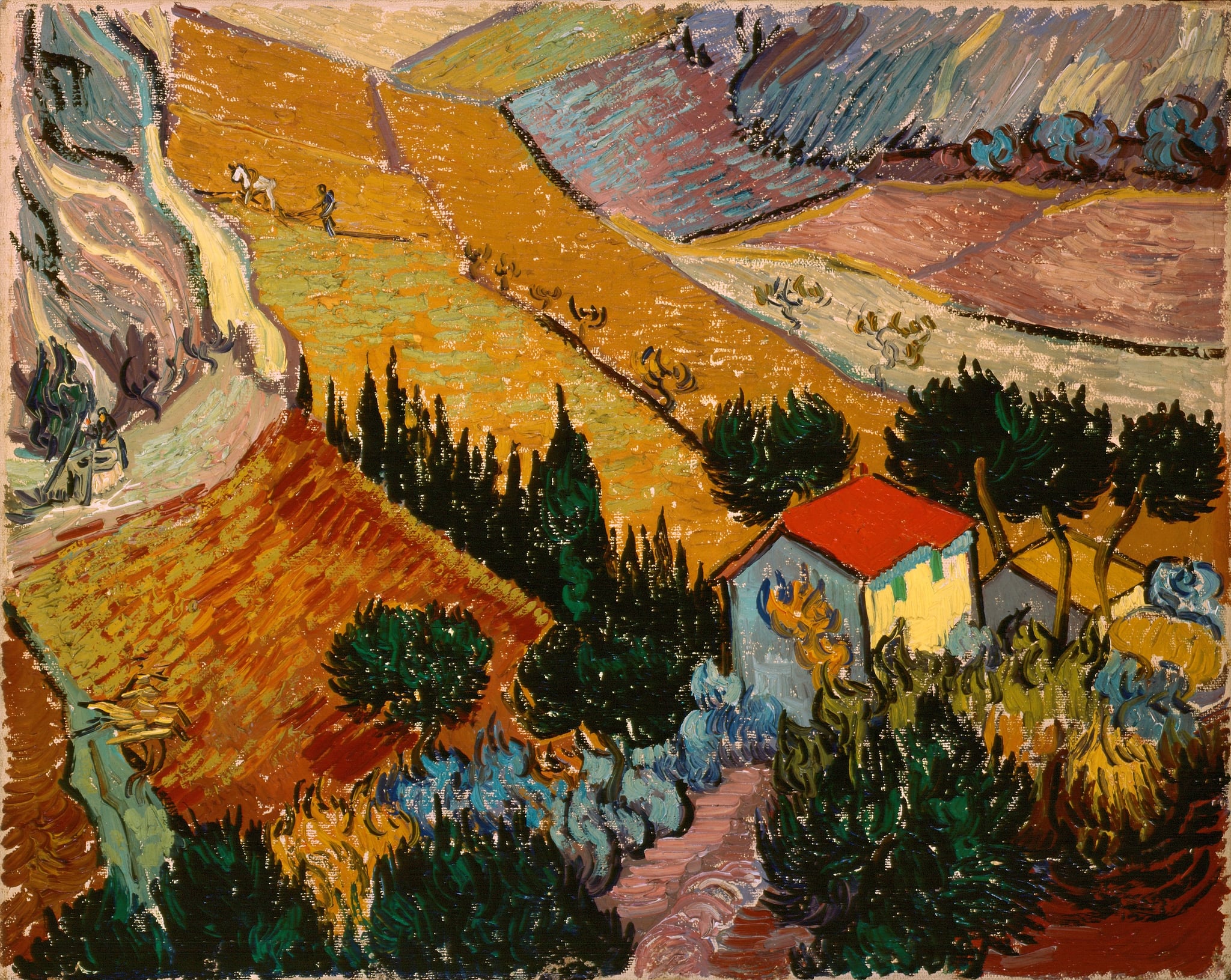
Landscape with Ploughman
Vincent van Gogh (1889)
Landscape with Ploughman compresses a steep Provençal valley into a vibrating mosaic of fields where a tiny figure with a white horse furrows the slope. Van Gogh turns cypress spires, a flame‑red roof, and banded plots into a pulse of <strong>human labor</strong> within <strong>restless nature</strong> <sup>[1]</sup><sup>[5]</sup>. The painting fuses elevated viewpoint and directional brushwork to stage endurance as pattern and rhythm.
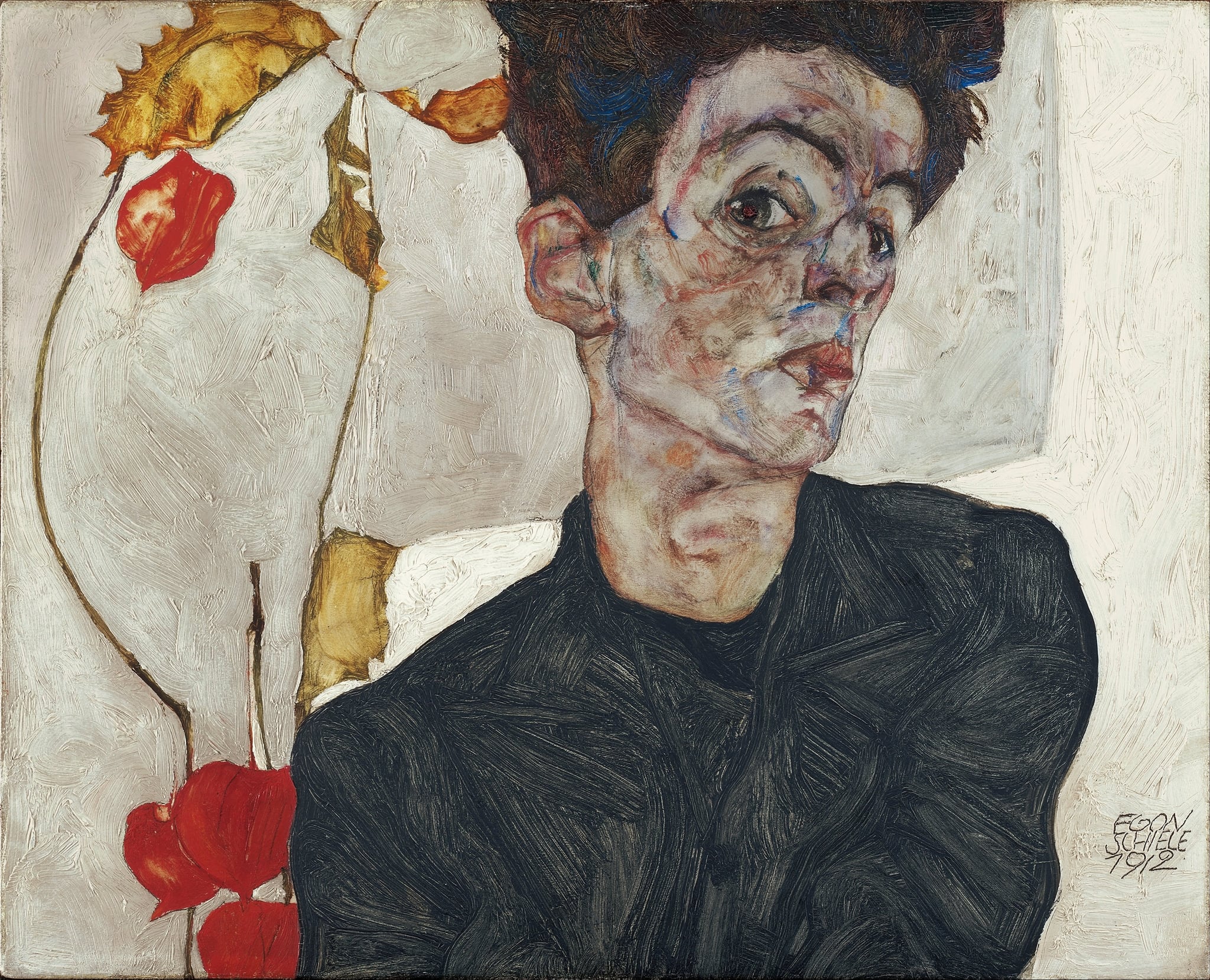
Self-Portrait with Physalis
Egon Schiele (1912)
In Self-Portrait with Physalis, Egon Schiele twists his gaunt body toward us, the face flayed by violet and blue accents and set against a scraped, chalky ground. The <strong>red-orange lantern pods</strong> flare beside his black, sharply linear jacket, a <strong>counterweight</strong> that charges the image with tension between vitality and decay <sup>[1]</sup><sup>[2]</sup>. Signed and dated <strong>1912</strong> at lower right, it crystallizes Schiele’s Expressionist self-scrutiny.
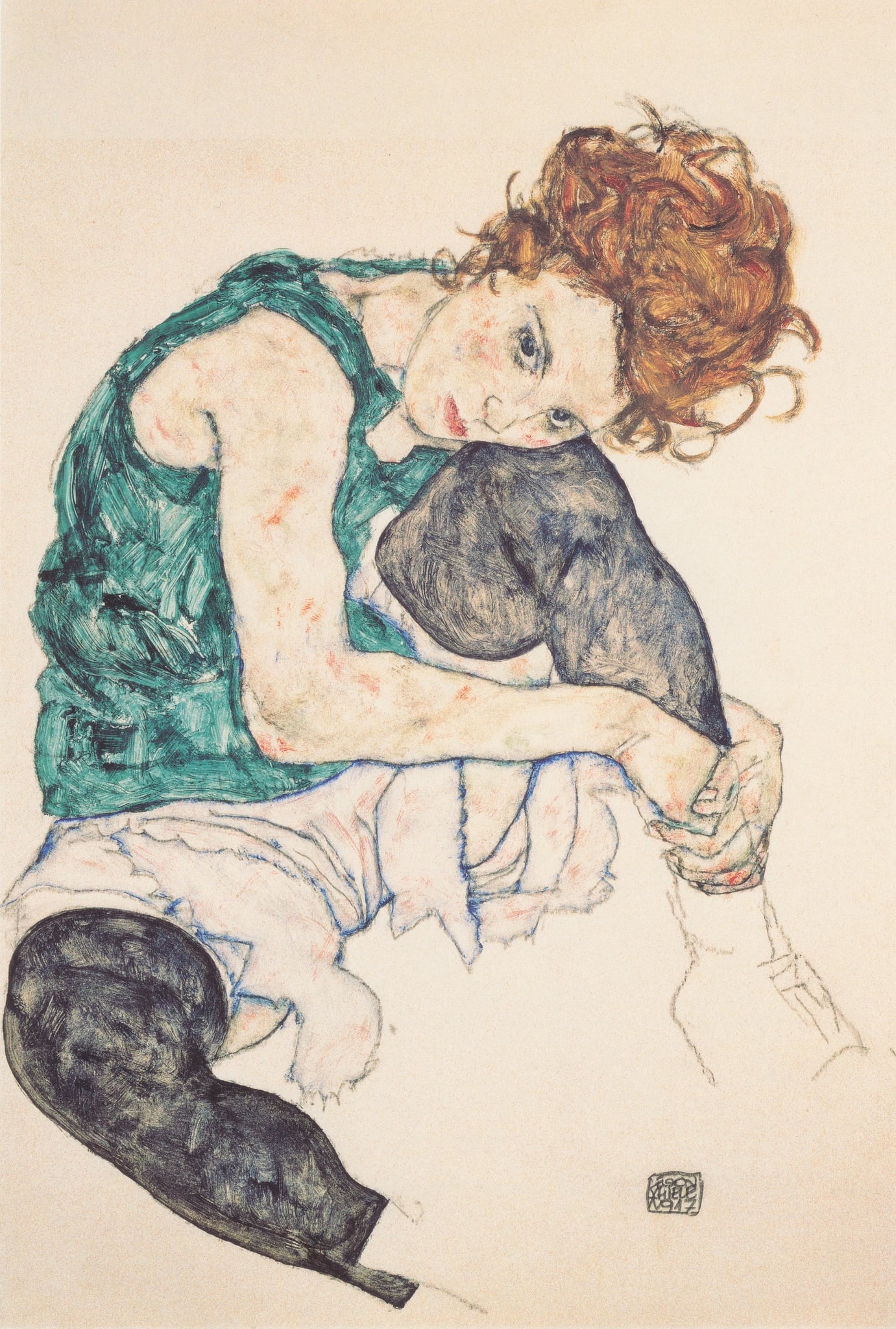
Seated Woman with Bent Knee
Egon Schiele (1917)
Egon Schiele’s Seated Woman with Bent Knee compresses the body into a tense, looping knot, fusing <strong>erotic charge</strong> with <strong>psychological vulnerability</strong>. The emerald bodice, inky stockings, and copper hair vibrate against a blank ground, while the sitter’s hands clamp her ankle, signaling <strong>self‑containment</strong> as much as display <sup>[1]</sup><sup>[3]</sup>.
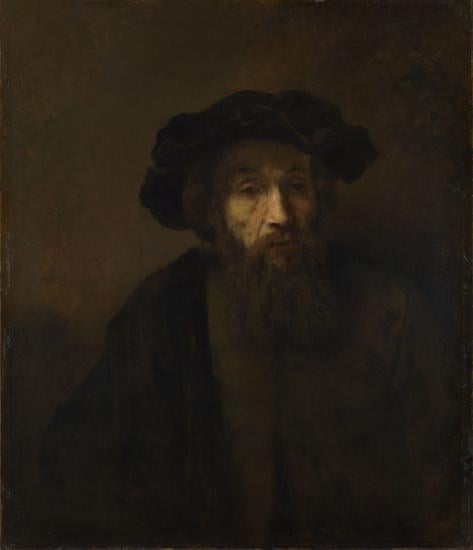
A Bearded Man in a Cap
Rembrandt van Rijn (late 1650s (probably 1657))
<strong>A Bearded Man in a Cap</strong> is a late‑1650s tronie by <strong>Rembrandt van Rijn</strong>, a meditative study where raking light grazes a timeworn face emerging from darkness. With a broad, soft <strong>cap</strong> and square‑cut <strong>beard</strong>, the figure embodies aged contemplation rather than social identity, rendered through Rembrandt’s late <strong>chiaroscuro</strong> and tactile brushwork <sup>[1]</sup>.