The Persistence of Memory
Study Print Studio
Create a personal study print
Build a companion study sheet around the part of this painting that speaks to you most. Choose a detail, shape an interpretation, and walk away with something personal and display-worthy.
Fast Facts
- Year
- 1931
- Medium
- Oil on canvas
- Dimensions
- 24.1 x 33 cm
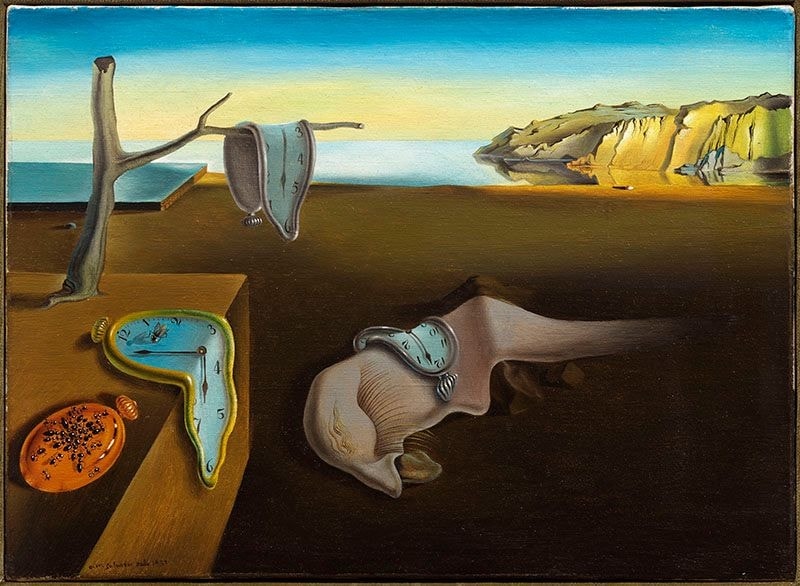
Click on any numbered symbol to learn more about its meaning
Meaning & Symbolism
Explore Deeper with AI
Ask questions about The Persistence of Memory
Popular questions:
Powered by AI • Get instant insights about this artwork
Interpretations
Historical Context: The Paranoiac‑Critical Method
Source: Smarthistory; MoMA audio guide; Encyclopaedia Britannica
Formal Analysis: Scale, Light, and Suspended Duration
Source: MoMA collection and audio; Smarthistory
Symbolic Reading: A Vanitas for the Machine Age
Source: MoMA audio guide; Encyclopaedia Britannica; Dalí Foundation
Place-Based Interpretation: Catalonia as Oneiric Ground
Source: Gala-Salvador Dalí Foundation; Smarthistory
Medium Reflexivity: Mimesis as a Tool of Unreason
Source: MoMA collection; Smarthistory; MoMA audio guide
Explore Specific Elements
Dive deeper into individual scenes and details within The Persistence of Memory.
The Melting Watches
Dalí’s melting watches turn the most rigid tool of modern life into soft, drooping membranes, making the impossible look eerily plausible. Rendered with photographic precision, they visualize a world where mechanical time dissolves into the pliable durations of dream and memory.
The Fetal Face
At the center of The Persistence of Memory lies a pallid, biomorphic head—often read as Dalí’s own sleeping profile—over which a soft watch slumps like skin. This uncanny "fetal face" anchors the painting’s dream-logic, fusing the artist’s inner self with Surrealism’s most famous emblem of liquefied time.
The Ants on the Watch
In the lower-left corner of Dalí’s The Persistence of Memory, a copper-colored pocket watch lies face-down as a tight cluster of 25 shiny black ants overruns its case. This lone “hard” watch resists melting, yet it is actively consumed—an image that turns a precision instrument into carrion and makes time itself feel perishable. The swarm is a compact key to Dalí’s Surrealism: seductive, meticulous, and unsettling all at once.
The Dead Tree
At the painting’s left edge, a leafless olive trunk rises from a geometric block, its brittle branch cradling a melting watch. This stark ‘dead tree’ moors Dalí’s dreamscape in his Mediterranean homeland while transforming a symbol of longevity into a quietly shocking emblem of time’s erosion and memory’s strain.
Seen in Comparisons
Related Themes
About Salvador Dali
More by Salvador Dali
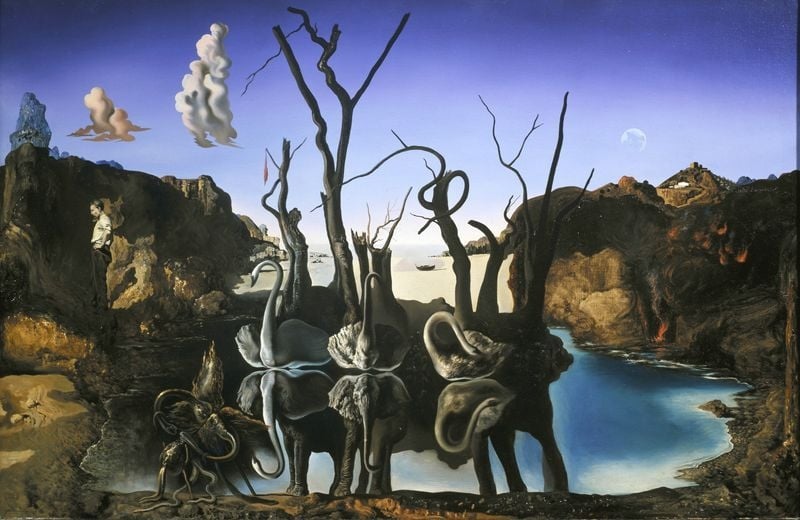
Swans Reflecting Elephants
Salvador Dali (1937)
Swans Reflecting Elephants stages a calm Catalan lagoon where three swans and a thicket of bare trees flip into monumental <strong>elephants</strong> in the mirror of water. Salvador Dali crystallizes his <strong>paranoiac-critical</strong> method: a meticulously painted illusion that makes perception generate its own doubles <sup>[1]</sup><sup>[2]</sup>. The work locks grace to gravity, surface to depth, turning the lake into a theater of <strong>metamorphosis</strong>.
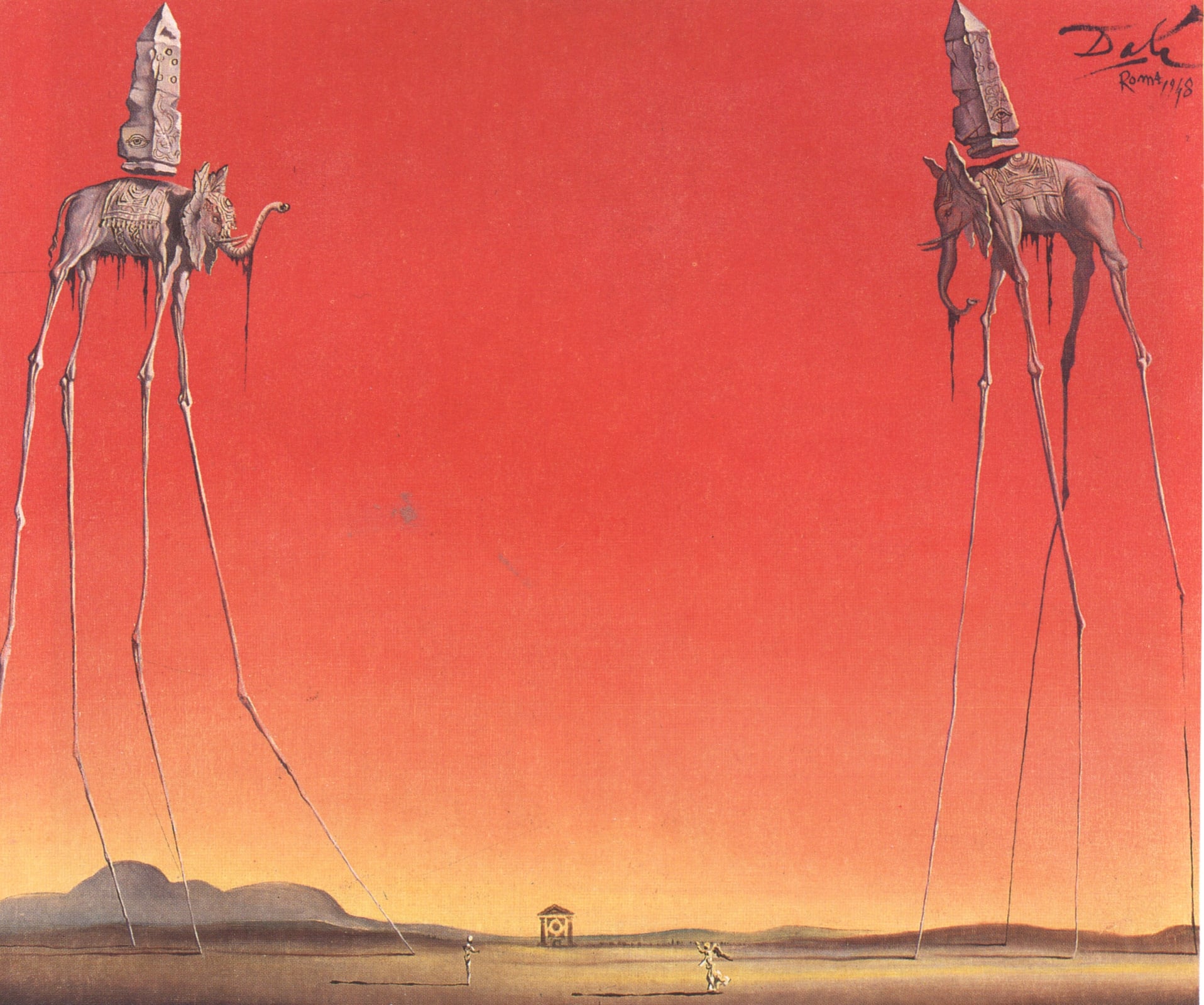
The Elephants
Salvador Dali (1948)
In The Elephants, Salvador Dali distills a stark paradox of <strong>weight and weightlessness</strong>: gaunt elephants tiptoe on <strong>stilt-thin legs</strong> while bearing stone <strong>obelisks</strong>. The blazing red-orange sky and tiny human figures compress ambition into a vision of <strong>precarious power</strong> and time stretched thin <sup>[1]</sup><sup>[2]</sup>.
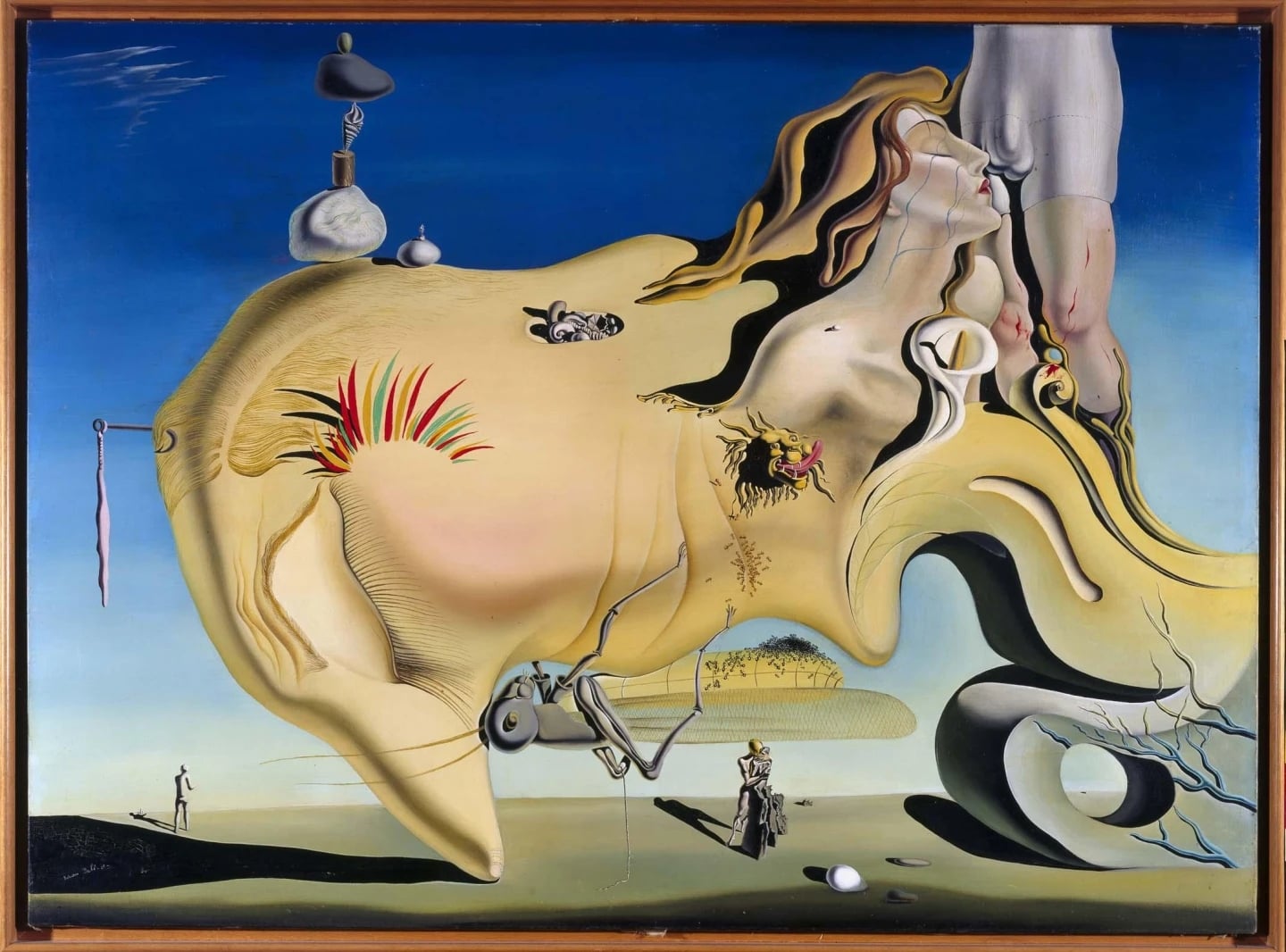
The Great Masturbator
Salvador Dali (1929)
The Great Masturbator condenses Dalí’s newly ignited desire and crippling dread into a single, biomorphic head set against a crystalline Catalan sky. Ants, a gaping grasshopper, a lion’s tongue, a bleeding knee, crutches, stones, and an egg collide to script a confession where <strong>eros</strong> and <strong>decay</strong> are inseparable <sup>[1]</sup><sup>[3]</sup><sup>[4]</sup>. Its precision staging turns autobiography into a <strong>surreal map of compulsion</strong> at the moment Gala enters his life <sup>[1]</sup>.