How Much Is The Persistence of Memory Worth?
Last updated: January 14, 2026
Quick Facts
- Current Location
- The Museum of Modern Art (MoMA)
- Methodology
- extrapolation
The Persistence of Memory is Dalí’s definitive Surrealist icon and a cornerstone of MoMA’s collection. If hypothetically consigned today, its unmatched cultural recognition and museum-grade provenance would draw trophy-level competition, supporting a $200–350 million estimate. This range reflects pricing behavior for singular, canon-defining works that trade far above an artist’s typical auction record.
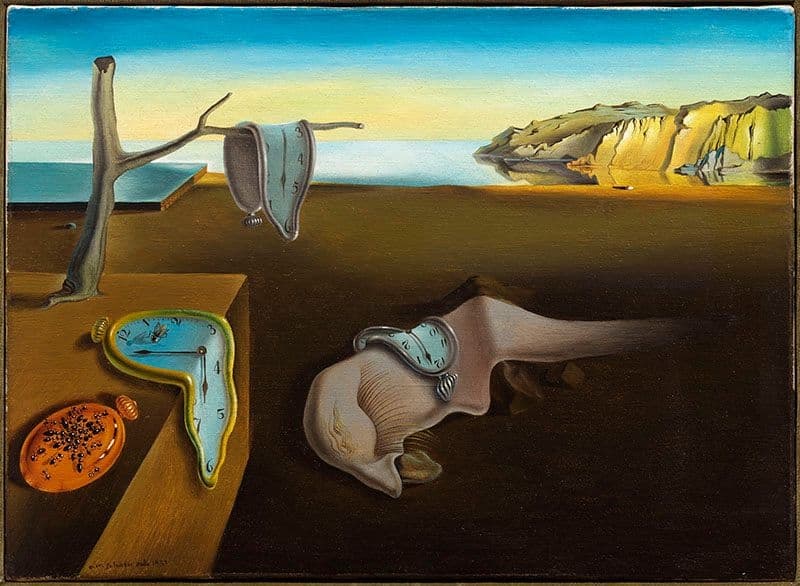
The Persistence of Memory
Salvador Dali, 1931 • Oil on canvas
Read full analysis of The Persistence of Memory →Valuation Analysis
Conclusion: If hypothetically offered at auction today, Salvador Dalí’s The Persistence of Memory would command approximately $200–350 million. This range reflects its unique status as the definitive Surrealist image, its outstanding provenance (MoMA, New York, since 1934), and the demonstrated willingness of the global trophy market to pay extraordinary premiums for singular cultural touchstones [1].
Method: The estimate is derived by extrapolating from the top end of the Surrealism category and from cross-artist trophy benchmarks. Dalí’s public auction record—$21.7 million for Portrait de Paul Éluard (1929)—does not constrain this work, as it is not comparable in cultural weight or recognizability [2]. Within Surrealism, René Magritte’s L’empire des lumières achieved about $80 million in 2022, establishing the category’s capacity for eight-figure-plus results when a universally recognized image appears [3]. Beyond Surrealism, the market has repeatedly paid triple-digit millions for icon-level works (e.g., Munch’s The Scream at ~$120 million), underscoring the pricing step-change that occurs for singular, brand-defining pictures [4].
Why this painting sits above standard comparables: The Persistence of Memory is Dalí’s signature image—the archetype of his “soft watches”—and arguably the single most famous Surrealist painting. Its scale is modest, but in the trophy segment, brand recognition and art-historical centrality dominate size considerations. The work’s unassailable provenance (artist → Pierre Colle → Julien Levy → anonymous gift to MoMA, 1934) and its long, uninterrupted museum exhibition history amplify its desirability and perceived security, both critical for nine-figure acquisitions [1].
Market positioning: The proposed range acknowledges that Dalí’s broader market is bifurcated (abundant later works and editions vs. scarce 1930s oils), with typical prime-period auction results in the eight figures. However, for this single, canon-defining work, the relevant pricing set is the “trophy” cohort—where scarcity, cultural ubiquity, and museum-grade provenance justify breakaway pricing from an artist’s standard record. On that basis, $200–350 million is defensible and could be exceeded under ideal conditions (peak liquidity, global institutional and UHNW participation, pristine condition, and a marquee sale platform).
Key sensitivities: As with all masterpieces, condition, legal/title clarity, and market climate at the time of sale would influence the final outcome. Absent negative findings and assuming the current museum-standard condition is maintained, buyer depth at this level should be robust, supported by cross-continental demand for canonical 20th-century icons [1][3][4].
Key Valuation Factors
Art Historical Significance
High ImpactPainted in 1931, The Persistence of Memory is the archetypal Surrealist image and the signature work in Dalí’s oeuvre. It codifies the artist’s concept of “soft watches,” encapsulating Surrealism’s exploration of subconscious time, dream logic, and transformation. Its inclusion in MoMA’s core narrative of modern art and its ubiquity in scholarship, pedagogy, and cultural discourse cement its status as a keystone of 20th-century visual culture. For valuation, this significance justifies a breakaway from typical artist comparables: market participants pay premiums for works that anchor movements, syllabi, and museum galleries. In short, it is not merely a great Dalí—it is the Dalí that defines Surrealism for a global audience.
Iconic Global Recognition
High ImpactThe image has penetrated global popular culture far beyond the art market: it is reproduced in textbooks, quoted in media, and synonymous with Surrealism itself. Such recognition functions like brand equity in the trophy segment, enlarging the pool of potential buyers to include collectors who prioritize cultural legacy, institutional display, and public impact. In this cohort, uniqueness of the image—not size or medium—drives competition. The Persistence of Memory is one of a handful of 20th-century pictures whose fame rivals their underlying market category. This ‘icon premium’ has precedent in pricing for Munch’s The Scream and Magritte’s L’empire des lumières, where recognizability translated directly into step-change valuations.
Scarcity and Provenance
High ImpactPrime 1930s Dalí oils are scarce, and works matching this painting’s art-historical centrality are effectively unobtainable. The continuous, museum-held provenance (MoMA, New York, since 1934) provides exceptional security, institutional validation, and exhibition history. In the nine-figure arena, such provenance materially reduces perceived risk (authenticity, conservation, title), supporting aggressive bidding. The near-zero probability of another image of equal symbolic power appearing in the market further amplifies scarcity value. If hypothetically deaccessioned or privately sold, the combination of unimpeachable history and unique cultural importance would attract both major private collectors and leading institutions, catalyzing trophy-level price discovery.
Trophy-Market Benchmarks
High ImpactWhile Dalí’s public auction record is ~$21.7 million, that metric is not dispositive for a singular icon. Category and cross-category benchmarks show that works with canonical status command multiples of an artist’s standard record. Magritte’s L’empire des lumières achieved about $80 million in 2022, resetting Surrealism’s top end. Munch’s The Scream—a culturally definitive image—brought roughly $120 million. These cases illustrate a pricing regime where cultural ubiquity, rather than artist averages, governs outcomes. The Persistence of Memory squarely fits this pattern, justifying an extrapolated $200–350 million range that recognizes the premium for movement-defining masterpieces.
Sale History
The Persistence of Memory has never been sold at public auction. It has been held by The Museum of Modern Art (MoMA).
Salvador Dali's Market
Salvador Dalí’s market is bifurcated: abundant later works, editions, and decorative objects keep broad price points accessible, while truly prime late-1920s–1930s oils are scarce and command the highest levels. The current public auction record is approximately $21.7 million for Portrait de Paul Éluard (1929), with other notable 1930s oils in the mid-to-high eight figures. In recent cycles, select small-scale oils and important works on paper have achieved low-to-mid seven figures, indicating stable demand when quality and provenance align. Despite a relatively modest headline record versus peers like Picasso or Magritte, Dalí remains among the most recognizable artists of the 20th century, and collectors prize museum-exhibited, early Surrealist works with unambiguous provenance.
Comparable Sales
Portrait de Paul Éluard
Salvador Dalí
Same artist; prime late-1920s Surrealist oil; long considered Dalí’s auction benchmark.
$21.7M
2011, Sotheby's London
~$31.0M adjusted
Printemps nécrophilique
Salvador Dalí
Same artist; prime 1930s Surrealist oil with strong imagery and exhibition history.
$16.3M
2012, Sotheby's New York
~$22.8M adjusted
Couple aux têtes pleines de nuages (diptych)
Salvador Dalí
Same artist; late-1930s Surrealist iconography; barometer for mature Surrealist oils at auction.
$10.7M
2020, Bonhams London
~$13.3M adjusted
Symbiose de la tête aux coquillages
Salvador Dalí
Same artist; same year as The Persistence of Memory (1931); small-scale Surrealist oil, useful for anchoring period-specific pricing.
$4.2M
2025, Sotheby's New York
L’empire des lumières
René Magritte
Closest public ‘trophy’ benchmark within Surrealism; globally iconic image commanding a large premium.
$79.8M
2022, Sotheby's London
~$87.6M adjusted
The Scream (pastel, 1895)
Edvard Munch
Canonical, universally recognized image; shows how a singular, culture-defining artwork prices far above an artist’s typical record.
$119.9M
2012, Sotheby's New York
~$167.6M adjusted
Current Market Trends
Surrealism has enjoyed sustained institutional and market momentum, reinforced by dedicated evening sales, centenary exhibitions, and a broadening global buyer base. The category’s price ceiling has been reset by Magritte’s record near $80 million, while cross-category benchmarks (e.g., Munch’s The Scream) confirm the premium for singular, iconic images. Top-end liquidity has been selective but deep for works with museum-grade provenance and cultural ubiquity. Against this backdrop, a canonical Dalí of 1930s vintage would sit squarely in the trophy segment, where scarcity, narrative power, and cross-cultural recognition drive outcomes well beyond standard artist records.
Study print
Study this painting as a print
Pair the full artwork with a museum-style study sheet focused on one meaningful detail.