Salvador Dali
Biography
Themes in Their Work
Where to See Salvador Dali's Paintings
Explore Salvador Dali's works on display in museums around the world.
Compare Salvador Dali
Most Expensive Salvador Dali Paintings
Explore ranked valuations of Salvador Dali's most valuable works →
Featured Artworks
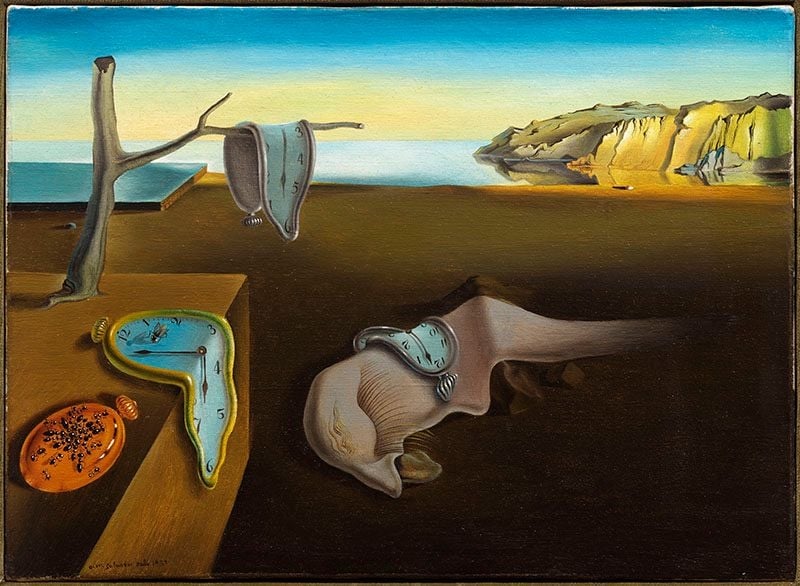
The Persistence of Memory
Salvador Dali (1931)
Salvador Dali’s The Persistence of Memory turns clock time into <strong>soft, malleable matter</strong>, staging a dream in which chronology buckles and the self dissolves. Four pocket watches droop across a barren platform, a dead branch, and a lash‑eyed biomorph, while ants overrun a hard, closed watch—a sign of <strong>decay</strong> and the futility of mechanical order <sup>[1]</sup><sup>[2]</sup>.
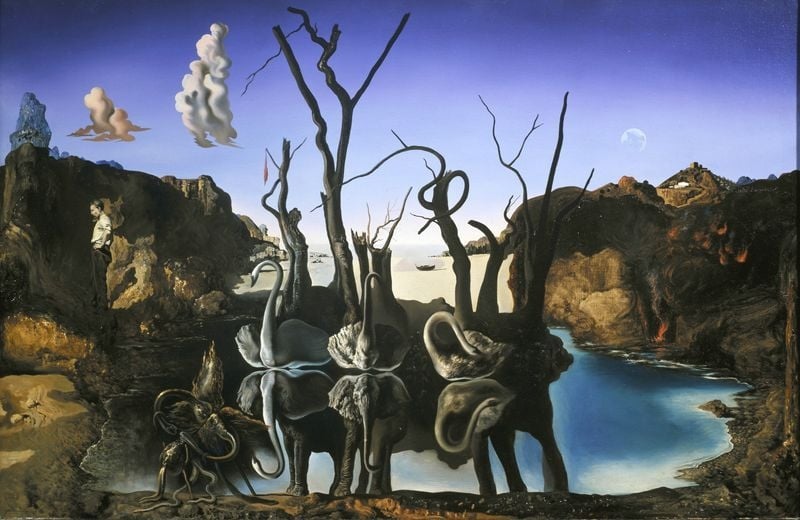
Swans Reflecting Elephants
Salvador Dali (1937)
Swans Reflecting Elephants stages a calm Catalan lagoon where three swans and a thicket of bare trees flip into monumental <strong>elephants</strong> in the mirror of water. Salvador Dali crystallizes his <strong>paranoiac-critical</strong> method: a meticulously painted illusion that makes perception generate its own doubles <sup>[1]</sup><sup>[2]</sup>. The work locks grace to gravity, surface to depth, turning the lake into a theater of <strong>metamorphosis</strong>.
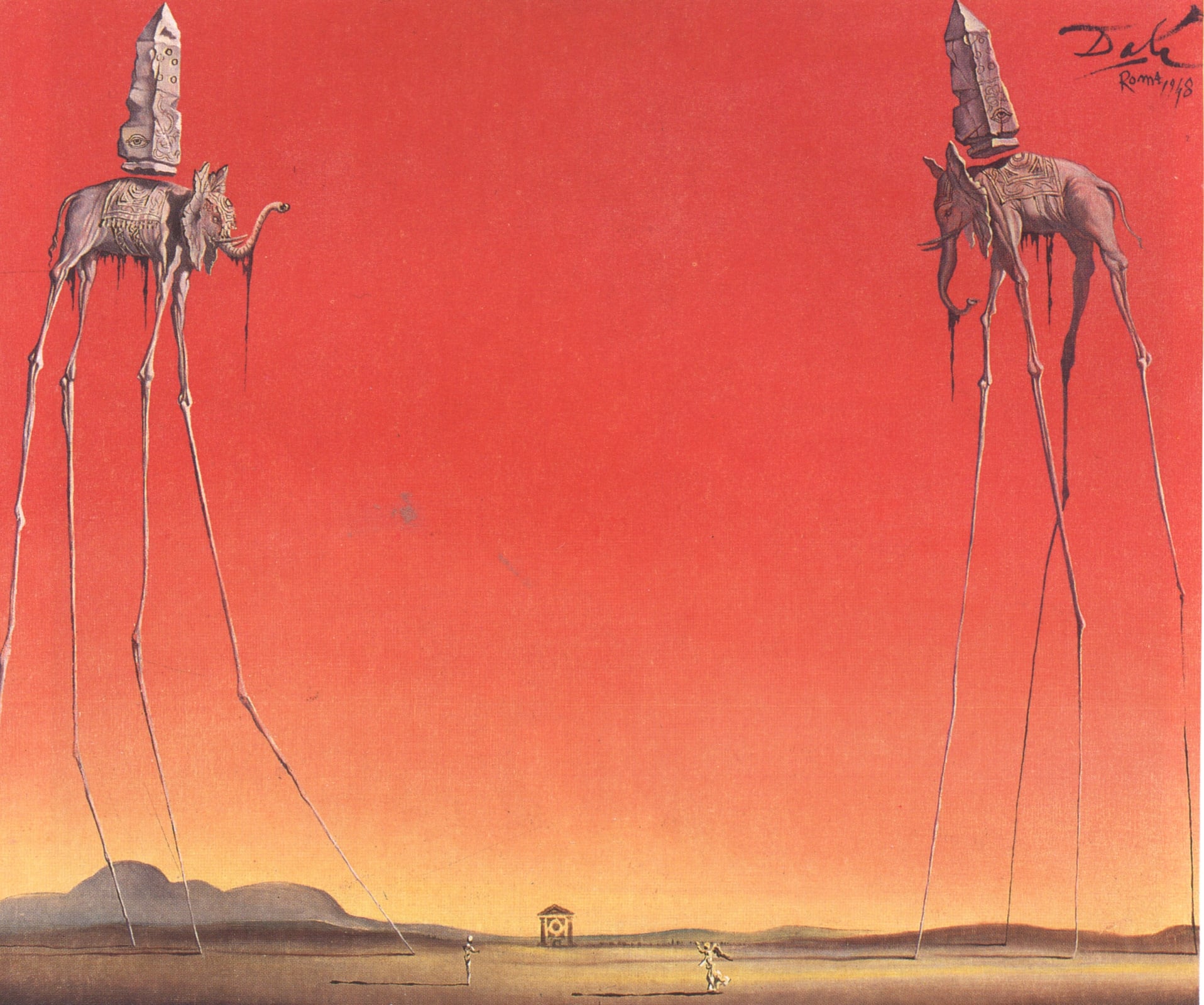
The Elephants
Salvador Dali (1948)
In The Elephants, Salvador Dali distills a stark paradox of <strong>weight and weightlessness</strong>: gaunt elephants tiptoe on <strong>stilt-thin legs</strong> while bearing stone <strong>obelisks</strong>. The blazing red-orange sky and tiny human figures compress ambition into a vision of <strong>precarious power</strong> and time stretched thin <sup>[1]</sup><sup>[2]</sup>.
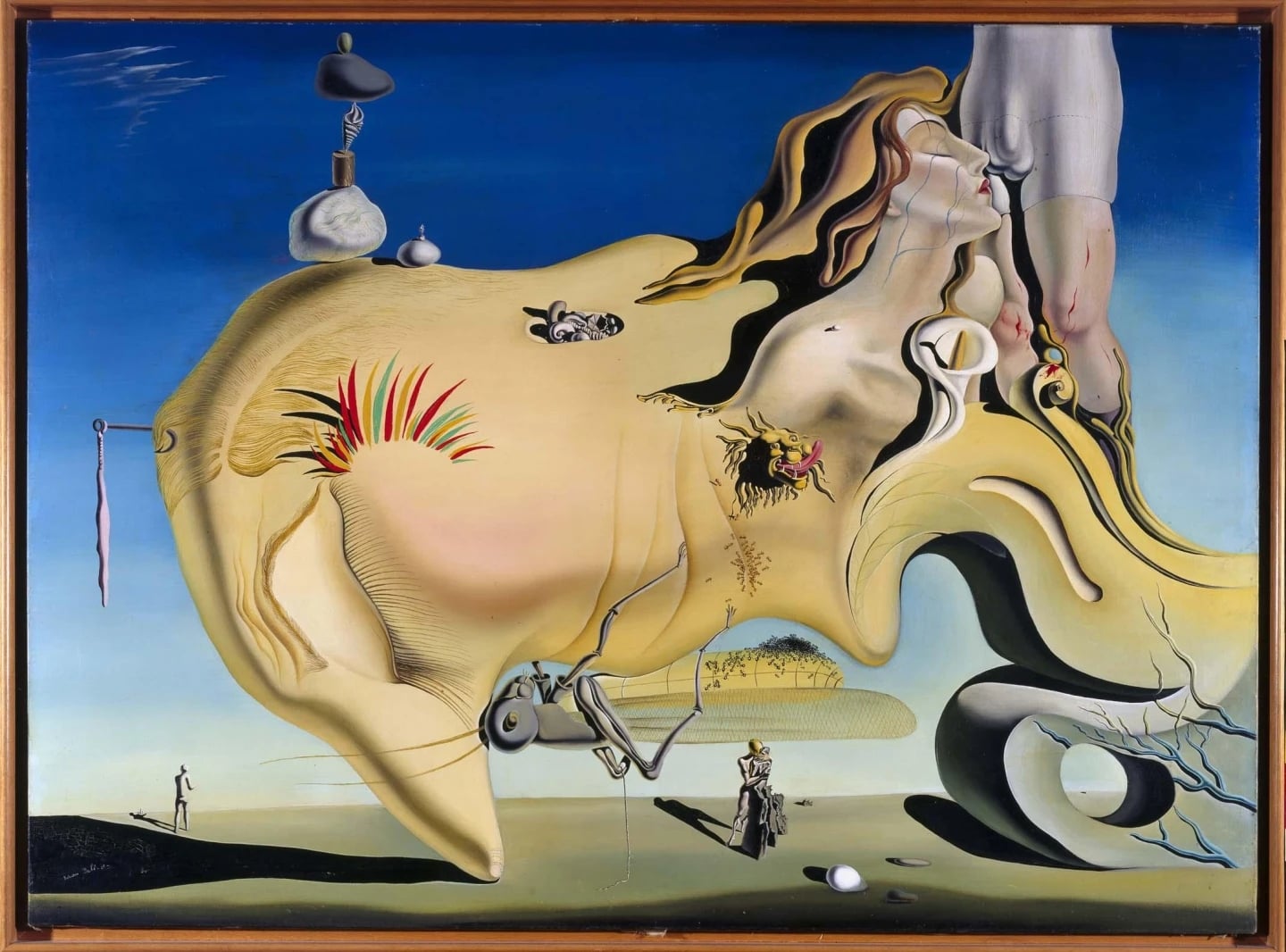
The Great Masturbator
Salvador Dali (1929)
The Great Masturbator condenses Dalí’s newly ignited desire and crippling dread into a single, biomorphic head set against a crystalline Catalan sky. Ants, a gaping grasshopper, a lion’s tongue, a bleeding knee, crutches, stones, and an egg collide to script a confession where <strong>eros</strong> and <strong>decay</strong> are inseparable <sup>[1]</sup><sup>[3]</sup><sup>[4]</sup>. Its precision staging turns autobiography into a <strong>surreal map of compulsion</strong> at the moment Gala enters his life <sup>[1]</sup>.