Salvador Dali Paintings in London — Where to See Them
London matters because the Tate Modern holds approximately 2 paintings by Salvador Dali on permanent display, making the city one of the few places where you can reliably see his work in person. Housed on the South Bank within the museum’s modern-art context, those two canvases are easy to access and slot neatly into a wider Surrealist and 20th-century itinerary.
At a Glance
- Museums
- Tate Modern
- Highlight
- See Salvador Dalí's Surreal works at Tate Modern.
- Best For
- Fans of surrealism and modern art seeking iconic Dalí paintings in London.
Tate Modern
Tate matters for experiencing Salvador Dalí because it holds key Surrealist works that show how Dalí’s paranoiac-critical method translated into precise, psychologically charged compositions — notably the museum’s long‑held example of his 1937 painting Metamorphosis of Narcissus, which is central to understanding his classical technique married to surrealist iconography. Tate’s collection and displays also place Dalí in dialogue with British and international modernists (and later exhibitions have highlighted his influence on and interactions with other 20th‑century artists), so visiting here lets you see Dalí not only as an isolated eccentric but as a formative figure within the broader modern‑art conversations Tate presents. ([en.wikipedia.org](https://en.wikipedia.org/wiki/Metamorphosis_of_Narcissus?utm_source=openai))
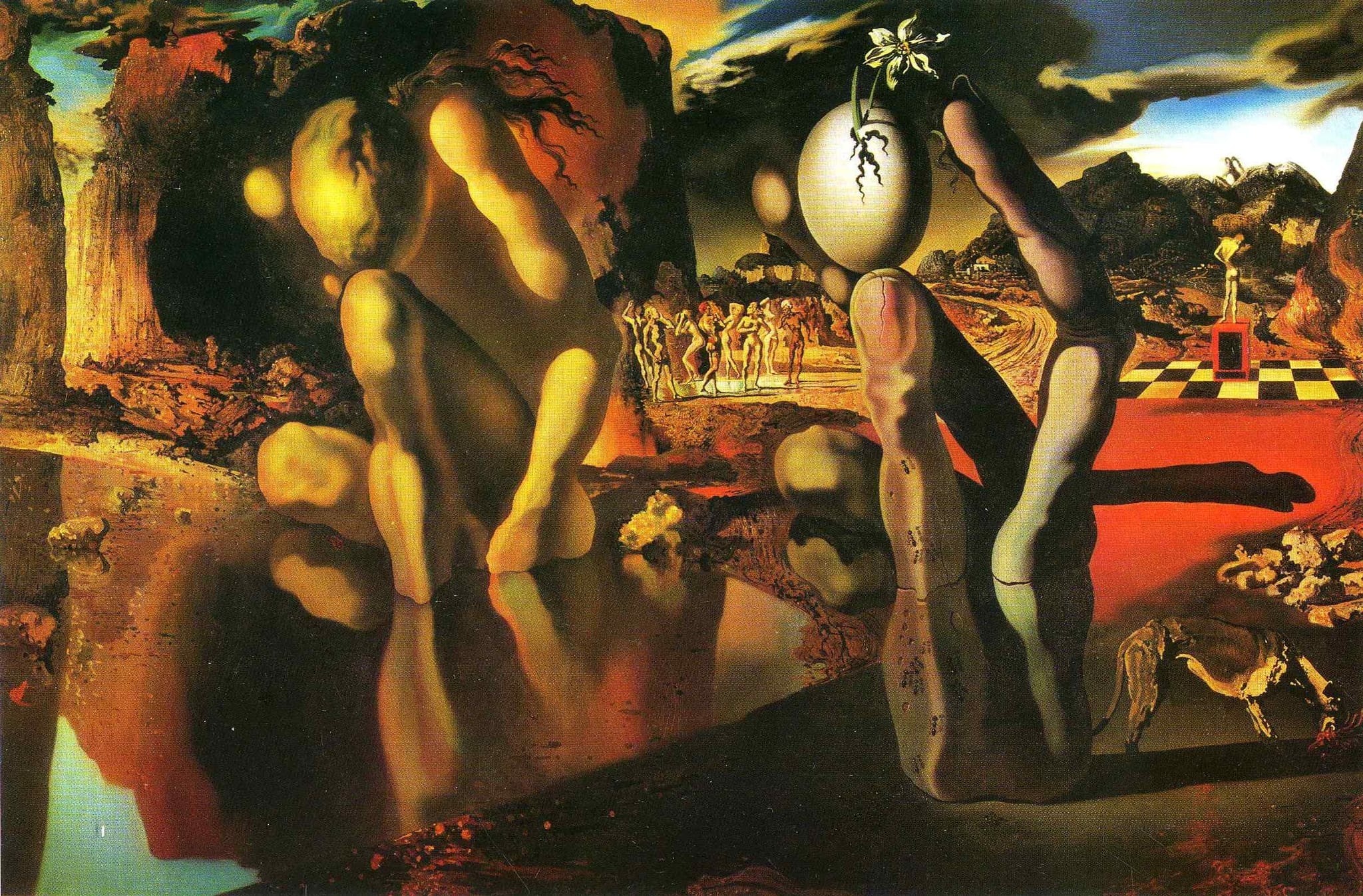
Metamorphosis of Narcissus
1937
Dali stages Ovid’s Narcissus as a double image: at left a crouched, sculptural Narcissus gazes into a pool, while at right the same forms resolve into a stone hand and a blossoming narcissus—a visual metamorphosis between figure and object. The work is significant as a key example of Dali’s paranoiac-critical method and his interest in myth, desire, and transformation during the late 1930s. When viewing, look for the mirrored correspondences (how limbs become rocks and flowers), the tiny recurring motifs (ants and eggs), and the deliberate ambiguity between reflection and alternate image.
Must-see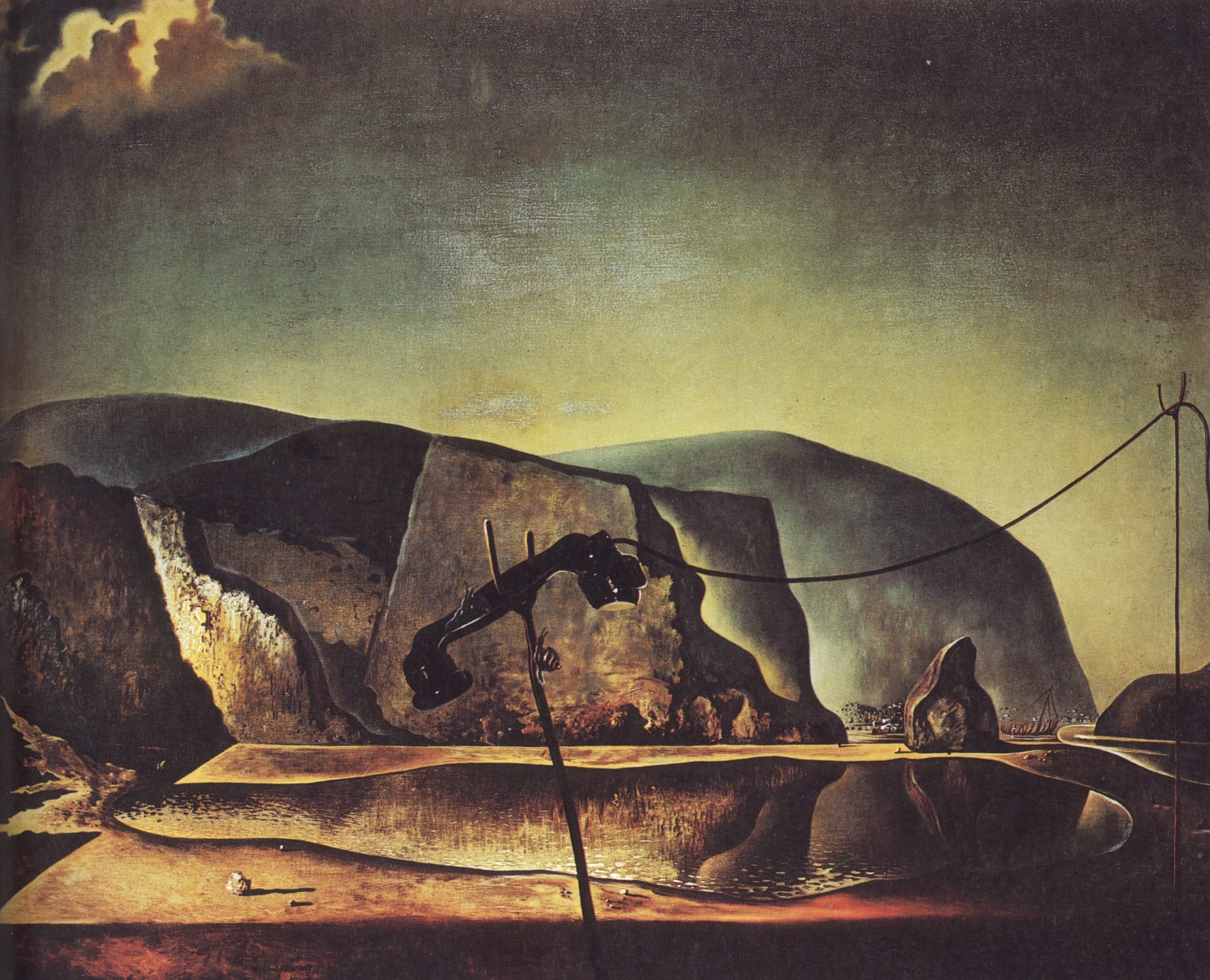
Mountain Lake
1938
Mountain Lake presents a dreamlike, sharply rendered landscape in which distant crystalline mountains and a still lake are composed with Dali’s uncanny precision, creating an eerily calm, almost stage-like setting. The painting is significant for showing Dali’s continual blending of meticulous realism with surreal, psychological atmosphere in his late-1930s work, focusing attention on space and stillness rather than overtly figurative paradoxes. Look closely at the crisp contrasts of foreground detail and distant clarity, the unsettling stillness of the water, and how scale and perspective are used to produce an ambiguous, contemplative mood.
Must-see