Salvador Dali Paintings in Madrid — Where to See Them
Madrid matters for experiencing Salvador Dalí because you can see roughly seven of his paintings on permanent display without leaving the city, giving a compact view of his practice across different museum contexts. Those works are split among three institutions — Museo Nacional Centro de Arte Reina Sofía (4 paintings) and Museo Nacional Thyssen-Bornemisza (3 paintings) — while Fundación MAPFRE (Colección, Sala Recoletos) currently has no Dalí paintings on permanent display.
At a Glance
- Museums
- Museo Nacional Centro de Arte Reina Sofía, Museo Nacional Thyssen-Bornemisza, Fundación MAPFRE (Sala Recoletos)
- Highlight
- Visit Reina Sofía to see Salvador Dalí's major works and displays.
- Best For
- Surrealism enthusiasts, modern art lovers, and museum-focused travelers
Museo Nacional Centro de Arte Reina Sofía
The Reina Sofía is essential for experiencing Dalí because it places his work inside the modern Spanish narrative alongside contemporaries such as Picasso and Miró, making it possible to see how Dalí’s Surrealism converses with the political and artistic shifts of 20th‑century Spain. The museum’s curatorial emphasis on Spanish avant‑garde movements gives visitors a clearer sense of Dalí’s innovations in technique and iconography when viewed in relation to works by his peers and rivals.
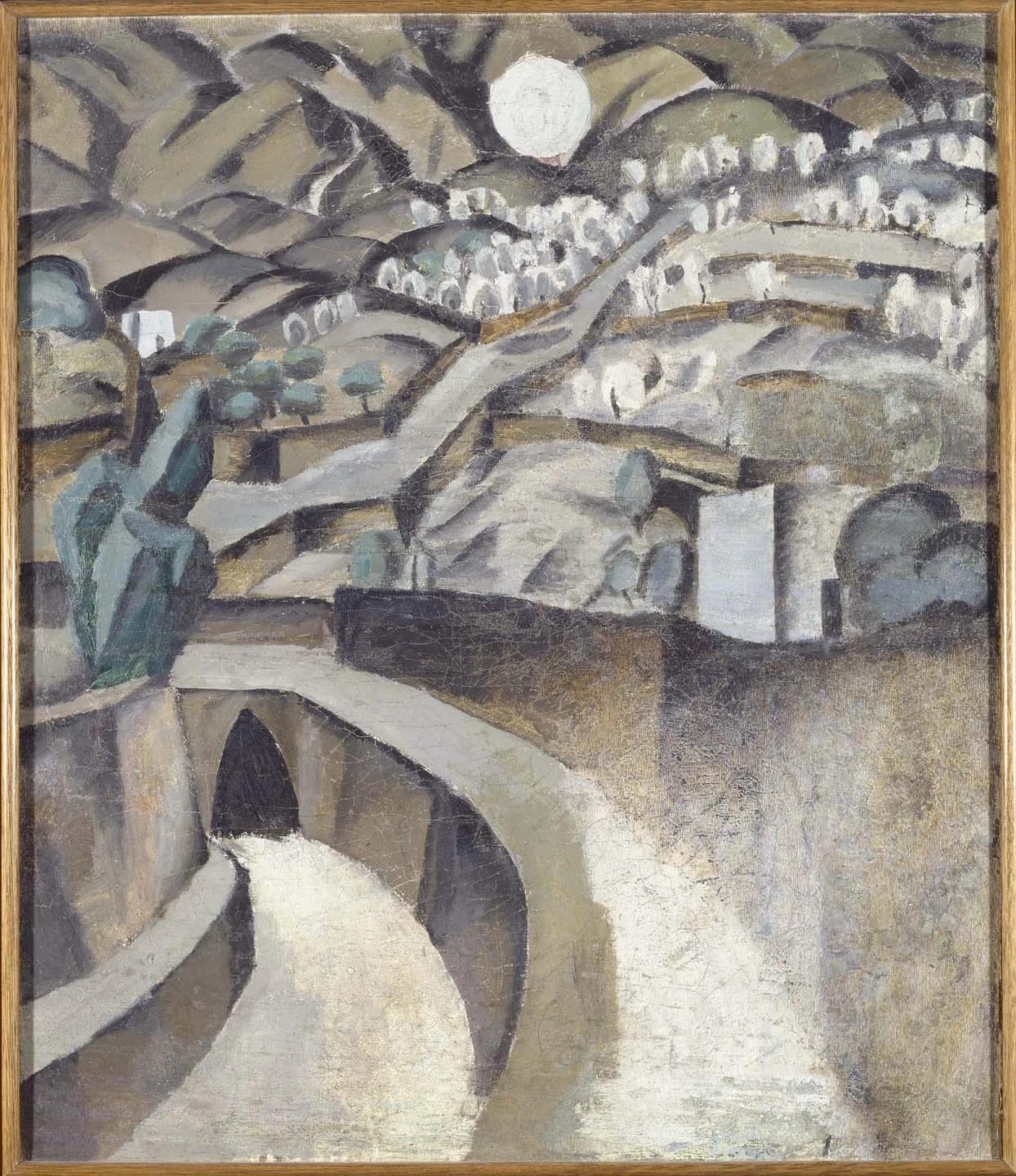
La Jorneta (paisaje de Cadaqués)
1923
A compact, cubist-inflected view of the Cadaqués shoreline rendered in muted tones and simplified planes that reduce rocks, sea and sky to geometric masses. It’s significant as an early work showing Dalí’s command of landscape and his absorption of Cubist lessons (he cited Juan Gris), marking a stage before his full turn to Surrealism; viewers should look for the measured tonal harmonies and the compositional synthesis that turn a coastal scene into an almost abstract structure. ([museoreinasofia.es](https://www.museoreinasofia.es/en/collections/artwork/la-jorneta-paisaje-de-cadaques-la-jorneta-landscape-cadaques/?utm_source=openai))
Must-see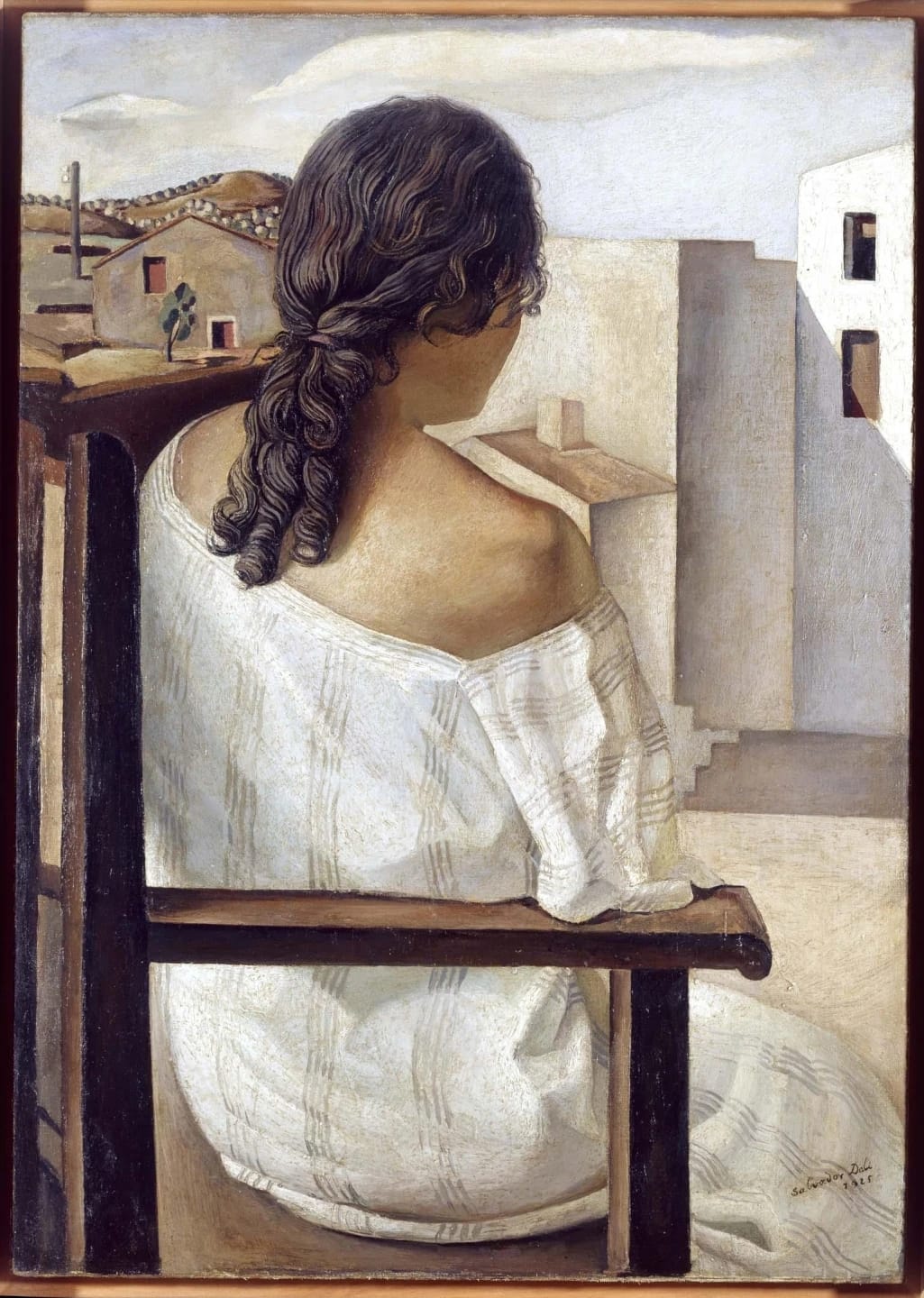
Retrato (Portrait)
1925
A finely modeled, Noucentista-style portrait from Dalí’s 1925 Barcelona period that evokes Mediterranean clarity and classical restraint while depicting a personal subject (often identified with family or acquaintances). The work is important because it illustrates Dalí’s realist skills just before his Paris years and was reproduced in the catalogue of his first solo show; viewers should attend to the careful modelling of the face, the calm compositional order, and the work’s restrained palette. ([museoreinasofia.es](https://www.museoreinasofia.es/colecciones/obra/retrato-1/?utm_source=openai))
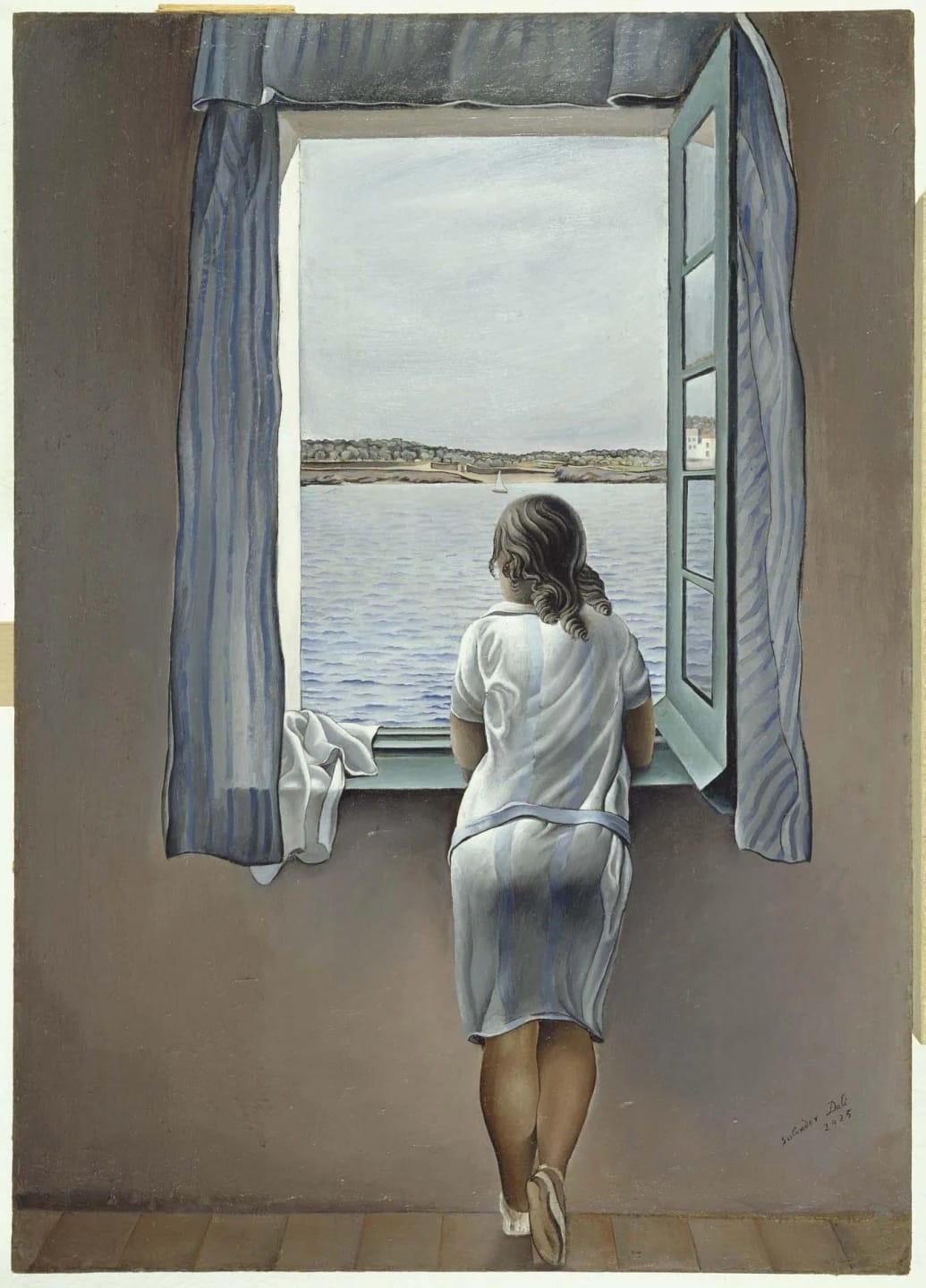
Figura en una finestra (Figure at the Window)
1925
A quiet interior scene of a young woman at a window looking toward the Mediterranean horizon, combining precise portraiture with a still, horizontal landscape beyond. Significant among Dalí’s realist portraits of family (notably his sister Anna María), the painting reveals his early interest in spatial clarity and art-historical references; viewers should notice the tension between the intimate figure in the foreground and the calm, Mantegna‑like planar sky and horizon outside the window. ([museoreinasofia.es](https://www.museoreinasofia.es/en/collections/artwork/figura-en-una-finestra-figure-window/?utm_source=openai))
Must-see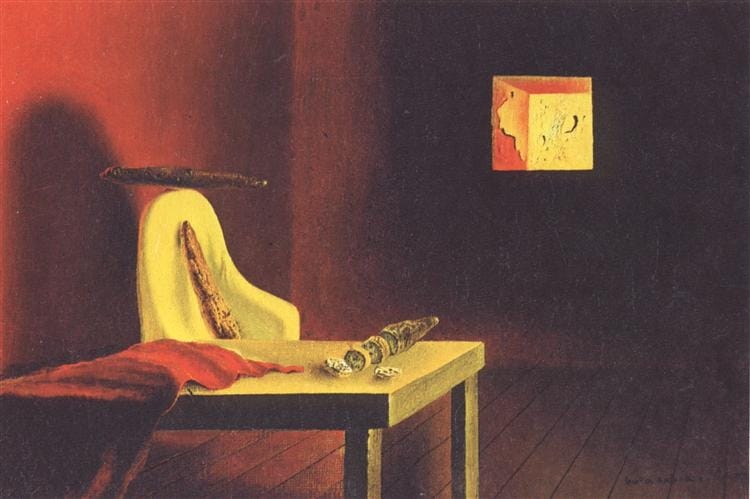
L'homme invisible (El hombre invisible)
1929-1932
A surreal, enigmatic composition in which a seated male figure seems to dissolve into or duplicate itself within a barren, ruin-filled landscape, introducing Dalí’s experiments with duplications and paranoiac imagery. This painting marks his decisive move into Surrealism—exploring doubles, metamorphosis and psychological projection—and viewers should look for the layered forms where body and landscape interpenetrate, the desolate classical ruins, and the sense of an image that both appears and vanishes. ([en.wikipedia.org](https://en.wikipedia.org/wiki/The_Invisible_Man_%28painting%29?utm_source=openai))
Must-seeMuseo Nacional Thyssen-Bornemisza
The Thyssen matters for Dalí because its encyclopedic private collection includes key examples of the artist’s development within broader European modernism, so the museum lets you trace stylistic links between Dalí and earlier movements such as Symbolism and the Old Masters that informed his surreal imagery. Seeing Dalí’s paintings in the Thyssen’s historically organized galleries emphasizes his technical debt to classical painting even as he pursued radical, dreamlike subjects.
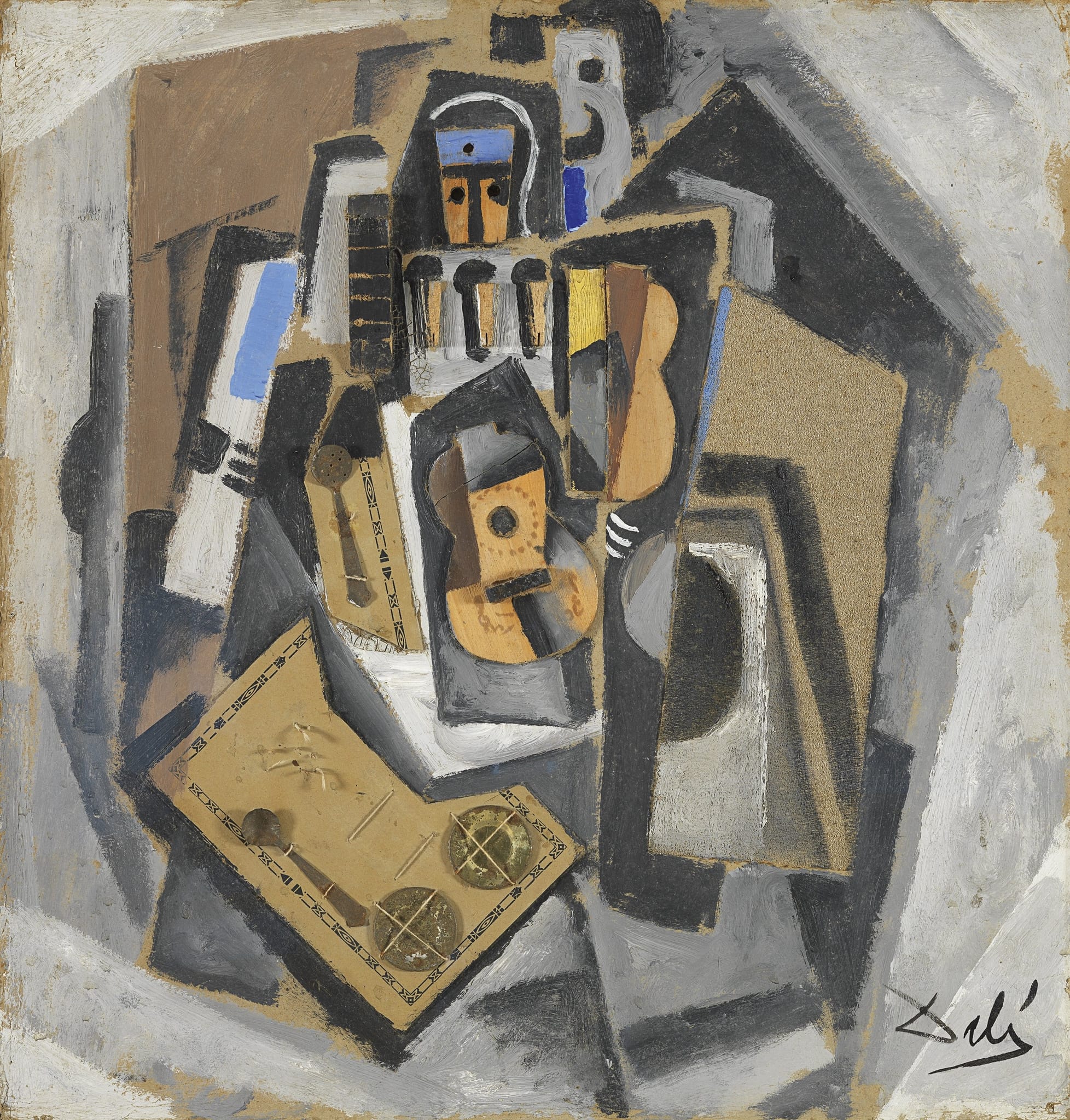
Pierrot with a Guitar
1923
An early Dali portrait showing a melancholic Pierrot figure holding a guitar against a simplified background, blending realistic draftsmanship with hints of surreal distortion. Its significance lies in revealing Dali’s formative exploration of theatrical and symbolist themes before his full Surrealist turn. Viewers should notice the precise rendering of the face and hands contrasted with the slightly off-scale guitar and the theatrical costume, which together create a mood of introspective performance and latent unease.
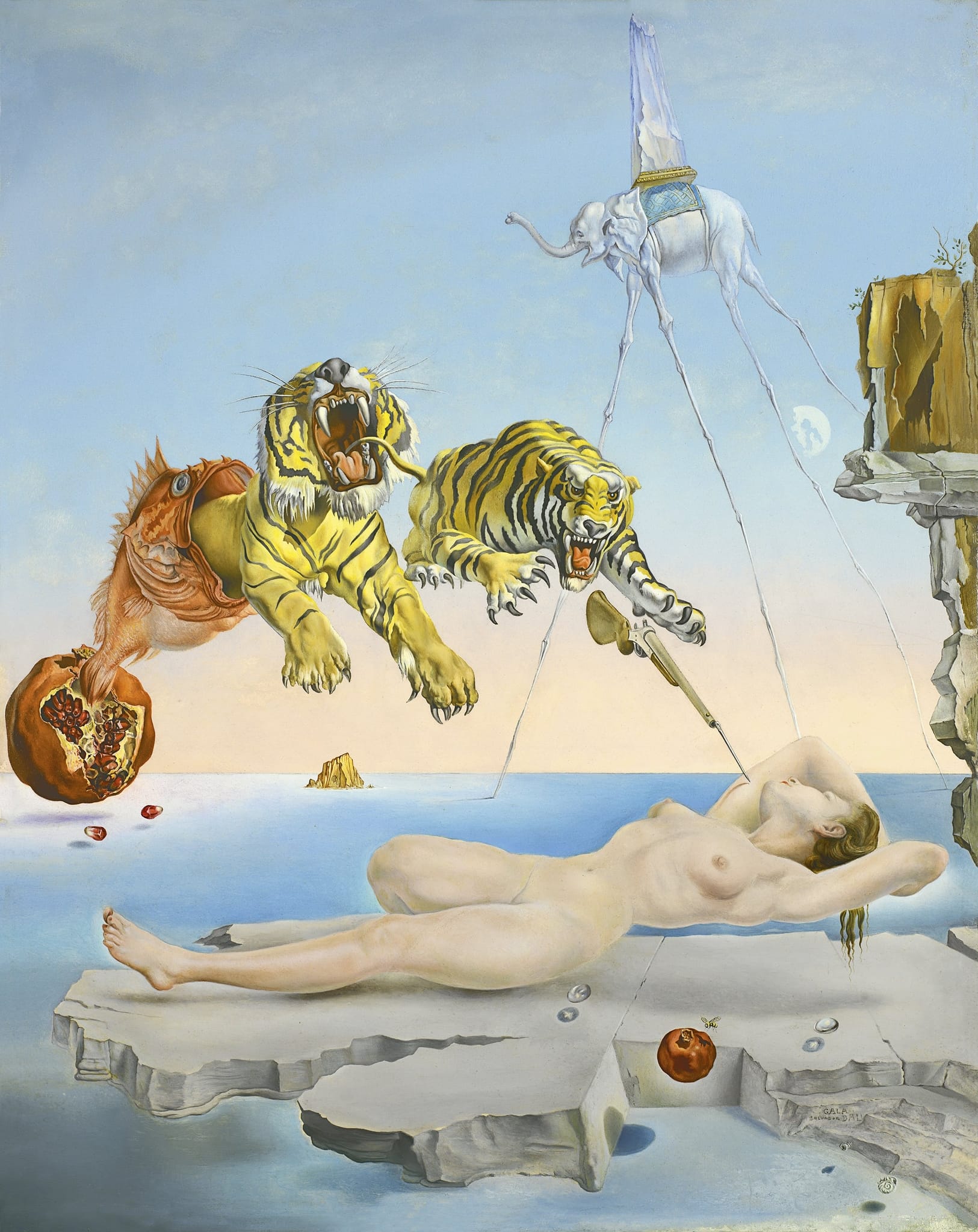
Dream Caused by the Flight of a Bee around a Pomegranate a Second before Awakening
1944
A vivid, hyper-detailed dreamscape in which a sleeping woman floats above a rock while a sequence of symbolic apparitions—a pomegranate, a fish, tigers, and a rifle—erupt from a buzzing bee, suggesting the instantaneous chain of associations in a dream. This painting is significant as a quintessential example of Dali’s paranoiac-critical method and his attempt to depict the precise mechanics of dream causality. Viewers should focus on the crisp, almost photographic detail, the suspended, cinematic sequencing of events, and the contrast between the serene sleeping figure and the violent, surreal intrusions of the dream narrative.
Must-seeFundación MAPFRE (Colección, Sala Recoletos)
Although the Recoletos collection currently holds no Dalí oil paintings, Fundación MAPFRE is important for Dalí research and appreciation because it frequently organizes thematic exhibitions, loans, and catalogues that spotlight his graphic work, photographs, prints, and archival materials—offering perspectives on his technique, publicity strategies, and collaborations that paintings alone don’t show. Visiting MAPFRE lets you encounter documentary and photographic contexts (exhibition design, book illustrations, commercial commissions) that explain how Dalí shaped his public image and experimentations beyond canvases.