Mysticism & ecstasy
Featured Artworks
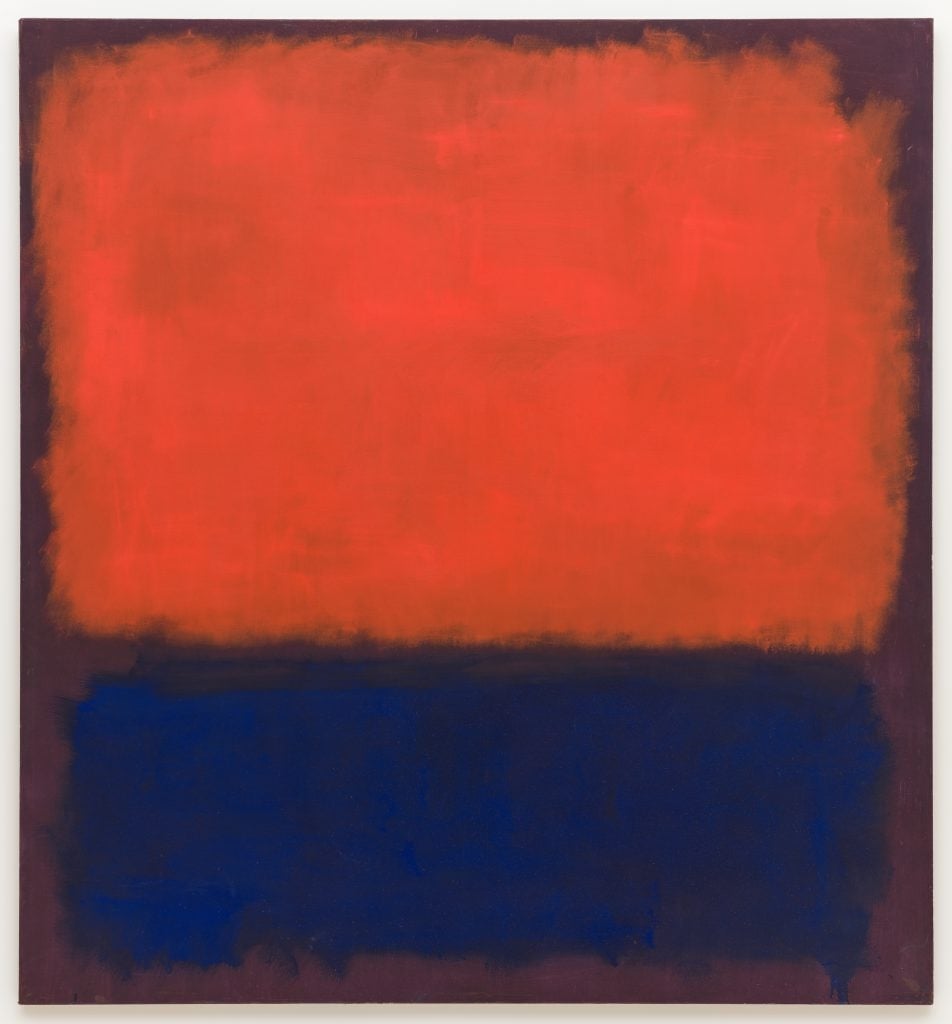
No. 14
Mark Rothko (1960)
In No. 14, 1960, Mark Rothko stages a charged encounter between a vast, <strong>ember-like red-orange</strong> plane and a weighty, <strong>indigo-blue</strong> band that nearly tips into black. The softly frayed borders and faint <strong>plum-violet</strong> surround cause the colors to hover and breathe, converting sheer scale and chroma into felt experience rather than depiction <sup>[1]</sup>.
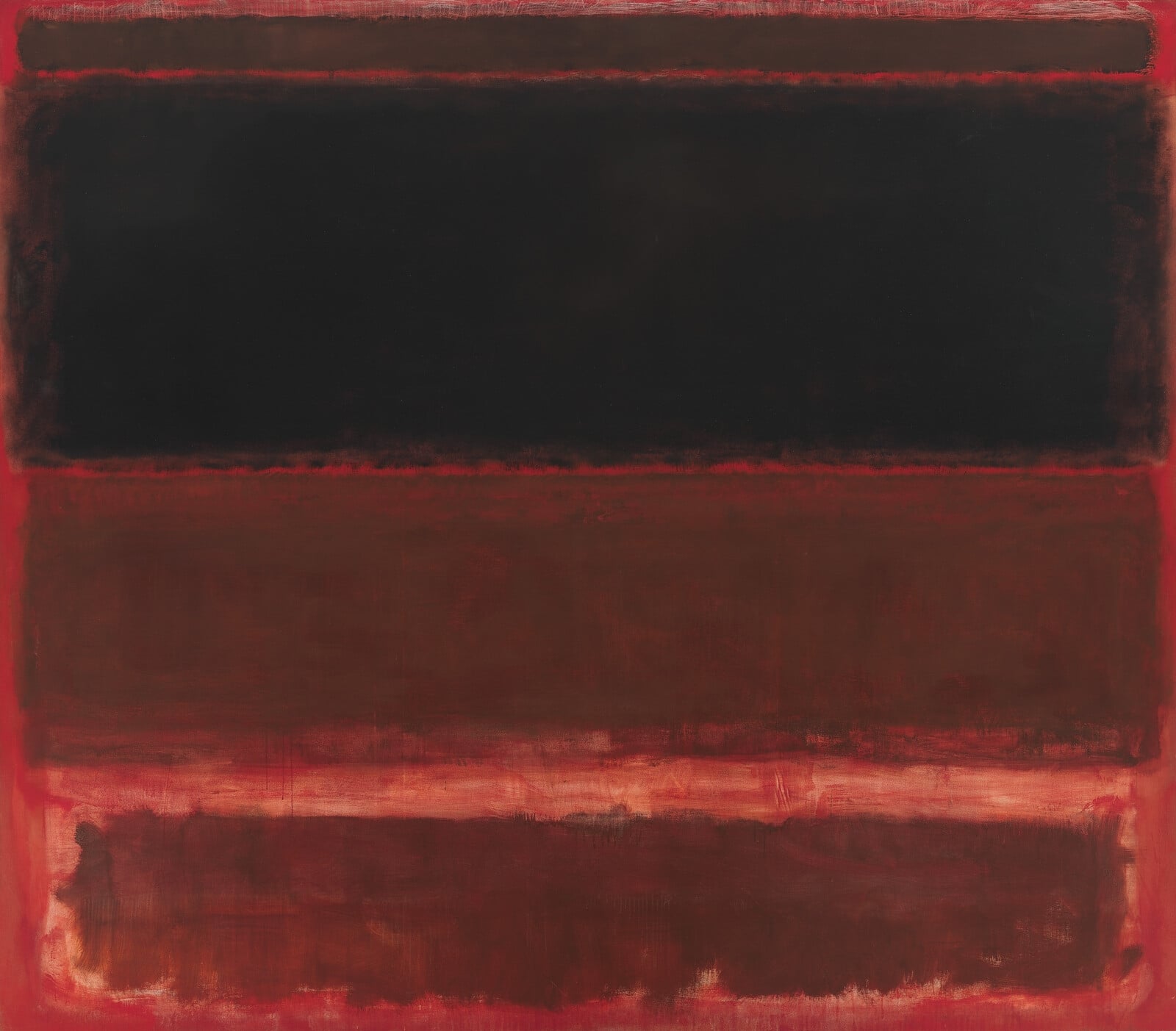
Four Darks in Red
Mark Rothko (1958)
Four Darks in Red stages four hovering bands within a smoldering red field to generate an <strong>immersive, solemn atmosphere</strong>. Thinly layered washes and feathered edges make the dark zones <strong>throb like thresholds</strong>, suspending viewers between weight and glow <sup>[1]</sup><sup>[4]</sup>. Painted in 1958 at monumental scale, it aligns with Rothko’s late‑’50s turn to wine‑dark, enclosing spaces <sup>[1]</sup><sup>[2]</sup>.
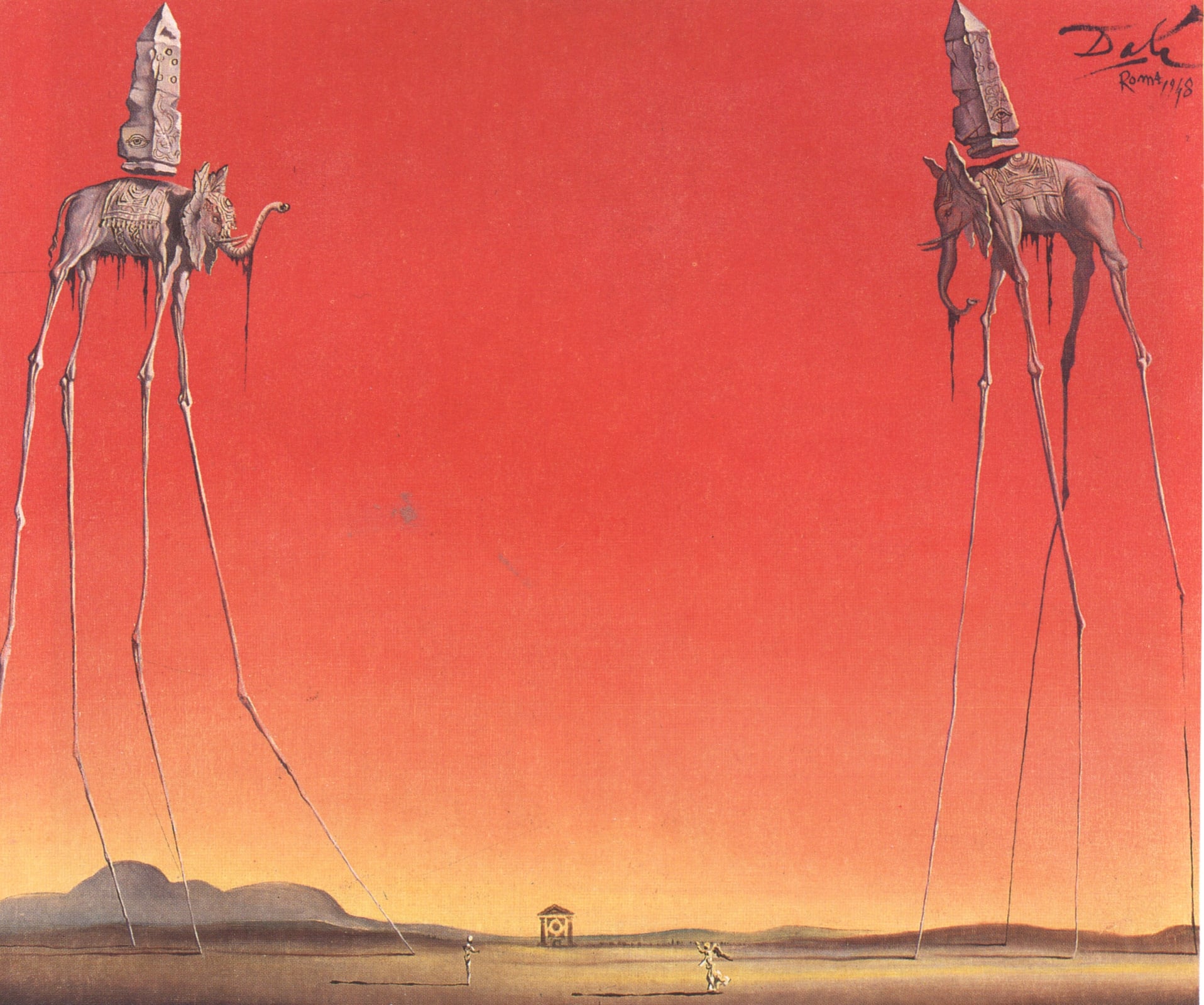
The Elephants
Salvador Dali (1948)
In The Elephants, Salvador Dali distills a stark paradox of <strong>weight and weightlessness</strong>: gaunt elephants tiptoe on <strong>stilt-thin legs</strong> while bearing stone <strong>obelisks</strong>. The blazing red-orange sky and tiny human figures compress ambition into a vision of <strong>precarious power</strong> and time stretched thin <sup>[1]</sup><sup>[2]</sup>.
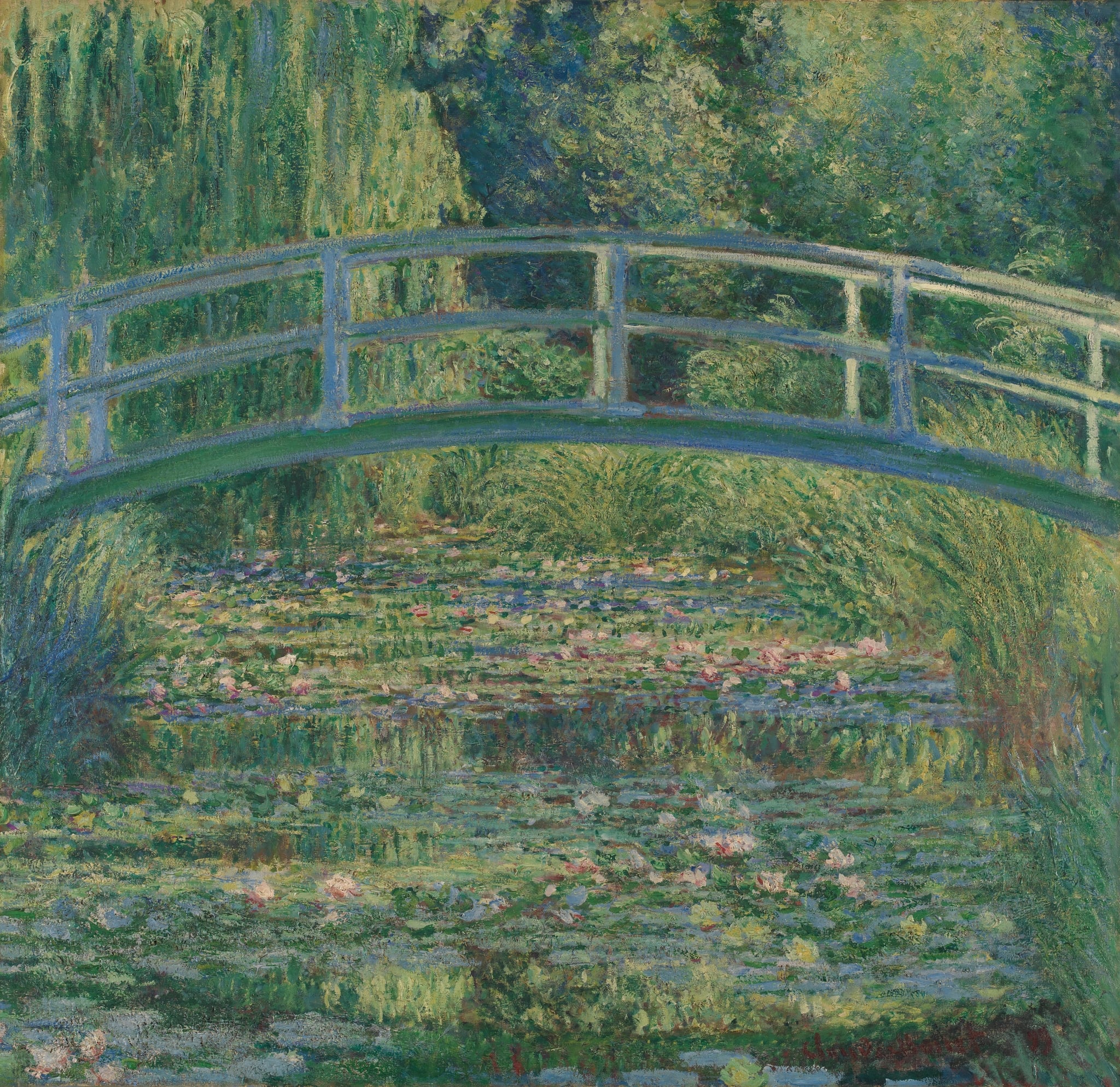
The Water Lily Pond
Claude Monet (1899)
Claude Monet’s The Water Lily Pond transforms a designed garden into a theater of <strong>perception and reflection</strong>. The pale, arched <strong>Japanese bridge</strong> hovers over a surface where lilies, reeds, and mirrored willow fronds dissolve boundaries between water and sky, proposing <strong>seeing itself</strong> as the subject <sup>[1]</sup><sup>[3]</sup>.
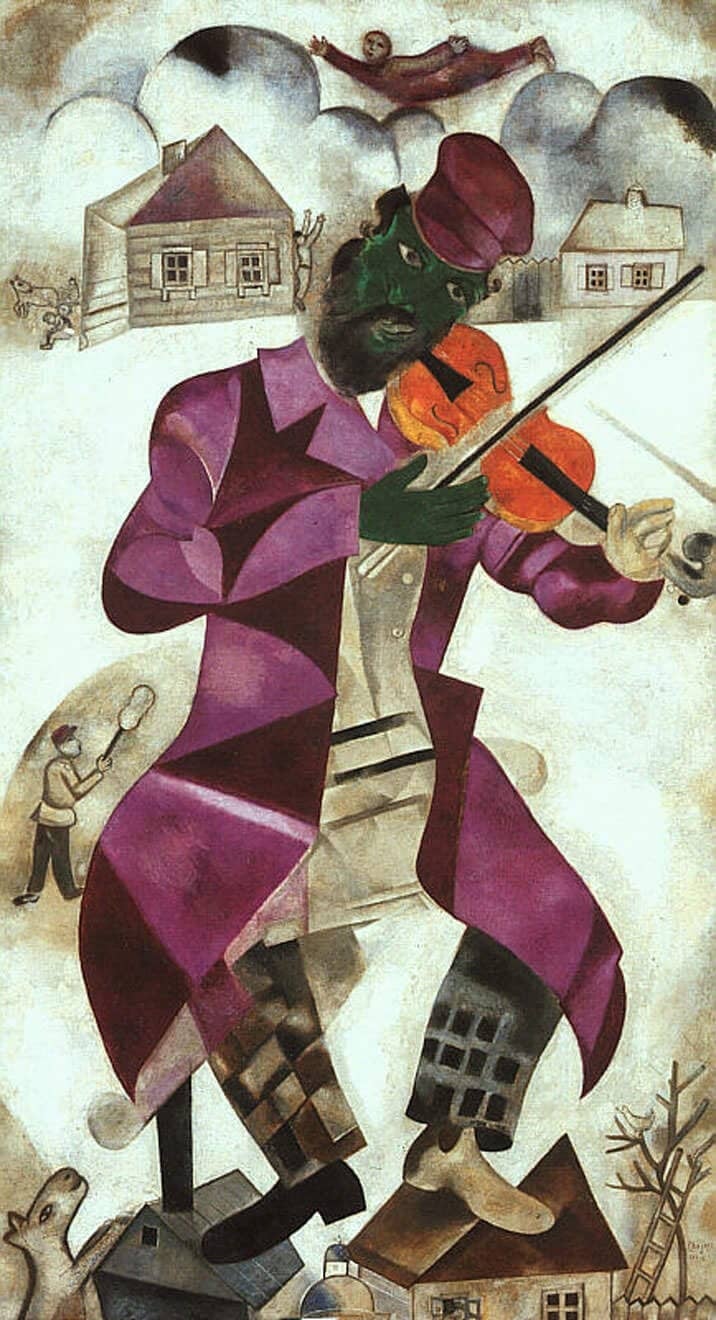
The Green Violinist
Marc Chagall (1923–1924)
The Green Violinist magnifies a village fiddler into a sky‑bridging guardian, his <strong>green face</strong> and <strong>purple coat</strong> turning him into a spiritual emissary rather than a mere entertainer. Striding across crooked <strong>rooftops</strong> without crushing them, he binds the shtetl’s houses, tree, clouds, and wandering figures into one continuous chord. Chagall fuses folkloric memory with modernist facets to assert music as the community’s sustaining force.
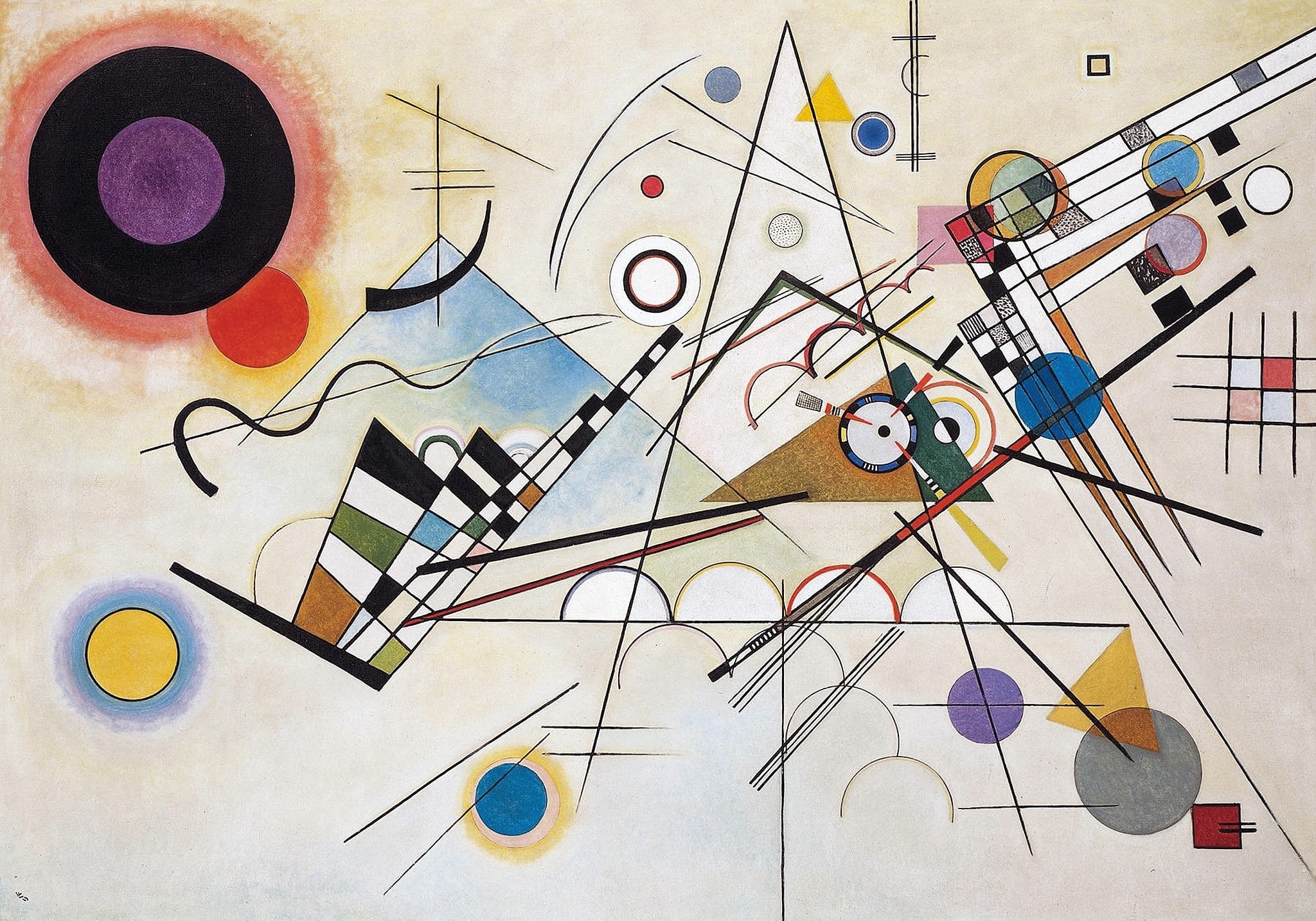
Composition VIII
Wassily Kandinsky (1923)
Composition VIII stages a <strong>musical drama in geometry</strong>: circles, vectors, and triangles surge across a cream field in calibrated counterpoint. A <strong>brooding black circle</strong> at left sets the tonal center while grids, checkerboards, and compass-like dials organize bursts of color and rhythm. The canvas becomes a <strong>score of invisible harmonies</strong>, where pure form conveys feeling.
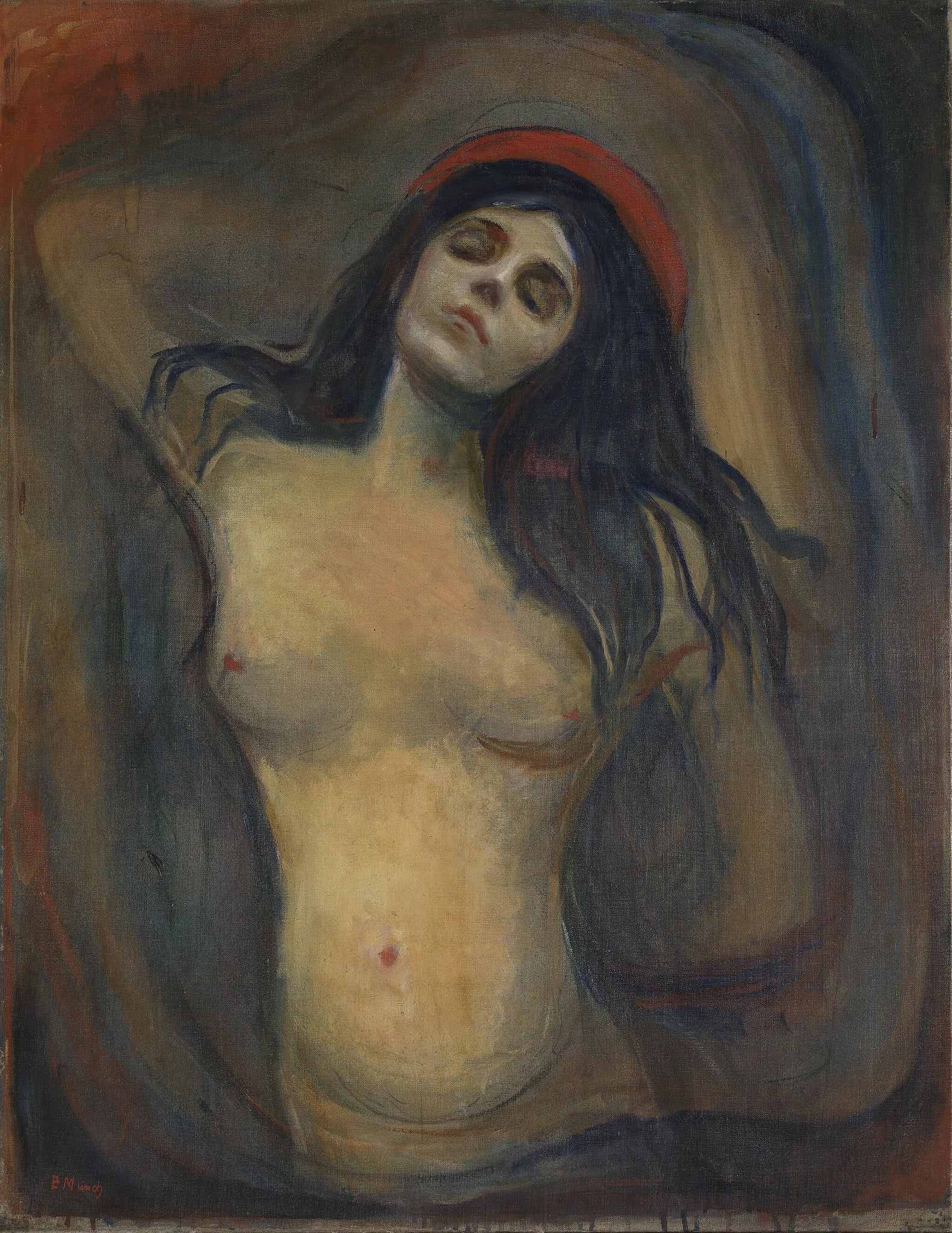
Madonna
Edvard Munch (1894)
Munch’s Madonna stages a collision of <strong>sanctity and sensuality</strong>: a half-length nude, eyes closed, tilts into a crimson nimbus while a dark, tidal field seems to carry her body. With smeared contours and a sparse palette, the figure hovers between emergence and dissolution, turning the Virgin’s icon into a modern emblem of <strong>eros, creation, and death</strong> <sup>[1]</sup><sup>[2]</sup><sup>[3]</sup>.
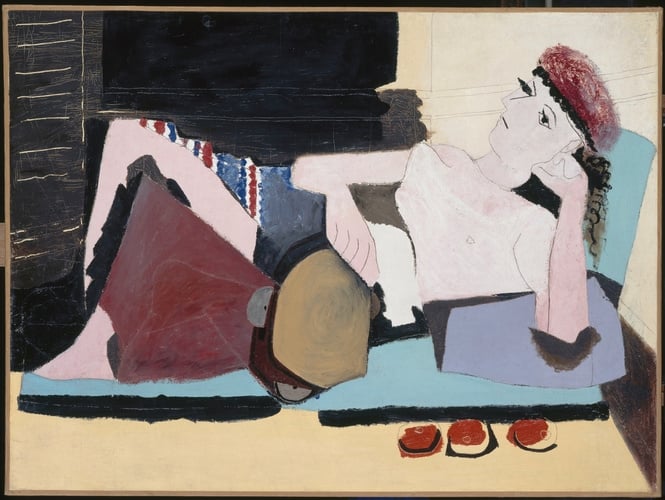
Femme au tambourin
Pablo Picasso (1925)
Picasso’s 1925 <strong>Femme au tambourin</strong> stages a reclining performer whose body is reduced to <strong>bold planes and hard contours</strong>. The circular tambourine across her lap and the <strong>three fruits</strong> aligned below create a visual rhythm that weighs <strong>pleasure against performance</strong> <sup>[1]</sup>.