Moral optics vs paranoiac doubles
Both Bosch and Dalí make fantasies look optically true. They use finish, stage-like landscapes, and emblem chains to test how much the eye will believe. Their deepest kinship is that seeing has stakes—ethical for Bosch, psychological for Dalí. From this common ground they diverge on what painting is for.
Comparison frame: How do Bosch and Dalí turn painting into a test of vision—and why does one use it to warn while the other uses it to unmoor?
Quick Comparison
| Topic | Hieronymus Bosch | Salvador Dali |
|---|---|---|
| Core aim | Clarify morality by disciplining sight; expose counterfeit paradise. | Generate second images; systematize perceptual doubt. |
| Mechanism of belief | Minutely finished inventions inside a continuous triptych landscape. | “Hand‑painted dream photographs” set in precise Catalan geology. |
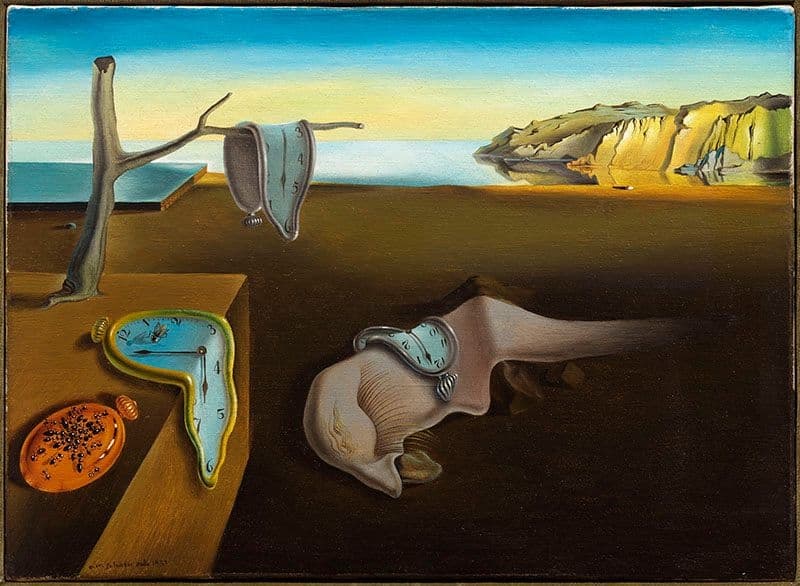
| Time | Ordered sequence (Eden → Delights → Hell) with consequences. | Pliable durée: clocks melt; a fixed hour never arrives. |
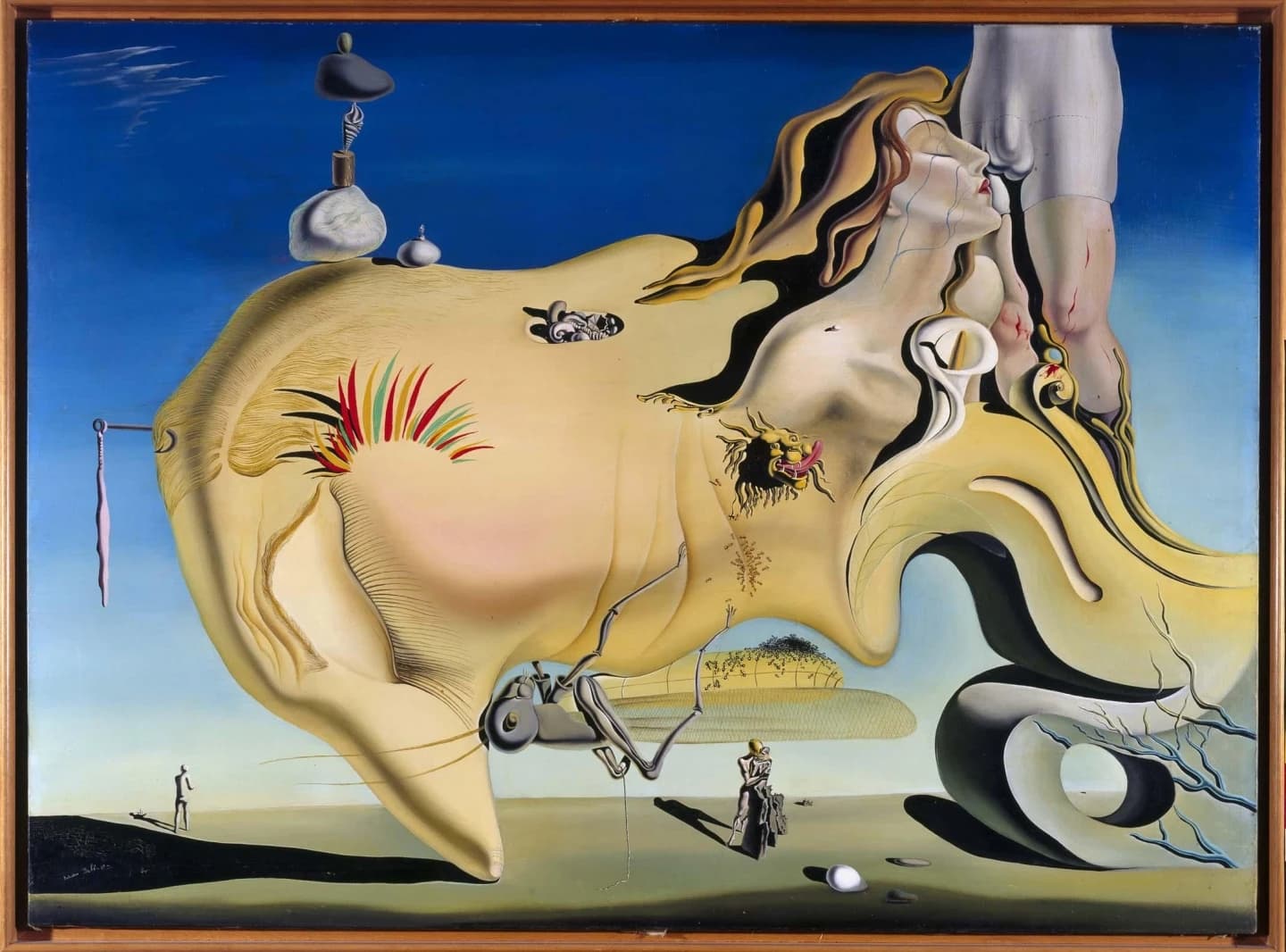
| Desire | Sweetness becomes compulsion; pleasure slides toward retribution. | Eros fused with phobia and decay (ants, grasshopper), propped by crutches. |
| Emblems | Owls, fruit, bubbles, instruments; emblems mutate across panels. | Watches, ants, flies, Catalan cliffs; hard/soft dialectic. |
| Structure | Triptych logic that reads across hinges; panoramic causality. | Single-panel riddles and doubles; later levitations and fragmentations. |
| Viewer’s role | Forensic reader of echoes and consequences. | Active producer of alternate images (paranoiac‑critical). |
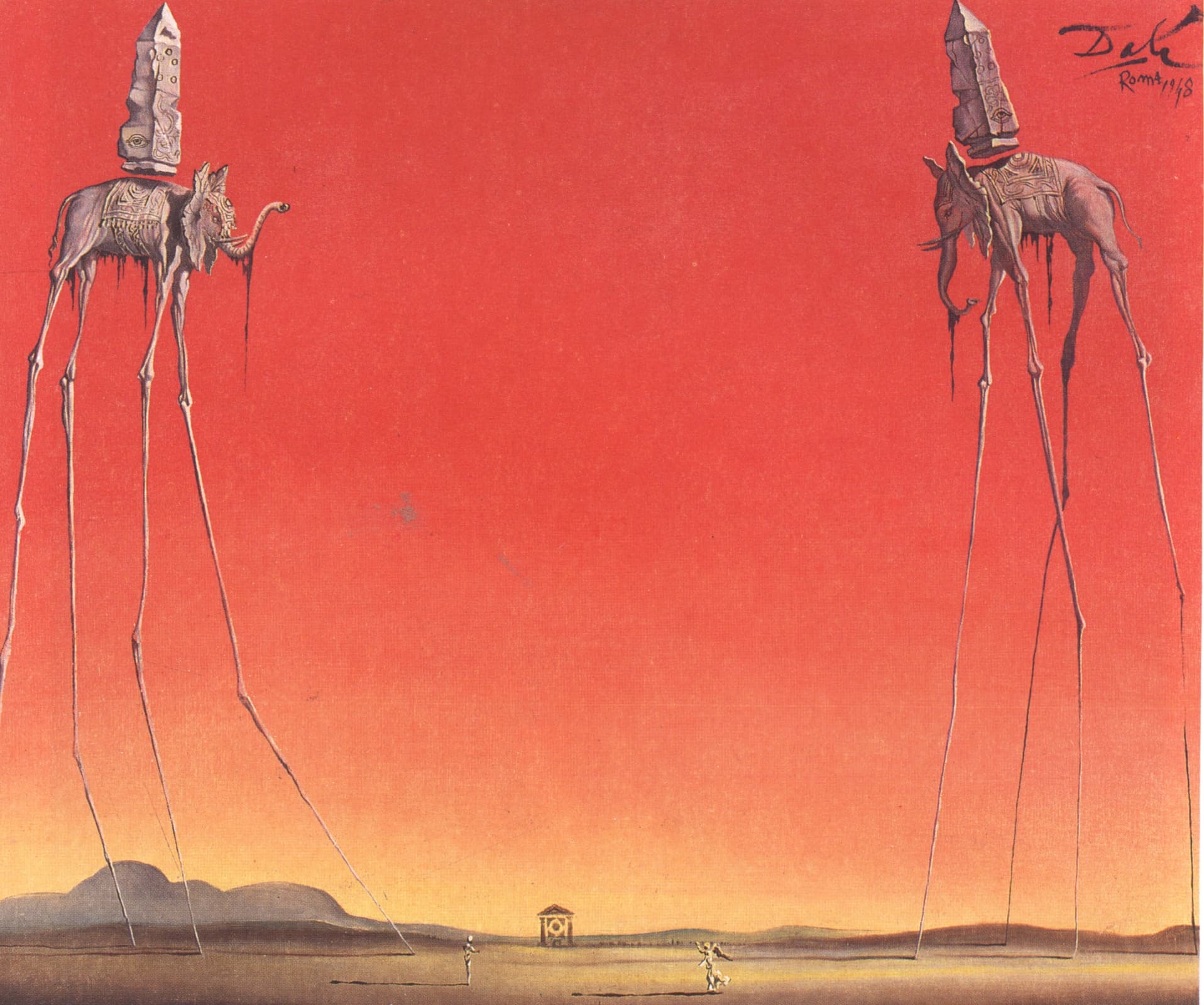
| Contradiction used for | Moral exposure (music → torture; delight → ruin). | Formal paradox (mass floats; time softens) to unseat certainty. |
Shared Ground
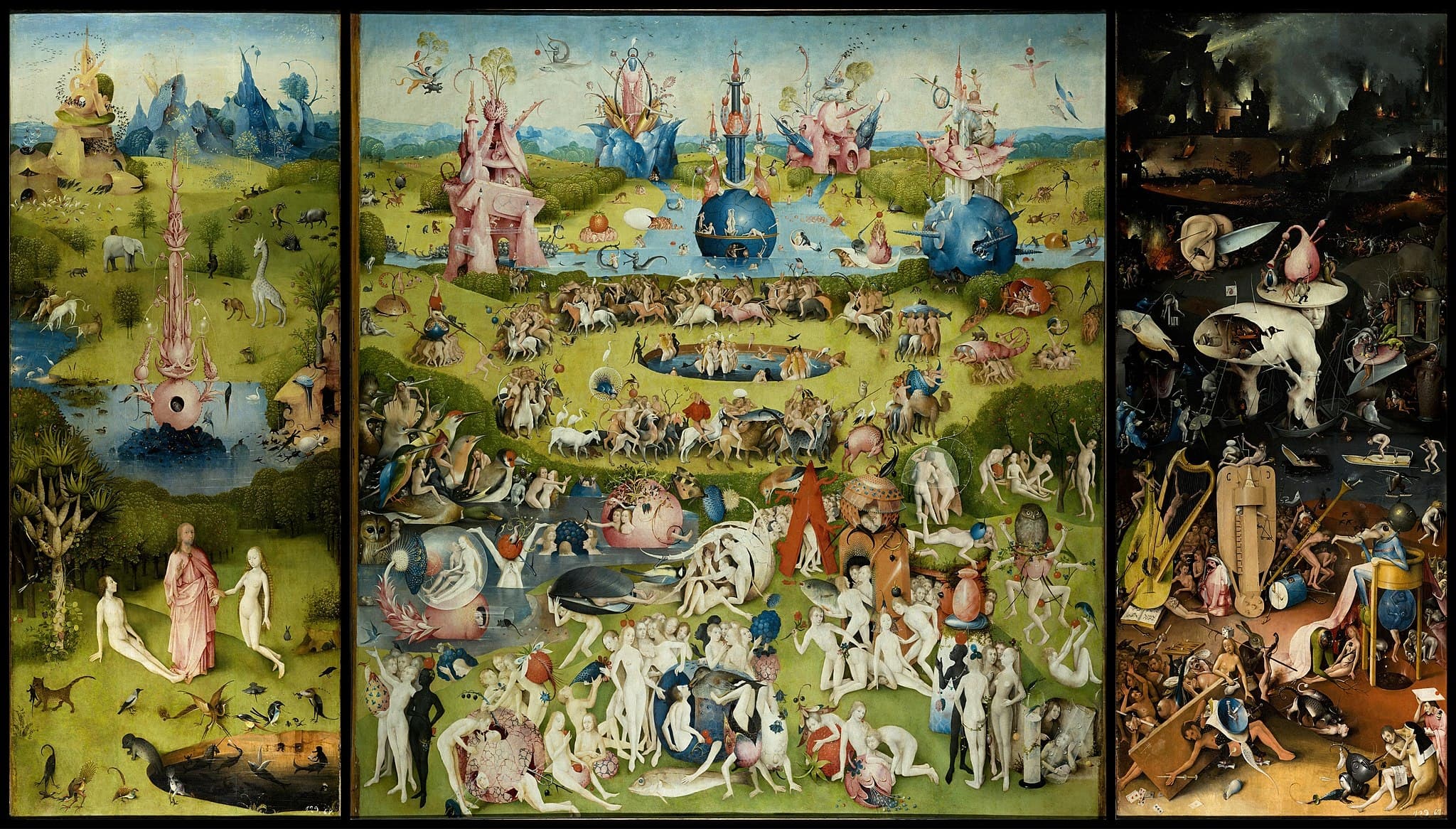
Bosch and Dalí share a striking premise: make the impossible look optically credible, then watch what that credibility does to the viewer. Both render fantasies with near-photographic finish. Bosch’s architecture and animal life feel observational even when they are fabricated; Dalí’s crystalline shores and razor shadows give hallucinations the authority of fact. This trust in the eye is not decorative—it is the lever that moves meaning. Each artist builds images that the eye “believes” before the mind can object.
They also agree that seeing carries consequences. In Bosch, perception is entangled with ethics: a viewer who confuses the center panel’s pageantry for virtue is already in danger. In Dalí, vision is a psychological engine that manufactures doubles and melts the boundaries of time and identity. Desire is the pressure point for both: Bosch stages sweetness and spectacle as a system that tips into compulsion, while Dalí entwines eros with rot (ants) and fear (grasshopper), then bristles the soft with crutches. Finally, both rely on continuous, stage-like landscapes. Bosch’s unbroken horizon lets causes and effects speak across triptych hinges; Dalí’s Catalan headlands anchor dreams in a knowable place, intensifying the test of perception. The result, in both cases, is a theater where belief is engineered on the surface and contested beneath it.
Decisive Difference
Their split is about what painting is for. For Bosch, painting disciplines sight so that moral causality becomes legible. The triptych’s left-to-right arc from Eden through a counterfeit garden to Hell is not a sequence of curiosities but a structure that encodes consequence. Emblems recur and mutate—the Eden fountain mirrored as brittle pavilions, then as broken instruments; the owl’s watchful knowledge shadowing pleasure—so that appetite’s drift into ruin is both seen and understood. Bosch uses virtuoso invention to unmask a world that feels like paradise but runs on misdirected desire. His finish seduces precisely so that its betrayal can instruct.
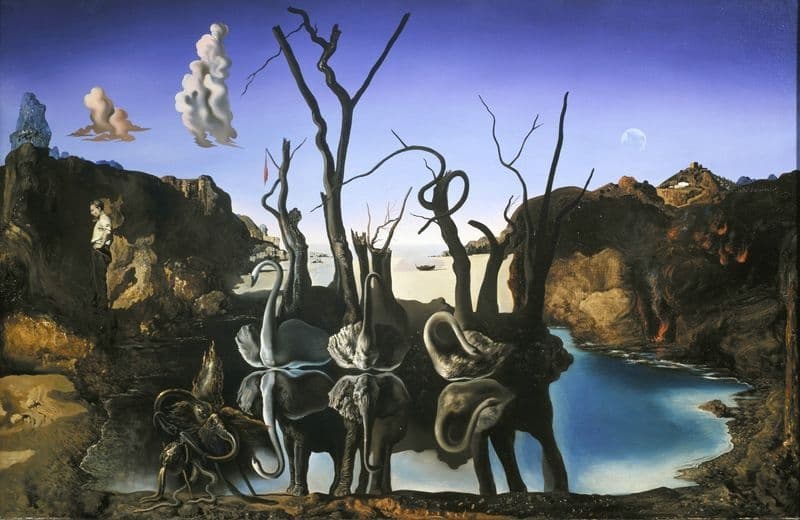
For Dalí, painting destabilizes sight to prove that perception is generative and unreliable. Through the paranoiac‑critical method, he constructs situations where forms insist on double readings: swans become elephants; a watch becomes skin; mass floats on stilt-legs. The hard/soft dialectic (watches vs flesh, stone vs biomorph) and emblems of putrefaction (ants, flies) turn certainty into a reversible state. Catalan geology supplies a rational stage so that the irrational can look incontestable. Where Bosch clarifies error, Dalí manufactures it—deliberately—so viewers experience how the mind forges meaning. In short: Bosch disciplines sight; Dalí destabilizes it.
Paired Works
Time: sequence or melt?
Focus question: Does time read as moral sequence or as pliable perception?
The Garden of Earthly Delights vs The Persistence of Memory
Desire as system
Focus question: Is desire staged as orderly pageant or as phobic machinery?
The Garden of Earthly Delights vs The Great Masturbator
Contradiction under stress
Focus question: How is contradiction used—morally or formally?
The Garden of Earthly Delights vs The Elephants
Seeing as trap vs seeing as manufacture
Focus question: Does the image warn against mis-seeing or compel a second image?
The Garden of Earthly Delights vs Swans Reflecting Elephants
Why This Comparison Matters
Putting Bosch beside Dalí clarifies two enduring models of how images work. If you think pictures should steady the eye and sort desire from its counterfeits, Bosch shows how invention and structure can teach causality without sermonizing. If you suspect perception is unstable and productive—able to make elephants out of swans and turn minutes into melt—Dalí offers a rigorous toolkit for seeing through doubles.
This split travels well beyond art history. It speaks to how we parse persuasive images today: do we read for consequences across frames, or do we test for second meanings engineered by context and bias? Bosch’s disciplined optics and Dalí’s destabilizing ones offer complementary literacies. Learning to hold both makes us better readers of pictures—and of the worlds those pictures help us trust, doubt, or refuse.
Related Links
Sources
- Museo del Prado – The Garden of Earthly Delights
- MoMA – The Persistence of Memory
- Britannica – Paranoiac‑critical method
- Museo Reina Sofía – The Great Masturbator
- Fundació Gala–Salvador Dalí – Salvador Dalí and Science
- The Dalí Museum – Timeline (nuclear mysticism)
- National Gallery (UK) – Surrealist glossary note
- Wikipedia – The Garden of Earthly Delights (overview and motifs)