The Great Masturbator
Study Print Studio
Create a personal study print
Build a companion study sheet around the part of this painting that speaks to you most. Choose a detail, shape an interpretation, and walk away with something personal and display-worthy.
Fast Facts
- Year
- 1929
- Medium
- Oil on canvas
- Dimensions
- 110 × 150 cm
- Location
- Museo Nacional Centro de Arte Reina Sofía, Madrid
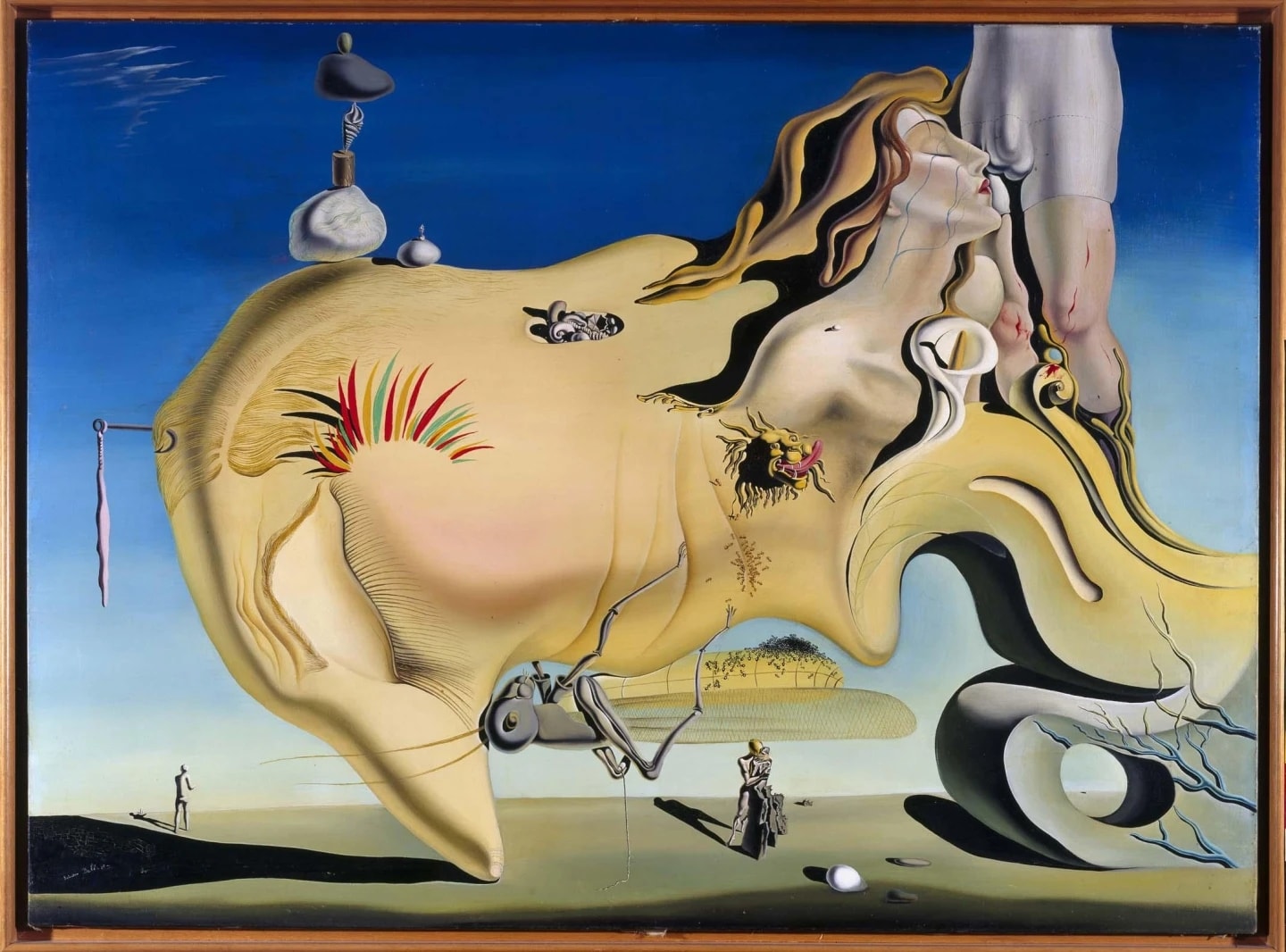
Click on any numbered symbol to learn more about its meaning
Meaning & Symbolism
Explore Deeper with AI
Ask questions about The Great Masturbator
Popular questions:
Powered by AI • Get instant insights about this artwork
Interpretations
Formal Analysis: Hard/Soft Dialectics and the Precision of Panic
Source: Fèlix Fanés (Yale University Press); Museo Reina Sofía; Dalí Museum
Place & Geology: Cadaqués as Psychic Engine
Source: Museo Reina Sofía; Fèlix Fanés
Psychoanalytic Iconography: Predation, Putrefaction, and Injury
Source: The Met; Gala‑Salvador Dalí Foundation; Dalí Museum
Surrealist Method: Toward the Paranoiac‑Critical Image
Source: Museo Reina Sofía; Britannica; Fèlix Fanés
Purity Against Stain: A Christian Code in a Sexual Crisis
Source: Museo Reina Sofía; Dalí Museum; General Christian iconography
Seen in Comparisons
Related Themes
About Salvador Dali
More by Salvador Dali
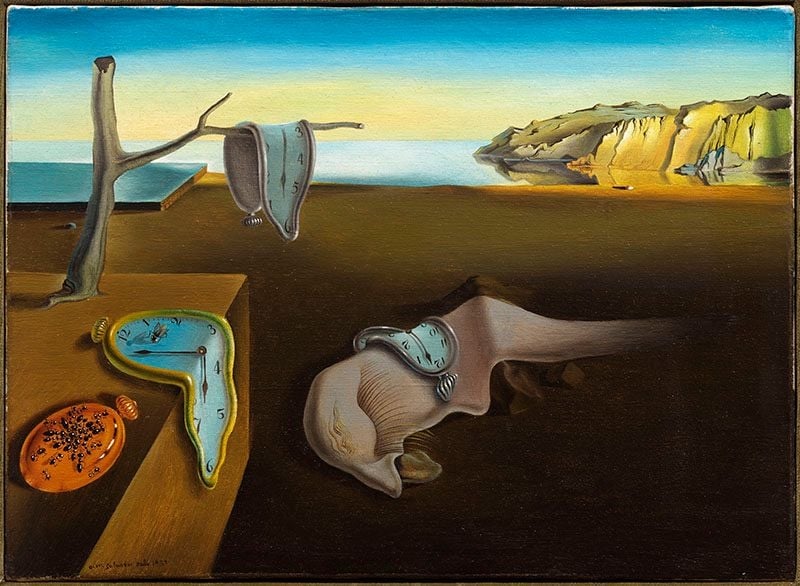
The Persistence of Memory
Salvador Dali (1931)
Salvador Dali’s The Persistence of Memory turns clock time into <strong>soft, malleable matter</strong>, staging a dream in which chronology buckles and the self dissolves. Four pocket watches droop across a barren platform, a dead branch, and a lash‑eyed biomorph, while ants overrun a hard, closed watch—a sign of <strong>decay</strong> and the futility of mechanical order <sup>[1]</sup><sup>[2]</sup>.
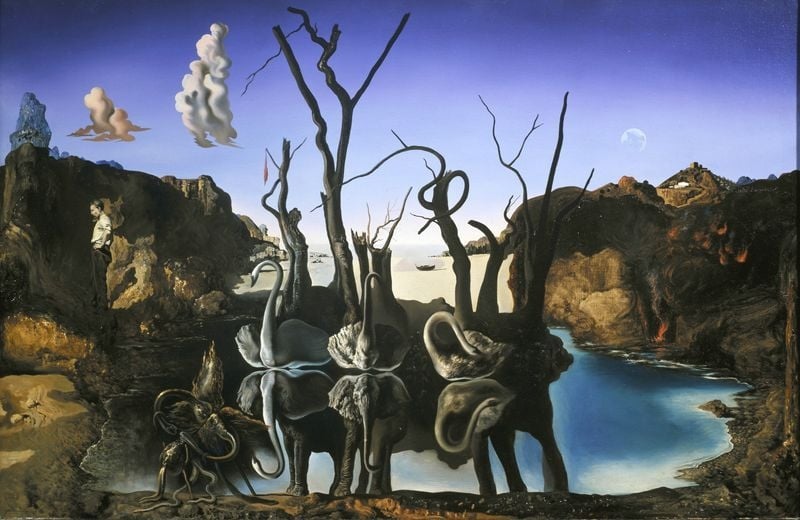
Swans Reflecting Elephants
Salvador Dali (1937)
Swans Reflecting Elephants stages a calm Catalan lagoon where three swans and a thicket of bare trees flip into monumental <strong>elephants</strong> in the mirror of water. Salvador Dali crystallizes his <strong>paranoiac-critical</strong> method: a meticulously painted illusion that makes perception generate its own doubles <sup>[1]</sup><sup>[2]</sup>. The work locks grace to gravity, surface to depth, turning the lake into a theater of <strong>metamorphosis</strong>.
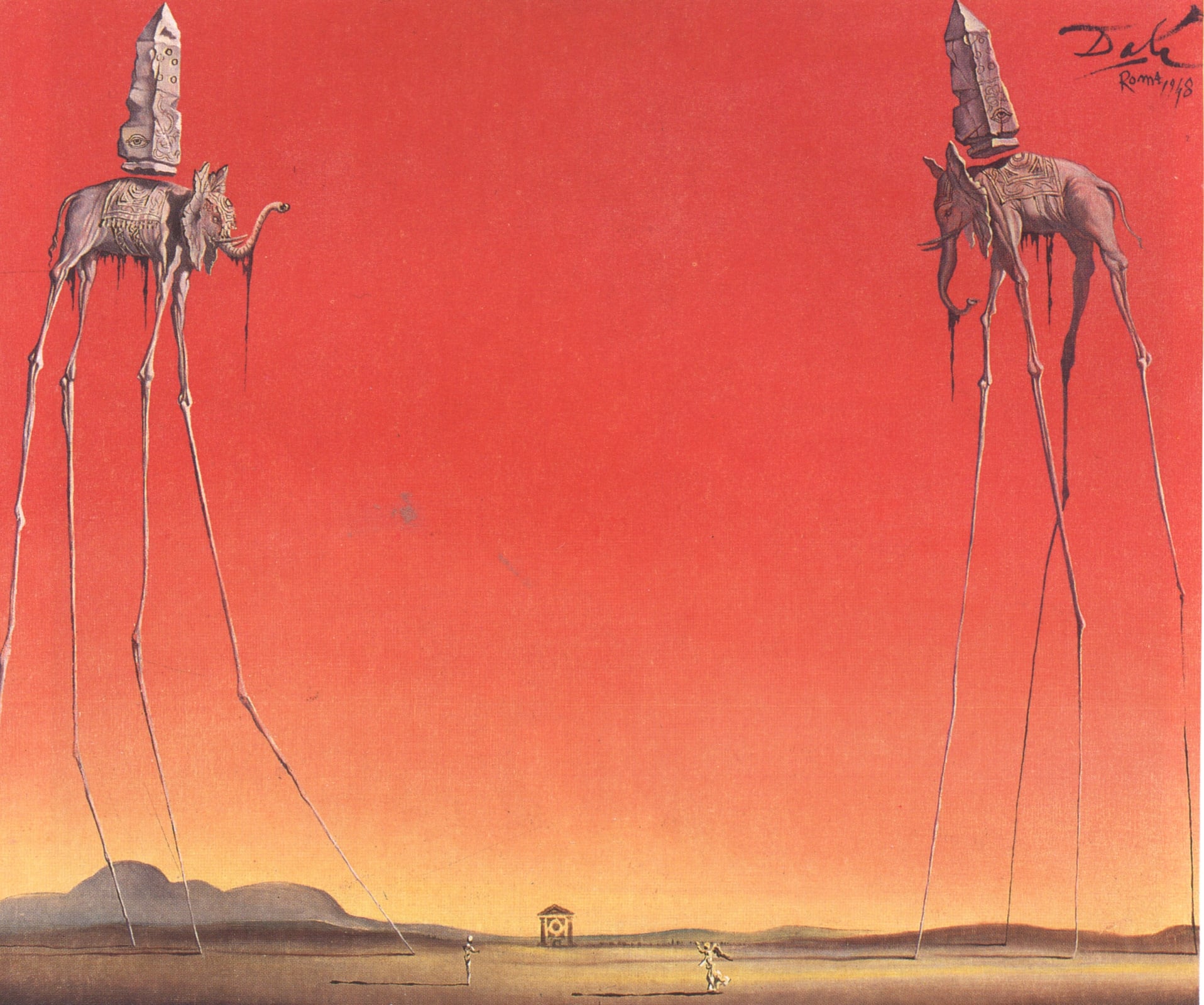
The Elephants
Salvador Dali (1948)
In The Elephants, Salvador Dali distills a stark paradox of <strong>weight and weightlessness</strong>: gaunt elephants tiptoe on <strong>stilt-thin legs</strong> while bearing stone <strong>obelisks</strong>. The blazing red-orange sky and tiny human figures compress ambition into a vision of <strong>precarious power</strong> and time stretched thin <sup>[1]</sup><sup>[2]</sup>.